This site is supported by our readers. We may earn a commission, at no cost to you, if you purchase through links.
A reptile that stops eating, moves sluggishly, and fails to shed properly isn’t necessarily sick—it may be cold.
Temperature governs nearly every biological process in reptiles, from enzyme activity and immune response to digestion and circulation.
Unlike mammals, they can’t generate their own body heat, so the environment you build for them becomes their physiology.
A deviation of even 5–10°F from the ideal range elevates stress hormones, suppresses immunity, and creates conditions where routine pathogens become lethal threats.
Consistent, accurate temperature monitoring isn’t a maintenance task you perform occasionally—it’s the foundation every other aspect of reptile care depends on.
Table Of Contents
- Key Takeaways
- Why Reptile Temperature Monitoring Matters
- How Temperature Affects Reptile Health
- Why Thermal Gradients Are Essential
- Best Tools for Monitoring Temperatures
- How to Maintain Safe Temperatures
- Frequently Asked Questions (FAQs)
- How does temperature affect reptiles?
- What is the importance of providing temperature gradients in reptile enclosures?
- What is the importance of temperature for animals?
- How often should enclosure temperatures be manually checked?
- Do reptiles behave differently during seasonal temperature changes?
- Which reptile species are most sensitive to temperature shifts?
- How does temperature monitoring differ for aquatic reptiles?
- Conclusion
Key Takeaways
- Reptiles can’t generate their own body heat, so even a 5–10°F drift from their ideal range suppresses immunity, stalls digestion, and can turn routine pathogens into life-threatening infections.
- A proper thermal gradient — warm basking zone on one end, cool retreat on the other — isn’t a design choice; it’s the physiological infrastructure your reptile navigates daily to regulate every body system.
- Consistent, well-placed monitoring tools (digital probes, infrared guns, smart sensors) catch equipment failure and temperature drift before your reptile shows symptoms — because by the time symptoms appear, the damage is already underway.
- Logging temperatures daily and recalibrating sensors regularly transforms reactive troubleshooting into preventative care, protecting feeding cycles, shedding, and long-term health.
Why Reptile Temperature Monitoring Matters

Your reptile’s health hinges on one thing you can actually control: temperature. Unlike mammals, reptiles can’t generate their own body heat, so every aspect of their wellbeing — digestion, immunity, energy, even shedding — depends on what you set up in that enclosure.
That’s why so many keepers swear by under-tank heating for reptile thermoregulation — it mimics the warm ground they’d naturally seek out in the wild.
Here’s why getting it right matters more than most keepers realize.
Ectothermic Reptiles Depend on External Heat Sources
Unlike mammals, reptiles are fully ectothermic — they can’t generate body heat internally. Every behavioral choice, from basking on a sun-warmed rock to retreating under a log, is Microhabitat Thermoregulation in action.
Ambient Temperature Selection drives their entire daily routine.
Key heat-dependent behaviors include:
- Solar Heat Utilization during peak daylight hours
- Seeking thermal refuges during Seasonal Heat Shifts
- Managing temperature gradients within their enclosure
- Choosing Heat Source Types that match their species-specific needs
That’s why temperature monitoring isn’t optional — it’s foundational. Understanding behavioral thermoregulation strategies helps improve enclosure design.
Proper Heat Supports Digestion, Immunity, and Activity
That external heat dependency shapes everything happening inside your reptile’s body. Proper thermoregulation directly drives Enzyme Kinetics, Immune Cell Function, and Circulatory Flow — meaning your basking setup isn’t decorative—it’s physiological.
Warm temperatures boost metabolic rate, support Immune Cell Function, improve activity levels, and enable Hormonal Regulation tied to feeding cycles. Without consistent temperature monitoring, these interconnected systems quietly fall out of sync.
Temperature Errors Can Cause Stress, Illness, or Death
When temperature monitoring fails, the consequences move fast. Heatstroke Pathophysiology begins once core temps exceed safe limits — proteins denature, cellular energy production collapses, and Organ Failure follows. Cold works the opposite way, triggering Hypothermia Cardiac Risk through metabolic shutdown.
When temperature monitoring fails, heatstroke or hypothermia can kill a reptile before symptoms are even noticed
Watch for these three stress indicators:
- Sudden lethargy or refusal to eat
- Labored breathing or muscle weakness
- Skin discoloration or abnormal posture
Thermal Swing Mortality risk climbs with erratic temperature fluctuations. Dehydration Consequences compound thermal stress, straining kidneys already overwhelmed by heat. Even a 5–10°F drift outside your reptile’s ideal range is enough to compromise reptile health.
Stable Conditions Improve Feeding and Shedding
Stable conditions do more than prevent illness — they set your reptile up to actually thrive. Consistent Basking helps Steady Digestion Rates and Optimized Meal Timing, making feeding predictable rather than guesswork.
Temperature stability also drives Predictable Shedding Cycles; without it, shedding issues like retained patches become common. Effective temperature monitoring keeps Reduced Stress Levels consistent, protecting long-term reptile health at every stage.
How Temperature Affects Reptile Health

Temperature isn’t just a comfort factor for your reptile—it’s the engine that drives nearly every biological process in its body. Get it wrong in either direction, and you’ll start seeing real health consequences, often before you realize something’s off.
Keeping warm, cool, and basking zones within the right ranges—as outlined in this corn snake temperature and care guide—makes the difference between a thriving snake and a sick one.
Here’s how temperature actually affects your reptile’s health, from metabolism to immune function.
Heat and Cold Change Metabolism
Metabolism in your reptile isn’t fixed — it shifts directly with enclosure temperature. Heat ramps up enzyme activity and liver glycogen mobilization, fueling digestion and movement, while cold suppresses mitochondrial thermogenesis and triggers hormonal appetite shifts that reduce feeding drive. Gut microbiota modulation follows these same cues.
Consistent temperature monitoring keeps these physiological processes running within the narrow range your ectothermic animal actually needs.
Low Temperatures Slow Digestion and Appetite
When your reptile’s enclosure drops below ideal temperatures, Metabolic Rate Decline follows almost immediately. Gut Motility Reduction slows digestion, leaving food sitting in the gut far too long — raising Constipation Risk Increase and dulling Hormonal Appetite Signals that normally trigger hunger.
Your temperature monitoring routine and Feeding Schedule Adjustment should prioritize consistent temperature gradients, because thermoregulation directly governs reptile physiology and appetite.
Excess Heat Can Trigger Dehydration and Heat Stress
Just as a car overheats when coolant runs low, your reptile’s body can spiral into dangerous territory when enclosure heat climbs too high.
Excess warmth drives Fluid Loss faster than they can rehydrate, triggering Electrolyte Imbalance, Organ Strain, and Behavioral Thirst.
Heat stress can cause Heat-Induced Rash or collapse.
Effective temperature monitoring in reptile enclosures, paired with a stable temperature gradient and humidity control, protects reptile wellness.
Pairing these practices with the right habitat setup—like those featured in this guide to desert snake terrariums—helps you replace substrate every four to eight weeks and keep mold at bay.
Poor Thermal Control Increases Infection Risk
When thermal gradients break down, your reptile’s immune defenses go with them. Immune Suppression, Pathogen Growth, and surging Stress Hormones form a dangerous chain reaction tied directly to Health Risks Related to Improper Temperature and Humidity:
- Gut Barrier integrity weakens, inviting bacterial infections
- Delayed Healing leaves wounds open longer
- Poor temperature monitoring allows respiratory infections to take hold
Consistent humidity control and a stable thermal gradient break that cycle.
Hatchlings Need Tighter Temperature Control Than Adults
Hatchlings don’t get the same margin for error that adults do. Their small bodies lose heat fast, and their narrow thermal window — roughly 26°C cool side to 31°C basking zone — must stay within 2°C day and night. Microclimate seeking behavior, immune development, and growth rate sensitivity all depend on it.
| Factor | Hatchling vs. Adult |
|---|---|
| Thermal Window | Narrower, tighter tolerance |
| Rapid Heat Recovery | Critical after shedding |
| Immune Development | More vulnerable to cold dips |
| Growth Rate Sensitivity | Stunts faster under cool temps |
Effective temperature monitoring in reptile enclosures catches these shifts before they become health risks related to improper temperature and humidity.
Why Thermal Gradients Are Essential
A reptile’s enclosure isn’t just a box — it’s a landscape your animal navigates throughout the day to stay healthy. Unlike a thermostat that holds one steady temperature, a proper gradient gives your reptile control over its own body.
Here’s what every effective thermal gradient needs to include.
Reptiles Need Warm and Cool Zones

Think of your enclosure as a landscape, not just a box. Your reptile needs Microhabitat Diversity built into every setup — a warm basking surface on one end and cool retreats on the other.
Pairing that temperature gradient with a steady day-night rhythm and gentle seasonal changes is easier once you understand how snake lighting needs work across daily and seasonal cycles.
Gradient Width Optimization generally means 1 to 1.5 meters of usable space, giving them real choice:
- Zone Placement Strategies prevent thermal dead zones
- Heat Source Types affect surface vs. ambient heat differently
- Seasonal Temperature Shifts require periodic gradient adjustments
- Temperature log reviews catch drift before it causes harm
- Health monitoring improves when gradients stay consistent
Basking Areas Support Digestion and Daily Activity
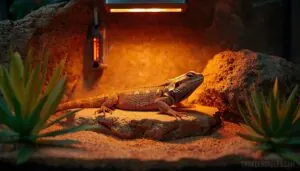
Once your reptile has a proper gradient in place, the basking area becomes the engine of its daily routine. Postprandial metabolism kicks in when your animal holds ideal temperatures of 100–110°F after meals — often for 30 to 60 minutes.
UVB-Enhanced Digestion, Energy Mobilization, and Morning Activity Peaks all depend on consistent basking access.
Shell Drying Benefits and effective temperature monitoring in reptile enclosures start here.
Cool Zones Let Reptiles Regulate Body Temperature

Cool zones are the other half of the equation. After basking, your reptile needs somewhere to step down — shaded retreats, Burrow Retreats, or Shade Structures where Microhabitat Cooling naturally kicks in. Substrate Moisture and Humidity Buffers stabilize ambient temperature in these areas, supporting safe thermoregulation strategies for ectothermic animals.
Build your cool zone with these three priorities:
- Maintain a gradient range of 65–85°F in the retreat area
- Use moist substrate or damp hides as natural Humidity Buffers
- Include this zone in your daily monitoring routine alongside the basking side
Incorrect Gradients Lead to Lethargy and Poor Growth

When the balance between warm and cool zones breaks down, Gradient Instability sets in fast. Your reptile can’t reach the body temperature needed for digestion, so Delayed Digestion and Reduced Appetite follow.
Over weeks, Metabolic Slowdown quietly leads to Growth Stunting — weight stays flat, activity drops.
Consistent temperature gradients in enclosures aren’t optional; they’re what keeps reptile physiology running on schedule.
Species-specific Gradients Vary by Habitat and Behavior

Not every reptile thrives under the same setup.
A bearded dragon’s habitat gradient—sharp transitions from blazing basking zones to cool shade—mirrors open desert conditions, while a crested gecko needs gradual, forest-style temperature gradients in enclosures.
Behavioral thermoregulation and ontogenetic gradient shifts mean juveniles and adults use heat differently too.
Matching species-specific thermal needs to your setup is where real environmental monitoring pays off.
Best Tools for Monitoring Temperatures

Getting the temperature right starts with having the right tools in your corner. There’s no guesswork involved when your equipment does the measuring for you.
Here are the key monitoring tools every reptile keeper should know about.
Digital Probe Thermometers for Ambient Readings
Digital thermometers with a temperature probe are your most reliable starting point for tracking ambient temperature inside any enclosure. Probe length selection matters — position it at the height your animal actually occupies.
Waterproof housing, low power consumption, and wireless data transfer for smooth logging.
Consistent monitoring routine also helps with temperature drift detection, catching gradual equipment decline before your reptile feels it.
Infrared Guns for Quick Surface Checks
An infrared temperature gun gives you instant, non-contact accuracy without disturbing your reptile during feeding or cleaning. Proper spot size management and emissivity calibration keep readings reliable across different substrate and basking surface materials.
For precise reptile husbandry, use laser targeting to confirm rapid spot detection on the exact basking zone:
- Point at the surface from 12 inches
- Adjust emissivity for rock or wood
- Read surface temperature in under a second
Hygrometers for Paired Humidity Monitoring
Humidity control is just as critical as heat in reptile husbandry, and paired hygrometers make Temperature and Humidity Monitoring far more reliable. Dual Sensor Calibration cross-checks readings between two units, reducing drift and catching errors early.
Capacitive vs Resistive sensor types helps you choose accuracy over cost.
Apply smart Sensor Placement Strategies on opposite enclosure walls, set Humidity Delta Alerts, and log at consistent Data Logging Frequency for dependable real-time monitoring.
Smart Sensors for Continuous Tracking
Smart sensors take real-time monitoring further than any handheld device can. These IoT devices use Mesh Connectivity to blanket large enclosures without dead zones, while Edge Processing filters noise and cuts false alarms by up to 90%. Battery Longevity runs 6–12 months, and secure Data Encryption protects your logs. Firmware Updates keep everything current without disturbing your animal.
- Updates every 1–5 seconds for instant anomaly detection
- Wireless mesh eliminates cold spots in larger enclosures
- Data logging retains 12 months of hourly trends
- Automated alerts trigger if temps drift beyond your set range
- Low-power design provides 6–12 months of battery life
Reliable Placement Improves Accuracy
Even small shifts in probe placement can throw off your entire monitoring system.
Keep every sensor at Consistent Probe Height — at your reptile’s actual resting or basking level, not the floor.
Shield probes from direct radiant heat using a Shielded Sensor Position to prevent inflated temperature readings. Standardized Measurement Zones and Airflow Interference Mitigation maintain temperature probe accuracy, while regular sensor calibration keeps your data trustworthy long-term.
How to Maintain Safe Temperatures

Knowing the right temperatures is only half the battle — keeping them stable day after day is where the real work happens. A few consistent habits make that far easier than it sounds.
Here’s what actually moves the needle.
Place Probes at Basking and Resting Heights
Where place your probes determines everything about the accuracy of your temperature readings. Set the basking probe directly on the basking area surface, within the lamp’s effective range, and use secure tying methods on branch perches to prevent drift.
Position your resting zone probe at the cool end, matching the reptile’s actual height. A daily drift check routine keeps your temperature gradient and temperature monitoring reliable.
Check Day and Night Temperature Shifts
Once your probes are positioned correctly, start comparing what they record across the full day-night cycle.
Nighttime Drop Detection reveals thermostat failures that daytime checks miss entirely. Day-Night Gradient Comparison shows whether Heat Source Lag is flipping your cool and warm zones after lights out. Check Substrate Air Temps separately — ground surfaces retain heat longer than air. The Humidity Temperature Link matters too: nighttime temperature fluctuations quietly raise moisture levels.
Log Readings to Spot Equipment Problems Early
Tracking day-night shifts is only half the work — your temperature logs tell the rest of the story. Regular record keeping exposes patterns that single spot-checks miss entirely.
Probe Drift Detection, Heat Source Degradation, and Thermostat Cycle Analysis all become visible when you compare today’s readings against last week’s. Relay Fault Indicators and Sensor Calibration Alerts turn gradual equipment failure into something you catch early, not after your reptile shows it.
Recalibrate and Replace Failing Devices Regularly
Logs catch drift — but catching it means nothing if you don’t act on it.
Schedule calibration checks annually at minimum, and clean sensor tips regularly since dirty contacts skew ambient readings just as badly as temperature drift or thermostat failure. Replace batteries before instability appears. If a device shows erratic behavior after cleaning and setup, end-of-life replacement beats risking your animal’s health on unreliable data.
Adjust Heat Sources Before Health Issues Develop
Replacing a failing device is the last line of defense — but you shouldn’t wait that long.
Seasonal temperature swings, wattage drift, and guard distance shifts can quietly push basking zones out of range before your animal shows symptoms.
Use monitoring tools for reptile environments to catch these changes early. Adjust heat tape calibration, radiant heat balancing, and heater output proactively — not reactively.
Frequently Asked Questions (FAQs)
How does temperature affect reptiles?
As the old saying goes, "a fish out of water knows its place."
Temperature governs nearly every biological process in reptiles — from metabolic rate shifts and digestion to behavioral thermoregulation and immune response.
What is the importance of providing temperature gradients in reptile enclosures?
A proper thermal gradient is the foundation of stress-free enclosure design. Without warm and cool zones, behavioral thermoregulation becomes impossible — your reptile can’t choose what its body actually needs.
What is the importance of temperature for animals?
Temperature governs every biological process in animals — from enzyme activity and growth development to stress hormones and predator avoidance. Without it, life simply doesn’t function.
How often should enclosure temperatures be manually checked?
Check enclosure temperatures at least once daily — morning when lights come on, evening when they go off.
Add extra checks after equipment changes, room relocations, or any time readings seem inconsistent.
Do reptiles behave differently during seasonal temperature changes?
Yes.
Seasonal activity shifts, basking timing variation, and microhabitat selection all change with temperature fluctuation.
Thermoregulatory plasticity drives these behavioral responses, affecting activity levels, reproductive timing, and feeding — making seasonal recalibration of enclosure temperatures and environmental sensors essential.
Which reptile species are most sensitive to temperature shifts?
Leopard Geckos, Caiman Lizards, Argentine Tegus, and Green Iguanas rank among the most temperature-sensitive species, each with narrow species-specific thermal needs that, when missed, quickly disrupt feeding, digestion, and activity.
How does temperature monitoring differ for aquatic reptiles?
Water worlds work differently.
Aquatic reptiles need depth-specific probes and smart sensors tracking the full water column profiling, from surface air heating zones to submersible heater placement below, accounting for seasonal water shifts throughout.
Conclusion
Temperature is the silent thermostat of your reptile’s entire existence—when it’s right, everything else falls into place.
Understanding why reptile temperature monitoring is important means recognizing that you’re not just managing heat; you’re managing health, immunity, digestion, and survival.
A few degrees off the mark can quietly unravel months of careful husbandry.
Monitor consistently, log faithfully, and adjust before problems surface.
reptile can’t tell you it’s cold—your thermometer has to.