This site is supported by our readers. We may earn a commission, at no cost to you, if you purchase through links.

A ball python kept at 30% humidity won’t just look uncomfortable, it will struggle to shed, develop stuck eye caps, and face respiratory infections within months. Most captive snake deaths trace back to one root cause: an enclosure that ignores the animal’s native climate, terrain, and instincts.
Snakes don’t adapt to generic setups the way dogs or cats do. A corn snake from the humid southeastern U.S. and a ball python from West Africa’s grasslands need entirely different temperature gradients and moisture levels to thrive, not just survive.
Creating a natural snake environment means matching your enclosure to millions of years of evolutionary programming, from basking zones to burrowing substrate. Get the fundamentals right, and you’ll build a habitat that keeps your snake healthy, active, and stress-free for decades.
Table Of Contents
- Key Takeaways
- Plan Your Snake’s Natural Habitat
- Choose a Secure, Properly Sized Enclosure
- Create Temperature, Humidity, and Lighting Zones
- Build a Naturalistic Snake Environment
- Maintain a Clean, Healthy Snake Habitat
- Frequently Asked Questions (FAQs)
- How to make a snake habitat?
- What smell do snakes hate most?
- What are the natural habitats for snakes?
- Do snakes like to be held?
- How often should I handle my snake safely?
- Can multiple snake species coexist in one habitat?
- How do I winterize outdoor snake habitats?
- What signs indicate my snake is stressed?
- How often should I rotate enrichment items and hides?
- What’s the safest way to quarantine a new snake?
- Conclusion
Key Takeaways
- Match your enclosure to your snake’s exact species needs, since generic setups covering temperature, humidity, and terrain are the leading cause of preventable illness and death.
- Build a true thermal gradient with heat on one side only, using a calibrated thermostat to keep basking spots around 90-100°F and the cool side near 70-75°F.
- Size and shape the enclosure for your snake’s full adult length and natural behavior, whether that means vertical climbing space or deep burrowing substrate.
- Stay ahead of problems with daily spot-cleaning, weekly substrate checks, and a backup power plan, since consistent maintenance and monitoring catch stress or drift before your snake suffers.
Plan Your Snake’s Natural Habitat

Every successful setup starts long before you buy a single heat lamp or hide. You need a clear picture of what your snake actually needs, from its adult size to its natural climate, so nothing gets left to guesswork. Here’s what to nail down before you build anything.
Take children’s pythons, for example—this complete children’s python care sheet breaks down their size, temperament, and habitat needs before you buy anything.
Research Species-Specific Habitat Needs
Every species carries its own blueprint. A ball python’s 50-60% humidity needs look nothing like a corn snake’s 65-75% range, and basking zones can swing between 24 and 32°C depending on origin.
Before buying anything, study your snake’s native range, prey habits, and shelter preferences. That research shapes every gradient, hide, and humidity target you’ll set later. Getting these elements right matters because they align with the essential habitat requirements of food, water, shelter, space, and arrangement that all captive animals need to thrive.
Consider Adult Size and Behavior
That research only gets you so far, since a hatchling’s needs shift dramatically by adulthood. Plan for full adult size now, not the size in front of you.
Mature snakes grow choosier: shedding slows, feeding turns selective, and territorial habits set in. Watch for stress cues like hissing or flattening, and adjust handling frequency accordingly.
Set Climate Targets
Stress cues fade once you set clear climate targets: a temperature gradient of 70-100°F, species-appropriate humidity, and a baseline you’ll track weekly. Define your scope, basking spots, cool zones, thermostats, then log readings for 90 days.
Publicly noting your setup (even in a care journal) keeps you honest and reveals drift before your snake ever suffers.
Choose Naturalistic or Bioactive
With targets logged, decide your design path. A naturalistic setup uses live plants and real substrate for looks and enrichment, while bioactive substrate adds a cleanup crew of springtails and isopods for self-sustaining waste breakdown.
Whichever route you choose, a step-by-step bioactive terrarium build for ball pythons shows how to pair living plants with a secure, escape-proof enclosure.
Match the choice to your species’ needs and your willingness to maintain layered substrate, microfauna, and humidity regulation systems long-term.
Gather Monitoring and Backup Supplies
A power outage at 2 a.m. shouldn’t cost your snake its gradient. Stock dual channel thermometers, a hygrometer near substrate level, and a thermostat you trust. Add backup power, a spare humidifier reservoir, and a small redundancy kit with batteries and fuses.
Calibrate thermometers quarterly, verify heating elements work, and sanitize water bowls weekly, since preparation beats panic every time.
Choose a Secure, Properly Sized Enclosure
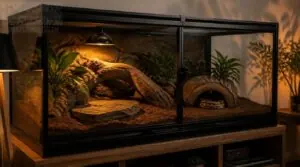
Your enclosure is the foundation of everything else you’ll build, so getting it right from the start matters. Size, material, and security all play a role in keeping your snake safe while giving it room to move and thrive. Here’s what you need to know before picking one out.
Substrate choice matters too, and if you’re weighing your options, this guide on whether substrate liners are actually necessary breaks down what really helps versus what’s just for looks.
Size for Adult Growth
Buying for a hatchling? Size the enclosure for the adult it’ll become, since most species hit full length within two to three years. A snake needing 4-6 feet as an adult can’t stay in a small tub that long.
If you’re planning ahead for multiple boas down the road, this guide to rack systems built for growing boa constrictor collections can help you invest smart from day one.
Track growth with monthly weigh-ins, then plan upsizing in stages so your snake always has room to fully stretch and explore.
Compare Enclosure Materials
Since material choice affects weight vs strength, glass suits stable stands while acrylic and polycarbonate offer lighter, impact-resistant alternatives for larger builds.
Stainless steel resists rust in humid setups and delivers the strongest impact durability, though cost runs high. Fiberglass reinforced polyester balances moisture resistance and price, making it a smart cost longevity balance for naturalistic terrarium enthusiasts.
Plan Ventilation and Airflow
Stale air breeds respiratory illness, so position vents for steady cross flow, low inlet, opposite outlet, preventing backdrafts.
Balance passive slats or an adjustable fan against your humidity needs, since heavy airflow dries tropical setups fast.
Match air changes per hour to your species’ target, and add a negative pressure alarm to catch blockages before they harm your snake.
Allow Climbing or Burrowing
Does your snake climb, burrow, or both? Design for its instincts, not just its length.
Arboreal species need vertical space reaching two-thirds body length, with branches 1-3 inches thick offering non-slip bark for secure perches.
Burrowers want loose, deep substrate, 6-12 inches for tunneling species, kept separate from humid zones to prevent mold buildup.
Secure Doors, Lids, and Gaps
A determined snake can escape through gaps no wider than its own head, so locking mechanisms matter as much as size. Check gap sizing under 2mm, use deadbolts extending 1 inch into frames, and inspect hatch security with stainless clasps. For naturalistic terrariums, escape prevention means:
A determined snake can escape through gaps no wider than its own head, so locking mechanisms matter as much as size
- Secure enclosures with square frames
- Piloted hinges preventing sag
- Access control via coded locks
Create Temperature, Humidity, and Lighting Zones
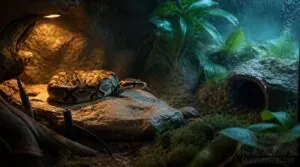
Your enclosure is only half the job; the environment inside it does the real work of keeping your snake healthy. Temperature, humidity, and lighting all need to mimic natural conditions, and getting them wrong invites stress and illness fast. Here’s how to set up each zone correctly, starting with heat placement.
Install Heat on One Side
Picture your snake’s world split into two halves, warm and cool, with one heat source anchoring the entire gradient.
Place your heating element on one end only, using a heat pad or ceramic emitter for steady ground heat.
This creates a true thermal gradient, letting your snake choose its basking spot while the opposite side stays naturally cooler.
Regulate Heat With Thermostats
A heat source without a thermostat is a gamble, since basking zones can climb well past 100°F.
Use a digital thermostat with the sensor at substrate level, set points around 90-95°F, and overheat protection engaged.
Check calibration monthly and keep a battery backup ready, since power outages shouldn’t mean cold-stress for your snake.
Monitor Warm and Cool Zones
A thermostat only sets the target, so you still need eyes on the numbers daily. Verify the basking spot hits 90-100°F and the cool side holds 70-75°F using probes placed at substrate level, not dangling in open air.
Log readings twice daily, morning and night, to confirm thermal gradient stability and catch drift before your snake feels it.
Adjust Species-Specific Humidity
Once temperature logs look steady, turn your attention to humidity zones, since moisture needs vary wildly by species. Tropical natives want 60-80%, while desert dwellers thrive at 30-50%.
- Mist 1-2 times daily, more during shedding
- Place water bowls near the warm side
- Build a humid hide with damp sphagnum moss
Adjust seasonally too, since activity and shedding cycles shift target ranges.
Set a Consistent Photoperiod
Rarely do keepers realize light matters as much as heat. Run a 12-hour light, 12-hour dark cycle on a timer with backup power, since outages disrupt diurnal rhythm fast.
| Do | Avoid |
|---|---|
| Fixed timer schedule | Random on/off |
| Gradual dawn/dusk | Sudden bright light |
| Gentle daytime bulb | Overheating fixtures |
| Seasonal shifts, gradual | Abrupt changes |
| Daily photoperiod logs | Skipping monitoring |
Build a Naturalistic Snake Environment
Once your temperature and humidity zones are dialed in, it’s time to fill the enclosure with elements that make it feel like home. Every piece you add, from substrate to hides to plants, should serve a purpose while mimicking your snake’s wild habitat. Here’s what to include, and why each choice matters.
Choose Safe Natural Substrate
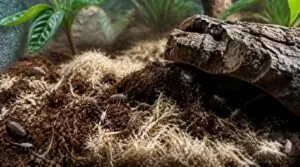
What’s under your snake’s belly matters as much as what’s above it. Pick coconut husk fiber or dust-free aspen for moisture retention without mold, keeping surfaces dry while deeper layers stay damp. Skip cedar and pine.
Rinse bark substrates first to cut dust, make sure drainage is quick, and choose bioactive-compatible options that support isopods, springtails, and easy spot-cleaning between refreshes.
Add Warm and Cool Hides
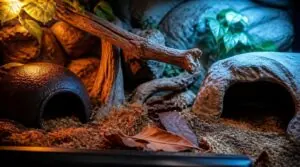
Give your snake somewhere to vanish on both ends of the gradient, since hiding isn’t optional, it’s survival instinct.
- Warm hide: dark ceramic, snug fit, 8-12 inches from heat
- Cool hide: light stone, roomy exit, opposite side
- Size to 1.5-2x girth
- Skip wood, choose resin or ceramic
Include Branches, Vines, and Cover
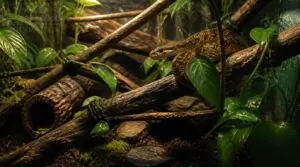
A bored snake is a stressed snake, and branches fix that fast.
Use varied diameters from 1-4 inches, angled from flat to steep for climbing challenges. Secure them with non-slipping fasteners and anti-chew wraps, then add vines for natural cover. Inspect regularly for cracks or decay.
This kind of environmental enrichment keeps arboreal species thriving.
Provide Clean, Accessible Water

Water does double duty here, hydration and humidity, so placement matters as much as cleanliness.
Set a shallow, wide-rimmed bowl on the cool side, away from heat sources to prevent algae growth. Change water daily. Wash bowls weekly with hot, unscented soap. Skip metal; food-grade plastic or ceramic won’t rust or harbor bacteria.
Use Snake-Safe Plants and Decor
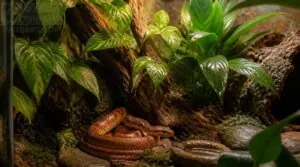
Not every plant belongs near a snake. Choose non-toxic species like pothos or peace lily, anchor driftwood securely, and quarantine new plants for a week to screen pests. Skip citrus, nightshade, and metal decor.
- Verify toxicity before buying
- Secure heavy decor to stands
- Rinse leaves regularly
Maintain a Clean, Healthy Snake Habitat
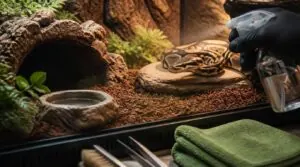
Building the habitat is only half the job, since ongoing care is what keeps your snake thriving long-term. A clean enclosure prevents bacterial growth, parasites, and respiratory issues while keeping stress levels low. Here’s what your regular maintenance routine should include.
Spot-Clean Waste and Spills Daily
Every day, scan corners and beneath hides for feces, shed skin, and uneaten prey. Lift solids with a scoop while wearing gloves.
Mop water spills immediately to block mold. Waste should carry only a light scent, nothing foul.
Keep a sealed bin, paper towels, and reptile-safe cleaner within reach for fast, thorough spot cleaning.
Refresh Substrate as Needed
Daily spot-cleaning only goes so far, since trapped moisture and waste residue build up beneath the surface. Check moisture weekly; refresh once it drops below 40%, swapping the top 2-3 inches while preserving burrows. Rake gently to reopen tunnels without collapsing them.
Replace 20-40% of total volume, and always source pesticide-free substrate to control odor and prevent mold.
Sanitize Decor and Water Bowls
Fresh substrate means little if old decor carries bacteria back in. Wipe plastic hides with a 70% isopropyl alcohol solution, letting pieces air dry fully before returning them.
Rinse ceramic or glass bowls with hot water after disinfecting. Brush cork and driftwood weekly, rotate decor to limit moisture contact, and store dried pieces in a ventilated container between cycles.
Monitor Feeding, Shedding, and Stress
A clean enclosure sets the stage, but your snake’s behavior tells you if that setup actually works. Watch for skipped meals, cloudy eyes before a shed, or hissing and tail whipping.
These cues flag stress, poor humidity, or wrong basking temps, letting you adjust before small issues become health problems.
Prepare for Power Outages
A snake’s thermal gradient collapses fast without power, so build a backup power plan before you need it. Keep a battery bank charged for thermostats and heat sources, plus a communication plan for emergencies.
Stock emergency supplies like blankets for insulation, and know backup warming methods. Check medical needs and safety checks routinely, since sudden temperature drops stress snakes quickly.
Frequently Asked Questions (FAQs)
How to make a snake habitat?
Picture a miniature rainforest or desert in a box: that’s your goal. Build it around species-specific temperature gradients, right humidity, safe substrate, secure hides, and reliable ventilation, so your snake can thrive exactly as nature intended.
Getting those temperature zones dialed in takes practice, and this guide to building a safe snake enclosure walks you through every layer — from substrate depth to hide placement — so nothing gets overlooked.
What smell do snakes hate most?
Ammonia fumes rank as the strongest deterrent, irritating snakes fast, while citrus, clove oil, and cinnamon offer gentler, pet-safe alternatives. Reapply after rain since scent barriers fade, and combine with habitat cleanup for lasting results.
What are the natural habitats for snakes?
From sandy burrows to rainforest canopies, wild snakes shape themselves entirely around home turf. Deserts, forests, grasslands, wetlands, and coastlines each demand distinct environmental mimicry.
Since species-specific research into behavioral needs guides every successful habitat design choice you’ll make.
Do snakes like to be held?
Not exactly. They tolerate brief handling but favor calm, low-stress routines over frequent contact. Always support the full body, watch for stress signs, avoid handling after feeding, and build trust gradually through slow, quiet approaches.
How often should I handle my snake safely?
Base handling on temperament: colubrids like corn snakes tolerate three ten-minute sessions weekly, ball pythons two to three. Defensive snakes start at one to two. Wait 48-72 hours after feeding, and watch for hissing or tensing signaling stress.
Can multiple snake species coexist in one habitat?
Mixing species is like inviting two chefs into one kitchen: territory clashes are inevitable. Careful species compatibility evaluation, distinct feeding stations, and thorough territorial behavior assessment matter more than good intentions when weighing coexistence.
How do I winterize outdoor snake habitats?
Start with your first frost date, then seal drafts, add insulated panels, and raise enclosures. Layer dry substrate, install backup heat sources, and check warm and cool zones daily to keep brumating snakes stable and safe.
What signs indicate my snake is stressed?
Watch for excessive hiding, appetite loss, stiff defensive coils, and open-mouth breathing. Rapid tongue flicking, aggressive handling reactions, and shedding troubles also signal distress, pointing to enclosure or husbandry adjustments your snake urgently needs.
How often should I rotate enrichment items and hides?
Daily swaps aren’t necessary and can backfire. Rotate enrichment every 5-7 days, shift hide locations weekly, and change substrate texture every 1-2 weeks, always keeping one familiar hide fixed for security.
What’s the safest way to quarantine a new snake?
Keep your new snake in a separate isolation room for 60-90 days, using dedicated equipment and reptile-safe disinfectants. Follow strict hygiene protocols, monitor health daily, and secure the enclosure fully to prevent escape or cross-contamination.
Conclusion
Like Eden built for a creature that never asked for paradise, a well-planned enclosure becomes its own quiet world.
Creating a natural snake environment isn’t a one-time project; it’s an ongoing conversation between you and an animal wired by instinct. Get the temperature gradients right, keep humidity steady, and clean consistently. Your snake won’t thank you in words. It’ll show you through steady sheds, healthy weight, and a calm, confident presence in its glass world.
If your boa will live in a bioactive setup, this guide to building a bioactive boa constrictor terrarium walks through layering the substrate and letting it cycle before move-in.