This site is supported by our readers. We may earn a commission, at no cost to you, if you purchase through links.
A snake can carry crypto parasites or inclusion body disease for weeks and look perfectly healthy the whole time. That new boa from the expo? It might be shedding pathogens in every dropping while eating like a champ. One shared water bowl or a reused pair of tongs is all it takes to infect your entire collection.
Proper snake health quarantine procedures stop that before it starts. This guide walks you through the full process: how long to quarantine, how to set up a bare-bones enclosure, the hygiene habits that actually matter, and the fecal tests that clear your snake for release.
Table Of Contents
- Key Takeaways
- When to Quarantine a Snake and How Long
- Set Up a Separate Snake Quarantine Enclosure
- Prevent Disease Spread With Quarantine Hygiene
- Monitor Your Snake’s Health During Quarantine
- End Quarantine Safely and Move Your Snake to Its Permanent Enclosure
- Frequently Asked Questions (FAQs)
- How long should I quarantine my snake?
- Can I leave a snake alone for a week?
- What is the duration of quarantine?
- What US state is snake free?
- Do you have a good reptile quarantine procedure?
- Should you quarantine snake mites?
- How long should wild-caught reptiles be quarantined?
- Why is quarantine important?
- What are the biosecurity measures for a quarantined animal?
- What equipment does a quarantined animal need?
- Conclusion
Key Takeaways
- A snake can carry and shed dangerous pathogens for weeks without showing any symptoms, making quarantine essential the moment any new or returning animal enters your space.
- Keep the quarantine enclosure in a separate room with its own dedicated tools, paper towel substrate, and a single hide—simple setups are easier to disinfect and harder for disease to hide in.
- Handle quarantined snakes last, scrub before disinfecting, and never share tongs, towels, or water bowls between animals, because a single shared item can undo an entire quarantine.
- Don’t end quarantine based on the calendar alone—your snake needs a clean fecal test, normal appetite, clear breathing, and no new lesions before it earns a spot with your main collection.
When to Quarantine a Snake and How Long
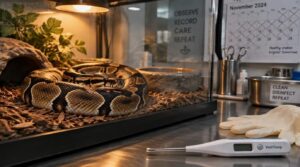
When should you quarantine a snake? Anytime it’s new, returning from a show or breeding loan, or showing suspicious signs like wheezing, mouth rot, or skipped meals. Treat these as automatic quarantine triggers, no exceptions.
A solid quarantine routine—typically 60 to 90 days with separate equipment and hands-on care—is one of the simplest ways to protect your whole collection, and our guide to preventative health care for pet snakes walks you through the rest.
Plan on a 30-day quarantine period as your baseline. Bump it to a six-week quarantine period if the snake came from an unknown source, arrived in a group, or has a sketchy medical history. Parasites and respiratory bugs play the long game, and patience beats regret.
Your quarantine duration isn’t just a calendar countdown. It’s tied to clean fecal tests and a solid Initial Health Assessment. Release criteria are simple: normal appetite, clean breathing, no new lesions, and negative stool results. Meet all of them, and quarantine compliance has done its job.
Set Up a Separate Snake Quarantine Enclosure
Now that you’ve committed to your quarantine window, build the space that makes it work. Your dedicated quarantine enclosures should live in a different room from your display collection, with their own thermostat, heating, and lighting. Think of it as a guest room, not a spare corner.
Pick a simple quarantine tank or rack tub made of easy-to-clean materials like plastic or glass. Skip the wood, cork, and loose substrate. Paper towel liners, a water bowl, and one hide are plenty. Fancy biotope setups can wait for the permanent enclosure.
If mites show up despite your efforts, this snake mite treatment guide walks you through clearing them before they spread to your main enclosure.
Match the thermal gradient and humidity to your species, and verify everything with a calibrated thermostat and gauges. A cold, stressed snake won’t eat or fight off illness.
Prevent Disease Spread With Quarantine Hygiene
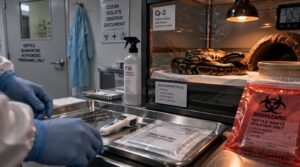
Your spotless guest room means nothing if you track manure through it. Hygiene protocols are what keep disease from stowing away on your hands, tools, and laundry.
Here’s your daily discipline:
- Handle the quarantine snake last, after all your healthy animals
- Use separate tools for each snake: tongs, scoops, thermometers, towels
- Wear a dedicated smock or disposable gown in the quarantine room
- Bag waste at the enclosure, seal it, and carry it straight out
- Wash hands twice: once leaving the room, again before touching anything else
Follow dirty-to-clean workflow, always. Never reuse textiles between rooms; organisms ride cloth longer than they survive on disinfected plastic. Stick to labeled disinfection protocols with correct dilution and full contact time. Organic debris neutralizes disinfectant fast, so scrub before you spray. These quarantine procedures sound fussy, but they’re your firewall.
For a deeper look at keeping pathogens out of your reptile room, this guide to snake disease prevention breaks down quarantine routines step by step.
Follow a dirty-to-clean workflow and scrub before disinfecting, because organic debris neutralizes your spray
Monitor Your Snake’s Health During Quarantine
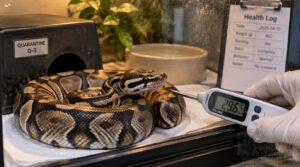
Now comes the part where you earn your snake-keeping badge: daily health monitoring. Quarantine only works if you’re actually watching what happens in that enclosure, not just waiting out the clock. Here’s what to check, when to check it, and when to call your vet.
Daily Checks and Health Records
Think of your logbook as a flight recorder: it captures the small wobbles before anything crashes.
And when it comes to feeding itself, weighing the tradeoffs in frozen versus live snake food helps you match your sanitation routine to the real risks.
Monitor daily for respiratory issues, appetite, stool, and shed progress.
Keep detailed health records with dates, temps, and your behavioral observation notes.
Do weight tracking same day, same scale.
Save fecal samples when they appear.
Clustering symptoms? Call your vet early.
Veterinary Screening and Fecal Testing
Once your snake settles in, book a reptile-savvy vet for baseline veterinary care. Schedule fecal testing early, even without symptoms, since parasites shed before trouble shows. Collect fresh droppings in clean containers, keep them cool, and label each one.
Because shedding is intermittent, run a follow-up fecal analysis later in quarantine. Microscopy finds eggs; PCR diagnostic tests catch what eyes miss.
End Quarantine Safely and Move Your Snake to Its Permanent Enclosure
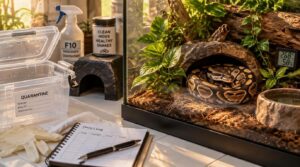
The finish line matters as much as the start. Schedule a Final Health Check: no abnormalities for the full quarantine window, and if fecal testing was done, your release decision should match the most recent completed test, not an older one.
Keep a dated quarantine log. Start date, end date, incidents, and your normalcy window. Memory is a terrible pathogen gatekeeper.
Ready to move? Use a clean, dedicated transfer container with a secure lid. Never drag quarantine substrates or hides into the permanent enclosure. Think of it like moving houses: you don’t pack the mattress from a sick room.
Handle quarantine gear as contaminated until it’s disinfected. Work one-direction: quarantine tasks first, permanent-enclosure tasks last, clean hands and tools between.
After PostQuarantine shift, make gradual habitat adjustments, resume normal feeding, and introduce enrichment introduction slowly. New weird signs? Restart the clock, don’t shrug.
Frequently Asked Questions (FAQs)
How long should I quarantine my snake?
I know, 90 days feels excessive. But here’s the deal: plan a 90-day quarantine period, stretch to six months for wild-caught snakes, and restart the clock if you add animals. Cutting the isolation short undermines its purpose, since the goal of quarantining new snakes is to catch hidden issues like incubating diseases, mites, and parasites that aren’t visible at purchase.
Can I leave a snake alone for a week?
Yes, for a healthy adult snake. Before you go, verify temperature and humidity control, offer water, feed several days prior, and do a quick health monitoring check. Hatchlings or sick snakes shouldn’t wait.
What is the duration of quarantine?
Plan on a 30-day minimum for healthy captive-bred snakes. Stretch to 60–90 days for wild-caught or unknown-history animals. Any illness resets the clock. Remember, a sixweek quarantine period beats spreading parasites.
What US state is snake free?
Two states are truly snake free: Alaska and Hawaii. Alaska’s brutal cold kills any snake, while Hawaii’s isolation plus strict cargo inspections keep them out. Maine and Rhode Island only lack venomous species.
Do you have a good reptile quarantine procedure?
Absolutely, and don’t worry, quarantine doesn’t need fancy equipment. Isolate new snakes 60–90 days in a separate room, use easy-clean substrate, monitor temperature and humidity, and schedule veterinary fecal testing before ending the quarantine period.
Should you quarantine snake mites?
You don’t quarantine mites; you eliminate them. Isolate any infested snake immediately, start treatment, and run strict hygiene protocols. Your quarantine procedures exist to catch mites early, not shelter them.
How long should wild-caught reptiles be quarantined?
Yes, 6–12 months feels extreme, but wild-caught snakes harbor latent infections that shed unpredictably. Isolate new snakes for at least 60–90 days, then extend based on your vet’s Initial Health Assessment results and quarantine duration.
Why is quarantine important?
Your entire collection is only as healthy as your newest arrival. New snakes routinely carry hidden viral and bacterial pathogens that shed well before symptoms appear, quietly turning one bad introduction into a collection-wide disaster.
What are the biosecurity measures for a quarantined animal?
Keep dedicated tools per animal, never sharing between snakes. Apply strict hygiene protocols: handle quarantined animals last, use reptile-safe disinfectant for enclosure sanitation, and always change gloves between each. These biosecurity measures stop cross-contamination cold.
What equipment does a quarantined animal need?
A newly acquired corn snake once taught one keeper a hard lesson: always have a bare quarantine tank stocked with paper towel substrate, a simple hide, fresh water dish, heat source, and dedicated tools ready.
Conclusion
A new ball python arrives looking alert, feeding well, and completely asymptomatic, then a fecal float reveals Cryptosporidium. That’s the snake that wrecks a collection.
Snake health quarantine procedures aren’t busywork. They’re the firewall between one risky animal and everything you’ve built. Sixty days, a clean setup, consistent hygiene, and proper testing give you something worth having: genuine confidence that your new snake is safe to join the rest.