This site is supported by our readers. We may earn a commission, at no cost to you, if you purchase through links.
You notice it on a Tuesday evening: a small brown spot near your snake’s vent, so faint you almost miss it. Most keepers do. That’s the problem with snake scales health issues. They start quietly and get serious fast.
I treat these cases every week. A cloudy eye, a patch of stuck shed, or one raised scale can signal trouble, or nothing at all. Knowing which is which keeps your snake safe and keeps you calm.
Before you worry about any one symptom, it helps to know your animal’s baseline, and this guide to snake species and their care needs shows what’s normal for each type.
Here’s how to tell healthy scales from warning signs, handle scale rot and bad sheds, and build habits that stop problems before they start.
Table Of Contents
- Key Takeaways
- Healthy Snake Scales Vs. Warning Signs of Disease
- Scale Rot in Snakes: Symptoms, Causes, and Treatment
- Snake Shedding Problems: Stuck Shed and Retained Eye Caps
- Other Snake Scale Problems: Mites, Injuries, and Fungal Infections
- Preventing Snake Scale Health Issues With Proper Care
- Frequently Asked Questions (FAQs)
- How long does it take for snake scales to heal?
- What illnesses can you get from snakes?
- Do scaleless snakes have health issues?
- What are the symptoms of ball python sickness?
- What are the signs of illness in snakes?
- Do snakes have skin problems?
- Do snakes have scale abnormalities?
- What problems does a pet snake have?
- Are snakes prone to health problems?
- Can a snake have scale rot?
- Conclusion
Key Takeaways
- Healthy scales look smooth, glossy, and flat, so you’ll want to watch for discolored, raised, cracked, or blistered scales, because those can signal early scale rot.
- Scale rot and stuck sheds usually trace back to poor husbandry like wrong humidity, soggy bedding, and a dirty enclosure, so fixing your setup is your first line of defense.
- You shouldn’t treat blisters, open lesions, or retained eye caps at home, because a reptile vet needs to step in with cultures and the right antibiotics, and you should never pull skin or use tweezers.
- You can prevent most scale problems by keeping humidity near 50-60%, a proper temperature gradient, a clean enclosure, and a weekly skin check, and by calling your vet as soon as something looks off.
Healthy Snake Scales Vs. Warning Signs of Disease

The scales on a healthy snake look smooth, glossy, and flat, with clean edges and an even texture from head to tail. They feel cool and dry. Some species have keeled scales, and that’s normal too.
When buying a ball python, comparing ball python morph prices alongside scale condition helps you spot a healthy snake that’s fairly priced.
Know what normal shedding looks like. Your snake’s eyes turn cloudy blue, then clear, and the skin comes off in one piece. A fresh shed leaves vivid scales with no stuck patches. Snakes have no eyelids, so a thin scale called the spectacle protects each eye, which is why the dull bluish-white appearance appears before every shed.
Now watch for warning signs. Discolored scales, especially red, black, or white patches, need attention. So do raised, cracked, or blistered scales, which can point to early scale rot. Incomplete shedding and retained eye caps often mean you’re lacking proper humidity. Pink skin plus lethargy? That’s an emergency. Call your vet today.
Scale Rot in Snakes: Symptoms, Causes, and Treatment
Scale rot can go from a small brown patch to a serious infection faster than you’d expect, so knowing what you’re looking at matters. Below, you’ll find the symptoms to watch for and the causes worth fixing right away. From there, we’ll walk through vet-guided treatment and safe supportive care you can start at home.
Recognizing Scale Rot and Its Causes
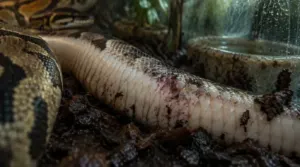
A snake with scale rot shows discolored scales first, usually small brown or black spots on the belly. Check near the vent. Scales may look raised or slightly red.
Catching these changes early matters because untreated rot spreads quickly, so this guide to the early signs of snake scale rot can help you compare what you’re seeing.
Next come blisters and open skin lesions. That’s a bacterial infection, and it’s serious.
Improper humidity, soggy substrate, and dirty enclosures cause most scale rot. Fix your setup fast.
Veterinary Treatment and Safe Supportive Care
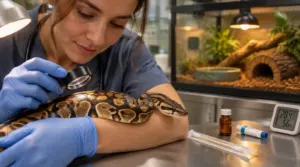
Don’t treat blisters at home. See a reptile vet right away. Your vet will culture the lesions, then prescribe systemic antibiotics and topical antibiotics. Antifungal medications come into play only if fungus shows up.
Husbandry correction matters just as much. Keep temperatures at 24-32°C, humidity at 50-60%, and the enclosure clean. Schedule regular veterinary checkups, and call if lesions spread.
Snake Shedding Problems: Stuck Shed and Retained Eye Caps
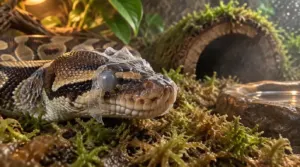
Shedding trouble and scale rot often share a root cause, and that’s husbandry. Dysecdysis, the medical term for a problem shed, shows up as incomplete shedding: patches of dull skin clinging to your snake, especially around the eyes or tail tip.
If retained skin, dark scales, or blisters persist despite better humidity, it’s time to review signs your snake needs a professional health check before problems turn systemic.
Try this:
- Confirm proper humidity for your species.
- Offer a humidity hide with damp moss.
- Give a short, lukewarm soak in shallow water.
- Never pull, pick, or tape loose skin.
Retained eye caps need a vet. A stuck eye cap is like a dirty window you can’t wipe clean. Tweezers can scar the eye. Call your reptile vet if skin stays stuck, sheds repeat, or an eye looks red, cloudy, or swollen. Early care protects your snake’s eyesight, too.
A stuck eye cap is like a dirty window you can’t wipe clean, so call a reptile vet instead of reaching for tweezers
Other Snake Scale Problems: Mites, Injuries, and Fungal Infections
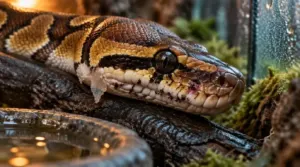
A few tiny mites can turn your calm snake into a restless, miserable pet. You’ll see rubbing, frequent soaking, and stuck sheds. Check for tiny black dots around the eyes and chin.
| What you see | What it can mean |
|---|---|
| Black specks near the eyes | Mites feeding on blood |
| Crusty, discolored scales | Fungal infections |
| Raw spot after a fall | Scale injury |
Don’t ignore a small scrape. Untreated, it invites bacterial infections that spread fast. Call your vet if you spot any of these signs.
Your vet can confirm mites or fungal infections quickly, then prescribe safe treatment. Don’t use over-the-counter sprays on your own, since they can harm your snake.
Poor enclosure ventilation makes every one of these problems much worse.
Preventing Snake Scale Health Issues With Proper Care
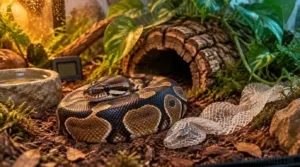
You can prevent most scale problems with steady, boring care. That’s good news.
Start with proper humidity. Most snakes do well at 50-60%, so put a hygrometer at substrate level and check it daily. Let the bedding dry between mistings. Soggy substrate is where bacteria thrive.
Keep a thermal gradient too: 88-92°F on the warm side, 75-80°F on the cool side. Balance enclosure ventilation so air moves without drying everything out.
Hygiene matters just as much. Spot clean daily, scrub the water bowl often, and pull shed skin promptly. Feed a species-appropriate diet for good nutrition balance. Add hides, and skip handling during sheds.
Stress weakens immunity, so a calm snake is a healthier snake. Keep it simple, stay consistent.
Frequently Asked Questions (FAQs)
How long does it take for snake scales to heal?
Think of your snake’s skin as a quilt that stitches itself back together, one shed at a time. Mild scale healing takes 3–6 weeks, but severe damage can need months and several sheds.
What illnesses can you get from snakes?
Snakes pose real zoonotic threats, and Salmonella tops the list. You can also pick up parasitic infestations like sparganosis, plus respiratory infections from Chlamydophila. Wash your hands well after every single handling, no exceptions, ever.
Do scaleless snakes have health issues?
Scaleless doesn’t mean fragile, but it does mean careful. Your snake faces higher risks of scale rot, incomplete shedding, and fungal infections.
Keep proper humidity, offer a species-appropriate diet, and check its skin every week.
What are the symptoms of ball python sickness?
Watch for open-mouth breathing, wheezing, or bubbly saliva. Those point to respiratory infections. You’ll also spot discolored scales, retained eye caps, and incomplete shedding. Lethargy and refusing food matter too. Call your vet quickly.
What are the signs of illness in snakes?
Watch for appetite loss, weight loss, lethargy, and odd posture. Check for incomplete shedding, retained eye caps, discolored scales, skin lesions, and openmouth breathing.
Any of these signals illness, so call your reptile vet soon.
Do snakes have skin problems?
Yes, they do. Your snake’s scales act like armor, but even armor needs upkeep. Scale rot, fungal infections, mites, and shedding problems are common. Spot skin lesions early, keep humidity levels right, and call your vet fast.
Do snakes have scale abnormalities?
Wondering if your snake’s scales can go wrong? They can. Scale abnormalities include discoloration, damage, and loose scales. Scale rot, fungal infections, and shedding problems need a vet fast. A humidity hide helps prevent them.
What problems does a pet snake have?
Your snake can battle respiratory infections, mites, mouth rot, scale rot, dysecdysis, fungal infections, and nutritional deficiencies.
Many start with poor care, so husbandry correction helps. Watch appetite, posture, and skin. Don’t skip vet checks.
Are snakes prone to health problems?
You might think snakes are tough, low-maintenance pets. They’re hardy, but they’re not problem-proof. Scale rot, fungal infections, dysecdysis, and mites show up fast without proper humidity. Book a wellness exam yearly, and watch appetite.
Can a snake have scale rot?
Yes, and untreated scale rot can turn fatal within days. Like rust on metal, it eats your snake’s armor, causing discolored patches, blisters and swollen scales. Keep proper humidity, since damp, dirty enclosures drive it.
Conclusion
Your snake’s scales are like a weather report you can read every day. Clear skies mean healthy skin. Clouds mean it’s time to look closer.
Most snake scales health issues begin small and stay manageable when you catch them early. Keep humidity steady, enclosures clean, and sheds on your radar. Check your snake weekly, and call your vet when something looks off.
You know your snake best. Trust that instinct, then act on it fast.