This site is supported by our readers. We may earn a commission, at no cost to you, if you purchase through links.

Nearly 3,000 snake species slither across every continent except Antarctica, yet most people can name maybe five. A garter snake barely stretches 10 inches; a green anaconda can top 13 feet and swallow prey whole. That gap in scale hints at something bigger: snakes occupy far more ecological niches than their reputation suggests.
Solid snake species information gives you more than trivia. It sharpens how you read a snake’s body language, habitat, even its scale pattern, so you know whether you’re looking at a harmless corn snake or something that demands respect.
From taxonomy down to the coil of a hunting python, understanding what makes each species tick turns fear into genuine curiosity.
Table Of Contents
- Key Takeaways
- How Snake Species Are Classified
- Physical Traits Across Snake Species
- Popular Pet and Wild Species
- Snake Habitats, Diets, and Behavior
- Snake Conservation and Human Relationships
- Frequently Asked Questions (FAQs)
- What are the 7 classifications of a snake?
- What are 25 shocking facts about snakes?
- Which state has zero snakes?
- Which smell do snakes hate?
- Which snake is the silent killer?
- How do snakes move?
- Do snakes have ears?
- How fast do snakes grow?
- What is molting in snakes?
- What physical trait sets snakes apart from other reptiles?
- Conclusion
Key Takeaways
- Nearly 3,000 snake species exist worldwide, but only about 600 are venomous and just 200 pose any real danger to humans, so most snakes you’ll ever encounter are harmless.
- A snake’s body is built entirely for legless living, using a flexible spine with up to 400 vertebrae, heat-sensing pits, and a flicking tongue to move, hunt, and sense the world around it.
- Where a snake lives shapes how it survives, whether that’s basking to regulate body heat, climbing trees, or swimming with a paddle-shaped tail in the ocean.
- Snakes play a vital role in keeping ecosystems balanced by controlling rodent populations, so protecting them from habitat loss and needless killing benefits both nature and people. Copperheads show this well, since their patterned bodies blend into leaf litter, and what a copperhead snake looks like helps you spot them safely. Harmless look-alikes get killed by mistake too, so knowing what a chicken snake actually is helps you tell a helpful rodent hunter from a venomous neighbor.
How Snake Species Are Classified

Understanding a snake starts with knowing where it fits on the family tree. Taxonomy might sound like dry academic territory, but it actually explains a lot about how a species looks, hunts, and defends itself. Here’s how scientists sort nearly 3,000 snake species into groups that make sense.
For a deeper dive into how these roughly 3,900 species branch into families and genera, this guide to the different types of snakes breaks down the classification system in plain terms.
Scientific Taxonomy Levels
Ranks in herpetology taxonomy run from broad to precise: Domain, Kingdom, Phylum, Class, Order, Family, Genus, and Species. This hierarchy lets you place any snake within the wider reptile classification system.
A species name (say, Python regius) pinpoints one organism; Genus and Family group relatives sharing ancestry. Species names follow binomial nomenclature naming rules, pairing a capitalized genus with a lowercase species term.
Understanding this classification system helps you read the snake phylogenetic tree accurately.
Major Snake Families
Below Family sits Genus, and five families dominate the snake world. Each carries a distinct hunting style: viper family members use haemotoxic venom and foldable fangs, elapidae family species like cobras deliver neurotoxic bites, boa family and python family constrict prey, and the colubrid family spans harmless garter snakes to mild mimics.
Evolutionary Origins
Trace those five families back far enough and you land on Jurassic lizard ancestors. Fossil change evidence, especially Eophis underwoodi from the Middle Jurassic Epoch (167 million years ago), documents the limbless adaptation process underway.
Molecular and fossil data support a Gondwanan origin theory, with early ecological niches spanning fossorial, aquatic, and semi-arboreal life within broader reptile evolution.
Venomous and Nonvenomous Groups
That fossorial ancestry split into two very different survival strategies: venomous snakes and nonvenomous constrictor snakes. Fang structure and venom delivery methods vary widely, roughly 700 species carry toxins, yet only 200 pack a lethal bite. Toxin composition ranges from neurotoxic to hemotoxic.
Curiously, 40% of bites are dry, and modern antivenom effectiveness has slashed U.S. fatalities to fewer than ten yearly.
Physical Traits Across Snake Species
Every snake shares a body plan built entirely around life without limbs, and that single fact shapes everything else about how they’re built. From the scales protecting their skin to the way they sense a warm-blooded meal in total darkness, each trait solves a specific problem of being a legless predator.
Here’s a closer look at the physical features that make snakes such impressive survivors.
Limbless Body Anatomy
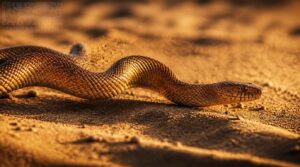
How does a body with no legs move with such grace? The answer lies in its vertebral column, built from 100 to 400 vertebrae, each bearing paired ribs. Segmented muscles wrap this flexible spine, contracting in waves. This muscle arrangement, paired with skeletal flexibility, drives limbless locomotion, while organ reduction (elongated liver, single functional lung) frees space along snake morphology’s slender frame.
Scales and Skin Shedding
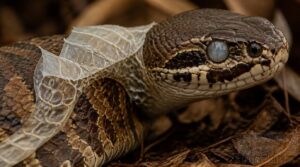
Run a finger along a snake’s flank and you’ll feel keratin plates, tough, overlapping, some keeled with a raised ridge for grip. This covering resists abrasion and slows water loss.
Sea snakes trade those keeled flank scales for smoother skin that cuts drag through open water, part of a broader set of adaptations detailed in this guide to venomous snake species.
Ecdysis sheds it monthly; eyes cloud blue as spectacle scales loosen, clearing once fresh, evenly colored skin emerges, parasites gone with the old layer.
Sensory Adaptations
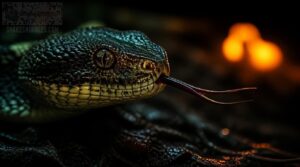
Watch a snake’s tongue flick and you’re seeing chemoreception in action, sampling air, passing molecules to the vomeronasal organ.
Add thermal sensing pits detecting infrared heat and jaw bones reading ground vibrations, and prey has nowhere to hide:
- Forked tongues tracking invisible chemical trails
- Pit holes sensing a mouse’s body heat
- Vibrational cues betraying footsteps in darkness
- Olfactory flicking distinguishing predator from prey
- Nerve endings converting signals into split-second decisions
Size and Color Variations

From a 10-inch garter snake to a 13-foot boa, size spans an enormous range within Serpentes. Size and color often correlate: ground dwellers favor olive camouflage, arboreal pythons run paler for dappled light. Geographic coloration follows suit, tan desert tones versus vivid tropical hues.
Captive morph variations (albino, piebald) showcase genetics; seasonal changes, like winter darkening, aid thermoregulation.
Snake Movement Methods

No legs, no problem. Ophidian locomotion relies on four main gaits: lateral undulation (S-shaped waves against surfaces), sidewinding (W-shaped tracks minimizing sand slip), rectilinear crawling (belly-scale contractions for stealthy ambush predation), and concertina locomotion in tight passages.
Arboreal climbers grip bark using anchored coils. Some species even glide, a main flying snake gliding adaptation few reptiles share.
Popular Pet and Wild Species

Not every snake fits neatly into "pet" or "wild" — some do both, depending on where you live and what you’re after. Whether you’re eyeing a docile companion for your terrarium or trying to identify what just slithered across your trail, knowing the key species matters. Here’s a closer look at five you’re likely to encounter, in captivity or in the field.
Ball Pythons
Ball pythons (Python regius), a modest member of the python family, rarely exceed 3–4 feet, making them ideal for enclosure setup in 40-gallon tanks with 78–80°F gradients.
Humidity control methods targeting 50–60% prevent shedding issues. Feed juveniles pinkies every 5–7 days; adults, rats biweekly.
Color morph variations like banana and piebald dominate the pet trade, though habitat fragmentation threatens wild populations’ conservation status.
Boa Constrictors
Boa constrictors (Boa constrictor) demand far more space than their python cousins, reaching 2 to 3 meters. Native to Central and South America, they hunt via constriction, gripping prey until circulatory arrest occurs.
Ovoviviparous reproduction yields 20 to 60 live young after 5 to 7 months’ gestation. Habitat loss from development threatens wild populations, making responsible captive husbandry increasingly relevant for conservation-minded keepers.
Corn Snakes
Where boas rely on bulk, Pantherophis guttatus thrives on manageable size (3-5 feet) and an easygoing temperament, making corn snake care ideal for beginners. Native to southeastern grasslands, they favor rodent burrows and agricultural edges.
- Vivid orange-red bodies with checkered bellies
- Docile enough for gentle handling
- 15-20 year lifespans reward dedicated keepers
They’re constrictors, nonvenomous, and thrive on thawed rodents within a proper thermal gradient.
Cobras and Vipers
Corn snakes ask little of a keeper; cobras and vipers ask for respect and distance.
The Elapidae’s king cobra delivers fast-acting neurotoxins, while Viperidae (Vipera berus included) inflict hemotoxic damage via hinged fang adaptation. Spitting species show impressive spitting accuracy toward eyes. Both rely on defensive posturing before striking, and envenomation always demands immediate medical treatment.
Sea Snakes
Where cobras threaten by land, Elapidae’s marine cousins hunt by sea. True sea snakes (Hydrophiinae) never touch shore; sea kraits do, to nest.
- Paddle-shaped tails drive powerful swimming
- Highly potent venom subdues fish fast
- Most give live birth at sea
Coral reef habitat loss now threatens several species, pushing some toward IUCN Red List concern.
Snake Habitats, Diets, and Behavior

Where a snake lives shapes nearly everything about how it hunts, eats, and survives from one season to the next. You’ll find these animals thriving in forests, deserts, oceans, and even the branches above your head, each with its own set of demands.
Here’s a closer look at the environments and behaviors that define snake life across the globe.
Global Snake Distribution
Snakes occupy every continent but Antarctica, from Amazonian rainforests to Saharan dunes. Tropical zones hold the richest species diversity, while islands often harbor endemic species found nowhere else.
Understanding how climate, elevation, and vegetation shape these ranges helps explain why snake habitat and environmental adaptations vary so dramatically between regions.
Elevational gradients shape distinct mountain communities, and adaptable species increasingly persist in human-modified landscapes, farmland, and cities alike, proving snakes’ notable capacity to colonize nearly every terrestrial biome available to them.
Terrestrial and Arboreal Habitats
Down on the forest floor, ground shelter comes from burrows and leaf litter, letting snakes ambush prey while regulating body heat against soil temperature.
Above, arboreal species show impressive tree climbing adaptations, gripping bark with muscular bodies. Canopy prey like birds and lizards stays plentiful, though branch spacing dictates locomotion, and regular shedding keeps scales gripping slick limbs securely.
Aquatic Snake Environments
Water shapes an entirely different set of adaptations. Marine reptile adaptation includes paddle-like tails and salt tolerance, letting sea snakes and the yellow bellied sea snake handle tidal zone navigation across estuaries and open reef.
- Freshwater river bends favor keeled, sleek bodies
- Lake edge ambush sites use submerged logs
- Water moccasin frequents shoreline vegetation
- Brackish estuary migration follows tidal salinity shifts
- Submerged foraging relies on chemosensory tongue-flicking
Hunting and Feeding Strategies
Patience defines predation here. Most species wait motionless, using vibrational prey detection and forked-tongue chemosensing to locate targets before striking within milliseconds. Pit vipers add infrared sensing for warm-bodied prey.
Constrictors coil and squeeze, while venomous hunters rely on rapid envenomation. Jaw unhinging lets prey pass whole; inward-curving teeth prevent escape as digestion begins.
Reproduction and Thermoregulation
Warmth governs everything a snake does. As an ectotherm, it relies entirely on behavioral thermoregulation: basking, shade-seeking, and substrate contact regulate metabolism and digestion.
Reproduction follows suit. Most species are oviparous, though some bear live young. Incubation temperature drives temperature-dependent sex determination, while python mothers coil protectively, offering rare parental care. Mating rituals hinge on tongue-flicking courtship, timed to seasonal activity windows.
Snake Conservation and Human Relationships

Snakes don’t exist in isolation; every species you’ve read about here fits into a web of ecological and human relationships worth understanding. Some of that relationship is cooperative, some is fraught, and some is a matter of stewardship you can take part in directly. Here’s what shapes how snakes and people coexist, from the wild to your own backyard.
Ecological Roles
Pull one snake from a food web and watch the ripple: rodent populations spike, crops suffer, disease risk climbs.
Snakes anchor predator-prey relationships, control rodents, disperse seeds indirectly by suppressing seed predators, and cycle nutrients through scavenging.
Their presence signals habitat quality; their decline warns of deeper ecological trouble worth heeding.
A snake’s presence signals a healthy habitat; its disappearance warns of trouble beneath the surface
Human-Snake Conflict
When rodent control breaks down, conflict follows. Crop field encounters spike where grain draws prey; farmers work barefoot at dusk, and bites happen. Fixes are simple:
- Protective footwear over bare skin
- Sealed thresholds for indoor snake prevention
- Community reporting networks flagging hotspots
Venomous snakebite mortality stays low here (under 10 deaths yearly from 8,000 bites), yet fear, plus habitat loss from development, fuels needless killing.
Endangered Snake Species
Killing snakes out of fear compounds a deeper crisis: habitat loss from development. Roughly 100 species sit on IUCN Red List categories.
| Species | Range | Threat |
|---|---|---|
| Northern diamondback rattlesnake | US | 15% range decline |
| Green pit viper | Sri Lanka | 8 km² lost yearly |
| Bald-facing snake | Madagascar | 60% mature loss |
Captive breeding programs and community monitoring aid recovery.
Invasive Species Impacts
Habitat loss isn’t the only threat reshaping native populations. Species introduced through the wildlife trade, like Florida’s Burmese pythons, trigger ecological disruption by outcompeting native predators and collapsing prey populations.
This alters predator-prey relationships, drives habitat fragmentation impacts, and burdens agriculture with livestock losses. Eradication programs strain public budgets, and disease reservoirs introduced by invaders raise health risks for wildlife and pets alike.
Responsible Pet Ownership
Which brings up the wildlife trade itself: many invasive populations trace back to released or escaped pets. Responsible ownership starts before purchase, choosing captive-bred corn snakes or ball pythons, researching enclosure needs, and never releasing an unwanted snake.
Proper husbandry, correct feeding schedules, and routine health checks protect both the animal and the ecosystems that habitat fragmentation already threatens.
Frequently Asked Questions (FAQs)
What are the 7 classifications of a snake?
Think of it as a family tree with seven branches. Your snake sits under Kingdom Animalia, Phylum Chordata, Class Reptilia, Order Squamata, then narrows through family, genus, and species, pinpointing its exact evolutionary identity among nearly 3,000 known species.
What are 25 shocking facts about snakes?
From venom potency records like the inland taipan’s lethal bite to infrared heat detection, jaw unhinging, and seasonal color change, snakes surprise us. With over 3,000 species, roughly 600 venomous, and skin shedding monthly, nature keeps delivering shocks.
Which state has zero snakes?
Alaska holds true zero-snake status, its cold climate and short growing season barring reproduction entirely.
Hawaii’s isolation and strict import laws keep it snake-free too, while Maine, though venomous-free, does host a few nonvenomous species like garter snakes.
Which smell do snakes hate?
Given their reliance on olfactory tongue flicking, snakes avoid cinnamon oil, clove oil deterrent, vinegar’s acid fumes, and garlic-onion vapors. Even citrus limonene scent disrupts sensory cues, prompting retreat rather than a defensive display.
Which snake is the silent killer?
Many herpetologists point to the black mamba as the typical silent killer: minimal warning, rapid neurotoxic venom, and lethal strike speed. Unlike a defensive bite or dry bite, its ambush tactics offer little chance for first aid before paralysis sets in.
How do snakes move?
Like a river finding its own bed, a snake writes its path in muscle wave patterns: undulation, concertina grip-and-release, or sidewinding across sand, each method borrowed from friction, terrain, and the ancient logic of scales meeting ground.
Do snakes have ears?
Technically, no external ears exist, but a small jawline opening leads to an inner ear chamber. The stapes transmits ground vibrations to it, letting snakes detect low frequencies (50 to 1,000 Hz) rather than airborne sound.
How fast do snakes grow?
A hatchling ball python barely 25 cm long can nearly double its size within a year. Juvenile growth runs fast, driven by feeding and warm temperatures, then slows sharply after maturity as energy shifts toward reproduction rather than length.
What is molting in snakes?
Molting, or ecdysis, is the periodic shedding of a snake’s outer skin, driven by growth and tissue renewal. You’ll notice dulled color and milky eyes beforehand; humidity and species largely dictate how often this reptile physiology cycle repeats.
What physical trait sets snakes apart from other reptiles?
Nearly 3,000 species share one signature trait: a fully limbless, elongated body. Reduced skeletal elements, legless locomotion, and specialized scales let snakes slither, burrow, and swim, an evolutionary adaptation no other reptile group carries this far.
Conclusion
Roughly 600 snake species carry venom, yet only around 200 pose any real threat to humans. That single ratio says everything about the gap between fear and fact.
Even after that threat is neutralized, though, a snake’s body can keep twitching for hours, and this post-mortem movement in snakes owes entirely to residual nerve activity rather than any lingering awareness.
Good snake species information replaces guesswork with recognition: a hood, a rattle, a color band each tell you something specific. Learn the patterns, and you stop seeing danger everywhere. You start seeing biodiversity, coiled quietly, doing exactly what it evolved to do.