This site is supported by our readers. We may earn a commission, at no cost to you, if you purchase through links.
A snake that sits out in the open isn’t brave. It’s terrified. Your corn snake might bolt for the corner of the tank, or your ball python might refuse a meal for weeks, and the culprit is often a missing hiding spot.
Snakes judge safety by touch. They want walls pressing against their coils, not a roomy castle. The best snake hides and caves fit snugly, block light, and sit on both the warm and cool sides of the enclosure, so your snake never has to pick between comfort and security.
Here’s how to choose, place, and clean the right ones.
Table Of Contents
- Key Takeaways
- Why Snake Hides Matter for Security and Stress Relief
- Top 8 Snake Hides and Caves to Consider
- 1. Reptile Cave Hideout Decorative Rock
- 2. Large Snake Hide Cave Habitat
- 3. Grey Rock Cave Wall Decoration
- 4. Reptile Hide Cave Extra Large
- 5. Zilla Reptile Bark Bend Terrarium Decor Large
- 6. Hobbit House Aquarium Ornament Fish Tank Decoration
- 7. Exo Terra Primate Skull Terrarium Large
- 8. Large Reptile Hide Box for Geckos and Snakes
- How to Choose The Right Hide Type and Size for Your Snake
- Where to Place Warm, Cool, and Humid Snake Hides
- Snake Hide Safety: Materials, Entrances, and Cleaning
- Frequently Asked Questions (FAQs)
- What are the best hides for snakes?
- What is the best brand of snake enclosures?
- What’s the coolest reptile to own?
- How many hides does a snake need?
- What makes a good snake hide?
- What kind of snake lives in a cave?
- Do snakes hide in caves?
- What is a hide for reptiles?
- How often should snake hides be cleaned?
- Can DIY snake hides be safe alternatives?
- Conclusion
Key Takeaways
- Your snake feels safest in a snug, dark hide where its coils touch the walls, so pick a tight fit over a roomy cave.
- Put one hide on the warm side and one on the cool side of the enclosure so your snake never has to choose between security and the right temperature, and add a humid hide for ball pythons. For more ideas on choosing hides that fit your setup, browse these snake hiding spots and caves that give your ball python a secure retreat.
- Size each hide to your snake’s girth and species, and check it again every few months, since juveniles can outgrow a hide in three to four months.
- Choose smooth, nonporous, nontoxic materials like ceramic, sealed resin, or PVC, and spot clean daily and deep clean monthly with mild soap and a reptile-safe disinfectant.
Why Snake Hides Matter for Security and Stress Relief
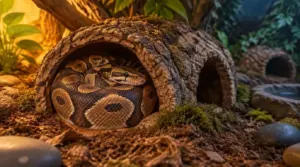
A hide isn’t just a cute cave for your snake to nap in. It’s a secure retreat, and your snake needs one the way you need a front door that locks.
Once the hide is sorted, you can build out the rest of the enclosure with snake tank decor ideas that add climbing spots and cover without crowding your snake’s space.
A snake’s hide is no mere cave but a secure retreat, as essential as a front door that locks
In the wild, snakes tuck into burrows, logs, and rock crevices, so your enclosure should echo that natural habitat. Touch matters most. A snake feels safest when its coils press against the walls and roof, so a snug fit beats a roomy decorative cavern.
Hides are stressbusting tools too. They shield your snake from bright lights, vibrations, and handling, which helps it eat, digest, and rest calmly. Hides also give ectothermic reptiles cooler, shaded spots to regulate body temperature throughout the day.
Always choose hides with multiple entry points, and put one on each end of the thermal gradient, so safety never costs warmth.
Top 8 Snake Hides and Caves to Consider
Ready to find your snake a cozy spot to call home? Below, you’ll find eight hides and caves that suit different snakes, setups, and budgets. Skim the list, pick the hide that fits your snake’s size and habits, and your scaly buddy will be settled in no time!
1. Reptile Cave Hideout Decorative Rock
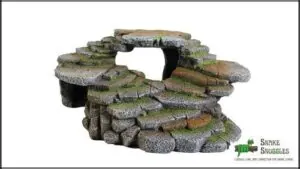
The Penn-Plax Reptile Cave Hideout packs a lot into a small footprint. Measuring 11 inches wide, 8.25 inches deep and 4 inches high, this resin rock gives your snake a place to climb, bask and hide.
Four entrance and exit holes let your snake slip in and out from any side, so it never feels cornered. The rough, realistic texture adds grip, and the basking platform on top gives your pet a spot to warm up.
It’s safe for freshwater and saltwater tanks.
Some owners report sharp edges, so run your hand over it and sand any rough spots. A few buyers also got pieces that broke in transit. Larger snakes will find it cramped.
| Best For | Owners of small reptiles, amphibians, axolotls, fish, or crustaceans who want a durable, realistic rock that works as a hideout, climbing spot, or swim-through in freshwater or saltwater tanks. |
|---|---|
| Material | Resin |
| Dimensions | 11 x 8.25 x 4 inches |
| Entrance Holes | 4 holes |
| Water Safety | Freshwater and saltwater safe |
| Size Limitation | Too small for larger reptiles |
| Reported Drawback | Sharp edges, pieces broken in transit |
| Additional Features |
|
- Four entrance and exit holes plus a rough, realistic texture give pets easy access, good grip, and plenty of hiding spots.
- The basking platform on top helps pets regulate their temperature.
- The resin is durable and safe for both freshwater and saltwater aquariums.
- Some customers report sharp edges, so the surface may need to be checked and sanded.
- Durability feedback is mixed, with some reports of pieces breaking on arrival.
- At 11 x 8.25 x 4 inches, it may be too small for larger reptiles like bearded dragons.
2. Large Snake Hide Cave Habitat
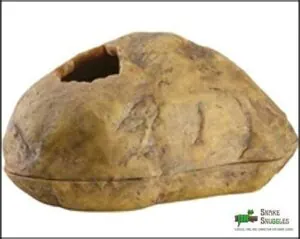
If the Penn-Plax felt tight for your snake, this one gives you more room. The Large Snake Hide Cave Habitat measures 11.8 x 7.9 x 5.9 inches, so a growing snake can curl up and touch the walls, which is what makes it feel secure.
Check it against any reptile hide sizing guide first. An adult ball python wants about 12x12x6 inches, so this cave suits juveniles and smaller adults best. Larger species may need an Exo Terra Snake Hide Cave or a Large Reptile Hide Box instead.
If your snake seems skittish even in a well-sized cave, these snake hide options for anxious snakes can help you pick a snug, secure spot that encourages calmer behavior.
The durable resin looks like real rock, and nontoxic materials keep it safe. Then put one hide on the warm side and another on the cool side of your thermal gradient.
Because every species has its own needs, check this snake species habitat guide before you finalize your enclosure setup.
| Material | Resin |
|---|---|
| Dimensions | 11.5 x 7.5 x 6.2 inches |
| Entrance Holes | 4 holes (2.2″, 1.4″, 1.4″, 1″) |
| Water Safety | Freshwater and saltwater safe |
| Size Limitation | Not guaranteed to fit tanks over 29 gallons |
| Reported Drawback | Mixed feedback on hole sizes |
| Additional Features |
|
3. Grey Rock Cave Wall Decoration
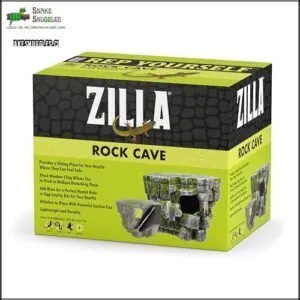
Floor space runs out fast, especially once you’ve set a hide on each side of the gradient. That’s where the Grey Rock Cave Wall Decoration earns its spot.
It mounts to the terrarium wall instead of sitting on the substrate, so your snake keeps room to roam. The molded resin looks like natural stone, and the hollow interior gives a shy animal a secure hiding place. Nontoxic Materials mean you won’t worry if it licks or rubs against it.
At 10x10x4.5 inches, it suits geckos, lizards, and smaller snakes best. Heavy-bodied adults need more cave than a wall mount offers. Pair it with an Exo Terra Snake Hide Cave Habitat, a Zilla Rock Cave, or a Reptile Hide Cave Extra Large on the floor.
| Material | N/A |
|---|---|
| Dimensions | N/A |
| Entrance Holes | N/A |
| Water Safety | N/A |
| Size Limitation | N/A |
| Reported Drawback | N/A |
| Additional Features |
|
4. Reptile Hide Cave Extra Large
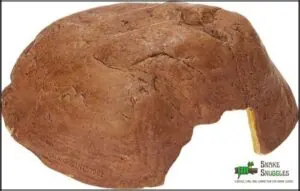
Resin walls give the Reptile Hide Cave Extra Large a sturdy build, and at 16.5" L x 10.6" W x 4.3" H it’s roomy enough for big boas and pythons up to 2000 grams. Its single door creates a secure retreat, which most snakes prefer over hides with multiple entry points that can leave them feeling exposed.
The black shell is made from nontoxic materials, wipes clean quickly, and dries fast. Stuff the inside with damp moss and it doubles as a humid hide. Smooth any rough edges with sandpaper first so nothing scrapes your snake. In your reptile enclosure setup, rest it directly on the substrate and leave about two inches of clearance on every side.
| Material | N/A |
|---|---|
| Dimensions | N/A |
| Entrance Holes | N/A |
| Water Safety | N/A |
| Size Limitation | N/A |
| Reported Drawback | N/A |
| Additional Features |
|
5. Zilla Reptile Bark Bend Terrarium Decor Large
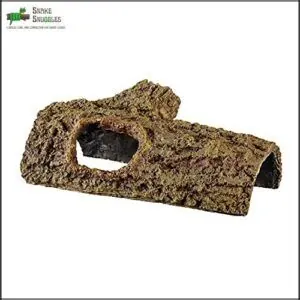
The Zilla Reptile Bark Bend Terrarium Decor Large gives your snake a secure retreat that looks like a fallen log from its natural habitat. Its curved shell shades your snake while it rests, and the open ends offer multiple entry points, so your pet never feels cornered.
A viewing window on top lets you check in without lifting the hide or startling your snake.
Size listings vary, from about 11" long to 13.5", so measure your enclosure before you buy. Choose a hide your snake can curl into snugly, and make sure it suits your reptile enclosure setup.
The wide base stays put on stable substrate. Wipe the non-porous surface clean.
6. Hobbit House Aquarium Ornament Fish Tank Decoration
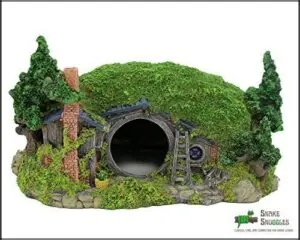
Picture a tiny storybook cottage tucked into the gravel, its round doors peeking out like invitations. That’s the Hobbit House, and your small snake will love it.
At 11.5 x 7.5 x 6.2 inches, it gives hatchlings and petite species room to curl up. The flat, weighted bottom keeps it steady, and the 1.9-pound resin body won’t tip when your snake squeezes through. Four entrances measure 2.2", 1.4", 1.4", and 1".
Owners report it fits a 29-gallon tank, but don’t count on larger setups. Hole size gets mixed reviews, so measure your snake first. Rinse it well before first use, and expect slight handcrafted differences between units.
| Best For | Aquarium owners with a 29-gallon tank who want a sturdy, good-looking hiding spot for their fish. |
|---|
- Made of non-toxic, environmentally friendly resin that is suitable for both fresh and salt water.
- The flat, weighted bottom keeps it stable once it’s placed in the tank.
- Four entry and exit holes (2.2", 1.4", 1.4", and 1") give fish plenty of shelter and hiding spots.
- Customers have given mixed feedback on the hole sizes.
- It isn’t guaranteed to fit aquariums larger than 29 gallons.
- The handcrafted look means each unit may differ slightly from the next.
7. Exo Terra Primate Skull Terrarium Large
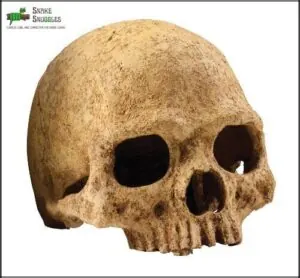
Think of this hide as a tiny haunted house for your reptile. The Exo Terra Primate Skull is a realistic resin skull with multiple entrances and exits, so your pet can slip in, peek out, and bolt the other way.
It measures 6.3 x 6.3 x 5.7 inches and weighs 14.08 ounces, so it’s sturdy but easy to move. It suits desert, rainforest, or aquatic setups, and it gives geckos and amphibians real enrichment.
Size matters with snakes, though. Baby ball pythons can’t crawl through it, so check the fit first. Sand any sharp edges smooth before it goes into the tank.
| Best For | Reptile and amphibian keepers who want a realistic, hard-wearing hide that gives geckos, frogs, and similar pets a secure place to retreat and explore. |
|---|
- Realistic primate skull design with multiple entrances and exits for easy access
- Durable resin build that suits desert, rainforest, or aquatic terrariums
- Gives pets a secure hiding spot that reduces stress and adds behavior enrichment
- May have sharp edges that need sanding before use
- Too small for baby ball pythons to crawl through
- Mixed feedback on size suitability for different snake species
8. Large Reptile Hide Box for Geckos and Snakes
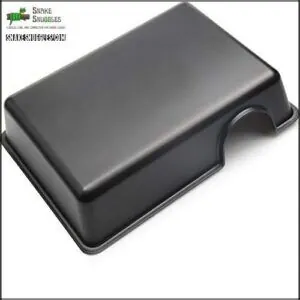
Not every hide needs to be fancy. This Zipefy box keeps things simple, and your snake or gecko won’t mind a bit.
At 9.5 x 6.7 x 2.2 inches, it gives small to mid-size reptiles room to grow while still feeling snug. The textured interior helps with molting, and the easy-clean surface wipes down fast.
It also suits ball pythons, lizards, and even spiders, and it weighs just 2.08 ounces, so it’s easy to move around during cleaning.
One catch: some owners found it too small. Measure your snake first, and check the dimensions before you order.
| Best For | Owners of small to mid-size reptiles like ball pythons and geckos who want a simple, easy-to-clean hide that helps with molting. |
|---|
- Textured interior helps reptiles shed during molting
- Easy-to-clean surface wipes down quickly
- Durable construction built for long-term use
- May be too small for some reptiles, according to customer feedback
- Value for money gets mixed reviews
- Dimensions need to be checked before ordering to make sure it fits
How to Choose The Right Hide Type and Size for Your Snake
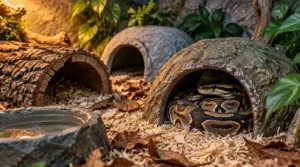
Picking a hide isn’t about grabbing the cutest cave on the shelf! Your snake needs a spot that feels safe and snug, so we’ll walk through six quick checks. Run through them one by one, and you’ll know exactly what to buy.
Match Your Snake’s Habits
Ever watched your snake ignore a perfectly good hide? Match Your Snake’s Habits first. Arboreal snakes want vertical spots, while terrestrial ones prefer ground-level burrows.
Good snake thermoregulation behavior depends on hides at both warm and cool ends. Use a snake hide sizing guide, keep reptile cave ventilation in mind, and your snake behavioral wellness will thank you for it!
Choose Secure Hide Designs
Your snake’s hide only works if it stays put and stays shut. Choose secure hiding spots for snakes with doors that overlap at least 1/4 inch. Sliding doors need a wire lock or latch, and cord grommets should be sealed or solid.
Skip hides with multiple entry points unless each opening closes snugly. Pick nontoxic easy-to-clean materials, like sturdy PVC.
Check Fit And Clearance
Snakes judge safety by touch, so snug snake hides beat roomy snake caves. Check any Exo Terra Snake Cave, PennPlax Reptology Shale Step Cave, or Zilla Vertical Décor Rock Cave like this:
- Measure your snake’s thickest girth.
- Make interior height 1.5x girth.
- Leave 1-2 inches spare floor.
- Confirm coiled body touches walls.
- Size entrance slightly wider than your snake’s body.
Plan For Growth
Snug today means cramped tomorrow, so Plan For Growth now. Juveniles can outgrow a hide in three to four months. That’s reptile growth accommodation in action!
Knowing when to replace a boa constrictor hide box helps you upgrade before your snake ends up squeezed in.
Use proper sizing for snake species, then upgrade when your snake can’t coil fully inside. Smart enclosure design keeps spare hiding caves for pet snakes ready, so bigger hides never catch you off guard.
Select Safe
Growth is handled, so let’s talk safety. Your snake spends hours curled up in there, so the hide matters.
Check:
- Safe Nontoxic Materials, like polypropylene or HDPE.
- A smooth, nonporous surface with no splinters.
- Proper Sizing for Snake Species, snug enough to touch.
- Ventilation and Entrance Options that fit your snake without letting light in.
Pick Easy to Clean Materials.
Cleanable Materials
Hides made from nontoxic easytoclean materials simplify reptile hygiene maintenance. Pick glazed ceramic, sealed rock, or smooth plastic, since they won’t soak up waste or cleaners. Skip unpainted wood and porous resins, because bacteria hide inside them. Stick with reptile safe materials and you’ll scrub less.
Planning reptile terrarium glass mounting? Make sure the suction cup attachment survives your wipe-downs.
Where to Place Warm, Cool, and Humid Snake Hides
You’ll want one hide on the warm side and one on the cool side, so your snake never has to pick between feeling safe and feeling comfortable.
If you’re not sure which style suits your setup, this guide to the best hiding houses for ball pythons compares sizes, materials, and designs.
Good reptile enclosure design starts with the thermal gradient. Put the warm hide right over the basking surface, aiming for 83-88°F for corn snakes and 88-92°F for ball pythons. Set the cool hide at the opposite end, around 72-78°F for corn snakes and 74-80°F for ball pythons. Keep nights on the warm side at 75°F or above.
Now for the humid microclimate. Tuck the humid hide on the cool side or middle, where moisture won’t vanish fast or breed mold. Shedding soon? Slide it toward the warmer side. Keep 70-85% humidity inside there.
Snake Hide Safety: Materials, Entrances, and Cleaning
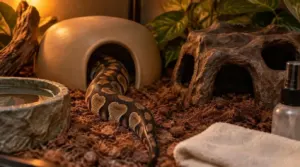
Picture your snake slipping into a dim, snug hideaway, ribs brushing the walls just enough to feel safe. That’s the goal, and snake hide safety makes it happen.
Start with reptile hide material safety: pick ceramic, sealed resin, or food-grade PVC, and check these before every purchase:
- Smooth edges with no splinters or rough spots
- Opaque walls that keep things dark
- Entrances about 1.5 to 2 times body width
- Stable placement on the floor, not loose substrate
A reptile hide multientrance design gives your snake an escape route. Follow a snake hide cleaning routine: wash with mild soap, disinfect with F10SC or 1:10 bleach, rinse, dry fully. Skip ammonia and scented cleaners. For reptile hide durability, replace anything cracked now.
Frequently Asked Questions (FAQs)
What are the best hides for snakes?
The best snake hides and caves are snug, dark, and non-toxic. Choose a tight-fitting cave with one entrance, place one warm and one cool, and keep it easy to clean. Rock-style hides add natural aesthetics too.
What is the best brand of snake enclosures?
Wondering which brand wins? For a sturdy reptile enclosure, Kages and Zen Habitats lead, thanks to quality PVC and easy assembly.
Exo Terra and Zilla suit smaller setups, while any reptile cave helps reptile wellbeing.
What’s the coolest reptile to own?
Think of a living dragon with a horn. That’s the rhinoceros ratsnake. Give it snake hides, climbing space, and temperature regulation for snakes in a reptile enclosure echoing its natural habitat, hiding behavior stays calm.
How many hides does a snake need?
Your snake needs two hides minimum, warm and cool. Ball pythons want a third, humid one.
Snakes hiding behavior favors snug walls touching reptiles full body. Extras with multiple entry points are reptile habitat enrichment.
What makes a good snake hide?
Good snake hides mimic their natural habitat: dark and snug. Your snake should touch the walls when coiled. Skip multiple entry points, and respect ventilation requirements.
Add secure hiding spots for snakes in both zones.
What kind of snake lives in a cave?
Caves are snake heaven! Beauty Rat Snakes, called Cave Racers, shelter there, and Ridley’s Racers climb walls. In their natural habitat, that’s reptile security behavior, so give yours snake hides on warm and cool sides.
Do snakes hide in caves?
Ever wonder why your snake vanishes the moment you look away? Yes, snakes love snake caves. This hiding behavior helps reptile temperature regulation and reptile security behavior, so snake hides feel truly safe and steady.
What is a hide for reptiles?
Stressed snakes often refuse food. A hide is an enclosed retreat where your snake feels safe, like snug dark hiding caves. It also helps with snake stress reduction and lets your snake easily regulate body temperature.
How often should snake hides be cleaned?
Your snake’s hide is its front door, so keep it welcome. Spot clean daily, deep clean monthly. Choose a nonporous surface for reptile cave maintenance and bacteria prevention. Clean sooner after shedding, feeding, or illness.
Can DIY snake hides be safe alternatives?
Worried homemade means unsafe? It doesn’t have to be. DIY hide safety comes down to nontoxic reptile decor like plastic tubs or ceramic pots, with smooth edges. Keep reptile cave maintenance simple: wash, disinfect, replace when soft.
Conclusion
Picture a nervous ball python named Juniper, who ignored every rat for three weeks. Then her keeper added a snug cave on the warm side and a second on the cool side. Dinner disappeared that night.
That’s the power of the best snake hides and caves. Pick a tight fit, block the light, and clean them often. Your snake will trade stress for calm, and you’ll trade worry for confidence. Give her a safe corner.