This site is supported by our readers. We may earn a commission, at no cost to you, if you purchase through links.
You’re watching your corn snake settle in for the night when you hear it: a faint, wet tick with every breath. Your first thought might be that it’s nothing. Your second is probably a panic search.
A snake making clicking sounds isn’t always an emergency, but it’s rarely random. Snakes can’t cough, so mucus that settles in the airway often clicks as air moves through it. Shedding skin around the nostrils can do the same thing, and I’ve seen both in the same week.
The difference comes down to timing, other symptoms, and your enclosure. Here’s how to tell which one you’re hearing.
Table Of Contents
- Key Takeaways
- Why is My Snake Making Clicking Sounds?
- When Does Snake Clicking Need Veterinary Care?
- Could Shedding Explain My Snake’s Clicking?
- How Enclosure Conditions Affect Snake Breathing
- What to Do While Awaiting Veterinary Care
- Top 1 Reference for Snake Care Checks
- Frequently Asked Questions (FAQs)
- Why is my snake making a clicking sound?
- Can snakes make a clicking sound?
- How to tell if a snake is in distress?
- What animal makes a repetitive clicking sound at night?
- Why does my snake make a clicking sound?
- How to tell if a snake is agitated?
- What does it mean when a snake makes a noise?
- Can wild snakes click for navigation purposes?
- Are some snake species completely silent?
- Can clicking indicate snake age or maturity?
- Conclusion
Key Takeaways
- A clicking sound when your snake breathes usually means air is moving through mucus or stuck shed skin, so it’s worth taking seriously even though it isn’t always an emergency.
- Faint, occasional clicking with no other symptoms calls for checking your enclosure temperatures today and booking a reptile vet this week, while wheezing, gurgling, or bubbles at the nostrils mean a same-day visit.
- If you see open-mouth breathing, call your vet right away, since your snake is working hard to get air.
- Most clicking traces back to enclosure problems like improper humidity, wrong temperatures, or dirty or aromatic bedding, so keeping humidity near 50-60%, a 90-95°F basking spot, and clean substrate prevents most cases.
Why is My Snake Making Clicking Sounds?
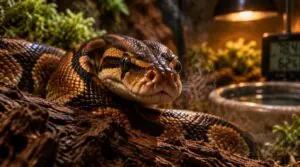
That faint click you hear when your snake breathes can be unsettling, but it doesn’t always mean something is wrong. Clicking can come from a few different sources, and learning to tell them apart is the first step toward knowing how you should respond.
If the clicking comes with wheezing, bubbly mucus, or open-mouth breathing, check these signs of a bacterial infection in snakes and call your vet promptly.
Below, we’ll look at clicking versus hissing and rattling, respiratory irritation, and the parasites and other conditions that sometimes sit behind it.
Clicking Versus Hissing and Rattling
A clicking sound isn’t the same thing as hissing, and telling them apart matters. Hissing is deliberate. Your snake forces air through its glottis to warn you off, usually while puffing up its body.
A rattling is just a rattlesnake shaking its tail. A clicking sound during quiet breathing, though, often means air is moving through mucus, which can signal a respiratory infection.
Respiratory Infections and Airway Irritation
So where does that mucus come from? Often, a respiratory infection. Snakes can’t cough, so secretions just sit in the airway, and you’ll hear gurgling sounds or see mucus in their mouths.
If the mucus keeps coming back or your snake seems unusually sluggish, this guide to common snake health problems to watch for can help you tell a minor issue from one that needs a vet.
A noisy breather may have an upper respiratory illness from dry air, cold temperatures, or dirty bedding. Viruses can play a part too, so don’t wait it out.
Most cases are secondary bacterial infections that follow chronic husbandry stress, such as incorrect temperatures, humidity, or aromatic bedding like cedar and pine.
Parasites and Other Underlying Conditions
Bacteria aren’t always the starting point. Sometimes a parasitic infection in snakes sets the whole thing off. Rhabdias bufonis lungworms and pentastomids live in the airway and irritate it directly, which can cause a clicking sound. Wild-caught snakes are the usual suspects.
Mites, Vitamin A shortage, and gut parasites can also weaken your snake, inviting upper respiratory illness.
When Does Snake Clicking Need Veterinary Care?
Once you know where a snake clicking sound might come from, the next question is how urgent it is. The answer depends on what your snake is doing while it clicks.
If you hear faint, occasional clicking and nothing else seems off, check your enclosure temperatures today and book a reptile veterinarian this week. Wheezing, whistling, gurgling, or bubbles at the nostrils mean a same-day visit.
Since respiratory trouble and mouth rot often start subtly, this guide to common pet snake health issues can help you spot early warning signs before they become emergencies.
Open-mouth breathing is different. A snake holding its head up to breathe is working hard for air, so call your veterinarian now.
Is your snake a noisy breather who’s also lethargic or off its food? Expect the vet to take nasal samples and possibly a blood sample to find the cause.
Could Shedding Explain My Snake’s Clicking?
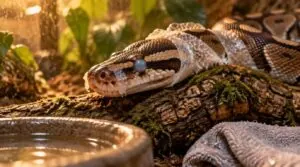
How can a healthy snake sound like it’s coming down with something? Often, it’s shedding. Before a shed, the skin around the nostrils thickens and loosens, and a bit of old skin can sit in the nostril and click with each breath. Your snake may also rub its head on rough surfaces, which irritates its nasal passages. Because snakes breathe through a single long right lung, a blocked nostril matters, and this guide to the internal anatomy of snakes shows how their respiratory system works.
Look for clicking without mucus, normal eating, and cloudy eyes. If that matches, try this:
- Check the snout for a grayish-white patch of stuck skin.
- Offer a soak in lukewarm water, or wrap your snake loosely in a damp pillowcase or towel.
- Gently rub away loosened skin, never pulling it.
Soaking your snake helps a bad shed, but shedding difficulties need a vet.
How Enclosure Conditions Affect Snake Breathing
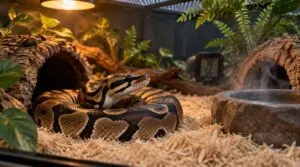
The enclosure itself is often the quiet culprit behind a clicking snake. Enclosure humidity control matters more than most keepers realize, because air that’s too dry thickens airway mucus, while constant dampness invites bacteria. Either way, reptile respiratory health suffers, and a swollen or mucus-clogged throat can cause upper airway obstruction, which is where that click often comes from.
Ask yourself whether your setup checks these boxes:
- Temperature and humidity stay steady, with a basking spot of 90-95°F
- Humidity sits near 50-60%, not constantly above 70%
- Fresh air moves through, so condensation doesn’t pool
- Substrate stays clean, dry and free of waste
- Hides on both ends keep snakes secure and calm
Sound reptile husbandry practices prevent most of these issues.
What to Do While Awaiting Veterinary Care

Imagine this: it’s a Friday evening, the clinic closed an hour ago, and your ball python is clicking with every breath. Your first instinct is probably to do something, anything. Usually, the best move is a calm one.
When your snake clicks with every breath after the clinic has closed, the best response is usually a calm one
Start by recording a short video with audio, plus notes on timing and any mucus or open-mouth breathing. Then check your thermal gradient and humidity, and fix anything that’s off. Good reptile husbandry practices matter most right now.
Keep handling to a minimum, skip oral swabs, and never force food. Place the enclosure somewhere quiet and dim.
Call a reptile-experienced veterinarian first thing tomorrow, or sooner if you suspect upper airway obstruction. Steady snake recovery care begins with these small steps.
Top 1 Reference for Snake Care Checks

Say you’ve just noticed a faint clicking sound from your ball python while it rests. Where do you turn for answers? I’d start with the DK Snake Encyclopedia, which is my top reference for everyday snake care checks.
Keep it on your shelf and compare what you see against its descriptions of normal breathing, posture, and shedding. It won’t replace reptile veterinary care, but it helps you describe snake illness symptoms clearly when you call.
Before you phone anyone, jot down the date, the sound’s pattern, and your enclosure humidity control readings. Those notes are often exactly what a vet needs.
Use the book for background and your vet for diagnosis. Together, they make snake recovery care far less stressful for you both.
Frequently Asked Questions (FAQs)
Why is my snake making a clicking sound?
A clicking sound usually means your snake’s airway is involved, often from infection. Reptile lung anatomy leaves no diaphragm to clear mucus, so reptile mucus production builds up.
Prompt reptile infection treatment matters a lot.
Can snakes make a clicking sound?
Picture a tiny, dry tick-tick coming from the dark of your snake’s enclosure. Yes, snakes can make a clicking sound, but it’s never normal. It usually signals mucus or irritation in the airway, so watch closely.
How to tell if a snake is in distress?
A snake’s breath is its quiet language.
Watch for snake stress indicators: open-mouth gaping, stargazing, snake nostril blockage, snake breathing mechanics changing, or a lethargic snake with a loss of appetite. Reptile health monitoring starts here.
What animal makes a repetitive clicking sound at night?
Not your snake, most likely. A nighttime clicking sound usually comes from click beetles, katydids, bats, or opossums, not respiratory sound production. Check outside first, then use reptile health monitoring if any doubts still remain.
Why does my snake make a clicking sound?
Ever wonder if that tiny clicking sound is normal? Usually it points to respiratory sounds from mucus or irritation in the airway, often an infection, dusty substrate, or low humidity. It’s worth watching closely.
How to tell if a snake is agitated?
Agitation isn’t always dramatic, so don’t wait for a bite. Watch for an agitated posture: an S-shaped neck, tight coiling, or head hiding. Hissing is a normal threat display, and rapid tongue flicking with stillness signals alertness.
What does it mean when a snake makes a noise?
Snakes don’t "talk," so any sound means something. A hiss is a normal warning, like why snakes make a sss sound when startled. Clicking, popping, or wheezing usually signals breathing trouble and needs checking.
Can wild snakes click for navigation purposes?
You’d have better luck teaching a snake to play the piano than finding one that clicks its way through the woods. A clicking sound isn’t navigation, and wild snakes don’t echolocate. They rely on scent, vibration and heat instead.
Are some snake species completely silent?
Silence is a snake’s best disguise, and nearly every species wears it. None have true vocal cords, so snake vocalization causes boil down to forced air. Hissing and rattling are defensive sounds, never a clicking sound meant to chat.
Can clicking indicate snake age or maturity?
Ironically, a clicking sound never proves maturity, only trouble. Juvenile ball pythons, like many pythons and boas, are simply more vulnerable, and snake vocalization causes include infection, so mind reptile pathogen transmission between separate tanks.
Conclusion
Still wondering whether that tiny tick is a problem?
A snake making clicking sounds is usually telling you something simple, like shed skin or a dry enclosure, but sometimes it’s signaling infection. Watch the timing, check your humidity and temperatures, and look for open-mouth breathing, bubbles, or lethargy.
If the sound lingers or worsens, call a reptile vet. You know your snake better than anyone, so trust that instinct. A good ear always beats guesswork.