This site is supported by our readers. We may earn a commission, at no cost to you, if you purchase through links.
Most reptile owners don’t realize their local vet has seen maybe a dozen lizards in their entire career. That’s not a knock on general practitioners—it’s just the reality of veterinary training, where reptile medicine often gets a single semester at best.
A bearded dragon with early metabolic bone disease or a ball python showing the first signs of respiratory infection needs someone who reads those symptoms fluently, not someone reaching for a mammal reference chart.
Finding a qualified reptile veterinarian near you isn’t just about convenience—it’s about getting care from a clinician who treats reptiles daily, knows species-specific baselines, and won’t mistake a normal shed for a skin infection. The difference in outcomes can be significant.
Table Of Contents
- Key Takeaways
- Why Reptile Specialists Matter
- Best Ways to Find Nearby Vets
- How to Verify a Clinic
- Prepare for Your First Visit
- Top 3 Terrariums to Review
- Frequently Asked Questions (FAQs)
- Can a regular vet treat reptiles?
- How to find a qualified vet?
- What is a vet for reptiles called?
- How much does a reptile vet visit cost?
- Where can I find a reptile vet?
- Do you need a reptile vet?
- What is a reptile vet Directory?
- Where can I find a reptile veterinarian in Australia?
- Do small animal vets treat reptiles?
- Where can I get a reptile treatment?
- Conclusion
Key Takeaways
- Most general vets have minimal reptile training, so finding a specialist—ideally board-certified through ARAV—can make a real difference in catching conditions like metabolic bone disease or respiratory infections early.
- The ARAV’s Find a Vet tool, local reptile clubs, and exotic animal hospital directories are your most reliable starting points for locating a vet who actually treats your species regularly.
- Before booking, verify case volume, confirm on-site imaging and lab capabilities, and ask the clinic about your reptile’s specific species, enclosure temps, and diet—a qualified vet won’t flinch at those questions.
- Walk into your first appointment prepared: bring enclosure photos, a feeding and symptom log, and a clear picture of your setup so your vet can treat the cause, not just the symptoms.
Why Reptile Specialists Matter
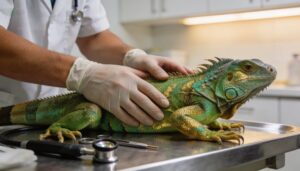
Not every vet is the right fit for your reptile.
Look for a vet with hands-on exotic experience — this guide to reptile veterinary care explains exactly what to ask before booking an appointment.
The gap between a general small-animal practice and a reptile specialist is wider than most people expect. Here’s what sets them apart and why it matters for your pet’s health.
Regular Vets Vs Exotic Vets
Most regular vets treat cats and dogs—reptiles are a different world entirely.
Training Curriculum Differences mean a regular vet gets minimal reptile coursework, while an exotic vet or reptile specialist builds real Case Load Composition with non‑traditional patients. Diagnostic Equipment Access also varies widely. Here’s what that gap looks like in practice:
- A regular vet may miss early metabolic bone disease signs.
- An exotic vet interprets temperature and lighting as medical data.
- A reptile specialist reads abnormal bloodwork against species-specific baselines.
Complex nutritional requirements are critical for preventing metabolic bone disease in reptiles.
Board-certified Reptile Expertise
Board certification takes that expertise even further. A board-certified herpetology veterinarian through the Association of Reptilian and Amphibian Veterinarians (ARAV) earns that title through Certification Exam Rigor, Continuing Education Requirements, and Case Report Documentation — not just time in practice.
They follow Specialist Diagnostic Protocols and may use modern Endoscopic Techniques.
When your reptile vet holds that credential, you’re not guessing at their skill level.
Species-specific Handling and Diagnostics
Handling your reptile isn’t like handling a dog. A skilled reptile vet uses Bloodless Restraint, Temperature‑Controlled Exams, and Species‑Specific Sampling to keep stress low and results accurate.
These aren’t small details — they shape every piece of diagnostic testing for reptiles.
- Hydration & Electrolyte Checks catch decline early
- Imaging Modality Selection fits your animal’s anatomy
- Species-specific treatment follows reptile baseline values, not mammal norms
Common Reptile Conditions Specialists Spot
Accurate diagnostics start with knowing what to look for.
A reptile vet sees patterns that general practitioners miss — things like early Respiratory Infections, subtle Skin Infections, or Parasite Infestations, hiding behind otherwise normal behavior.
| Condition | Warning Sign |
|---|---|
| Respiratory Infections | Wheezing, open-mouth breathing |
| Skin Infections | Lifting scales, redness |
| Parasite Infestations | Weight loss, abnormal stool |
| Digestive Disorders | Regurgitation, appetite loss |
| Systemic Weakness | Lethargy, sunken eyes |
Why Husbandry Knowledge Matters
A reptile’s health lives or dies by its environment. Specialists in herpetology veterinary services understand that Temperature Regulation, UVB Lighting, Dietary Balance, Humidity Control, and Substrate Hygiene aren’t optional extras — they’re medicine.
For reptile specialists, temperature, light, and humidity are not habitat details — they are medicine
Improper temperature gradients slow digestion. Weak UVB lighting causes calcium failure. Poor habitat design for reptiles creates stress before any illness even begins.
Species-specific husbandry knowledge lets your vet catch the cause, not just treat the symptom.
Best Ways to Find Nearby Vets
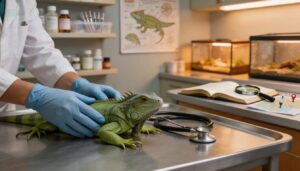
Finding a qualified reptile vet doesn’t have to feel like searching for a needle in a haystack. There are several reliable ways to locate someone with real experience caring for your specific animal.
Start by checking resources like python snake care and housing guides to understand your reptile’s specific needs before your first vet visit.
Here are the best places to start.
Use Reptile Vet Directories
One of the easiest starting points is an online directory built specifically for reptile owners. The Association of Reptile and Amphibian Veterinarians runs a Find A Vet tool — a Veterinarian search platform for reptile and amphibian specialists — with geolocation search tools, membership credential tags, and directory filtering options.
If your reptile is displaying worrying behaviors before you even get to a vet, brushing up on the warning signs of snake aggression and defensive behavior can help you describe symptoms more clearly during your appointment.
These platforms cut through the noise quickly, connecting you directly to vets who actually know your animal.
Search “reptile Veterinarian Near Me”
A simple search for "reptile veterinarian near me" does more than you’d expect. Your phone’s location settings trigger geo-targeted results, pulling up local clinics through map pack optimization that surfaces board-certified herpetology veterinarian options nearby.
Use user review filters and location-based vet lookup services to compare practices fast. Mobile-friendly listings show hours, phone numbers, and booking links right there on the results page.
Check Exotic Animal Hospital Listings
Exotic animal hospital listings are a goldmine most owners overlook. Online directories and vet directory sites organize clinics by specialty, so you can find a reptile veterinarian or exotic vet who actually treats your species.
Look for listings that detail:
- Diagnostic capabilities like digital X-ray and in-house labs
- Patient volume and years treating reptiles
- Location proximity to your address
- Insurance acceptance and online booking options
- Emergency and after-hours access
Ask Local Reptile Groups
Your local reptile clubs are one of the best‑kept secrets for finding a trusted reptile vet.
Members share firsthand Member Vet Recommendations, Species‑specific Feedback on how clinics handled their gecko or snake, and even Group Emergency Contacts.
Meetup Referral Stories often reveal Trustworthiness Indicators that no online directory captures.
Search Facebook groups or herpetological societies, and ask who members actually use — not just who ranks highest.
Get Referrals From Reptile Stores
Your reptile store knows more than you might think. Staff often use Store Referral Scripts to match you with clinics through a Species Matching Process — asking what your animal eats, how long symptoms have lasted, and whether you have photos.
Many keep In-Store Vet Cards ready at the register. Some even offer Reward Incentives when you follow through.
It’s a surprisingly practical starting point.
Compare Multiple Nearby Clinics
Once you have a few names, don’t just pick the closest one. Compare their service hours, facility equipment, and staff expertise side by side.
Pricing differences can be significant — a wellness exam ranges from $60 to $100 depending on the clinic.
Check their communication channels too. A quick call tells you a lot about how well they’ll actually listen.
How to Verify a Clinic
Finding a clinic online is the easy part — knowing whether it’s actually the right fit takes a little more digging. Before you book an appointment, there are a few straightforward things you can check to feel confident in your choice.
Here’s what to look at.
Review Credentials and Certifications
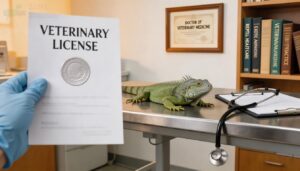
Before trusting anyone with your animal, check their credentials carefully. Confirm license verification through your state’s veterinary board and look for board certification from a recognized specialty body.
A board-certified herpetology veterinarian will have completed rigorous training and exams. Membership in the Association of Reptilian and Amphibian Veterinarians (ARAV) signals serious commitment.
Also confirm continuing education activity and run digital credential checks on any badges listed online.
Ask How Many Reptiles They Treat

Credentials get you in the door, but case volume tells the real story. Ask your exotic animal vet directly: how many reptiles do they see each week?
A reptile specialist with strong annual caseload and species diversity manages everything from snakes to chelonians regularly. A board-certified herpetology veterinarian sees reptile numbers that reflect real, ongoing treatment frequency — not just occasional visits.
Confirm In-house Imaging and Lab Work

Case volume is one piece of the puzzle — what happens next depends on the tools your reptile vet actually has on-site. Ask directly about diagnostic imaging and in-house lab capabilities before booking.
- Radiograph Availability — on-site digital X-rays catch fractures and foreign bodies same-day
- Ultrasound Capability — evaluates organs, fluid, and reproductive structures during your visit
- On-site Blood Panel — blood chemistry analysis and hematology results without waiting days
- Cytology Services — fecal examination and slide review done immediately in-house
- Lab Turnaround Time — faster results mean faster treatment decisions for reptile health monitoring
Check Emergency and After-hours Options
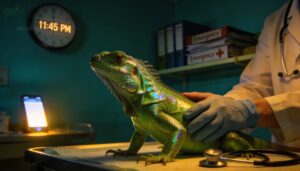
Before a crisis hits, verify your clinic’s after-hours contact verification process and 24/7 on-call support availability. Ask directly: what’s their after-hours triage protocol? Many practices route urgent calls through an answering service that connects you to an on-call specialist.
Keep an emergency transport checklist and urgent symptom guide ready. Knowing your reptile emergency plan ahead of time makes all the difference when minutes matter.
Read Local Reviews Carefully
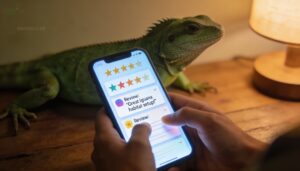
Reviews tell a story if you know how to read them. Look for consistency patterns across multiple posts — the same praise or complaint appearing repeatedly usually signals something real.
Recency relevance matters too, so prioritize the last 6–12 months.
Credibility cues like balanced, detailed narrative details outweigh vague five-star ratings.
Owner response behavior shows how a clinic addresses problems when they arise.
Ask About Your Species Specifically
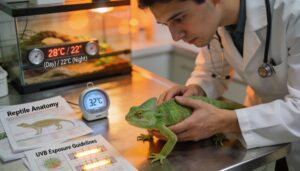
Before you book, test the clinic with one direct question: can they discuss your animal’s scientific name, exact age, enclosure temperature ranges, UVB duration, and diet composition? A qualified reptile vet or board-certified herpetology veterinarian will ask these things without prompting.
These details shape species-specific treatment and species-specific dietary recommendations. If the clinic seems unfazed by the specifics, that’s a good sign.
Prepare for Your First Visit
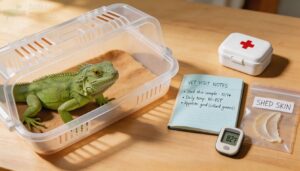
Your first visit goes smoother when you walk in prepared. A few simple steps before you leave the house can save time, reduce stress for your reptile, and help the vet get straight to work.
Here’s what to have ready before you go.
Gather Medical and Feeding History
Think of your first vet visit like a job interview — you want to walk in prepared. Before you go, build a simple Appetite Log noting what your reptile eats, how much, and how often.
Document Diet Composition, Hydration Tracking habits, and Feeding Environment details.
Note any Stool Analysis changes too.
This history helps your vet make accurate, species-specific dietary recommendations fast.
Bring Enclosure Photos and Setup Details
Your enclosure tells a story your reptile can’t. Before your reptile vet appointment, photograph the full habitat and enclosure design so the doctor can assess it without guessing.
Focus on:
- Lighting placement and distance to the basking surface
- Temperature gradient from warm to cool side, with both probe readings visible
- Substrate depth, humidity measurement device location, and your feeding station setup
Clear photos save exam time and sharpen your vet’s recommendations.
Record Symptoms and Behavior Changes
Before your visit, jot down every change you’ve noticed — even small ones.
Track food intake and water consumption, noting any dips or increases.
Record shedding frequency and whether retained skin appeared.
Log movement activity, posture shifts, and eye appearance.
These details feed directly into diagnostic testing for reptiles and sharpen the vet’s ability to connect symptoms to specific husbandry needs fast.
Ask for Exam and Testing Costs
Once you have your symptom notes ready, call the clinic before you arrive. Ask about the exam fee structure upfront — basic wellness visits usually run $60 to $100.
Lab test pricing and imaging cost estimates are separate, and costs climb quickly with diagnostic testing for reptiles.
Ask about payment plan options and whether they accept pet insurance.
Prepare Safe, Low-stress Transport
Getting your reptile to the reptile vet calmly takes a little preparation.
Use a Ventilated Container with a secure lid and non‑slip interior.
Temperature Control matters — add a warm pack away from direct skin contact and confirm the range with a thermometer.
Minimal Handling reduces startle responses.
Cover the container for darkness, calm, and keep it in a Secure Position during the drive.
Know When Symptoms Are Urgent
Once your reptile is safely transported, pay attention to what your animal is telling you.
Mouth breathing, wheezing, or a bluish tongue signal respiratory distress — go straight to an emergency vet.
Seizures, sudden collapse, or an inability to right itself point to neurologic collapse.
Severe bleeding, sunken eyes showing dehydration signs, or behavioral shifts after a new product suggest toxic exposure.
Don’t wait on these.
Top 3 Terrariums to Review
The right terrarium makes a real difference in your reptile’s day-to-day health and comfort. These three options are worth a close look depending on your species and setup.
Here’s each one brings to the table.
1. Zilla Tropical Vertical Glass Terrarium
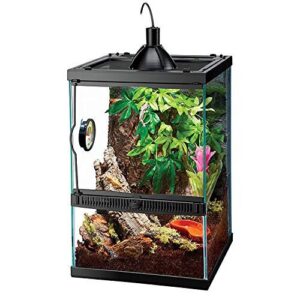
The Zilla Tropical Vertical Glass Terrarium is a solid starter choice for small arboreal species like crested geckos or tree frogs. It measures 12 × 12 × 18 inches — enough vertical space for climbing without overwhelming a juvenile animal.
The front-opening door with a locking latch makes feeding and spot-cleaning straightforward. Its watertight 5-inch base accommodates humid setups or simple drainage layers.
The kit includes a mini halogen dome, coconut husk bedding, and a humidity gauge, so you’re not starting from zero.
| Best For | Small arboreal reptiles and amphibians — think crested geckos, tree frogs, or dwarf geckos — that need vertical space to climb and thrive in a humid environment. |
|---|---|
| Material | Clear glass |
| Top Access | Hinged screen top |
| Ventilation | Screen top mesh |
| Watertight Base | 5 in. deep watertight base |
| Secure Locking | Front locking latch |
| Weight | ~16.8 lb |
| Additional Features |
|
- Front-opening door with a locking latch makes feeding and cleaning easy without stressing your animal
- Watertight 5-inch base lets you set up a water feature or drainage layer without any extra gear
- Comes with the basics included — halogen dome, bedding, and a humidity gauge — so you’re not buying everything separately on day one
- The foam background is flimsy and can get torn up by more active animals, and the door hinge area may need silicone to seal properly
- The included halogen bulb runs hot and has a reputation for burning out early — many owners swap it for an LED
- The humidity and temperature gauge isn’t always accurate, so you may want a separate digital thermometer to be sure
2. Repti Zoo Tall Glass Terrarium

If your gecko has outgrown its starter setup, the Repti Zoo Tall Glass Terrarium (24" × 18" × 36") gives medium-to-large reptiles’ real vertical room to move.
The interchangeable side panels are a standout — swap between mesh and glass to dial in airflow for your specific animal.
Front double-hinge doors make daily feeding easy, and the watertight base supports bio-active or moisture-heavy setups without trouble.
At $219.99, it’s a capable mid-range option built for the long haul.
| Best For | Gecko and reptile owners ready to upgrade to a spacious, customizable enclosure that supports bio-active or humidity-heavy setups. |
|---|---|
| Material | Tempered safety glass |
| Top Access | Removable mesh top |
| Ventilation | Swappable mesh/glass panels |
| Watertight Base | Tested watertight base |
| Secure Locking | Key-operated door lock |
| Weight | ~60 lb |
| Additional Features |
|
- Swappable mesh and glass side panels let you fine-tune ventilation as your animal’s needs change
- Front double-hinge doors make feeding and cleaning quick without disrupting the whole setup
- Watertight base handles bio-active builds, water features, or substrate heaters without issue
- The door key is small and easy to lose, and the latch can feel stiff in daily use
- Assembly can be frustrating — side panels need to be held in place while you work, and the instructions aren’t great
- At around 60 lbs fully built, you’ll likely need a second person to move or reposition it
3. Reptile Growth Mini Clear Terrarium
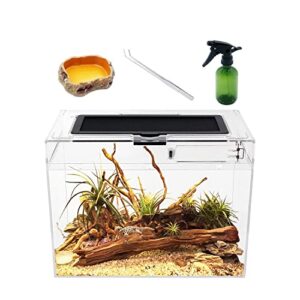
For small reptiles and invertebrates, the Reptile Growth Mini Clear Terrarium (RG-P02) keeps things simple without cutting corners. The polycarbonate build withstands drops and temperature swings from -20°C to 120°C, so it holds up to daily use.
You get 360° visibility, a magnetic feeding port, and a metal mesh top that works with heat or UVB lamps.
It arrives pre-assembled with accessories included. Just note the interior runs smaller than listed — not ideal for anything that needs room to stretch.
| Best For | Hobbyists keeping small reptiles, geckos, tarantulas, jumping spiders, or other compact invertebrates who want a clear, easy-to-use enclosure without a complicated setup. |
|---|---|
| Material | Polycarbonate |
| Top Access | Metal screen top |
| Ventilation | 360° mesh ventilation |
| Watertight Base | Leak-free construction |
| Secure Locking | Magnetic spring latch |
| Weight | ~3.31 lb |
| Additional Features |
|
- Full 360° polycarbonate walls give you a clear view of your animal from every angle, with no yellowing over time
- The magnetic feeding port makes daily feeding quick and lowers the chance of accidental escapes
- Comes pre-assembled with accessories included — tweezers, spray bottle, and water dish right out of the box
- The actual interior height runs shorter than the listed 9 inches, so larger specimens may feel cramped
- Mesh vent holes are big enough for tiny invertebrates like baby jumping spiders to slip through
- Ventilation may not be enough for high-humidity setups, meaning you’ll likely need to mist more often
Frequently Asked Questions (FAQs)
Can a regular vet treat reptiles?
Not every vet can walk the walk regarding reptiles. Most small animal vets have limited training with them and will often refer you out to someone more experienced.
How to find a qualified vet?
Start with the ARAV’s "Find a Vet" tool, then search local exotic animal hospital listings. Ask reptile-owning communities for firsthand recommendations. Confirm the clinic treats your specific species before booking.
What is a vet for reptiles called?
A vet for reptiles is called a herpetology veterinarian, or "herp vet" for short. Some also go by exotic animal veterinarian, especially when they treat a range of non-traditional pets.
How much does a reptile vet visit cost?
A routine reptile exam usually costs $100 to $300. Diagnostics like bloodwork or X-rays add more. Emergency visits can run $200 to $500 or higher depending on what your reptile needs.
Where can I find a reptile vet?
Start with the ARAV’s "Find a Vet" tool, which filters by location and specialty. Local herpetological societies and reptile forums often share owner-verified recommendations that directories miss.
Do you need a reptile vet?
Think of reptiles as quiet stoics — they mask illness until it’s serious. Yes, you need a reptile vet. Specialized care catches hidden problems early, before they become emergencies.
What is a reptile vet Directory?
A reptile vet directory is an online database listing clinics that treat reptiles. You can search by location, species, or clinic name to find experienced exotic animal practitioners near you.
Where can I find a reptile veterinarian in Australia?
Unusual Pet Vets has clinics in Perth, Melbourne, Brisbane, Sunshine Coast, Canberra, and Adelaide. The Reptile Doctor operates in Victoria, and Currumbin Vet Services covers Gold Coast and Brisbane.
Do small animal vets treat reptiles?
Some small animal vets can see reptiles, but most are most comfortable with cats and dogs. If your vet seems unsure, ask for a referral to an exotic specialist instead.
Where can I get a reptile treatment?
You can get reptile treatment at specialized exotic animal clinics, bird and reptile hospitals, or university veterinary outpatient programs.
Some clinics also offer husbandry advice and purchase exams alongside illness care.
Conclusion
Imagine making your way through a dense forest without a map; finding the right care for your reptile can feel just as challenging. But with the right tools and knowledge, you’re now equipped to track down a qualified reptile veterinarian near you.
By prioritizing specialized care, you’re investing in your pet’s health and happiness. Finding a qualified reptile veterinarian near me isn’t just a search; it’s a commitment to giving your scaly friend the best life possible, every day.