This site is supported by our readers. We may earn a commission, at no cost to you, if you purchase through links.

Your ball python hasn’t eaten in three weeks, and the shed came off in jagged patches. You call your regular vet, and they admit they don’t see many reptiles. That moment of uncertainty is something I hear about constantly from snake owners.
Snakes don’t hide illness well from trained eyes, but they hide it perfectly from untrained ones. A qualified snake vet for exotic pets isn’t a luxury. It’s the difference between catching a respiratory infection early and losing your animal to something preventable.
Knowing where to look, what to ask, and how to prepare changes everything.
Table Of Contents
- Key Takeaways
- Why Snakes Need Exotic Pet Vets
- Best Places to Find Snake Vets
- How to Compare Qualified Snake Vets
- Services a Skilled Snake Vet Provides
- Prepare for Your Snake’s Vet Visit
- Frequently Asked Questions (FAQs)
- How much does a vet cost for a snake?
- Do vets for pets treat snakes?
- What is a vet called that works with exotic animals?
- Can you take your pet snake to the vet?
- What is a vet that works with reptiles called?
- Is it expensive to take a snake to the vet?
- What signs indicate my snake is sick?
- How do I transport my snake safely?
- Are emergency reptile vets available after hours?
- How can I tell if a vet specializes in snakes?
- Conclusion
Key Takeaways
- Snakes hide illness instinctively, so only a vet with hands-on reptile experience can catch problems early enough to make a real difference.
- Building a three-clinic shortlist before an emergency hits — including one for routine care, one backup, and one with after-hours access — is the single most practical thing you can do as a snake owner.
- Credentials like ABVP board certification and verified state licensing matter, but so does asking how many snakes a vet actually sees each month, since active experience beats a dusty diploma.
- Most snake health problems trace back to diet or habitat, so a vet who offers nutrition and enclosure consultations isn’t just a bonus — they’re addressing the root cause, not just the symptoms.
Why Snakes Need Exotic Pet Vets
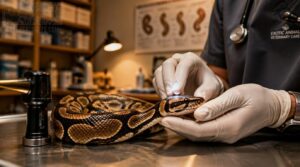
Your snake can’t tell you when something’s wrong, and that’s exactly why choosing the right vet matters so much.
That’s why learning to recognize common pet snake health issues early can make all the difference before a small problem becomes serious.
Because your snake suffers in silence, the vet you choose speaks for them
A general practice vet often lacks the reptile training needed to catch problems that hide in plain sight.
Here are the five biggest reasons your snake deserves an exotic pet veterinarian.
Unique Reptile Health Needs
A snake isn’t a furry patient with a stethoscope-friendly heartbeat, and that’s exactly why reptile medicine is its own specialty. As ectotherms, snakes depend on external heat, with ball pythons needing a warm zone of 88-92°F and a cooler side of 74-80°F, so reptile wellness starts with habitat precision. In the wild, snakes rely on solar radiation and basking behavior to helps maintain their ideal body temperature, which helps essential functions like digestion and immune response.
Your average dog vet simply won’t know these thermal baselines, but proper reptile preventive care depends on them.
Hidden Signs of Illness
Because their survival instincts mask weakness, snakes hide sickness until it’s serious. That’s why reptile disease screening matters so much. Watch for these hidden signs of illness:
- Wheezing or clicking breaths, hinting at respiratory infections
- Refusing food beyond two weeks
- Bubbles around the nostrils or mouth
Consistent snake health monitoring, plus routine parasite screening, catches problems early, when treatment is easiest.
Species-Specific Husbandry Expertise
Not every vet knows that a ball python’s needs differ wildly from a corn snake’s. True species-specific care means your vet understands reptile husbandry inside and out, from reptile temperature gradients to proper handling and restraint.
Ask whether they offer a habitat consultation and guidance on reptile nutrition. That expertise, plus skilled health assessment, separates a real snake specialist from a general practitioner.
Preventive Care Benefits
Husbandry expertise pairs naturally with reptile preventive care, and the payoff is big. Annual wellness exams catch hidden weight loss, skin changes, and early infections before they become chronic. Your vet also establishes baseline bloodwork for future comparison.
What routine prevention covers:
- Baseline weight and body condition records
- Parasite screening through stool testing
- Early infection detection
- Feeding and growth trend tracking
- Guidance on tests when concerns appear
An exam runs $50–$100, far cheaper than treating serious illness later.
Emergency Care Readiness
When emergencies strike, minutes matter. Before crisis hits, confirm your vet offers emergency vet services or identify a 247 Emergency animal hospital nearby. Keep numbers posted, and know the route.
| Emergency Type | First Call | Backup Plan |
|---|---|---|
| Breathing trouble | Exotic vet | Emergency hospital |
| Prolonged refusal to eat | Exotic vet | Monitor, recheck |
| Injury or swelling | Emergency hospital | Exotic vet follow-up |
Assemble a reptile first aid kit with towels, gloves, and a thermometer. Reptile emergency care rewards preparation.
Knowing what a vet visit might cost ahead of time helps too — ball python veterinary care costs and what to expect gives a solid overview, with exams typically ranging from $50 to $200.
Best Places to Find Snake Vets

Now that you know why your snake needs a specialist, let’s talk about where to actually find one. The good news is that qualified snake vets are easier to locate than you might think, once you know where to look. Here are five proven places to start your search, from local clinics to breeder recommendations.
Search Local Exotic Animal Clinics
Your first stop should be local exotic animal clinics. Many general practices rarely see reptiles, so look for hospitals that advertise veterinary services for snakes. Check their websites for species lists, appointment availability, and emergency policies.
Call ahead and ask directly, "How many snakes do you see weekly?" A true exotic pet specialist will answer confidently, and often offer same-week visits.
Use Reptile Veterinarian Directories
Skip the guesswork and let a reptile veterinarian directory do the searching for you. These free databases let you search by state, city, or ZIP code, and many show interactive maps with clinic hours and contact details.
- Filter by snake species expertise, including pythons, boas, and colubrids
- Check whether clinics accept new reptile patients
- Look for tags noting venomous snake experience
Reputable directories verify licenses and often confirm ABVP certification in Reptile and Amphibian practice, so you can trust listings. Some, like ReptiFiles, cross-check user submissions before publishing. You’ll also find verified reviews mentioning specific conditions treated, which helps you gauge real reptile health experience before booking your snake vet.
Ask Breeders and Reptile Groups
Who better to recommend a reptile veterinarian than people who keep snakes daily? Breeders and reptile groups know which exotic animal vet controls reptile health management well. Ask breeders directly; most gladly share clinic names, since healthy customers mean repeat sales. Online communities on Facebook and Reddit offer quick feedback too.
| Source | Best For |
|---|---|
| Breeders | Trusted local vet referrals |
| Reptile groups | Honest reviews and warnings |
| Both | Emergency backup options |
Your snake’s care team starts here.
Check Emergency Hospital Networks
Snakes get sick at 2 a.m., not just during business hours.
Many general emergency hospitals partner with exotic specialists, so emergency exotic pet treatment continues after your regular clinic closes. These networks share medical records, offer 247 exotic pet ICU access, and guarantee a reptile-trained vet on staff.
Before you need one, confirm which hospitals near you handle snakes, since some exclude certain species.
Build a Three-Clinic Shortlist
One vet is never enough. Build a three-clinic shortlist so you’re never stuck when your snake needs help fast.
Your shortlist should include:
- One clinic close by for routine exams
- One backup for urgent, nonemergency problems
- Clinics offering online booking or phone scheduling
- One that accepts first-time reptile visits
- After-hours triage guidance for emergencies
Keep every phone number handy, and confirm each clinic’s intake process before you need it.
How to Compare Qualified Snake Vets
Finding a shortlist of snake vets is only half the battle, and now comes the part that really matters: figuring out who deserves your trust. Not every clinic that says "exotics" on the door actually sees snakes regularly, so a little homework goes a long way. Here’s how to compare your candidates on credentials, experience, and cost so you can choose with confidence.
Verify Licenses and Credentials

Trust starts with verification. Before you commit to a vet, confirm their license is active through your state veterinary board’s online lookup. Match their full name and license number, then check status, expiration, and any disciplinary actions.
| What to Check | Where | Why It Matters |
|---|---|---|
| Active license | State vet board site | Confirms legal practice |
| Expiration date | Board record | Avoids lapsed credentials |
| Discipline history | Board lookup | Flags suspensions |
Primary source verification protects your snake from fraud.
Look for ABVP Certification

A license tells you a vet can practice; board certification tells you they’ve gone further. The American Board of Veterinary Practitioners (ABVP) certifies specialists in twelve species categories, including reptiles. Diplomates, who use the title DABVP, pass a rigorous exam and recertify every three years.
When choosing a snake vet, this credential signals deeper reptile medicine training beyond standard exotic pet care.
Confirm Regular Snake Experience

Board certification matters, but so does day-to-day practice. A DABVP who hasn’t examined a snake in months may be rustier than a general practitioner who treats them weekly. Ask directly: how many snakes do you see monthly?
- Frequency of routine reptile exams
- Comfort with reptile diagnostic services
- Familiarity with your species’ quirks
Experience turns textbook knowledge into confident, capable care.
Compare Hours, Services, and Costs

Once you’ve found experienced hands, compare the practical details. Most exotic clinics run Monday through Friday, 8am to 6pm, with limited Saturday hours.
Ask about appointment wait times, emergency services, and after-hours fees, which add $200 to $400.
Routine exam costs run $50 to $200, while specialized diagnostics like radiographs reach $400.
Confirm payment plans and Care Credit acceptance before you need surgery.
Evaluate Reptile-Specific Reviews

Dig into reviews, because they reveal how a clinic truly controls snakes. Look for these green flags:
- Owner names the species, like a ball python, plus age and enclosure basics
- Review mentions diagnostics, such as fecal exams or radiographs
- Treatment outcomes with timelines, like mites clearing within two weeks
- Vet discusses humidity, feeding, and heat source safety
Skip vague praise like "great staff," since it says nothing about reptile health expertise.
Services a Skilled Snake Vet Provides

Once you’ve found a vet who truly knows snakes, it helps to understand what they can actually do for your pet. A skilled reptile veterinarian offers far more than a quick once-over, covering everything from routine wellness exams to emergency surgery. Here are the five main services you should expect from a qualified snake vet.
Routine Wellness Examinations
Your snake can’t tell you when something feels off, so routine wellness exams do the talking. Schedule one every 6 to 12 months, since reptiles hide illness well.
Expect weight checks, skin and mouth inspection, heart and breathing assessment, plus discussion of husbandry and diet. Most visits run $60 to $120, a small price for reptile health.
Parasite and Disease Screening
Because snakes carry parasites silently, screening matters even when your snake looks healthy. A skilled vet combines fecal flotation with reptile blood work, plus PCR testing and reptile oral swabs when needed.
- Fecal parasite testing
- Blood screening for systemic illness
- Skin and scale checks
- Cyst and stage identification
- Repeat testing when shedding is intermittent
Budget $75 to $200, since parasite control in exotic pets prevents bigger bills later.
Diagnostic Imaging and Bloodwork
Ever wonder what’s happening under those scales? Blood tells part of the story, pictures tell the rest.
Diagnostic imaging for exotic pets pairs radiographs with reptile blood work, giving your vet a complete view. Neither alone suffices. Bring previous reports for comparison. At-home follow-up care is easier when you stock proper reptile blood collection supplies ahead of your vet’s next recommended recheck.
Expect $150 to $400 for combined testing, and always tell the team about fasting needs beforehand.
Emergency Surgery and Anesthesia
When minutes matter, you want a team that already knows reptile anesthesia inside and out. Snakes can’t tell us where it hurts, and their unique physiology makes reptile emergency care genuinely different from cat or dog medicine.
Before choosing a clinic, ask about these five readiness markers:
- Experience with reptile anesthesia and safe drug protocols
- Same-day emergency vet services for critical cases
- Expert monitoring during surgical procedures for exotic animals
- Clear cost estimates, often $800 to $2,500
- A boardcertified exotic veterinarian on staff
A skilled team moves fast, communicates clearly, and monitors recovery closely.
Nutrition and Habitat Consultations
Did you know most snake illnesses trace back to diet or habitat? That’s why reptile nutrition and reptile habitat design consultations matter.
Your vet reviews feeding schedules, prey sizing, and frozen-thawed options, then assesses temperature gradients, humidity, and reptile UVB requirements.
Expect guidance on reptile enrichment ideas supporting natural behaviors, usually $75 to $150 per session.
Small changes prevent big problems later.
Prepare for Your Snake’s Vet Visit

A little preparation goes a long way toward making your snake’s vet visit smooth and stress-free, and honestly, it can make the difference between a quick checkup and a frustrating appointment.
The good news is that getting ready doesn’t take hours, it just takes a bit of planning the day before.
Here’s what I recommend every snake owner do before heading out the door.
Track Feeding, Shedding, and Symptoms
Always log feeding and shedding details before your vet appointment. Note missed or refused meals, shed dates, and symptoms with severity. If your snake regurgitates, record how long after feeding it happened.
Track enclosure temperature shifts and humidity too, since reptile environmental stress often mimics illness. A simple notes app works just fine, and your vet needs patterns, not flawlessness.
A combined thermometer hygrometer monitor makes logging those daily readings quick and easy, so spotting a problem trend before your appointment takes almost no effort.
Gather Records and Insurance Papers
Once your health log is ready, pull together past vet records and exotic pet insurance details. Bring your policy number and coverage dates so staff can verify benefits quickly.
If you don’t carry reptile pet insurance, ask about reptile CareCredit or reptile payment plans before your visit. Knowing your options upfront keeps the appointment focused on your snake, not paperwork.
Use a Secure Travel Carrier
With your paperwork sorted, turn to your snake’s carrier. A secure, escape-proof container protects your snake and reassures your vet.
For most snakes, a hard-sided plastic tote with a locking lid works well. Tuck your snake inside a cloth pillowcase first, then place it in the tote. Add paper towels for traction, and clip binder clips along the lid for security.
Maintain Safe Transport Temperatures
Once your snake is secured inside, safe transport temperatures are the next thing to nail down. Most snakes need to stay between 24 and 32°C during transit.
Wrap a chemical heat pack in cloth and tuck it along one container wall. A digital probe thermometer helps you monitor conditions closely.
Cold temps increase reptile dehydration risks and trigger metabolic disorders.
Frequently Asked Questions (FAQs)
How much does a vet cost for a snake?
How much does a vet cost for a snake? Routine wellness exams usually run $50 to $200, while emergency services can reach $100 to $800 or more, depending on exactly what treatment your snake needs.
Do vets for pets treat snakes?
Do vets for pets treat snakes? Not always. Most general practice vets focus on cats and dogs, so finding one with exotic pet care experience and proper reptile training is key to your snake’s health.
What is a vet called that works with exotic animals?
A vet who works with exotic animals is called an exotic animal veterinarian. Some earn board certification in exotic animal medicine, making them specialists in reptile and non-traditional pet care.
Can you take your pet snake to the vet?
Can you take your pet snake to the vet? Absolutely. As they say, an ounce of prevention is worth a pound of cure. Reptile-experienced vets handle exotic pet care that regular clinics simply can’t provide.
What is a vet that works with reptiles called?
A vet that works with reptiles is commonly called a reptile vet. Some also practice under the broader title of exotic animal vet, and their work covers reptile medicine, herpetological care, and overall snake health.
Is it expensive to take a snake to the vet?
Snake vet costs usually range from $50 to $200 for a routine wellness exam, and emergency visits cost even more. Budgeting $20 to $50 monthly per snake helps you cover surprises without serious financial stress.
What signs indicate my snake is sick?
Watch for refused meals, sunken eyes, lethargy, incomplete shedding, unusual postures like stargazing, sticky mouth discharge, and visible weight loss along the spine. These warrant a reptile medicine evaluation promptly.
How do I transport my snake safely?
How do I transport my snake safely? Like a medieval courier protecting precious cargo, use a ventilated latching bin with a cloth bag inside, maintain species-correct temperatures, and handle gently to support the full body.
Are emergency reptile vets available after hours?
Yes, after-hours emergency care does exist, but availability varies by clinic and night. Some exotic animal hospitals keep a reptile vet physically on site overnight, while others route your calls through an on-call system instead.
How can I tell if a vet specializes in snakes?
How can I tell if a vet specializes in snakes? Credentials, consistency, and confirmed case experience matter most. Look for a snake vet who is board-certified in exotic medicine and actively works with reptile health regularly.
Conclusion
Your snake can look completely healthy on the outside while quietly deteriorating within. That gap between appearance and reality is exactly why finding the right snake vet for exotic pets matters so much.
Don’t ever wait for a crisis to begin your search. Build your three-clinic shortlist now, take the time to verify credentials, and schedule that first wellness visit.
The vet you choose today becomes your single greatest ally the moment something goes wrong.