This site is supported by our readers. We may earn a commission, at no cost to you, if you purchase through links.

You find it in the enclosure one morning: a ghostly, wrinkled tube of skin, and your snake still wearing a ragged strip of it around its tail. That crinkled leftover isn’t harmless. Retained shed can tighten into a tourniquet and cut off circulation.
If you’re wondering what causes snake stuck shed, the answer usually traces back to a handful of fixable problems: low humidity, dehydration, a poor temperature gradient, mites, or scale rot. Each one leaves its own clues, and you can learn to read them.
Here’s how to spot the cause, prevent the next bad shed, and know when a vet should step in.
Table Of Contents
- Key Takeaways
- Why Do Snakes Get Stuck Shed?
- How Do Humidity and Hydration Affect Shedding?
- Can Enclosure Conditions Cause Stuck Shed?
- Can Health Problems Cause Stuck Shed?
- How Can You Prevent Snake Stuck Shed?
- When Does Stuck Shed Need Veterinary Care?
- Frequently Asked Questions (FAQs)
- How to get rid of stuck shed on snake?
- How long should you soak a snake with a stuck shed?
- Should you feed snakes when they are about to shed?
- Do snakes eventually stop shedding?
- How often should snakes shed their skin?
- What snake species have unique shedding requirements?
- Can stuck shed cause permanent eye damage?
- Do baby snakes shed more frequently?
- Should I handle my snake during shedding?
- How often do healthy snakes normally shed?
- Conclusion
Key Takeaways
- Low humidity and dehydration are the most common reasons your snake’s shed sticks, so match your enclosure to your species’ range (ball pythons need 55-70%, rising to 75-85% during shed) and start raising moisture 2-3 days before the eyes cloud over.
- Your setup can undermine good numbers, so give your snake a warm-to-cool temperature gradient, a humid hide, moisture-holding substrate like coconut fiber, a soaking-size water bowl, and rough surfaces to rub against.
- If stuck shed keeps coming back despite good care, you’re likely dealing with a health issue like mites, scale rot, or poor nutrition, and fixing humidity alone won’t solve it.
- You can help with a 10-15 minute lukewarm soak and a damp hide, but never peel dry skin or use oils, and call a reptile vet right away if you see retained eye caps or a swollen, dark tail tip that signals tightening shed.
Why Do Snakes Get Stuck Shed?
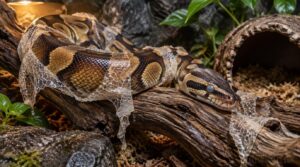
Why does a shed that should peel off in one clean piece end up in patches? Stuck shed, called dysecdysis, happens when the old skin can’t separate from the new layer beneath it.
Knowing what a normal shedding pattern in snakes looks like makes it much easier to spot early when a shed has gone wrong.
Most often, low humidity is the culprit, and dehydration makes it worse by leaving the skin stiff and slow to release. Humidity below 40% hardens the skin and reduces its pliability, which is why maintaining proper humidity levels matters most during a shedding cycle. But your setup matters too. Without rough surfaces like branches or rocks, your snake has nothing to rub against to start the shed.
Health plays a part as well. Mites irritate the skin, infections leave patchy retention, and poor nutrition, including a vitamin A shortfall, disrupts how new skin forms. Think of stuck shed as a symptom, not a diagnosis. Finding the real cause comes first.
How Do Humidity and Hydration Affect Shedding?

Two things decide whether your snake sheds cleanly: the moisture in the air and the water in its body. Below, you’ll find what each species needs and how to spot a snake that’s running dry. Let’s start with the numbers, since they’re easy to get wrong.
A snake sheds cleanly only when the air around it holds enough moisture and its body holds enough water
Species-Specific Humidity Requirements
Humidity requirements change with the species you keep, so check your enclosure setup against these ranges:
If you’re breeding snakes, humidity matters even more, so it helps to pair these ranges with this essential snake breeding supplies checklist.
- Ball pythons: 55-70%, rising to 75-85% during the shedding cycle
- Leopard geckos: 30-40%, plus a 70-80% humid hide
- Corn snakes: 40-50%, rising to 60-70% when shedding
Good reptile husbandry means matching these numbers with a digital hygrometer, then watching your snake’s hydration status closely.
Water Access and Dehydration
Once your Humidity Levels are dialed in, check your snake’s Water Access. A clean, stable bowl big enough to soak in matters, and tipped or dirty bowls limit what your snake can actually drink.
Dehydration leaves skin dry and stiff, so it sheds poorly. Judge your snake’s Hydration Status by the skin, and try Warm Soaks if it looks tight.
Can Enclosure Conditions Cause Stuck Shed?
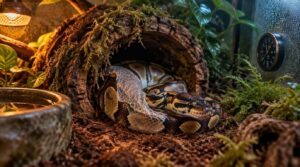
Yes, and often the enclosure is the culprit, even when you’ve dialed in the numbers above. Your setup either holds moisture where your snake needs it or lets it escape.
If your snake keeps struggling with stuck sheds, this guide to maintaining moisture in a snake enclosure walks through substrate, ventilation, and lid adjustments that help hold humidity steady.
Check these five things:
- Temperature gradient: Give your snake a warm side and a cool side. Cold slows skin renewal, and heat without a gradient dehydrates.
- Substrate choice: Coconut fiber or sphagnum moss holds moisture far longer than newspaper or reptile carpet.
- Enclosure size: Oversized tanks make stable humidity levels hard to maintain, while too much ventilation dries the air fast.
- Humid hide: Put one where your snake can reach it easily, ideally in the warmer zone.
- Hydration monitoring: Check your hygrometer and water bowl daily.
Start with these fixes.
Can Health Problems Cause Stuck Shed?

Snake mites and skin infections can make a shed stick, so you’ll want to look closely at your snake’s skin health. Mites irritate the scales, while scale rot creates a barrier that keeps old skin from separating cleanly.
Internal problems matter too. Dehydration leaves skin too dry to loosen, and poor nutrition, especially low vitamin A or protein, weakens the layers your snake needs to renew. Respiratory infections and other illnesses add stress, which can throw off the whole shedding cycle. If your vet confirms a deficiency, a reptile vitamin A supplement can help, but too much is harmful, so dose carefully.
It’s important to remember that proper humidity levels won’t fix a sick snake. If stuck shed keeps returning despite good care, your snake may be dealing with a health issue. Watch for mites, rough scales, and appetite changes.
Because hatchlings dry out so fast, good enclosure ventilation and airflow matters just as much as humidity when you’re trying to prevent stuck shed.
How Can You Prevent Snake Stuck Shed?

Maintaining proper humidity levels for your species is the simplest way to protect reptile skin integrity. Ball pythons do best at 55-70%, rising to 75-85% during shed, while corn snakes need 40-55% plus a humid hide.
Hydration and shedding go hand in hand, so keep a soaking-size water bowl on the cool end. Start raising moisture 2-3 days before shed, not after the eyes cloud over.
Build your setup around these habits:
- Use coconut fiber or cypress mulch instead of aspen.
- Line a humid hide with damp sphagnum moss.
- Place a hygrometer mid-height on the cool side.
- Spot-clean often to prevent mold.
For shedding assistance, offer natural shedding aids like clean driftwood or slate to rub against during the pre-shed period.
When Does Stuck Shed Need Veterinary Care?
Most stuck shed clears up with a warm soak and better humidity, but some cases are beyond what you can fix at home. Knowing where that line sits helps you act early and avoid hurting your snake. Below are the two areas to understand, starting with the signs that call for a vet and then what you can safely do yourself.
Retained Eye Caps and Tail Constriction
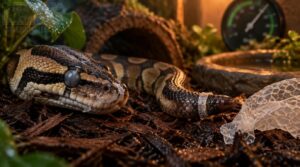
Check your snake’s face and tail after every shed. Retained eye caps look like dull, cloudy eyes, and retained shed can tighten around tail tips like a ring, cutting off circulation.
If a tip looks swollen or dark, or eye caps stay put across sheds, don’t wait. Call a reptile veterinarian, and recheck your humidity levels against your species’ needs.
Safe Support Versus Harmful Removal
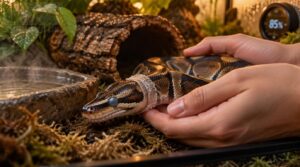
Your hands can help or harm, and the difference comes down to safe support versus harmful removal. Aim for proper humidity levels and gentle assistance, like a brief lukewarm soak or a damp hide.
Skip these:
- Peeling attached skin
- Oils or solvents
- Shedding assistance tools like brushes
If it won’t budge, call a reptile veterinarian.
Frequently Asked Questions (FAQs)
How to get rid of stuck shed on snake?
Think you should peel stuck shed off dry? That’s a myth. Restore proper humidity levels, then soak your snake in lukewarm water. Skip rough manual removal methods; offer gentle assistance with a soft damp cloth.
How long should you soak a snake with a stuck shed?
Most vets suggest 10 to 15 minutes. Keep warm soaks shallow and lukewarm so your snake’s head stays above water. If shed remains, repeat later, but don’t pull. Soaking sessions can’t replace proper humidity levels.
Should you feed snakes when they are about to shed?
Your corn snake’s eyes turn milky blue, and Friday’s mouse sits untouched. Offer food, don’t force it.
Watch shedding problem signs, dehydration risks, and skin elasticity; meals limit nutritional deficiencies and helps skin integrity maintenance.
Do snakes eventually stop shedding?
A pale, papery sleeve peels off your snake’s nose like a sock.
The ecdysis process never stops. Adults slow down, so shedding frequency drops, but hydration levels still affect skin retention issues and shedding complications.
How often should snakes shed their skin?
Wondering what’s normal? Shedding frequency depends on age: juveniles shed every 4 to 6 weeks, adults every 2 to 6 months.
If you’re still deciding which species to bring home, these easy-to-care-for snakes for beginners are good choices, since shedding stays predictable and manageable.
Since timing varies so much, it helps to learn the pre-shed behavior changes in snakes, like hiding more and refusing food, that signal a shed is near.
If a shed seems stuck or incomplete, understanding what causes dysecdysis in snakes can help you spot problems early and know when to call your vet.
Track each ecdysis process; humidity levels prevent shedding complications and support reptile skin health.
What snake species have unique shedding requirements?
Ball pythons thrive around 50 to 60 percent humidity. Amazon tree boas need more, plus steady airflow.
Desert species want dry substrate and a humid hide. Then tune humidity control to your snake’s shedding cycle.
Can stuck shed cause permanent eye damage?
Yes, but it’s not inevitable. Repeated retained shed over your snake’s eye caps can injure the eye. Never pick at them. Improve your humidity control, and get veterinary advice if stuck shed keeps coming back.
Do baby snakes shed more frequently?
Baby snakes outgrow their skin fast, so their shedding cycle runs shorter than an adult’s. Expect ecdysis every four to six weeks during juvenile growth, and feed well, since their nutritional needs drive it.
Should I handle my snake during shedding?
Skip all handling while your snake’s eyes are blue and cloudy. It’s stressed and prone to biting, and you can disrupt the skin’s fluid layer.
Offer a humid hide, fresh water, and rough décor instead.
How often do healthy snakes normally shed?
Time flies when your snake’s growing, and so does its skin. Healthy snakes shed four to twelve times a year.
Juveniles can shed every few weeks, while adults slow to a few shedding cycles annually.
Conclusion
A ball python sitting at 30 percent humidity instead of the 50 to 60 percent it needs is a stuck shed waiting to happen. That gap explains a lot about what causes snake stuck shed, and it’s one you can measure and fix today.
Keep water fresh, check your gradient, and treat mites early. If an eye cap or tail ring won’t budge, call your vet right away. Clean sheds aren’t luck. They’re habits.