This site is supported by our readers. We may earn a commission, at no cost to you, if you purchase through links.
A ball python that finishes shedding but leaves dull, papery skin clinging to its scales isn’t having a bad day. It’s telling you something went wrong with its environment.
Dysecdysis, the clinical term for incomplete or abnormal shedding, affects a significant portion of captive snakes and traces back to humidity deficits, thermal gradient errors, or nutritional gaps far more often than genetics or disease.
Left unaddressed within 24 to 48 hours, retained skin can constrict circulation and retained eye caps risk permanent corneal damage.
The steps to help with an incomplete shed follow a specific order, and that sequence matters.
Table Of Contents
Key Takeaways
- Incomplete shedding is almost always an environmental problem—fix your humidity (55–80%), temperature gradient (75–92°F), and nutrition before assuming something is wrong with your snake.
- When a shed doesn’t come off cleanly, act within 24–48 hours: rehydrate with a lukewarm 85–90°F soak and a moss-packed humid hide, then gently wipe head-to-tail with a damp cloth—never pull skin that resists.
- Retained eye caps and a cold or discolored tail tip are emergencies, not wait-and-see situations—home removal attempts risk permanent corneal damage or tissue necrosis, so get a vet involved the same day.
- Two missed sheds in a row is a warning sign; three or more consecutive incomplete cycles point to something systemic—vitamin A deficiency, parasites, or organ dysfunction—and require a full veterinary workup.
Rehydrate Your Snake’s Retained Shed
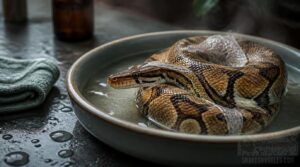
Rehydration is your first line of defense when a shed doesn’t come off cleanly. The goal at this stage is to restore enough moisture to loosen retained skin without causing additional stress to your snake. Here’s how to approach it step by step.
Keeping humidity in the right range is what makes rehydration work, so it helps to know the ideal humidity levels for snake shedding before you start the process.
Confirm Incomplete Shed Signs
Before you attempt any treatment, you need to know exactly what you’re dealing with. After shedding is complete, inspect your snake under good lighting. Retained skin patches appear dull, dry, or slightly raised against normal scales. If the eyes stay cloudy beyond 48 hours post-shed, or the tail tip feels tight and cold, incomplete ecdysis is confirmed. Act without delay.
Distinguishing retained shed from a developing infection matters too — reviewing snake skin condition and parasite control methods can help you rule out underlying issues before beginning any physical intervention.
Also, examining the shed itself can provide valuable clues — scale texture and pattern retention in the discarded skin can help confirm your snake’s species and flag whether the shed was healthy or problematic.
Raise Enclosure Humidity Safely
Once you’ve confirmed retained shed, correcting enclosure humidity is your immediate priority. Environmental factors, including ventilation rate and substrate absorption, control how fast moisture escapes.
- Mist enclosure walls lightly twice daily
- Place a warm-end water bowl to drive passive evaporation
- Briefly reduce ventilation to slow humidity loss
Check your hygrometer 30 minutes after misting, not right away.
Provide a Humid Hide
Misting helps enclosure-wide humidity, but a humid hide targets the microclimate your snake actually inhabits. Pack a smooth plastic container loosely with damp sphagnum moss and place it between the warm and cool sides. Environmental monitoring inside the hide matters: aim for 60-80% during shed cycles, especially for juveniles, who shed more frequently than adults.
| Setup Element | Guideline |
|---|---|
| Substrate | Damp sphagnum moss, not dripping wet |
| Placement | Between warm and cool zones |
| Internal humidity | 60-80% during shed cycles |
| Moss replacement | Every 2-4 weeks |
Use a Lukewarm Soak
When the humid hide isn’t enough, a lukewarm soak gives retained skin the direct hydration it needs.
Fill a shallow, escape-proof container with water at 85-90°F (29-32°C), confirmed with a thermometer rather than touch alone. Water depth matters: your snake must keep its head above the surface without effort.
Soak for 15-20 minutes, and stay present for the entire session.
Allow Skin to Soften
Patience is the actual intervention here. After lukewarm soaking or time in a humidity hide, your snake needs at least 20-30 minutes for hydration therapy to penetrate retained skin properly. Don’t rush to remove anything yet.
Once softened, the damp towel technique works because the skin yields rather than tears. Pulling before softening occurs risks tearing the new epithelium beneath.
For more on why timing matters so much, snake handling injury recovery and wound care walks through the full process of safe removal without compromising healing tissue.
Remove Only Loose Shed Safely
Once your snake’s skin has had time to soften, you’re ready to begin gentle manual assistance—but only where the shed is already separating on its own. Forcing anything that’s still attached does more harm than good, so restraint here is just as important as technique. These steps will walk you through exactly how to handle that process safely.
Support Your Snake Gently
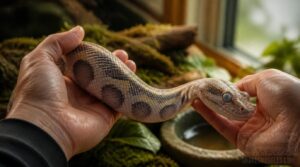
A snake in active shed is already under significant stress. Pick up around the mid-body, using both hands to distribute its weight evenly.
If the snake feels unstable, it will struggle, and struggling tears retained skin rather than releasing it. Let the snake move between your hands freely, following its lead. Forced restraint tightens the body, working directly against you.
Use a Damp Towel
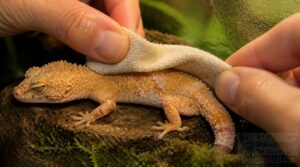
A damp towel cuts through stuck shed more gently than soaking alone. Dampen a soft, unscented cloth with lukewarm water, between 80-90°F, and wring it out fully, since excess moisture can chill or macerate skin. Hold it against retained patches for 2-5 minutes.
Limit each session to 10-15 minutes total, and keep this method clear of retained eye caps.
Move With Scale Direction
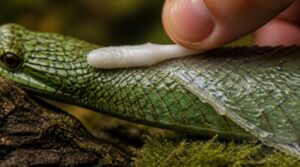
The direction you wipe matters as much as the moisture itself. Always move head to tail, following keratin scale overlap. Wiping against it lifts scales and turns stuck shed into an injury.
Watch for these signals:
- Smooth gliding means the shed is ready to release
- Any resistance means stop immediately
- Only visible looseness confirms it’s safe to assist
Limit Each Removal Session
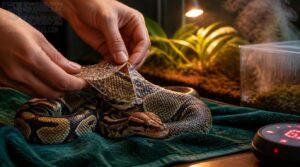
Keep every session under 10 to 20 minutes. Beyond that threshold, stress escalates and your snake may thrash or attempt escape, turning careful work into a risky one.
If breathing quickens or the body tenses, stop immediately.
One focused session per day, with at least 24 hours of rest between attempts, protects both skin integrity and your snake’s calm.
Never Pull Attached Skin
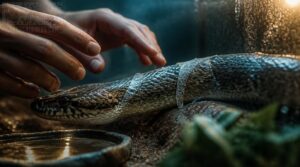
Attached retained skin is still connected to living tissue. Forcing it off during incomplete shedding risks tearing new scales and creating open wounds prone to infection. Never pull attached skin. If it resists gentle pressure, stop and return to soaking and humidity control:
- Soak 15 minutes in lukewarm water
- Raise enclosure humidity to 70-80%
- Recheck looseness before the next attempt
Protect Eyes and Tail Tips
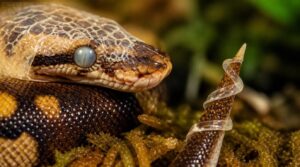
Once the main body shed is handled, two areas demand your closest attention: the eyes and the tail tip.
Retained eye caps and constricting tail skin can escalate quickly from a nuisance to a genuine medical emergency if missed. Here’s what to check, and when to step back and let a vet take over.
Identify Retained Eye Caps
Look closely at both eyes right after your snake completes a shed cycle. If one spectacle scale stays persistently cloudy or dull while the other clears, that’s a retained eye cap, not a passing haze.
Asymmetry is your clearest indicator. Check the shed skin too: missing transparent ovals where eye caps should sit confirms ocular retained scales didn’t release cleanly.
Avoid Home Eye Removal
Once you’ve confirmed a retained eye cap, don’t attempt removal at home. The spectacle bonds to the ocular tissue beneath, and forcible removal risks corneal ulceration or permanent blindness. Tweezers or sharp objects raise the real possibility of a puncture wound.
Forcible removal of a retained eye cap risks corneal ulceration, permanent blindness, or puncture — leave it to a vet
Even a loose-looking cap can tear healthy tissue if pulled before it’s ready. If soaking doesn’t resolve it, schedule veterinary care promptly.
Check Tail Tip Circulation
While the eyes demand careful attention, the tail tip faces its own silent threat. Retained skin dries and constricts like a tourniquet, cutting off circulation. Check for:
- Dark or cold tail tip indicating oxygen loss
- Reduced flexibility when the tip won’t bend freely
- Swelling above the tail tip from restricted blood flow
- Discoloration compared to the rest of the body
Watch for Tight Bands
Retained skin constricts fastest at low humidity, especially around the tail tip. Unlike discoloration, tight bands escalate without soaking. Poor nutrition, including vitamin A deficiency, worsens shedding quality.
| Band Sign | Action |
|---|---|
| Slight discoloration | Raise humidity, soak |
| Visible swelling | Soak immediately |
| Cold or pale tissue | Vet today |
| Band won’t loosen | Professional removal |
| Tail tip encircled | Emergency care |
Monitor Problem Areas Daily
Tracking changes daily is the difference between early intervention and a preventable crisis. Check eye caps first; if cloudy scales remain after the shed, vision is already compromised.
The tail tip deserves equal daily attention, since retained skin tightens quickly as it dries. If humidity levels drop below your target range, expect those problem areas to worsen within 24 hours.
Prevent Future Incomplete Sheds
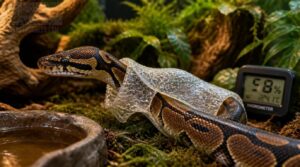
Once your snake has recovered from a stuck shed, the real work shifts to making sure it doesn’t happen again. Most incomplete sheds trace back to fixable husbandry gaps—humidity, temperature, nutrition, and parasite control chief among them. Here’s what to address in your enclosure before the next shed cycle begins.
Maintain Species-Appropriate Humidity
Ball pythons need 55 to 70 percent relative humidity during normal conditions, rising toward 80 percent at shed time. If your hygrometer reads below 50 percent consistently, dysecdysis becomes almost inevitable.
Getting humidity right starts with the setup itself, since an oversized or poorly ventilated enclosure makes it harder to hold, so review these common mistakes when setting up snake tanks before you buy.
Placing a large water dish near the warm side of the enclosure is one of the easiest ways to keep levels steady, and this guide to using water dishes for humidity control shows how.
Since low humidity can quietly lead to stuck shed and infection, it helps to know the early signs of reptile skin infection before problems escalate.
Place your digital hygrometer at the cool end of the enclosure, away from water sources and heat elements that skew readings. A humid hide gives your snake a localized microclimate refuge without saturating the whole enclosure.
Check Temperature Gradients
Temperature directly affects skin elasticity during ecdysis. If your thermal gradient is off, your snake can’t thermoregulate properly, slowing metabolism and compromising shed quality.
Confirm your basking zone reliably hits 88-92°F, with the cool end around 75-80°F. Use a digital thermometer with probes at both ends.
Poor enclosure design that collapses this range leaves your snake unable to shed cleanly.
Add Safe Textured Surfaces
Snakes don’t shed the way you peel tape. They rub against rough surfaces to initiate and complete ecdysis. Without adequate texture, that process stalls.
Add cork bark or river rocks along travel paths and near humid hides. Boil or bake natural wood before placing it inside, and avoid sandpaper or sharp materials that could abrade skin.
Feed Balanced Whole Prey
Poor nutrition disrupts ecdysis more than most keepers realize. If your snake’s diet lacks vitamin A and D, skin cell turnover slows, making complete sheds nearly impossible.
Whole prey diets correct this automatically:
- Muscle meat supplies balanced protein for cellular repair
- Organ meats deliver vitamin A and D3 in bioavailable form
- Bones provide essential minerals that support healthy skin tissue
Check for Mites
Mites are one of the most commonly missed causes of chronic incomplete shedding.
Snake mites burrow along scale folds and disrupt skin moisture, making complete ecdysis nearly impossible. Conduct weekly environmental monitoring inside enclosure corners, hides, and basking zones.
If you spot any tiny moving specks, preserve them in 70% isopropyl alcohol and pursue veterinary intervention for targeted parasite control.
Know When Veterinary Care is Needed
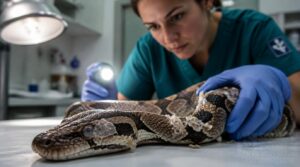
Home care goes a long way, but there are moments when your snake needs more than a warm soak and a humidity boost. Certain signs point to something deeper — and acting quickly makes all the difference. Here’s when to stop troubleshooting on your own and get a vet involved.
Persistent Retained Eye Caps
If a retained eye cap persists beyond 24 hours despite raised humidity, a humidity hide, and lukewarm water therapy, don’t attempt removal yourself. Pulling on the cap risks tearing delicate ocular tissue.
Veterinary care is required if the eye appears cloudy, swollen, or painful. Soaking alone won’t resolve a firmly adhered cap, and waiting increases the risk of permanent injury.
Dark or Cold Tail
A discolored or cold tail tip signals compromised circulation, and retained skin forming a tight constricting band around the tip is usually the cause. Temperature fluctuations can worsen tissue damage by reducing blood flow to an already stressed area.
If you notice purplish-black discoloration, contact an exotic veterinarian immediately. Soaking and humidity adjustments won’t reverse necrosis once tissue death begins.
Red or Ulcerated Skin
Circulation isn’t the only threat. Retained skin traps moisture against scales, creating ideal conditions where bacterial colonization develops quickly.
Watch for:
- Scale rot: soft, discolored patches beneath shed remnants
- Open skin lesions with visible fluid or swelling
- Any area that looks ulcerated or crater-like
Systemic infection can follow. If you spot these signs, contact your vet that day.
Repeated Incomplete Shed Cycles
One incomplete shed can happen to any keeper. Two in a row demands attention. Three or more consecutive cycles point to something systemic, whether that’s a vitamin A deficiency, chronic humidity control failure, internal parasites, or organ dysfunction.
Juvenile snakes shed more frequently than adults, which means problems surface faster. If your snake can’t complete back-to-back sheds, schedule a veterinary workup.
Lethargy or Feeding Refusal
When your snake shows lethargy or anorexia alongside a retained shed, don’t wait for improvement that won’t come on its own.
- Skipped two or more consecutive meals
- Visibly sluggish despite corrected humidity levels
- Unresponsive to normal feeding stimulus
- Noticeable weight loss within weeks
These signs point to systemic illness. Seek veterinary care immediately.
Frequently Asked Questions (FAQs)
Can stress cause incomplete shedding in snakes?
Even a single disruption can ruin an otherwise perfect shed. Stress-induced dysecdysis is real, and chronic handling stress, frequent disturbances, or poor environmental conditions directly interfere with the hormonal regulation that drives complete, clean ecdysis.
How long does a healthy shed normally take?
A healthy shed runs 9 to 14 days from first skin dulling to complete slough. Juvenile molt rate can hit every two weeks, while adult molt interval settles around four to six weeks.
Should I handle my snake during shedding?
During the preshed phase, your snake’s disturbance sensitivity is at its highest. Handling adds stress that can disrupt the shedding cycle, so avoid picking it up and stick to visual checks only until the shed completes.
Do different snake species shed more frequently?
Like growth rings on a tree, shedding frequency by age tells its own story. Juveniles cycle through molts every 3–6 weeks; adults shed every 8–12 weeks, shaped largely by species-specific humidity needs and environmental temperature.
Can incomplete shedding affect my snakes growth?
Incomplete shedding can, and often does. Retained skin and chronic failed cycles interfere directly with normal growth, signaling root problems, whether from poor humidity, nutritional deficiencies, environmental factors, or undetected illness already taking hold.
Conclusion
A ball python arrives at the clinic with a tail so constricted by retained shed that necrosis has already set in. Three weeks of low humidity. One missed shed. That’s how fast this escalates.
Knowing how to help incomplete shed situations before they reach that point is the difference between a routine fix and a serious veterinary emergency. Monitor humidity daily. Act within 48 hours. Your snake can’t tell you when time is running out.