This site is supported by our readers. We may earn a commission, at no cost to you, if you purchase through links.
A Puff Adder can strike a distance equal to its own body length. That’s faster than you can blink, and your bare hand is the closest target.
Snake handling hooks for beginners exist to fix that problem. A hook keeps your hands out of strike range and tells your snake what’s happening before you touch it. One gentle tap says "you’re not dinner." It also helps with heavy pythons, stubborn hides, and stressed animals that might regurgitate a meal.
You don’t need a pricey setup. You need the right length, a solid weld, and a nonslip grip. Here’s how to pick one and use it with confidence.
Table Of Contents
- Key Takeaways
- When Beginners Should Use a Snake Handling Hook
- How to Choose a Beginner Snake Hook: Size, Strength, Grip, and Budget
- Top 7 Snake Handling Hooks for Beginners
- How to Use a Snake Hook Safely: Support Your Pet and Reduce Stress
- How to Clean, Inspect, and Store Your Snake Hook
- Frequently Asked Questions (FAQs)
- How do I handle my snake for the first time?
- What are some good snake hooks?
- How to properly use a snake hook?
- What can I use instead of a snake hook?
- What is the best beginner snake for handling?
- Are snake sticks recommended for beginners?
- How to handle snakes for beginners?
- Can you use hooks on all snake species?
- How often should beginners practice hook handling?
- What alternatives exist to traditional snake hooks?
- Conclusion
Key Takeaways
- A hook keeps your hands out of strike range and tells your snake it’s not feeding time, so use it before you think you need it, especially when a snake is defensive, shedding, sick, or recently fed.
- Pick a hook that’s 24 to 30 inches long, rated for your snake’s weight, made of rust-resistant stainless steel, and fitted with a solid weld and a nonslip foam or rubber grip.
- Most of the budget hooks listed cost $5 to $20 and suit small, non-venomous snakes, but they carry weight limits of 2 to 10 pounds, so test every locking section on arrival and step up to sturdier gear for big or defensive animals.
- Handle with a calm routine: tap the mid-body first, lift from one-third to halfway down the body while supporting the full weight, keep sessions short, and wash, inspect, and dry the hook regularly so it stays safe.
When Beginners Should Use a Snake Handling Hook

Usually, the best time to grab a hook is before you think you need one. Beginner snake hooks exist to keep your hands out of strike range while you learn. Some species, such as the Puff Adder, can strike a distance equal to their body length, so understanding a minimum safe strike distance matters before you reach in.
Use one when your snake gets defensive. Hissing, tight coils, a lifted head? Back off and hook first. Same goes for shedding, illness, or a recent meal, since stress can trigger regurgitation.
If you’re newer to larger constrictors, this guide to handling a boa constrictor safely walks through reading body language and choosing the right moment to pick them up.
Feeding mode is the big one. A gentle tap tells your snake it’s not dinner.
A snake hook for beginners also helps with heavy pythons and boas, and for coaxing snakes out of tight hides. Think of it as training wheels for safe snake handling. Pair it with solid snake hook safety habits and smart hook maintenance tips.
How to Choose a Beginner Snake Hook: Size, Strength, Grip, and Budget
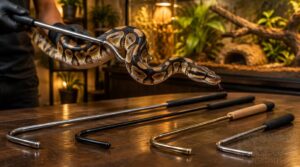
Picking your first snake hook shouldn’t feel like guesswork. Four things matter most, and you’ll see them broken down next: size and weight, materials, grip, and price. Nail those, and you’ll handle your snake with steady, chill control.
Hook Size and Weight
A snake hook for beginners comes down to hook size and weight, so get those right first.
Snake hook length matters most. Stick with 24 to 30 inches for solid control and feedback. Go shorter for rack work. Past 40 inches, you lose control.
Snake hook weight matters too. A 9-pound rating suits an adult ball python, because movement can double the load. Pick beginner snake hooks accordingly.
Materials and Build Quality
Weight is only half the story. Stainless steel hooks resist rust, sweat, and cleaning sprays, so they keep their shape for years.
Shaft materials matter just as much. Carbon fiber stays stiff and corrosion-proof. Aluminum is lighter but needs isolation from steel, or galvanic corrosion creeps in.
Skip flimsy joints. Durability starts at the weld, so check it.
Grip Comfort and Control
A solid shaft means nothing if the handle fights you. Grip comfort decides how steady your hand stays when a snake shifts.
Look for a nonslip grip made of foam or rubber. Sweaty palms and humid enclosures are real. Good ergonomic design also cuts fatigue.
Check three things:
- Groove or contoured handle shape
- Soft foam that absorbs moisture
- A secondary grip on longer hooks
Safe snake handling starts here.
Price and Long-Term Value
aren’t the same thing, and any snake hook buying guide should say so. Budget snake hooks cost $10 to $20, and they work fine. A $15 hook used weekly runs about $0.14 per use. A $40 hook costs $0.38, but may last five years.
Snake hook corrosion resistance and durability favor stainless steel. Always buy warranty-backed.
Top 7 Snake Handling Hooks for Beginners
Ready to pick your first hook? Below are seven beginner-friendly snake hooks worth your money, and each one gives you more control and keeps your snake chill. Find the one that fits your hand, your snake, and your budget.
1. Aquaneat Reptile Snake Hook
Nervous about your first handling session? The Aquaneat hook gives you room to breathe.
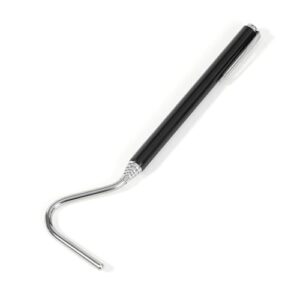
It extends from 7 to 26 inches, so you pick your distance and build confidence at your own pace. The round-headed tip is designed to minimize skin damage, which keeps your snake calm and you in control. Rust-resistant stainless steel controls the humid, messy reality of reptile rooms, and the non-slip grip stays steady when your hands aren’t.
Collapsed, it slips into a standard pocket.
Some users say it feels flimsy under load, and rough or frequent use can break it. Keep it for small, non-venomous snakes, and never use it on anything over 10 pounds. Big or defensive animals? Step up to something sturdier.
| Best For | Nervous or first-time snake handlers who want a pocket-sized, adjustable hook to keep a safe distance while handling lighter animals. |
|---|---|
| Material | Stainless Steel |
| Maximum Length | 26 inches |
| Minimum Length | 7 inches |
| Design Type | Adjustable |
| Weight Capacity | 10 lbs |
| Price | N/A |
| Additional Features |
|
- Extends from 7 to 26 inches, so you can choose your distance
- Round-headed hook is designed to minimize skin damage
- Rust-resistant stainless steel collapses to fit in a standard pocket
- Some users report it feels flimsy under load
- Not intended for moving anything over 10 pounds
- May break or fail with rough or frequent use
2. AIUWIZO Snake Hook Tool
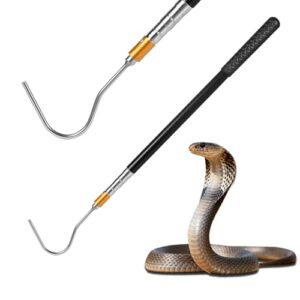
Imagine this: a ball python tucked behind your garage shelves, and you’re standing there with nothing but your bare hands. Not ideal.
The AIUWIZO hook fixes that. It extends from 16 inches to 61 inches, so you get over five feet of safe distance. The stainless steel shaft resists rust, and the rounded tip guides your snake without scraping. The rubber handle stays put when your palms sweat.
At $7.69, it’s a low-risk way to start. Check it when it arrives, though. Some units show burrs on the tip, so file it smooth, and test every locking section before you trust it.
| Best For | Budget beginners, hikers |
| Material | Stainless Steel |
| Maximum Length | 61 inches |
| Design Type | Retractable |
| Handle Type | Rubber |
| Weight Capacity | Not specified |
| Price | $7.69 |
| Additional Features | Four locking sections, all-metal frame |
| Best For | Budget-conscious beginners, hikers, and campers who want an inexpensive, extendable hook for occasional snake handling, wildlife observation, or reaching high shelves. |
|---|---|
| Material | Stainless Steel |
| Maximum Length | 61 inches |
| Minimum Length | 16 inches |
| Design Type | Retractable |
| Weight Capacity | N/A |
| Price | $7.69 |
| Additional Features |
|
- Telescopes from 16 inches to 61 inches, giving over five feet of safe distance
- Stainless steel hook with a non-slip rubber handle and a rounded metal tip for secure, gentle handling
- Lightweight at 6.7 ounces and collapses down for easy carrying, at a low price of $7.69
- Some units arrived with broken sliding hook mechanisms
- The hook tip may have burrs that need filing before smooth use
- Locking sections may fail to secure properly on certain units
3. Repti Zoo Snake Hook Tool
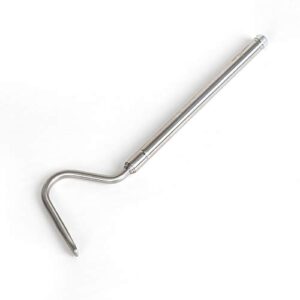
Think of this hook as the pocketknife of snake handling. It collapses to 7.8 inches, slips into a pocket, and stretches to 23.6 inches when you need reach.
Use it to guide a small snake, nudge it aside during tank cleaning, or reach into tight corners. The stainless steel build and smooth duck-billed tip keep things gentle.
Know the limits. It helps up to 2.2 lb, and it can reclose under downward pressure when fully extended. Bigger snake? Skip it. Venomous? Never.
| Best For | Beginners with small non-venomous snakes needing a compact tool for everyday care |
| Material | Stainless Steel |
| Maximum Length | 23.6 inches |
| Design Type | Collapsible |
| Handle Type | Standard |
| Weight Capacity | 2.2 lbs |
| Price | Budget |
| Additional Features | Collapses to 7.8 inches, tank cleaning capability, wrist strap hole |
| Best For | Beginners with small non-venomous snakes who need a compact, pocket-sized tool for everyday care. |
|---|---|
| Material | Stainless Steel |
| Maximum Length | 23.6 inches |
| Minimum Length | 7.8 inches |
| Design Type | Collapsible |
| Weight Capacity | 2.2 lbs |
| Price | Budget |
| Additional Features |
|
- Collapses to 7.8 inches to fit in a pocket and extends to 23.6 inches for reach.
- Stainless steel build with a smooth duck-billed tip keeps handling gentle.
- Works well for guiding small snakes, cleaning tanks, and reaching tight corners or high shelves.
- Only rated for snakes up to 2.2 lb, so it can be too small for larger snakes.
- Can reclose under downward pressure when fully extended.
- Not designed for use with venomous reptiles.
4. Stainless Steel Snake Hook Tool
[ORIGINAL TEXT]
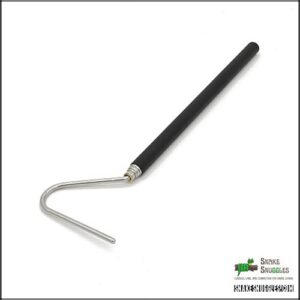
Need a hook that won’t empty your wallet? The Stainless Steel Snake Hook Tool costs $7.99 and folds down to a packaged 12.75 inches, so it rides easily in a gear bag. Extended, it reaches 39 inches and weighs just 3.84 ounces.
The rubber grip keeps control in your hand, and the hook geometry holds small snakes without pinching. Chill, steady moves do the rest.
The catch? The plastic handle can feel flimsy, the hook wiggles slightly, and it may bend under heavy loads. Keep it light. Garter snakes and juveniles are perfect. Anything chunky needs sturdier gear.
| Best For | Small snakes, juveniles, beginners on a budget |
| Material | Stainless steel |
| Length | 39 inches extended |
| Design | Retractable |
| Grip | Rubber |
| Capacity | 2 lbs |
| Weight | 3.84 ounces |
| Price | $7.99 |
| Extra | Aquarium maintenance, reaching vents |
[/ORIGINAL TEXT]
| Best For | Beginners on a budget who need a lightweight, portable hook for handling small snakes, garter snakes, and juvenile reptiles. |
|---|---|
| Material | Stainless Steel |
| Maximum Length | 39 inches |
| Minimum Length | 12.75 inches |
| Design Type | Retractable |
| Weight Capacity | 2 lbs |
| Price | $7.99 |
| Additional Features |
|
- Retractable design that is easy to carry and store
- Rubber grip and hook shape give safe, steady control of small reptiles
- Stainless steel construction with a 39-inch reach that also helps with high objects like vents and shelves
- Plastic handle can feel flimsy
- Hook wiggles slightly in the mounting during use
- May bend under heavy loads, so it is not suited for larger or heavier snakes
5. Telescopic Snake Hook Reptile Catcher Tool
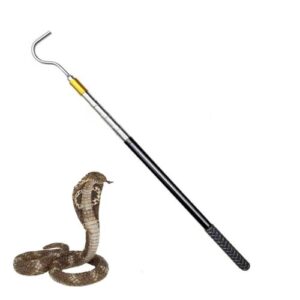
Need reach without the bulk? The Telescopic Snake Hook Reptile Catcher Tool ($5.59) collapses to 16 inches and stretches to 61, so you’re covered either way.
Five individually lockable sections let you dial in your length. Pull a corn snake from a vivarium. Reach a copperhead tucked under deck boards. Same tool, zero stress.
The stainless steel head is reinforced with rivets, so it holds up under tension. The rubber handle keeps your grip steady. At just 6.7 ounces, it’s light enough to control all day, and it’s designed for rattlesnakes and pythons too.
Heads-up: some buyers found the sections tight to lock, and a few received units with threading issues. Test every section before you head into the field. No warranty details are listed, so inspect it on arrival.
| Best For | Reptile enthusiasts and outdoor handlers who need an extendable, lightweight tool for safely catching, moving, or observing snakes, including rattlesnakes, pythons, and copperheads. |
|---|---|
| Material | Stainless Steel |
| Maximum Length | 61 inches |
| Minimum Length | 16 inches |
| Design Type | Telescopic |
| Weight Capacity | N/A |
| Price | $5.59 |
| Additional Features |
|
- Extends from 16 inches to 61 inches, so it works for tight spaces and longer reach.
- Has five individually lockable sections, so you can set the exact length you need.
- Has a stainless steel build with a rivet-reinforced head built to handle tension, plus a rubber handle, all at just 6.7 ounces.
- No corrosion resistance details are given for the stainless steel.
- The rubber handle’s makeup is not described, including UV resistance and grip texture.
- No warranty, replacement parts, or storage case information is included.
6. Bytcew Snake Hook Catcher Pole
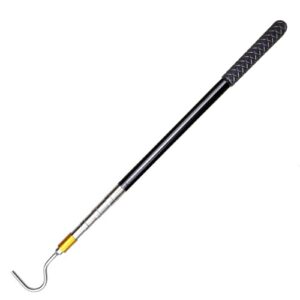
Want even less weight in your hand? The Bytcew Snake Hook Catcher Pole ($18 to $60) weighs just 5.6 ounces, so long sessions won’t wear you out.
It extends from 16 to 61 inches across five stainless steel sections, and each one locks on its own. The head is reinforced with rivets, so it stays put under tension. The rubber handle keeps your grip steady, even with sweaty palms. Silver white finish only, so don’t expect color options.
Know the limit: 2 pounds when fully extended. That’s perfect for garter snakes and small rat snakes, not heavy bruisers. It’s for adults only.
One catch. Some users report tight locks between sections. Test every joint before you head into the field. Twist each one firmly, then lock it down.
| Best For | Reptile enthusiasts and adult hobbyists who want a lightweight, extendable tool for catching and handling small snakes like garter snakes and small rat snakes. |
|---|---|
| Material | Stainless Steel |
| Maximum Length | 61 inches |
| Minimum Length | 16 inches |
| Design Type | Telescopic |
| Weight Capacity | 2 lbs |
| Price | $18 to $60 |
| Additional Features |
|
- Weighs just 5.6 ounces, so long sessions won’t wear you out
- Extends from 16 to 61 inches with five sections that each lock on their own
- Rivet-reinforced head stays put under tension, and the rubber handle keeps your grip steady
- Holds only 2 pounds when fully extended, so it’s not for heavy snakes
- Some users report tight locks between sections, so each joint needs testing before use
- Comes in silver white only, with no color options
7. Wamlet Snake Grabber Hook Tool
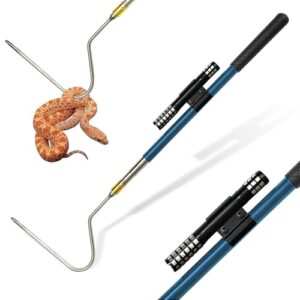
Need more reach? The Wamlet Snake Grabber Hook Tool stretches from 22.4 to 64.9 inches, so you can keep your distance and stay chill.
It weighs just 0.25 kg (8.8 ounces), and the stainless steel build holds up. The flat, non-sharp hook point slides under a snake without scraping scales. Collapsed, it measures 15.67 x 6.5 x 1.57 inches, so it fits in a daypack.
Hiking at dusk? The built-in LED flashlight helps you spot snakes early. Just pack batteries, because they’re not included. That makes it a solid pick for camping, hiking, and pet reptile management.
Know the limits. It’s built for small snakes, and it may bend or break on anything over 36 inches. Some users say telescoping isn’t smooth, so test each section before heading out.
| Best For | Hikers, campers, and pet reptile owners who need a lightweight, extendable tool to move or catch small snakes (under 36 inches) from a safe distance. |
|---|---|
| Material | Stainless Steel |
| Maximum Length | 64.9 inches |
| Minimum Length | 22.4 inches |
| Design Type | Telescopic |
| Weight Capacity | N/A |
| Price | N/A |
| Additional Features |
|
- Extends from 22.4 to 64.9 inches, giving you plenty of reach while collapsing to fit in a daypack
- Stainless steel build with a flat, non-sharp hook point that slides under a snake without scraping its scales
- Built-in LED flashlight improves visibility in low-light conditions
- May bend or break when used on snakes longer than 36 inches
- Some users report that the sections don’t telescope smoothly
- Flashlight batteries are not included and must be purchased separately
How to Use a Snake Hook Safely: Support Your Pet and Reduce Stress
You’ve picked your hook. Now let’s use it right. Safe snake handling starts with a calm, predictable routine, and a snake hook for beginners makes that routine easy to learn.
Nail your snake hook technique in five steps:
- Tap the mid-body gently first.
- Slide the hook under the body, one-third to halfway from the head.
- Lift smoothly and support the full weight.
- Add your free hand only once the snake settles.
- Keep sessions short and calm.
That’s real snake stress reduction. Your snake learns the hook means predictable, gentle contact, not food and not danger.
A snake that learns the hook means gentle, predictable contact will see it as neither food nor danger, and stay calm
Beginner mistakes handling matters too. Never jerk the snake off the hook, never use it to punish, and don’t keep re-hooking when your snake shifts.
How to Clean, Inspect, and Store Your Snake Hook

Your hook just did its job. Now it needs yours. A solid snake hook maintenance routine keeps it safe, clean, and ready for every session. For the weekly disinfecting step, a reptile-safe cage disinfectant works well on hook handles and enclosures without leaving harsh residues behind.
Here’s the routine:
- Wash with hot water and dish soap after every session.
- Disinfect weekly, keeping surfaces wet for 10 minutes.
- Rinse well and air dry completely.
- Run a monthly snake hook inspection for rust, bends, and cracked grips.
- Choose proper snake hook storage: a dedicated rack, away from sunlight.
Skip ammonia and phenol cleaners. They leave toxic residues.
Ignoring this is one of those beginner mistakes handling guides rarely mention. A bent or slippery hook makes safe snake handling harder, and your snake feels every wobble. Keep it clean. Keep it sound. Stay chill.
Frequently Asked Questions (FAQs)
How do I handle my snake for the first time?
Wait 48 hours after feeding. Then tap your snake’s mid-body with a snake hook for beginners, lift one-third from the head, and let it glide over your hands. Stay calm. Don’t grip. Let it explore.
What are some good snake hooks?
Funny how the best snake hook for beginners is the one that keeps you boring. Grab the Aquaneat Reptile Snake Hook: 24-inch stainless steel, rubber grip, under $ Chill, simple, and your snake barely notices.
How to properly use a snake hook?
Ten seconds, total mastery. Tap mid-body, slide under, lift, then support with your hand.
Snake hook practice, good snake hook grip design, and snake hook portability help beginner reptile care. Smooth snake handling techniques follow.
What can I use instead of a snake hook?
Nothing screams confident keeper like wrestling a snake with a broom.
Safe hook alternatives are pleasantly dull: a ventilated tub or secondary enclosure. Guide your snake in, lock the lid, done.
Beginner reptile care wins.
What is the best beginner snake for handling?
Corn snakes are the best pick in this beginner snake owner guide. They stay chill in your hands, top out at 3 to 5 feet, and eat frozen prey without drama. Plenty of color morphs, too.
Are snake sticks recommended for beginners?
A hook is a scalpel, not a butter knife. Snake hooks for beginners work best with supervision, not solo. Start with tongs, build skill, then graduate. Snake hook safety demands practice, so find a mentor.
How to handle snakes for beginners?
Keep sessions to 5–15 minutes while you learn.
Approach from the side, use a snake hook for beginners to lift the mid-body, let it drape, and move slowly. Calm hands win. Skip the head grabs.
Can you use hooks on all snake species?
Nope. A snake hook for beginners works on thick-bodied pythons and boas, but slender racers slide right off. Big constrictors outgrow standard hooks. Venomous snakes need pro gear and training. Know your species first.
How often should beginners practice hook handling?
Hook training is like learning guitar: short, steady practice beats cramming. Build a handling practice routine of two or three sessions weekly, five to ten minutes each. Consistency is your best snake handling safety tip.
What alternatives exist to traditional snake hooks?
You don’t always need a traditional hook. Snake tongs give venomous species more distance, while telescopic grabbers and soft nets handle capture from afar. Inspect every tool before use. Beginner mistakes start with worn gear.
Conclusion
Ever wish you could handle your snake with zero nerves? You can. The right hook turns a tense moment into a calm one.
Snake handling hooks for beginners aren’t about fear. They’re about control and respect. Pick a solid weld, a grip that won’t slip, and a length that suits your animal. Then tap gently, support the body, and stay chill.
Your snake learns your routine. You learn your confidence. Start with the hook today.