This site is supported by our readers. We may earn a commission, at no cost to you, if you purchase through links.

Most snakebite victims never saw the strike coming—not because the snake was hiding, but because they misread every warning signal leading up to it. A rattlesnake’s S-coil isn’t aggression; it’s a last resort after subtler cues went unnoticed. That distinction matters enormously when you’re standing three feet from a timber rattler on a hiking trail with no clear exit route.
Snake handling hooks exist precisely for these moments, offering mechanical distance to make deliberate, controlled decisions rather than panicked ones. Knowing which hook to use, how to interpret a snake’s behavior, and understanding the gear that separates you from its fangs is critical. This knowledge marks the difference between a story you tell and one told about you.
Table Of Contents
- Key Takeaways
- Assess Outdoor Snake Encounter Risk
- Choose The Right Snake Hook
- Compare Hook Materials and Designs
- Aluminum Hooks for Lightweight Field Handling
- Steel Hooks for Large or Strong Snakes
- Stainless Steel for Corrosion Resistance
- Copper Hooks for Lightweight Antimicrobial Handling
- U-shaped Hooks for Better Body Support
- Avoid Poorly Balanced or Flimsy Hooks Outdoors
- Consider Collapsible Hooks for Hiking and Herping
- Top 10 Snake Handling Hooks
- 1. ICLOVER Foldable Snake Catcher Tool
- 2. 4Fit 52 Inch Pro Snake Tongs
- 3. DocSeward Balanced Snake Hook
- 4. Repti Zoo Collapsible Snake Hook
- 5. Aquaneat Extendable Stainless Steel Snake Hook
- 6. Bytcew Telescopic Snake Hook
- 7. Jihaqua Extensible Stainless Steel Snake Hook
- 8. Jihaqua Stainless Steel Snake Hook
- 9. Zoo Med Deluxe Collapsible Snake Hook
- 10. Mabor Retractable Stainless Steel Snake Hook
- Wear Protective Snake Safety Gear
- Snake Gaiters for Ankle-to-knee Bite Protection
- Snake Boots for Higher Leg Coverage
- Puncture-resistant Gloves for Safer Hand Positioning
- Eye Protection Against Sudden Head Strikes
- Thick Welder’s Gloves for Added Handling Security
- Snake Sacks for Controlled Temporary Containment
- Why No Gear Guarantees Complete Bite Immunity
- Use Snake Hooks Safely
- Apply Hook-and-Tail Handling
- Plan for Snakebite Emergencies
- Carry Pressure Bandages in a Field First-aid Kit
- Use Pressure-immobilization When Appropriate
- Keep Emergency Contact Cards Accessible
- Know The Nearest Antivenom-capable Hospital
- Bring GPS for Precise Location Sharing
- Carry a Satellite Phone or Locator Beacon Remotely
- Seek Immediate Medical Care After Any Venomous Bite
- Prevent Future Outdoor Encounters
- Frequently Asked Questions (FAQs)
- Conclusion
Key Takeaways
- Reading a snake’s behavioral signals—retreating posture versus a raised S-coil—before reaching for any tool is what keeps a routine encounter from turning dangerous.
- Hook length isn’t preference; it’s geometry: match it to the snake’s body length so your hand stays outside the strike zone and the animal’s weight is evenly supported.
- Protective gear (gaiters, puncture-resistant gloves, eye protection) works as a backup layer, not a substitute for distance and technique—no equipment eliminates bite risk entirely.
- Prevention beats response every time: clearing debris, sealing structural gaps, and controlling rodents removes the conditions that draw snakes close to people in the first place.
Assess Outdoor Snake Encounter Risk

Before you reach for a hook, you need to understand what you are dealing with. A snake’s behavior in the moment tells you more than its species alone—and reading those signals correctly could save you from a dangerous mistake.
The same close observation that helps you read your snake’s habitat signals also trains your eye to catch subtle behavioral cues before a situation escalates.
Here’s what to assess before you make a move.
Recognize Retreat, Defensive Posture, and Strike Triggers
When you spot a snake, watch its body tension and head orientation first—these tell you everything. A retreating snake keeps its head low and angled away, tail flicking intermittently to create distance, and actively scans for an escape path. That posture signals retreat, not threat.
Recognizing this distinction is foundational to safe snake handling techniques and understanding snake behavior to prevent attacks before they escalate.
Watch for Rattling, Hissing, Coiling, and Head Flattening
Once a snake shifts from retreat to defense, its signals stack fast. Rattle intensity cues escalate with proximity—that buzzing grows louder as you close distance. Hiss frequency escalation follows the same pattern. Watch coil posture stages too: a loose curve tightens into a raised S-shape ready to fire. Head flattening signals peak threat.
Multi‑signal integration is your safest read.
Additionally, many species employ muscular coiling defense to prepare for striking.
Identify Local Venomous Versus Non-venomous Snakes
Reading behavioral signals is only half the equation—knowing what you’re dealing with changes everything about how you respond. Head shape offers your first clue: venomous pit vipers usually display a triangular, spade-like profile noticeably wider than the neck. Pupil morphology matters too—elliptical slit pupils often indicate ambush hunters.
Key snake identification markers to assess quickly:
- Scale Texture: Keeled, ridged scales appear frequently on venomous species; smooth scales are more common in nonvenomous snake species.
- Habitat Indicators: Rocky sun-warmed outcrops and brush edges favor venomous snakes; gardens and wetlands typically attract nonvenomous snake species.
- Seasonal Patterns: Many venomous species emerge after rainfall events, while nonvenomous snakes often remain active across broader seasonal windows.
- Tail Features: Rattles or segmented tail tips confirm rattlesnakes; nonvenomous snakes taper smoothly without such structures.
Carrying regional field guides and practicing snake behavior education before reaching for your snake hooks greatly sharpens your identification accuracy under pressure.
Decide When Not to Handle The Snake
Even with solid species identification behind you, risk assessment doesn’t stop there. Some encounters simply aren’t yours to manage.
High stress signals—rapid body tremors, a flattened neck, hissing near a limited escape path, or proximity to livestock—mean the risk calculus tips sharply against handling.
Nighttime visibility concerns compound that danger further.
Trust those indicators; snake behavior education exists precisely to tell you when to step back.
Call Wildlife Removal for High-risk Encounters
When risk assessment points beyond your skill set, calling professional wildlife removal isn’t a defeat—it’s the right call. Professionals carry proper PPE, snake hooks, tongs, and legal authorization you may lack.
- Confirm response time and service area upfront
- Ask about legal obligations under local wildlife protection laws
- Request written cost estimates before work begins
- Share coordination procedures with your household beforehand
Choose The Right Snake Hook

Picking the right hook isn’t just about preference — it’s what keeps you and the snake safe. The size, width, and design all depend on the specific snake you’re handling.
Here’s how to match the right tool to the snake in front of you.
Match Hook Length to Snake Body Length
Hook length isn’t arbitrary—it’s your first line of defense. A proper length-to-body ratio ensures midsection support while keeping your hand well clear of the strike zone. Think of it as your hook balance point: too short collapses control, too long sacrifices maneuverability.
Girth matching and variable length adjustment work together, so selecting appropriate snake hook length always starts with accurate measurement.
Use 24–36 Inch Hooks for Snakes Under 3 Feet
For snakes under 3 feet, a 24–36-inch hook provides the ideal balance between reach and control. This range ensures your hand remains 2–3 feet from the strike zone while supporting proper weight distribution along the snake’s body.
Ergonomic grip and travel portability are equally critical—these hooks are lightweight enough for field hikes, enhancing practicality without compromising functionality.
Rubber or plastic hook tip materials offer cushioned contact, enabling stealth-approach techniques and safer captures. This design smooths interactions, prioritizing both handler confidence and animal welfare.
Use 36–48 Inch Hooks for 3–6 Foot Snakes
When you’re facing a 3–6 foot snake outdoors, a 36–48 inch hook keeps your hands well outside the strike zone. Hook ergonomics matter here—a textured, balanced grip improves terrain adaptability across uneven ground or wet grass. Hook width and weight distribution for heavy-bodied snakes prevent rolling or slipping mid-lift.
These safe snake capture techniques also align with maintenance protocols that keep shafts corrosion-free.
Use 48–60 Inch Hooks for Snakes Over 6 Feet
Once you’re dealing with a snake over 6 feet, the margin for error shrinks fast. A 48–60-inch hook gives you roughly 5 feet of working distance—enough to stay outside the strike zone while maintaining control of heavy-bodied snakes.
Key advantages of this snake handling hook size guide:
- 48–60-inch reach keeps your wrist and shoulder relaxed, reducing fatigue through Ergonomic Handle Design
- Weight Distribution Techniques improve when the hook contacts the midsection, preventing dangerous writhing
- Hook Maintenance Routine matters more with heavier shafts—inspect joints and tips before every use
- Protective equipment for snake encounters should always accompany these hooks, including cut-resistant gloves and eye protection
Choose Mini-hooks for Hatchlings or Small Snakes
Hatchlings demand the same precision as adults—just on a smaller scale. Mini hooks under 12 inches offer Curved Hook Tips that follow a tiny snake’s natural contours without causing body flattening, while lightweight aluminum shafts keep the lift stress-free.
Ergonomic Grips support your control during Mini Hook Training sessions.
Follow the snake handling hook size guide: 6–10 inches gives you safe, precise positioning every time.
Select Wider Hooks for Heavy-bodied Snakes
Heavy-bodied snakes demand Girth Matching—your Hook width and weight distribution for heavy-bodied snakes must align with the animal’s midsection. Wider hooks spread load across a broader contact area, reducing scale stress and preventing dangerous slips during an outdoor snake encounter.
- Distribute pressure evenly using snake handling hooks rated for high Load Rating thresholds
- Check Edge Sharpness regularly to prevent accidental skin tearing on thick-bodied specimens
- Perform Stress Inspection on shafts after each heavy-snake session
- Prioritize Terrain Adaptability when selecting wider hooks for uneven ground
Select Narrow Hooks for Precision Handling
While wide hooks excel at supporting bulk, narrow hooks—with jaw openings of 0.5 to 1.5 inches—offer precision leverage in tight spots like brush piles or rocky ledges. Their edge design minimizes scale stress during safe snake capture techniques, and their load limits (2–5 lbs) suit slender species well.
| Feature | Narrow Hook | Application |
|---|---|---|
| Jaw Opening | 0.5–1.5 inches | Small-to-medium snakes |
| Precision Leverage | 15–25° tip angle | Tight terrain maneuvering |
| Load Limits | 2–5 lbs lift rating | Slender, lightweight species |
Training drills emphasizing steady, parallel hook placement ensure appropriate snake handling equipment becomes second nature during outdoor encounters.
Compare Hook Materials and Designs
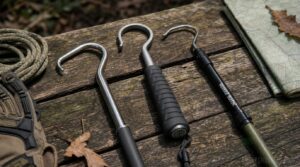
Not all snake hooks are built the same, and the material and design you choose can make a real difference in how safely and effectively you handle a snake. Each option has its own strengths, depending on the size of the snake, your environment, and how far you’re traveling.
Here’s how the most common materials and designs compare.
Aluminum Hooks for Lightweight Field Handling
Aluminum snake hooks built from anodized aircraft grade aluminum rod offer a dependable balance of strength and portability that serious field work demands.
Swivel Head Alignment lets the tip conform to irregular body contours, while Telescoping Extension Mechanics adjust reach without swapping tools mid-encounter.
Always verify Load Rating Validation specs before use.
- Anodized Finish Benefits include hardened surfaces that resist scratching during repeated field use
- Corrosion Resistance Strategies improve longevity in humid or wet outdoor environments
- Telescoping models compress for pack-friendly transport yet extend to full working length quickly
- Swivel heads reduce stress on the snake’s body during capture
- Check manufacturer’s load ratings to match your snake hooks to the species you’re handling
Steel Hooks for Large or Strong Snakes
When aluminum simply won’t hold, steel steps in. For heavy-bodied snakes—large constrictors, thick-necked vipers—steel hooks deliver the rigidity and load capacity that serious field work demands.
The Midwest Standard 40 Hook, with its reinforced neck, passes Stress Analysis and Rigidity Testing that lighter alloys can’t match.
Follow Maintenance Protocols religiously: lubricate joints, inspect for micro-bends, and store dry.
Hook Ergonomics and proper hook width and weight distribution for heavy-bodied snakes matter enormously here.
Stainless Steel for Corrosion Resistance
Stainless steel earns its reputation through chemistry: a chromium oxide layer—just nanometers thick—self-repairs when scratched, ensuring durability in harsh conditions like swamp mud and saltwater exposure.
Grades enhanced with molybdenum pitting resistance, like 316, withstand chloride-rich environments where cheaper alternatives fail.
The passivation process seals the surface permanently, locking in corrosion resistance.
For professional snake handling equipment, stainless is the standard, combining reliability and longevity in demanding fieldwork.
Copper Hooks for Lightweight Antimicrobial Handling
Copper offers something stainless steel can’t match: passive antimicrobial performance built into the alloy composition itself, neutralizing surface microbes between cleanings without chemicals. This is critical for outdoor risk assessments involving multiple animals.
- Weight advantage reduces joint fatigue during extended surveys
- Antimicrobial performance protects against cross-contamination
- Corrosion management requires dry storage after each use
- Maintenance routine: wipe with a non-abrasive cloth regularly
U-shaped Hooks for Better Body Support
When managing a heavy-bodied species like the diamondback rattlesnake, hook geometry matters more than most handlers realize. A U-shaped hook’s Broad Support Curve and Even Load Distribution ensure weight is spread evenly across the midsection, adhering to guidelines for hook width and weight distribution in heavy-bodied snakes.
The Anti-Slip Design and Smooth Contact Surface—core snake handling techniques—work together to maintain the Structural Stability Axis during lifts. This combination significantly reduces strike risk by prioritizing control and minimizing stress on the snake.
Avoid Poorly Balanced or Flimsy Hooks Outdoors
A flimsy hook isn’t just inconvenient—it’s a liability. Poor Weight Distribution and material fatigue turn a routine lift into a loss of control.
Before trusting any hook outdoors, check for these failure points:
- Uneven Balance Testing under load
- Flexing shafts indicating material fatigue
- Corroded joints lacking corrosion prevention
- Off-axis heads disrupting ergonomic tool design
Choose equipment built to last.
Consider Collapsible Hooks for Hiking and Herping
When pack space is tight, a foldable design earns its place. Collapsible snake hooks compact to roughly one-third their extended length, delivering real weight reduction—20 to 40 percent lighter than fixed models—without sacrificing the 24–60 inches of reach that herpetology fieldwork demands.
Rapid deployment via locking mechanisms keeps you ready on the trail. Clean joints after muddy outings—a simple maintenance tip that extends tool life substantially.
Top 10 Snake Handling Hooks
Picking the right hook makes a real difference when you’re face-to-face with a snake that’d rather not cooperate. The market has plenty of options, but only a handful consistently earn high marks for durability, reach, and field reliability.
Here are ten worth considering.
1. ICLOVER Foldable Snake Catcher Tool
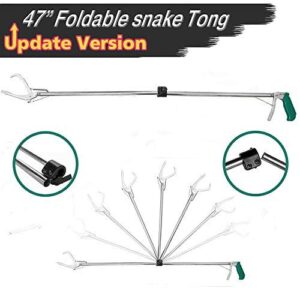
The ICLOVER Foldable Snake Catcher extends to a full 52 inches—enough distance to keep you well clear of even an agitated strike—then collapses to just under 27 inches for easy stowage in a field pack.
Its aluminum alloy tube keeps weight around 1.2 pounds, while the stainless steel jaw resists corrosion through wet seasons.
Three locking levels let you calibrate grip force to the snake’s body size, reducing tissue compression without risking escape during relocation.
| Best For | Hikers, campers, and backyard homeowners who want a safe, humane way to relocate small-to-medium snakes without getting too close. |
|---|---|
| Extended Length | 47 in |
| Material | Stainless steel |
| Collapsible Design | Yes, 26 in |
| Non-Slip Handle | Rubber-coated |
| Venomous Use | Not recommended |
| Weight | Not specified |
| Additional Features |
|
- Extends to 47 inches, giving you plenty of distance from a snake before it even knows what’s happening
- Folds down to about 26 inches, so it fits easily in a pack or truck bed without getting in the way
- Wide-angle jaws and a rubber grip handle make it easy to control, even when your hands are sweaty or the situation’s a little stressful
- Some users have reported the joint connection breaking under load, so it may not hold up with heavier snakes
- A few units showed up missing the lock pin, which is kind of a big deal when you need a secure grip
- Not the right tool for large snakes or venomous species that need professional-grade equipment
2. 4Fit 52 Inch Pro Snake Tongs
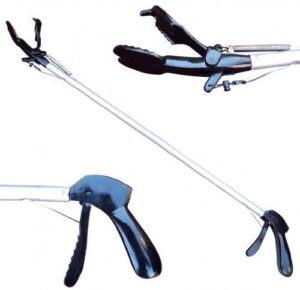
The 4Fit Pro Tongs take a different mechanical approach—where the ICLOVER relies on a folding jaw assembly, these 52-inch aluminum alloy tongs use spring-loaded jaws with a double-coated tip that cradle the snake’s body without pinching scales. That matters more than you’d think when handling a defensive animal.
The non-slip pistol grip stays secure even in wet conditions, and the fully closed-tip design prevents mid-lift escapes. These features prioritize control and safety during handling.
However, the front-heavy balance can fatigue your wrist during extended sessions, so short, controlled lifts work best to maintain precision and reduce strain.
| Best For | Anyone who needs to safely relocate snakes from their yard, campsite, or pond without getting anywhere near them. |
|---|---|
| Extended Length | 52 in |
| Material | Aluminum |
| Collapsible Design | No |
| Non-Slip Handle | Pistol-grip contoured |
| Venomous Use | Suitable |
| Weight | 15.9 oz |
| Additional Features |
|
- Spring-loaded jaws apply even pressure, so you’re not injuring the snake mid-catch
- 52 inches of reach keeps you at a comfortable distance from venomous or defensive animals
- One-piece build means no assembly hassle—just grab it and go
- Front-heavy feel makes your wrist work overtime during longer sessions
- The aluminum shaft and cable can bend under load, which raises some durability red flags
- Jaw width may not cut it for larger snakes, and the grip can feel awkward for smaller hands
3. DocSeward Balanced Snake Hook
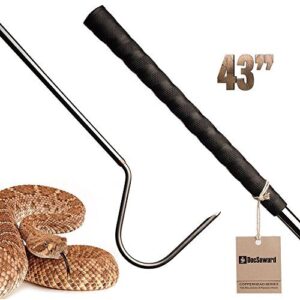
Where the 4Fit leans front-heavy, the DocSeward Balanced Snake Hook corrects exactly that problem. Its copper ferrule shifts weight distribution toward the rear, eliminating strain during extended use.
The stainless-steel, beveled-tip hook ensures clean, non-cutting or non-pinching engagement under a snake’s mid-body, while the rubber grip maintains hold even in muddy conditions. Available in 43-inch and 33-inch lengths, it reliably handles snakes in the 3–7 foot range.
| Best For | Snake handlers, wildlife educators, and serious hobbyists who regularly work with mid-to-large snakes and want a tool built to last through long sessions in the field. |
|---|---|
| Extended Length | 43 in |
| Material | Stainless steel |
| Collapsible Design | No |
| Non-Slip Handle | Rubber golf-club grip |
| Venomous Use | Suitable |
| Weight | 8 oz |
| Additional Features |
|
- Rear-weighted balance cuts fatigue fast—you can handle snakes for longer without your arm giving out.
- The beveled stainless-steel tip slides under a snake smoothly without pinching or cutting, which keeps the animal calm.
- Rubber grip holds firm even when your hands are wet or muddy, so you stay in control.
- At $61, it’s a real investment—probably overkill if you’re only moving the occasional garden snake.
- The 43-inch max length can feel limiting with very large or heavily coiled snakes.
- Like any hook, it rewards good technique—a rushed or careless user can still let a snake slip free.
4. Repti Zoo Collapsible Snake Hook
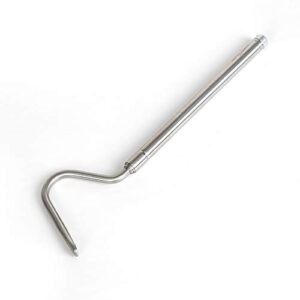
Portability matters when you’re working in the field. The Repti Zoo Collapsible Snake Hook folds down to just 7.8 inches—small enough for a jacket pocket—yet extends to 23.6 inches when you need it.
The stainless steel shaft with its rounded, flattened tip engages safely under a small snake’s mid-body without pinching.
At roughly 0.2 lb, fatigue isn’t a concern. Just note its limits: manufacturer guidance restricts use to non-venomous snakes under approximately 2.2 lb.
| Best For | Hobbyists who keep small, non-venomous snakes and want a compact, no-fuss hook they can toss in a pocket and forget about until they need it. |
|---|---|
| Extended Length | 23.6 in |
| Material | Stainless steel |
| Collapsible Design | Yes, 7.8 in |
| Non-Slip Handle | Standard grip |
| Venomous Use | Not recommended |
| Weight | 0.2 lb |
| Additional Features |
|
- Folds down to 7.8 inches, so it fits in a jacket pocket or tool bag without taking up real estate
- Extends to nearly two feet, giving you solid reach inside most home terrariums
- The rounded steel tip is gentle enough to slide under a snake’s body without causing stress or injury
- Not built for venomous or larger, heavier snakes—the hook can lose rigidity under serious downward force
- Attaching a wrist strap is awkward; the anchor point is tiny and may need a bit of DIY improvisation
- The retractable design trades some stiffness for portability, which can feel less confident when handling a squirmy or aggressive animal
5. Aquaneat Extendable Stainless Steel Snake Hook
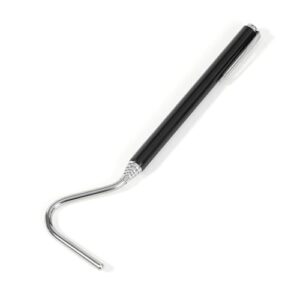
For encounters with smaller snakes—ball pythons, corn snakes, hatchlings—the Aquaneat Extendable Stainless Steel Snake Hook effectively covers that range. Its telescoping stainless steel shaft adjusts from 7 inches up to 26 inches, locking securely at your chosen length. The rounded tip ensures safe repositioning without damaging scales. Weighing just 1.76 oz, it handles light tasks without causing fatigue.
However, stick to handling non-venomous, lighter-bodied species; repeated use on muscular snakes may bend the hook.
| Best For | Beginner snake keepers and hobbyists who handle small, non-venomous species like ball pythons or corn snakes. |
|---|---|
| Extended Length | 26 in |
| Material | Stainless steel |
| Collapsible Design | Yes, 7 in |
| Non-Slip Handle | Non-slip grip |
| Venomous Use | Not recommended |
| Weight | 1.76 oz |
| Additional Features |
|
- Telescopes from 7 to 26 inches, giving you flexible reach inside a terrarium or out in the field
- Rounded hook tip keeps handling stress low and avoids scratching delicate scales
- Weighs next to nothing (1.76 oz) and collapses small enough to pocket
- Feels flimsy under the weight of larger, more muscular snakes
- Not built for venomous species — the load capacity just isn’t there
- Some users report the hook bending or breaking after repeated use
6. Bytcew Telescopic Snake Hook
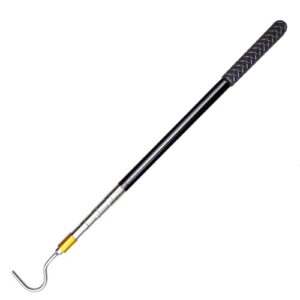
The Bytcew Telescopic Snake Hook delivers exceptional reach and safety, collapsing to 12 inches for compact storage and extending to a full 60 inches to maintain a safe distance from defensive strikes.
Constructed with a corrosion-resistant anodized aluminum shaft, it withstands wet field conditions. The Y-shaped hook head securely cradles a snake’s mid-body without damaging scales, ensuring humane handling.
A textured grip and locking sections prevent accidental collapse during use, enhancing stability and control.
This tool is best suited for small to mid-sized snakes, though heavier specimens may exceed its load capacity.
| Best For | Hikers, backyard gardeners, and reptile hobbyists who need a lightweight, affordable tool for safely handling small snakes without getting too close. |
|---|---|
| Extended Length | 61 in |
| Material | Stainless steel |
| Collapsible Design | Yes, 16 in |
| Non-Slip Handle | Rubber handle |
| Venomous Use | Suitable |
| Weight | 0.35 lb |
| Additional Features |
|
- Extends from 16 in to 61 in with five lockable sections, giving you solid reach without needing to hover over the snake
- Stainless steel build with a rivet-reinforced head holds up to regular use and wet conditions
- At just 0.35 lb and $9.99, it’s an easy grab for anyone building out a basic snake-handling kit
- The 2 lb load limit means larger or heavier snakes are off the table — you’d need a beefier tool
- Some users have flagged the hook’s stability and overall build quality as inconsistent, so it may not hold up to heavy professional use
- The hook size runs small, which can make it tricky to get a secure hold on anything bigger than a small to mid-sized snake
7. Jihaqua Extensible Stainless Steel Snake Hook
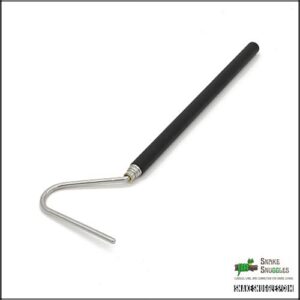
The Jihaqua Extensible Stainless Steel Snake Hook extends to 39 inches, providing safe handling of adult corn snakes or mid-sized rattlesnakes without direct hand contact. Its stainless steel construction ensures corrosion resistance in wet field conditions, while the rubberized grip maintains a secure hold, even in muddy terrain.
The duckbill-style hook is designed to cradle a snake’s midsection without causing scale abrasion, prioritizing humane handling. This feature ensures minimal stress to the reptile during capture or relocation.
One caveat: the plastic handle may feel fragile under sustained pressure. For heavy or frequent use, reinforcing it with tape is recommended to enhance durability.
| Best For | Hobbyist reptile keepers and field herpers who need a portable, hands-free way to safely handle small to medium snakes without putting themselves at risk. |
|---|---|
| Extended Length | 39 in |
| Material | Stainless steel |
| Collapsible Design | Yes |
| Non-Slip Handle | Rubber overlay |
| Venomous Use | Limited |
| Weight | Not specified |
| Additional Features |
|
- Extends to 39 inches, giving you plenty of reach to handle corn snakes or mid-sized rattlesnakes without getting too close
- Collapses down small enough to toss in a bag, making it easy to bring to field outings or reptile events
- The rubberized grip keeps things steady even when your hands are wet or muddy
- The plastic handle can feel flimsy under pressure — you may want to wrap it with tape if you’re using it a lot
- The 2.5-inch hook is on the small side and can bend or break when dealing with larger snakes
- No instructions included, so figuring out how to extend and retract the shaft is a trial-and-error situation
8. Jihaqua Stainless Steel Snake Hook
A compact workhorse, the Jihaqua Stainless Steel Snake Hook telescopes from pocket-sized to roughly 39 inches — enough reach to safely manage small-to-medium specimens without crowding your safety margin.
The stainless steel construction resists field corrosion, while the textured rubber grip holds firm in wet or muddy conditions. These features ensure durability and control in challenging environments.
Its rounded hook tip cradles the midsection without damaging scales, prioritizing both handler safety and reptile welfare.
At around $7.99, it’s an accessible entry point for field herpers or homeowners encountering the occasional unwanted visitor in the yard.
| Best For | Beginner herpers, homeowners dealing with the occasional yard snake, or anyone who needs a lightweight, affordable hook for small-to-medium reptiles. |
|---|---|
| Extended Length | 39 in |
| Material | Stainless steel |
| Collapsible Design | Yes |
| Non-Slip Handle | Rubber-grip |
| Venomous Use | Limited |
| Weight | 2.08 oz |
| Additional Features |
|
- Telescopes up to 39 inches, giving you solid reach without getting too close
- Stainless steel hook with a rubber grip holds up in wet or muddy conditions
- At $7.99, it’s a genuinely low-risk way to get started
- The plastic handle feels a little flimsy — a few users wrapped it in tape to beef it up
- The hook is short and can bend under load, so it’s not great for bigger snakes
- No instructions included, which makes extending the shaft more confusing than it should be
9. Zoo Med Deluxe Collapsible Snake Hook
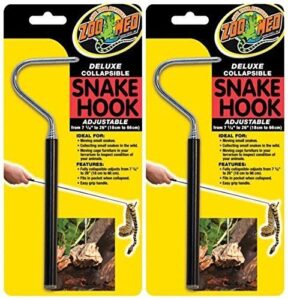
The Zoo Med Deluxe Collapsible Snake Hook is a smart carry for anyone prioritizing portability without sacrificing function. It telescopes from 7¼ inches to 26 inches, offering ample reach for handling small to medium non-venomous species encountered outdoors.
The collapsible design folds down to pocket size, ensuring it won’t hinder hikers or outdoor enthusiasts. This compact form factor makes it an ideal tool for on-the-go convenience without added bulk.
Crucially, this hook isn’t rated for venomous reptiles. For such encounters, step back and call a professional—safety must always come first.
| Best For | Hikers, casual hobbyists, and new snake keepers who need a lightweight, packable hook for handling small non-venomous snakes on the go. |
|---|---|
| Extended Length | 26 in |
| Material | Plastic |
| Collapsible Design | Yes, 7.25 in |
| Non-Slip Handle | Molded plastic |
| Venomous Use | Not recommended |
| Weight | 0.22 lb |
| Additional Features |
|
- Telescopes from 7¼" to 26", giving you solid reach without lugging around a full-size hook
- Folds down small enough to toss in a pocket or backpack—genuinely portable
- Comes as a two-pack, so you’ve got a backup or can share with a friend
- Not built for snakes over ~150g; the plastic can flex or snap under real weight
- The locking mechanism can loosen up over time, which gets frustrating fast
- Strictly for non-venomous species—don’t even think about using this with a hot snake
10. Mabor Retractable Stainless Steel Snake Hook
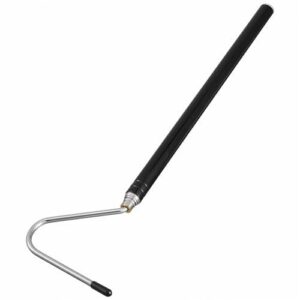
The Mabor Retractable Stainless Steel Snake Hook earns its place through sheer adaptability. Its telescoping shaft extends from 20 inches to 60 inches, offering flexible reach for medium to large species.
Constructed entirely from 304 stainless steel—including the locking collar and shaft segments—it resists corrosion even after repeated exposure to harsh elements like mud and rain.
The knurled grip ensures secure handling with gloved hands, while the collapsible design allows compact storage in a field vest pocket.
| Best For | Anyone who handles small to medium snakes at home or needs a versatile, pocket-sized hook for light reptile work and everyday tasks. |
|---|---|
| Extended Length | 40.9 in |
| Material | Stainless steel |
| Collapsible Design | Yes, 11.6 in |
| Non-Slip Handle | Standard grip |
| Venomous Use | Not recommended |
| Weight | 65.3 g |
| Additional Features |
|
- Telescopes from 11.6 in to 40.9 in, so you can adjust your reach without swapping tools
- Stainless steel build shrugs off rust, mud, and moisture with no fuss
- At 65 grams and $7.19, it’s easy to carry and easy to justify buying
- Feels flimsy to some users and isn’t built for heavy loads or forceful handling
- The hook is too small and light for large or heavy snakes
- The locking mechanism can loosen up over time with regular use
Wear Protective Snake Safety Gear

A snake hook puts distance between you and the animal, but your body still needs a back-up plan. The right gear can mean the difference between a close call and a serious injury.
Here’s what you should be wearing before you ever get near a snake.
Snake Gaiters for Ankle-to-knee Bite Protection
Snake gaiters are your first line of defense where most bites actually land—between the ankle and knee. These aren’t just thick pants; they’re engineered snakeproof legwear built from material layers combining 1000-denier Cordura nylon and polycarbonate inserts hardened through durability testing.
Key features include:
- Fit Adjustability ensures closures cinch snugly over boots and pants, eliminating dangerous gaps
- Ventilation Design wicks heat during extended field work
- Cleaning Guidelines are simple—most are hand-washable with mild detergent
- Pair them with snake hooks and snake bite kits for complete readiness
Snake Boots for Higher Leg Coverage
Where gaiters leave off, snake boots take over—extending snake-proof legwear from mid-calf to just below the knee, closing the exposure gap you’d face when kneeling in brush.
Knee-High Protection paired with Reinforced Shin Caps deflects low strikes that hooks and tongs can’t fully neutralize during wildlife management work.
| Feature | Field Benefit |
|---|---|
| Waterproof Membrane | Keeps feet dry in wet habitats |
| Lugged Outsole Grip | Stabilizes footing on mud and uneven terrain |
| Adjustable Calf Straps | Seals gaps between protective footwear and pants |
| Reinforced Shin Caps | Deflects strikes and brush abrasion |
Puncture-resistant Gloves for Safer Hand Positioning
Your puncture-resistant gloves—constructed with layered materials like Kevlar or UHMWPE and a nitrile coating—prevent fang penetration while preserving the dexterity required for snake handling hooks.
Look for these critical features:
- Enhanced Grip: Texturing on finger surfaces and palm panels
- Ergonomic Fit: Available in XS–XXL sizing to minimize fatigue
- Safety Certifications: Verified puncture resistance (e.g., EN 388 compliance)
- Care & Maintenance: Machine-washable materials to extend glove lifespan
Eye Protection Against Sudden Head Strikes
Your hands are covered—now protect your eyes. A striking snake moves faster than a blink, which is why polycarbonate impact lenses with a wraparound frame design aren’t optional when using snake handling hooks at close range.
Look for anti-fog coating, a reliable ventilation system, and UV400 protection to maintain clear sightlines across variable outdoor conditions—because you can’t react to what you can’t see.
Thick Welder’s Gloves for Added Handling Security
Thick welder’s gloves provide a meaningful layer of puncture resistance beyond standard options, featuring cowhide leather shells typically measuring 1.0–1.5 mm thick. This robust design offers enhanced protection against sharp objects.
The layered construction—comprising a leather outer shell, heat-insulating lining, and padded palm—effectively blocks fang penetration while maintaining flexibility. Pre-curved fingers ensure dexterity ergonomics, preserving precise hook compatibility with snake-handling tools.
Textured palm surfaces deliver grip enhancement, ensuring firm control even in wet conditions. This combination of durability and tactical functionality makes the gloves ideal for high-risk handling tasks.
Snake Sacks for Controlled Temporary Containment
A strikeproof snake sack completes your containment toolkit alongside your snake handling hook.
These breathable snake containers—built from mesh or heavy-duty nylon for material durability and ventilation design—follow size guidelines of one to two body lengths of interior space.
Monitor stress indicators like rigid posture during temporary transfers.
Apply cleaning protocols after each use, and always follow established safety protocols for handling snakes.
Why No Gear Guarantees Complete Bite Immunity
Even the best protective gear for snake handling can’t promise zero risk—and that’s a fact worth sitting with. Gear complacency, human error, equipment failure, and environmental factors all chip away at bite prevention.
Even the best snake-handling gear reduces risk, but never eliminates it
Variable venom potency means identical bites produce wildly different outcomes.
Your snake handling hooks and risk assessment practices create a layered defense, but snake-bite treatment remains the definitive safeguard when protection falls short.
Use Snake Hooks Safely

Using a snake hook correctly is less about instinct and more about learned technique. Small adjustments in how you approach, position, and lift can mean the difference between a clean encounter and a defensive strike.
Here’s what safe hook use actually looks like in practice.
Approach Slowly From a Safe Distance
Before you raise that hook, slow everything down—your movement, your breathing, even your thinking. Control your breathing pace first; a calm body signals a calm approach. Observe an escape route behind the snake, maintain visual contact without staring it down, and use peripheral awareness to track the full body.
- Step backward slowly if it coils or hisses
- Apply risk assessment and safe distance practices before moving closer
- Follow safety guidelines for snake handling and handling guidelines when deploying snake handling hooks
Keep at Least One Hook Length Away
Distance verification isn’t just a precaution—it’s your first line of defense.
Hook length calculation is straightforward: one full hook length equals the exact measurement from handle to tip, and that distance must stay between you and the snake at all times.
Stance stability matters here too. Use visual distance markers on the ground to maintain your fluid safety buffer, keeping risk assessment and safe distance practices active throughout every lift.
Place The Hook Under The First Body Third
Think of the mid-body anchor—approximately one-third of the snake’s total length from the head. Slide the hook smoothly along scale alignment to avoid scale damage, applying gentle downward pressure for reducing leverage.
Proper technique for restraining snakes is developed through muscle memory practice. Key steps include:
- Position the hook tip directly under the centerline
- Avoid compressing ribs during initial contact
- Keep movements deliberate, never rushed
- Reassess balance immediately after lifting
- Practice first with calm, non-venomous specimens
Begin with non-venomous specimens to refine your approach.
Lift Steadily Without Jerky Movements
A jerky lift is an invitation for disaster. Maintain wrist alignment with the snake’s midsection throughout controlled elevation, moving at roughly 2–4 inches per second—continuous motion, never segmented. Minimal lateral shift keeps the balanced center of gravity stable.
Proper technique for restraining snakes demands that you monitor your own breathing to prevent stiff tensing. These field methods for handling snakes aren’t optional—they’re foundational.
Keep The Snake Supported to Prevent Falls
Steady motion gets the snake off the ground—now your job is keeping it there safely. A stable hook angle prevents sudden rotation, while even pressure application along the mid-body stops sagging and buckling.
For larger snakes, a segmented lift strategy—periodic pauses to redistribute weight—keeps your snake-handling tools working with you, not against you.
Active tension monitoring and environmental footing adaptation prevent accidental injuries, especially on uneven terrain.
Avoid Pinning or Pressing The Snake Unnecessarily
Once you’ve stabilized the lift, resist any urge to pin the snake against the ground. Pinning concentrates pressure on focal points along the spine, triggering defensive thrashing.
Mid-body support with a slack grip—using lateral guidance rather than downward force—keeps stress indicators minimal. This approach prioritizes controlled movement over restraint.
Always maintain a clear escape path; snakes handled with proper safety guidelines retreat naturally rather than escalating toward a strike.
Never Grab The Snake by The Head
Avoiding restraint keeps stress low—but grabbing the head undoes all of that immediately. Head grip hazards are real: jaw clamping, sudden thrashing, and bite risk spike the moment your hand moves near the skull. Neck stress risks include vertebral damage to the animal.
Instead, alternative grip techniques using snake tongs versus snake hooks, combined with handler safety protocols, give you far better control without direct contact.
Apply Hook-and-Tail Handling
Once you’ve got the snake balanced on the hook, the real skill kicks in—knowing what to do next with your other hand and your body position.
The hook-and-tail method gives you control without putting either you or the snake at unnecessary risk. Here’s how to work through each step of the technique safely.
Use The Hook to Support The Mid-body

The mid-body angle is everything here. Place your hook so it contacts the ventral scales directly beneath the snake’s widest point, maintaining steady scale contact that distributes grip pressure evenly — especially critical for heavy-bodied species where hook width and weight distribution matter most.
A balanced lift from this position prevents coiling before it starts, keeping the snake stable and your field methods clean.
Control The Tail Without Squeezing
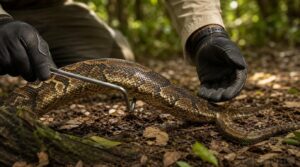
Once the hook holds the mid-body, shift your attention to rear tail tension — light, consistent contact along the tail’s mid-to-base section, never the tip. A non-squeezing grip and wrist steadiness work together here, allowing a scale-friendly lift that guides direction without triggering defensive responses.
Whether your snake-handling hook and tongs usage follows protocols for venomous or nonvenomous species, controlled tail pivot keeps every movement deliberate and safe.
Keep The Head Pointed Away From People

Before you lift, confirm the head is angled away from everyone nearby—this single habit defines safe head angle discipline in real field conditions.
Head Orientation Drills train you to check automatically before every move:
- Scan bystander positioning before initiating any lift
- Align the snake’s head outward during hook placement
- Perform visual head checks mid-lift without rushing
- Rotate slowly if the head drifts toward observers
- Execute a clean head-away release in a designated safe direction
Snake handling safety protocols—for both venomous and nonvenomous snakes—require this consistent awareness throughout.
Maintain Balanced Weight Distribution

When your forearms carry uneven loads, the snake shifts unexpectedly—and balance disappears fast. Distribute weight symmetrically: one hand under the mid-body, the other supporting the rear third.
Keep your spine neutral and feet shoulder-width apart for a stable foot stance.
| Placement Zone | Hand Role | Key Benefit |
|---|---|---|
| Front third | Hook support | Controls head direction |
| Mid-body | Primary forearm load balance | Mass center alignment |
| Rear third | Tail hand | Symmetrical hand placement |
Use All Fingers When Supporting Larger Snakes

Think of your hand as a cradle, not a clamp. When supporting heavy-bodied snakes, even finger contact across the underside prevents dangerous point pressure—align all fingers to your shoulder’s breadth for ideal hand positioning strategy.
Finger pressure balance keeps the body stable, while deliberate grip relaxation timing reduces finger fatigue management issues. This ergonomic tool design principle directly reinforces snake handling safety.
Avoid Handling Snakes That Recently Fed

A recently fed snake is effectively off-limits. Digestive Stress Indicators—such as a slack jaw, sluggish movement, and a puffed throat—signal that the animal’s biology is fully committed to digestion. Hormonal Defense Spikes during this period make even typically docile species unpredictably reactive, dramatically elevating Post-Feeding Regurgitation Risk for both the handler and the snake.
Respect these Handling Wait Period rules:
- Wait a minimum of 48 hours before any contact.
- Extend to 72 hours after large prey consumption.
- Apply the Indirect Observation Method—monitor from a safe distance using your snake handling hook only if repositioning is absolutely necessary.
Release The Snake Calmly in a Safe Direction

Release is where patience matters most. Guide the snake’s body toward open ground—grass or leaf litter absorbs impact better than hard surfaces, making a Soft Ground Release far less stressful.
Maintain Visual Head Monitoring throughout, and use a Gradual Step‑Back to create space. A Clear Escape Path prevents re-coiling. Minimal Body Disturbance through your professional field snake hook ensures a calm, controlled departure.
Plan for Snakebite Emergencies

Even the most careful handler can’t predict every outcome, so treating emergency prep as part of your standard kit—not an afterthought—is simply smart field practice.
A snakebite in a remote area can escalate fast, and the gap between a good outcome and a bad one often comes down to what you packed before you left.
Here’s what your emergency plan should include.
Carry Pressure Bandages in a Field First-aid Kit
Every field first-aid kit you carry while using a snake handling hook should include pressure bandages—packed intentionally, not as an afterthought. Proper snakebite treatment starts before any bite occurs.
- Compact storage design keeps wraps accessible without unpacking everything
- Color-coded labeling helps you locate bandages fast under stress
- Separate compartment access reduces fumbling during emergencies
- Temperature-resistant packaging protects elastic wrap longevity in heat
- Sealed pouches guard against moisture and contamination
Use Pressure-immobilization When Appropriate
Bandages alone won’t help if you don’t know when to use them. The pressure immobilization technique works best following a neurotoxic bite—where lymphatic flow control is the priority—not for every encounter.
Bandage width guidelines recommend 10–15 cm elastic wraps applied firmly upward from the bite site. Contraindications for PI include impaired circulation or non-venomous bites.
Simulation training drills build the muscle memory that matters when seconds count.
Keep Emergency Contact Cards Accessible
Once pressure-immobilization is applied, your next move is communication—and that starts before you ever reach for a snake handling hook.
Store waterproof laminated cards with high-contrast typography in multiple card locations:
- Wallet or vest pocket
- Car visor pouch
- Outdoor gear bag
Add a QR code linking to digital backups, and commit to annual card updates whenever personal details change.
Know The Nearest Antivenom-capable Hospital
Your emergency response planning for snake bites means nothing if you don’t know where antivenom is stored. Before your next outing, call local emergency departments directly to confirm antivenom stock availability through on-call pharmacy contacts, and factor in realistic travel times.
Poison control coordination via 1-800-222-1222 can guide you toward the right facility, including hospital transfer procedures if your nearest center lacks the specific antivenom required.
Bring GPS for Precise Location Sharing
When seconds matter in a snakebite emergency, GPS devices become essential field safety equipment alongside your snake handling hook. Modern Multi‑Constellation Accuracy—combining GPS, GLONASS, and Galileo—pins your location within 5–10 meters, giving responders precise coordinates fast.
Keep these priorities in mind:
- Enable Real-time Alerts to notify trusted contacts instantly
- Practice Battery Conservation by disabling unused location services
- Configure Location Privacy to share only with emergency contacts
Carry a Satellite Phone or Locator Beacon Remotely
Deep in remote areas where cellular service vanishes, satellite phones and personal locator beacons (PLBs) become essential lifelines. PLBs transmit distress signals on 406 MHz without subscriptions, but users must complete beacon registration before venturing out.
Always check satellite coverage maps and adhere to SOS messaging protocols. Prioritize battery conservation tips, as cold weather mitigation is critical when relying on GPS and emergency communication devices as your only lifeline.
Seek Immediate Medical Care After Any Venomous Bite
Call 911 immediately after any suspected venomous bite—don’t wait for symptoms to escalate. Record bite time precisely, since clinicians use this to guide snake bite treatment and antivenom access decisions.
Maintain the limb still to slow venom spread through lymphatic pathways.
Share snake details with dispatch if you safely observed the animal.
Your wilderness first aid preparation means nothing without prompt professional care behind it.
Prevent Future Outdoor Encounters

The best encounter is the one that never happens.
Most snake activity around homes and properties comes down to a few environmental factors you can actually control. Here’s what you can do to make your space a lot less inviting.
Remove Debris, Boards, and Brush Piles
Think of debris piles as open invitations—snakes, and the rodents that attract them, rarely refuse. Habitat modification to deter snakes starts with clearing boards, brush, and clutter that create sheltered refugia. This habitat simplification aids rodent suppression, fire hazard reduction, and visibility enhancement simultaneously.
Use a long handle snake removal hook or pitchfork to safely dislodge materials, and bag everything promptly to prevent re-accumulation.
Keep Grass and Pasture Edges Trimmed
Overgrown pasture edges don’t just look untidy—they’re prime snake habitat. Trimming every six to eight weeks removes the low ground cover snakes rely on for concealment, making habitat modification one of your most reliable snake deterrent strategies.
Regular edging also delivers edge soil aeration, improved drainage, and weed seed suppression, while keeping livestock path safety intact and giving your property an aesthetic property boost.
Seal Gaps Around Barns, Sheds, and Homes
Snakes don’t knock—they slip through gaps you’ve forgotten exist. Structural exclusion stands as one of the most durable snake deterrent strategies, focusing on fortifying your building’s shell to eliminate entry points.
Habitat modification begins with meticulous sealing and reinforcement. Prioritize these structural interventions:
- Door Sweep Installation – Seal exterior door gaps to under 1/4 inch
- Foundation Crack Sealing – Fill cracks wider than 1/8 inch with polyurethane sealant
- Vent Mesh Screening – Fit fine-mesh screens on all soffit and crawlspace vents
- Siding Caulk Application – Close board gaps exceeding 1/4 inch with exterior-grade caulk
- Roof Flashing Maintenance – Reseal chimney and pipe flashing annually with high-grade sealant
Control Rodents That Attract Snakes
Rodents are fundamentally a welcome mat for snakes—where they forage, serpents follow, tracking scent cues with chemoreceptors tuned for precision. Habitat modification and snake deterrent methods work best when you cut off the food chain at its source.
| Strategy | Action | Target Area |
|---|---|---|
| Food Storage Practices | Seal pet food in wildlife-proof containers | Sheds, porches |
| Rodent Exclusion Barriers | Install 1/4-inch hardware cloth | Foundation vents |
| Trap Placement Strategies | Set traps along walls, rotate bait weekly | Crawlspaces, barns |
Monitoring rodent activity and habitat decluttering—clearing brush piles within 50 feet of structures—systematically removes the conditions that make your property attractive to both rodents and the snakes hunting them.
Use Lighting for Nighttime Snake Detection
Lighting transforms nighttime yard patrols into reliable snake detection windows. Mount motion-activated fixtures 6–8 feet high, positioned using solid light placement geometry—1.5 to 2.5 meters from known travel routes—so ground-level illumination reveals silhouettes without harsh hot spots.
Pair ambient light spectrum (2700–4000K) with thermal camera pairing for warm-body detection, and integrate reflective gear integration on boots.
Keep headlamps and tactical flashlights accessible alongside your snake handling hooks.
Teach Family Members Safe Snake Distance Rules
Once your yard perimeter is lit and monitored, the family perimeter needs equal attention. Establish a child distance drill—two full body lengths back from any snake—and pair it with a verbal cue system like "Back Away Softly."
Role-play scenarios reinforce venomous snake safety faster than lectures. Teach the one-third rule: head, body, tail.
Knowing snake behavior turns panic into protocol.
Schedule Professional Removal for Recurring Snakes
If snakes keep returning despite your family’s awareness protocols, that’s a signal worth taking seriously—one sighting a month is your threshold for scheduling professional wildlife removal.
A licensed technician will verify permit compliance, deliver clear cost estimates, assess rodent activity, and build an inspection timeline with follow-up scheduling built in.
Don’t confuse professional vs. DIY snake removal; credentials and experience aren’t optional when venomous species are involved.
Frequently Asked Questions (FAQs)
How do you clean a snake hook after use?
After each use, wipe the shaft clean, rinse off debris, dry thoroughly, then apply a light mineral oil coat.
Store in a dry, moisture-free spot to secure rust inhibition and ensure long-term equipment maintenance.
Can children safely use snake handling hooks?
Children shouldn’t handle snakes independently. Adult supervision, proper skill training, and child ergonomics all factor into safety.
Without structured educational programs and PPE for snake handlers, legal liability and injury risk are simply too high.
How do you store hooks between outdoor trips?
Store hooks like surgical instruments—dry, organized, and inspected after every use. Routine inspection catches rust early.
Use silica gel packets, compartmentalized cases, and padded sleeves for moisture control, organized compartments, and protective transport.
Are snake hooks legal to carry in all states?
No single federal law governs snake hooks, as state wildlife statutes, permit requirements, and local ordinance restrictions all vary significantly. Always verify your specific jurisdiction’s legal considerations regarding snake handling before engaging in such activities.
How long do quality snake hooks typically last?
Quality snake hooks last 5–10 years with routine maintenance. Stainless steel resists corrosion longest, often exceeding a decade.
Watch for wear indicators like joint looseness or tip bending, and replace components before replacing the whole tool.
Conclusion
Think of snake handling hooks for outdoor encounters as your medieval drawbridge—distance is your first line of defense, and control determines whether the encounter becomes a crisis.
Every skill in this guide, from reading a defensive coil to selecting the right hook length, compounds into a single outcome: you walk away safely.
Preparation isn’t caution for caution’s sake; it’s the difference between reacting to a situation and commanding it.