This site is supported by our readers. We may earn a commission, at no cost to you, if you purchase through links.

The difference between a calm transfer and a bite often comes down to one thing: the tool in your hand. Even keepers with years of experience behind them underestimate how much hook selection shapes the entire handling session—wrong length, poor balance, and a defensive snake will tell you immediately.
A hook isn’t just a safety buffer; it’s your first point of communication with the animal.
The right snake handling hooks for experienced keepers give you precise leverage, scale-safe support, and standoff-distance, transforming a tense interaction into a controlled one.
Table Of Contents
- Key Takeaways
- Top 7 Snake Handling Hooks
- Choose The Right Hook Length
- Compare Hook Materials and Designs
- Aircraft-grade Aluminum Hooks for Daily Handling
- Stainless Steel Hooks for Durability and Strength
- Carbon and Composite Hooks for Reduced Fatigue
- Fixed Hooks Versus Collapsible Snake Hooks
- Telescoping Lock Quality and Collapse Prevention
- Rounded Hook Heads and Scale-safe Support
- Grip Comfort for Longer Handling Sessions
- Match Hooks to Snake Species
- Use Advanced Hook Techniques Safely
- Frequently Asked Questions (FAQs)
- Conclusion
Key Takeaways
- Hook length isn’t a comfort preference — it’s a safety calculation, and matching it to your snake’s size directly determines how much control you keep during every interaction.
- The material you choose shapes the whole session: aluminum stays light for daily use, stainless steel holds up under heavy loads, and carbon fiber cuts fatigue when you’re handling repeatedly.
- Reading your snake’s body language before the hook ever touches it — head elevation, tail vibration, tight coiling — is what separates a controlled transfer from a defensive bite.
- A hook is only as reliable as its maintenance; inspect tips regularly, clean after every session, and replace worn or corroded parts before they become a liability.
Top 7 Snake Handling Hooks
Not every hook earns its place in a serious keeper’s kit — but these seven do. Each one was selected for its build quality, handling control, and real-world reliability with everything from ball pythons to large constrictors.
Whether you’re managing a curious ball python or a hefty boa, matching hook length to your snake’s size makes all the difference — here’s a snake handling hook size guide to help you dial in the right fit.
Here’s what made the cut.
1. Gzlozak Retractable Heavy Duty Snake Hook
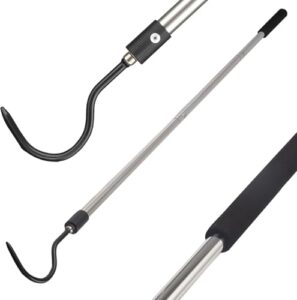
The Gzlozak Retractable Heavy Duty Snake Hook is a dependable choice when you need flexible reach without sacrificing control. Its stainless steel shaft resists corrosion in humid enclosures, and the ergonomic foam grip keeps fatigue manageable during longer sessions.
Extending from 35 to 66 inches, it provides real distance from defensive animals. The locking collar holds firm under load, ensuring stability during use.
The gel-coated tip cradles the snake without snagging scales, prioritizing both handler safety and animal welfare.
| Best For | Snake handlers, wildlife hobbyists, and anyone who needs a reliable tool for safely relocating snakes at a comfortable distance—especially useful for those with limited mobility. |
|---|---|
| Length | 35–66 in (adjustable) |
| Shaft Material | Stainless steel |
| Handle Grip | Non-slip foam |
| Hook Tip Coating | Soft gel coating |
| Weight | 15.2 oz |
| Load Capacity | 8 lb |
| Additional Features |
|
- Extends up to 66 inches, so you stay well clear of defensive snakes during handling or relocation
- Gel-coated hook tip is gentle on scales, which matters if you’re handling reptiles regularly and want to keep stress low
- Disassembles into compact sections, making it easy to toss in a bag for field work or camping trips
- Screws together in four sections instead of telescoping, so setup takes a bit more time than you’d expect
- Hook size works best for snakes between 0.5 and 1.75 inches in diameter—larger pythons or big adult constrictors may be tricky to manage
- The plastic riveted coupling at the joints is the weak link; rough or abrupt handling could cause problems over time
2. DocSeward Balanced Snake Hook
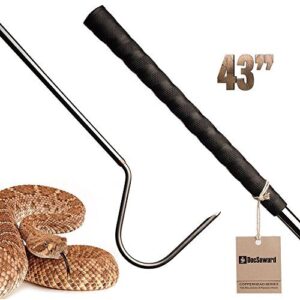
Where the Gzlozak gives you range, the DocSeward Balanced Snake Hook delivers precision. At 43 inches, it’s designed for snakes in the 3–7-foot range. Its copper ferrule shifts weight toward the handle, reducing wrist strain during extended use.
The stainless-steel tip glides smoothly under a snake’s mid-body without snagging scales.
A rubber golf-club grip ensures a secure hold, even when wet, making the tool feel like a natural extension of your hand.
| Best For | Handlers who regularly work with mid-sized snakes (3–7 ft) and need a tool precise enough for tight spaces and extended sessions. |
|---|---|
| Length | 33 or 43 in (fixed) |
| Shaft Material | Stainless steel |
| Handle Grip | Rubber golf-club grip |
| Hook Tip Coating | Beveled stainless steel |
| Weight | 8 oz |
| Load Capacity | Up to ~7 ft snakes |
| Additional Features |
|
- Balanced weight keeps your wrist from tiring out during long handling sessions
- Stainless-steel beveled tip slides under a snake cleanly without snagging
- Rubber grip stays secure even when your hands are wet
- $61 is a steep ask if you’re only moving the occasional garden snake
- May fall short for very large or deeply coiled snakes
- Built specifically for snakes, so don’t expect it to pull double duty with other reptiles
3. Dutypro Snake Hook Catcher
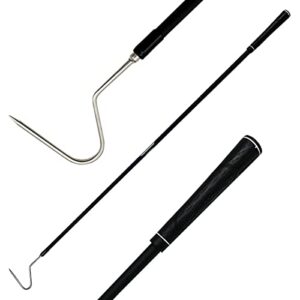
The Dutypro Snake Hook Catcher elevates precision for field professionals. Its narrow hook head minimizes scale contact, ensuring noticeably gentler captures. The aluminum rod reduces weight, while the stainless steel head resists corrosion during repeated outdoor use.
A textured grip reduces hand fatigue over extended periods—a critical advantage when relocating defensive animals.
At $29.99, this tool delivers controlled, repeated handling capability in a straightforward, durable design.
| Best For | Hikers, campers, and reptile keepers who need a safe, no-contact way to handle or relocate snakes without getting too close. |
|---|---|
| Length | 44 in (fixed) |
| Shaft Material | Stainless steel / carbon |
| Handle Grip | Rubber-coated |
| Hook Tip Coating | Polished carbon |
| Weight | 8.8 oz |
| Load Capacity | ≤5 lb |
| Additional Features |
|
- Long 44-inch reach keeps you at a comfortable distance from venomous snakes
- Lightweight at just 0.25 kg, so it’s easy to toss in a pack for outdoor trips
- Duck-billed blade is gentler on the snake, which matters if you’re relocating rather than harming
- A few buyers have received units already broken out of the box, so quality control can be hit or miss
- Not great for larger, heavier snakes—works best on small to medium-sized ones
- The rubber handle can wear down over time, which may make it slippery after heavy use
4. Gzlozak Stainless Extendable Snake Hook
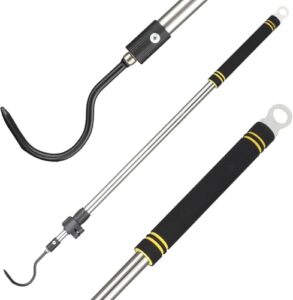
When reach matters more than weight, the Gzlozak Stainless Extendable Snake Hook earns its place. Four threaded sections assemble into a full 66 inches, giving you genuine distance from defensive animals without sacrificing control.
The stainless steel shaft withstands repeated use and resists corrosion.
A soft gelatinous coating on the hook tip protects scales during contact, while the foam grip stays secure even with sweaty hands.
At 1.28 lb, it won’t tire you out mid-session.
| Best For | Snake handlers, reptile keepers, and field workers who need safe, hands-free distance when dealing with defensive or venomous snakes. |
|---|---|
| Length | 35–66 in (adjustable) |
| Shaft Material | Stainless steel |
| Handle Grip | Non-slip foam |
| Hook Tip Coating | Soft gelatinous coating |
| Weight | 1.28 lb |
| Load Capacity | 8 lb |
| Additional Features |
|
- Extends up to 66 inches, giving you real distance from the animal without losing control
- Soft gelatinous hook tip is gentle on scales, and the foam grip holds steady even with wet hands
- At just 1.28 lb, it’s light enough to use for extended sessions without arm fatigue
- Four screw-together sections are slower to adjust than a smooth telescoping design
- The small hook tip isn’t ideal for large adult pythons or snakes over roughly 2 inches in diameter
- The plastic riveted joint where the hook meets the shaft is a known weak point under heavy stress
5. RUYARXNM Carbon Snake Hook Tongs
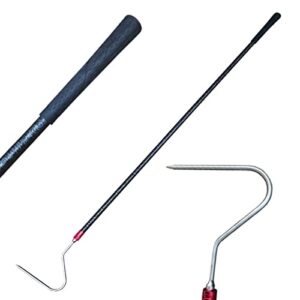
Carbon-fiber construction sets the RUYARXNM apart from heavier steel alternatives. At just 0.41 lb, you can work through a full handling session without straining your wrist later.
That lightweight feel makes it much easier to focus on proper snake handling technique rather than fighting fatigue mid-session.
The 48-inch shaft keeps you at a comfortable distance, while the detachable stainless-steel duckbill hook cradles the snake without snagging scales.
The rubber grip remains firm even in slippery conditions. Note: The tip ships sharp, so be sure to attach the included rubber hose cover before your first use.
| Best For | Hobbyist reptile keepers and field workers who need a lightweight, humane way to handle or relocate small to mid-sized snakes safely. |
|---|---|
| Length | 48 in (fixed) |
| Shaft Material | Carbon fiber |
| Handle Grip | Rubber ergonomic |
| Hook Tip Coating | Rubber hose cover |
| Weight | 0.41 lb |
| Load Capacity | 9 lb |
| Additional Features |
|
- At 0.41 lb, the carbon-fiber shaft is genuinely light — long handling sessions won’t tire your arm out.
- The 48-inch reach keeps a safe buffer between you and the snake, which is a real confidence booster if you’re still getting comfortable around reptiles.
- The detachable duckbill hook is designed to be gentle on scales, so you’re not stressing the animal out more than necessary.
- The hook tip comes sharp out of the box — you’ll want to put the rubber cover on before you do anything else.
- It’s only rated for snakes up to 9 lb, so larger or more muscular species are off the table.
- One hook means one grab point, which can make wrangling a feisty or unpredictable snake trickier than you’d like.
6. SYFRLLC High Carbon Snake Hook
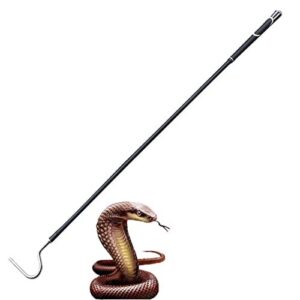
High carbon steel provides essential rigidity under load, particularly when lifting defensive animals. The SYFRLLC hook ranges from 36 to 48 inches, balancing reach and control effectively.
Its polished, rounded head prevents scale snags, and the rubberized handle ensures a secure grip, even with damp hands.
Built for repeated use, routine cleaning and drying after each session keeps rust at bay.
| Best For | Hikers, campers, farmers, and anyone who works around snakes and wants a safe way to handle them without getting too close. |
|---|---|
| Length | 35–66 in (adjustable) |
| Shaft Material | Stainless steel |
| Handle Grip | Non-slip foam |
| Hook Tip Coating | Soft gelatinous coating |
| Weight | 15.8 oz |
| Load Capacity | 8 lb |
| Additional Features |
|
- Long reach (43–49 inches) keeps you at a safe distance from venomous or defensive snakes
- Lightweight at just 7.2 oz, so it won’t wear you out during long field sessions
- Polished hook and anti-slip handle make controlling and repositioning snakes much easier
- Some units have thread mismatches that make assembly a headache right out of the box
- Sharp burrs on the hook have been reported, which could harm the snake during handling
- The hook connection can wobble over time and may need threadlocker to stay secure
7. OdontoMed2011 Heavy Duty Snake Hook Blue Dip
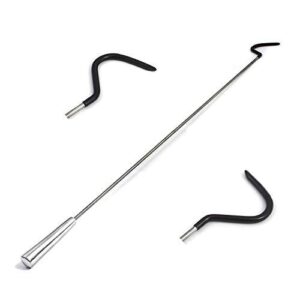
The OdontoMed2011 Heavy Duty Snake Hook stands out for its blue dip coating, which serves dual purposes: reducing glare and resisting snags against cage hardware—a critical advantage during tense repositioning.
The stainless steel shaft ensures durability under load, while the 40-inch length maintains a safe distance without compromising control.
The hook head is engineered to cradle a snake’s mid-body weight smoothly, minimizing scale stress during handling.
It’s worth noting that the coating may wear over time with repeated sterilization cycles, so inspect it regularly to ensure continued performance.
| Best For | Veterinary and clinical professionals who regularly handle small to medium snakes and need a durable, easy-to-see tool that keeps a safe distance during procedures. |
|---|---|
| Length | 43–49 in (fixed) |
| Shaft Material | High-carbon steel |
| Handle Grip | Anti-slip rubber/fiberglass |
| Hook Tip Coating | Polished stainless steel |
| Weight | 7.2 oz |
| Load Capacity | Not specified |
| Additional Features |
|
- The 40-inch stainless steel shaft is built to last through repeated clinical use without bending or rusting.
- The blue dip tip cuts down on glare and stands out against tissue, making it easier to see exactly what you’re doing.
- At just over a pound, it’s light enough to handle comfortably during longer procedures.
- The blue coating can wear down after multiple sterilization cycles, so you’ll need to keep an eye on it.
- It may flex under heavier specimens — anything over 3 lbs and you might want something sturdier.
- The fixed 40-inch length doesn’t adjust, which can be awkward in tighter spaces.
Choose The Right Hook Length

Hook length isn’t just a preference — it’s a safety decision. The distance between your hand and the snake’s head matters more than most keepers realize, especially as your collection grows.
Hook length is a safety decision — the distance between your hand and the snake’s head can make all the difference
Here’s how to match the right length to the snake you’re working with.
18–24 Inch Hooks for Snakes Under 2 Feet
For snakes under two feet, hook length recommendations clearly point to the 18–24 inch range. Lightweight balance keeps your wrist steady, while a low-profile tip allows precision placement without forcing movement. Fixed designs outperform collapsible options here — minimal leverage protects delicate scales. An ergonomic grip and hook head design round out control, making this the right starting point.
The Zoo Med adjustable length snake hook offers a fully collapsible design and ergonomic grip, extending from 7¼ to 26 inches.
24–36 Inch Hooks for 2–4 Foot Snakes
Once your snake crosses the two-foot mark, mid-body reach becomes the priority. Hook length recommendations based on snake size point clearly to the 24–36 inch range — enough lever advantage to guide the animal without pulling it off balance.
Corrosion resistance matters in humid setups, so stainless steel earns its place.
Quick deployment and gentle handling of scales are standard features of solid fixed designs in this range.
36–47 Inch Hooks for 4–6 Foot Snakes
At four feet, a snake’s mass shifts the equation entirely. Utilizing reach advantage in the 36–47 inch range keeps posture upright — reducing enclosure bending means better control and less strain.
Key mechanical and ergonomic benefits include:
- Midsection support mechanics improve with an ideal hook angle.
- Weight distribution remains balanced across the shaft.
- Hook length recommendations based on snake size favor professional-grade, fixed designs.
47–60 Inch Hooks for Large Constrictors
Once your snakes hit the 6-foot mark, hooks in the 47–60 inch range become your standard. This extra reach provides genuine Reach Optimization, keeping your body clear while handling heavy boas or pythons.
Stump Ripper Snake Hook and Heavy-Duty Fiberglass Hook designs in this class balance Load Leverage and Joint Stability. These features ensure telescoping hooks and large constrictors remain manageable, preventing shaft flex from undermining control.
Why Experienced Keepers Need Distance Control
Proper standoff distance provides observation clarity, allowing keepers to read head elevation and tail flicks before committing to contact. This safety buffer also manages reflex accommodation when fatigue sets in, ensuring safer handling dynamics.
Telescoping hooks and professional snake handling equipment naturally support stress mitigation by maintaining critical distance. These tools enable controlled, low-risk interactions while preserving the handler’s spatial advantage.
During multi-person captures, built-in handling distance enhances team coordination far safer and more predictable outcomes. Structured spacing reduces errors and streamlines collaborative efforts in high-stakes scenarios.
Matching Hook Length to Enclosure Size
Enclosure Dimension Mapping starts with measuring interior length, then adding 6–12 inches for safe hand reach and standoff distance.
Glass tanks need more clearance for Barrier Proximity Assessment, while wooden vivariums demand shorter hooks.
Choosing the appropriate snake hook length, with length flexibility and weight rating in mind, keeps hook angle optimization practical and reach efficiency metrics sound.
Avoiding Excessive Leverage on The Snake’s Body
Hook length shapes how much leverage you apply to the snake’s body. A hook that is too long creates a longer lever arm, concentrating force at one point. Midline hook placement and dual-point support spread that load across the body.
Ventral scale contact with a flat surface limits twisting. Slow, steady motion, stress-aware handling, and proper body weight support keep ribs safe from harmful torque.
Compare Hook Materials and Designs

The material your hook is made from shapes every part of the handling experience — how heavy it feels, how long it lasts, and how safe it is for you and your snake.
Not every material fits every situation, and design details like hook shape and grip style matter more than most keepers expect.
Here’s how the most common options stack up.
Aircraft-grade Aluminum Hooks for Daily Handling
Aircraft-grade aluminum — specifically the 6000 alloy series — is the material you’ll reach for every day. Its certified load ratings ensure reliability through repeated use, while the lightweight telescoping design minimizes wrist fatigue during extended sessions.
Anodized color-coding allows for quick identification of the right tool. With a solid routine inspection protocol, this high-grade aluminum hook, featuring an ergonomic design, truly proves its value.
Stainless Steel Hooks for Durability and Strength
When reliability is non-negotiable, stainless steel earns its place. The passivation layer in high-grade stainless steel tools self-heals after minor scratches, preserving corrosion resistance session after session.
Three reasons experienced keepers trust high-strength stainless steel:
- Outstanding tensile strength withstands heavy-duty encounters without bending
- Remarkable fatigue life sustains daily use over years
- Anti-slip grip keeps control secure
Equipment durability like this pays for itself.
Carbon and Composite Hooks for Reduced Fatigue
Carbon fiber construction changes the game for keepers who handle snakes daily. With weight savings of up to 50 percent over steel, this lightweight hook design significantly reduces wrist torque and extends fatigue life noticeably.
Stiffness tuning through layup optimization allows manufacturers to fine-tune flex characteristics without compromising strength. This ensures optimal performance tailored to specific handling needs.
Fiberglass composite options add valuable thermal insulation, keeping the hook comfortable during extended use in varying conditions.
The result? Less strain, more control—a critical advantage for professionals relying on precision and endurance.
Fixed Hooks Versus Collapsible Snake Hooks
Fixed hooks and collapsible hooks each serve a different keeper. A fixed hook gives you rigid, predictable control — no moving parts, lower maintenance, and solid durability under heavy snake force.
A collapsible hook wins on travel convenience and compact storage, though locking reliability matters deeply here.
Weight considerations and budget impact your choice too, since quality telescoping mechanisms cost more but prevent dangerous mid-session collapse.
Telescoping Lock Quality and Collapse Prevention
A collapsible hook is only as safe as its locking mechanism — and that’s where most budget tools quietly fail.
When evaluating locking mechanisms on telescoping snake hooks, prioritize these three features:
- Positive detent engagement — you should feel and hear it click
- Redundant lock paths — dual systems prevent sudden collapse if one fails
- Anti-collapse notches — secondary catch points that hold under real load
Quality locking collar materials and built-in load indicator systems aren’t extras on a telescopic design — they’re non-negotiable for safe, confident handling.
Rounded Hook Heads and Scale-safe Support
The hook head design is critical, as it determines whether a snake remains calm or reacts defensively. Proper edge rounding and a rounded shape minimize scale friction while distributing pressure evenly across the snake’s body.
Incorporating a soft sleeve lining and using materials with low hardness significantly reduces stress on the snake. These features address key concerns in snake manipulation, prioritizing the animal’s comfort without compromising handler safety.
Adherence to basic safety guidelines in hook design and ergonomics is essential for managing large snakes effectively. Well-designed tools ensure both the snake’s welfare and the handler’s control during interactions.
Grip Comfort for Longer Handling Sessions
Good hook head design matters, but so does what’s in your hand.
Ergonomic handle shapes follow your hand’s natural curve, reducing wrist strain during longer sessions.
Rubber grip surfaces with smart texture patterns keep control steady even when hands get sweaty.
Proper weight distribution reduces fatigue noticeably.
Padding materials and heat management maintain grip comfort consistently throughout use.
Match Hooks to Snake Species
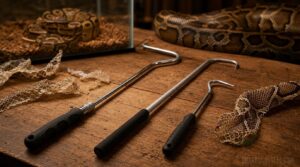
Not every hook suit every snake, and the species you’re working with should drive your choice just as much as length or material.
A ball python requires something very different from a defensive ratsnake or a full-grown Burmese.
Here’s how to match your hook to what’s actually in the enclosure.
Choosing the right length and shape isn’t guesswork—this guide to using a snake hook for cleaning enclosures breaks down which style works best for different species and setups.
Ball Python Hook Handling Considerations
Ball pythons are sensitive animals, and mid-body engagement is your safest starting point. Approach slowly, placing the hook under the midsection rather than near the head. Leverage minimization matters here — too much pressure risks injury. A soft gel-wrapped tip reduces scale friction during gentle transfer and secure release.
Stress monitoring throughout ensures your python stays calm and cooperative.
Corn Snake Handling and Lightweight Hooks
Corn snakes are docile by nature, but that doesn’t mean any hook will do. A Calm Approach and Hand Positioning control this species is most receptive to.
Environmental silence matters too — handle away from noise and other pets.
- Respect the post-feeding wait before any session
- Fine-tune hook angle adjustment to guide, not force
- Weigh collapsible versus fixed snake hook designs based on enclosure access and hook ergonomics
Boa Constrictor and Heavy-duty Hook Needs
Boas are a different animal entirely — heavy, muscular, and capable of surprising grip pressure even during calm handling. That’s where heavy-duty options for large constrictors earn their keep.
High-grade stainless steel tools and professional-grade fiberglass hooks for experts deliver the leverage balance and weight optimization you need.
Safety protocols matter here: Use a 60-inch hook and carefully manage fatigue reduction.
Large Constrictor Support and Control
When handling large constrictors, body weight distribution is everything. Spread the animal’s mass across both forearms, and always bring a secondary handler for tail support — secondary handler coordination isn’t optional at this size.
Keep the snake’s head clear of your torso for airway protection, and manage pressure points carefully.
Use a professional-grade hook with solid weight capacity for proper balance and control.
Defensive Snakes and Added Reach Requirements
Some snakes won’t give you a second chance to adjust your position. Defensive posture spacing demands that you maintain distance before the animal escalates — and that’s exactly where extended reach safety matters most.
An extendable snake hook or telescopic hook provides this critical buffer instantly:
- Manage temperature aggression from warm, alert animals
- Control visual deterrent placement without crowding the enclosure
- Handle tool scent management by keeping unfamiliar equipment at a distance
Professional-grade hooks with adjustable lengths are non-negotiable here.
Venomous Versus Non-venomous Handling Tools
The gap between venomous handling gear and standard snake hooks is real, and it matters. Venomous tools prioritize Tip Reinforcement Differences and longer reach — your Weight Reach Tradeoff shifts toward distance over speed. Heavy-duty fiberglass hook designs add Lock Reliability Standards and Safety Color Coding, ensuring clarity during critical maneuvers.
Non-venomous snake handling tools favor lighter builds with Noise Dampening Features for calm, low-stress contact, emphasizing gentleness over force.
Temperament-based Hook Selection for Experts
Every snake has a personality — and expert keepers know how to read it. Temperament profiling and stress cue analysis shape which hook you reach for first. Adaptive reach adjustment means swapping fixed hooks for telescoping models when aggression grading shifts mid-session.
Behavioral leverage mapping guides your positioning. For species-specific handling of reactive animals, professional-grade fiberglass hooks provide the precision calmer situations don’t require.
Use Advanced Hook Techniques Safely
Having the right hook is only half the equation — knowing how to use it well is what separates a confident keeper from a reactive one.
Expert technique isn’t about being fearless; it’s about being deliberate, reading the situation, and responding with control. These seven steps will sharpen how you handle every interaction.
Step 1: Read The Snake’s Body Language

Before you reach for your professional-grade hook, read the room — or rather, the snake.
Body Tension along the midline and Head Elevation signal readiness to strike. Coil Indicators, Tongue Flicking patterns, and Tail Vibration all reveal stress levels before contact begins. Analyzing snake behavior cues during handling separates guesswork from control.
- Tight defensive coil = stress, not curiosity
- Rapid Tongue Flicking near the hook = heightened alertness
- Head Elevation off substrate = potential strike posture
- Stiff Tail Vibration = imminent defensive escalation
- Rigid Body Tension along midline = the snake is braced
Step 2: Touch Gently With The Hook
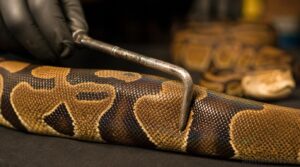
Gentle contact is your next move once you’ve read the snake’s signals. Place the hook tip at the mid-body, 6–12 inches from the head, using smooth alignment and steady pressure — never abrupt force. Brief contact of 2–5 seconds, with calm posture on your end, goes a long way toward reducing snake stress during handling.
Always ensure proper hook hygiene before touching any animal.
Step 3: Apply The Hook-then-hand Method
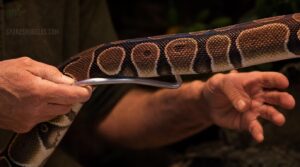
Once gentle contact is established, the hook-then-hand method gives you real control. Slide your snake hook under the mid-body to set body alignment first, keeping the shaft parallel to the snake’s length.
Watch stress indicators — any stiffening means pause. When the animal settles, bring your hand in from the side.
Timing is crucial here: move only when the snake is calm.
Step 4: Support One-third of Body Weight

With your hook placed, weight distribution becomes your next focus. Support roughly one-third of the snake’s body weight on the hook itself — this lever balance keeps tension control even and reduces sudden shifts. It also helps with fatigue mitigation during longer holds.
Watch stress monitoring cues like tail flicks throughout. Most equipment load ratings and weight capacities are built around this body weight support guideline.
Step 5: Move Slowly During Enclosure Cleaning

Slow, steady pacing matters just as much during enclosure hygiene as it does during active handling. Gentle repositioning of décor and substrate — one item at a time — keeps stress monitoring simple. This methodical approach ensures minimal disruption to the snake’s environment.
Keep tools within reach for low-profile entry without sudden grabs. If the snake tenses, pause 30–60 seconds to allow adjustment. Safe enclosure cleaning using snake hooks means matching your tempo to the snake’s comfort, reinforcing trust through consistent, unhurried actions.
Step 6: Reduce Stress Through Hook Training
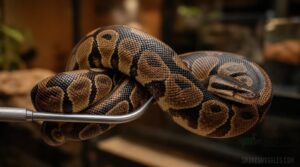
Training snakes to tolerate handling tools takes patience, but short, frequent sessions beat marathon attempts every time. Keep ambient noise reduction in mind — a quiet room matters more than most keepers realize.
Work within the ideal temperature range of 24–30°C, use reinforcement pauses after calm contact, and practice progressive distance expansion gradually.
The impact of hook design on snake stress is real; consistent sessions build trust.
Step 7: Clean, Inspect, and Store Hooks Properly
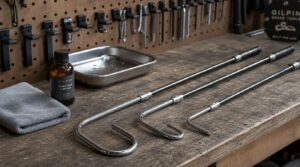
Your tools carry real risk if neglected — so treat maintenance like part of the job.
Follow sanitization protocols: wash with hot water, sanitize, and dry completely.
Apply lubrication guidelines to all moving joints and collars.
Use storage solutions that keep hooks dry and protected.
Run through inspection checklists regularly, checking for rust, cracks, and wear.
Good record-keeping and consistent cleaning and maintenance extend tool life greatly.
Frequently Asked Questions (FAQs)
How do professional endorsements influence hook selection?
Any keeper can claim a hook works — but when Animal Planet veterans stake their reputation on it, that’s a credibility boost you can’t fake.
Peer trust, built through real collaboration with expert herpetologists, drives smarter choices.
Can telescoping hooks handle snakes over eight pounds?
Yes, but with conditions. Joint Lock Integrity and Load Capacity Testing matter most.
A well-built telescoping tool’s convenience aside, always follow weight rating guidelines for snake handling equipment to stay safe with heavier animals.
How often should hook tips be fully replaced?
Replace hook tips when corrosion, bending, or dullness appears — usually every 6–12 months. Stainless steel extends that window; carbon steel shortens it. Keep spare tips ready and document your replacement schedule.
Do titanium hooks outperform stainless steel for longevity?
Titanium edges out high-grade stainless steel on fatigue longevity and corrosion resistance, especially outdoors. Still, professional-grade stainless offers solid longevity with lower cost efficiency trade-offs when maintenance demands stay consistent.
Conclusion
The right hook doesn’t just keep you safe—it keeps the animal calm, the session controlled, and your confidence intact. Every choice you make, from length to material to technique, signals something to the snake before your hand ever enters the enclosure.
The best snake handling hooks for experienced keepers are the ones matched precisely to your species, your setup, and your method. Master that match, and every handling session becomes less reaction, more intention.