This site is supported by our readers. We may earn a commission, at no cost to you, if you purchase through links.

Most ball pythons that struggle through a bad shed didn’t lack humidity across their whole enclosure—they lacked one small, damp retreat at exactly the right moment. That distinction matters more than most care guides let on.
A humid hide and a dry hide serve completely different purposes, and swapping one for the other throws off the careful balance your snake depends on.
Knowing when to offer each type—and how to set them up correctly—means the difference between clean, full sheds and the frustrating cycle of retained eye caps and stuck skin.
Table Of Contents
- Key Takeaways
- Humid Hide Vs Dry Hide Basics
- When Ball Pythons Need Humid Hides
- Ideal Placement and Temperature Gradient
- Setup, Materials, and Maintenance
- Best Humid Hide Container Size and Shape
- DIY Humid Hide Using Food-grade Plastic Tubs
- Choosing Sphagnum Moss or Coco Coir Filler
- Keeping Bedding Damp but Never Dripping Wet
- Adding Ventilation Holes to Prevent Stagnation
- Using Digital Hygrometers to Monitor Humidity
- Target Humidity Inside a Humid Hide During Shed
- Cleaning Humid Hides to Prevent Mold and Bacteria
- Avoiding Scale Rot From Overly Wet Conditions
- Replacing Humid Hide Substrate Regularly
- Top 4 Products Not Needed
- Frequently Asked Questions (FAQs)
- Conclusion
Key Takeaways
- A humid hide isn’t a daily necessity—it’s a targeted tool you activate during the bluish phase to prevent stuck shed and retained eye caps, not a permanent moisture source.
- Your ball python needs both hide types at the same time: the dry hide handles everyday security and temperature regulation, while the humid hide manages the shedding window.
- Place your humid hide in the warm-to-middle zone (84–88°F) and keep the substrate damp like a wrung-out sponge, targeting 70–85% RH inside the hide during shedding.
- Clean and replace humid hide substrate every one to two weeks, because warm, damp conditions breed mold quickly—and scale rot follows neglect closely.
Humid Hide Vs Dry Hide Basics
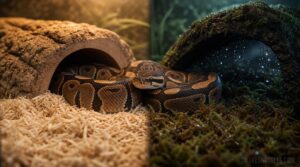
Not all hides do the same job, and knowing the difference really matters for your ball python’s health.
Understanding what makes a hide truly effective for ball pythons can mean the difference between a stressed, hiding-all-day snake and a genuinely secure one.
A dry hide and a humid hide each serve a specific purpose — and using them wrong can cause real problems.
Here’s what sets them apart.
Key Differences in Purpose, Moisture, and Daily Use
Think of these two hides as doing completely different jobs inside your enclosure.
| Feature | Humid Hide | Dry Hide |
|---|---|---|
| Purpose | Microclimate for shedding | Daily security and thermoregulation |
| Moisture Retention | High — sphagnum or coco coir | None — dry air only |
| Behavioral Preference | Temporary, shed-cycle use | Permanent hide rotation staple |
A humid hide provides localized moisture without affecting overall enclosure humidity, acting as a humidity buffer substrate—which your ball python visits by choice, not necessity.
Why Dry Hides Support Security and Thermoregulation
A dry hide provides more than just a hiding spot for your ball python—it creates a predictable refuge centered on two essential needs: security and heat concentration.
| Feature | Warm-Side Dry Hide | Cool-Side Dry Hide |
|---|---|---|
| Temperature Range | 86–88°F | 76–80°F |
| Primary Function | Thermal anchoring for digestion | Cooling retreat |
| Humidity Level | Dry conditions only | Dry conditions only |
| Heat Source Proximity | Near basking element | Away from heat |
| Design Requirement | Snag-free, snug fit | Snag-free, snug fit |
The secure microclimate inside a rigid, opaque hide blocks external disturbances, promoting calmness. A snag-free design safeguards scales during movement. By combining warm-side ambient heat with a defined temperature gradient, this setup empowers your ball python to regulate its own body temperature effectively.
Why Humid Hides Create a Temporary Shedding Microclimate
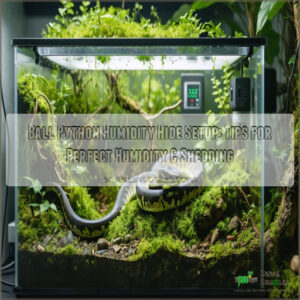
A dry hide locks in security and heat—but when shedding time arrives, your ball python needs something different. A humid hide creates a localized vapor buildup inside a small enclosed space, producing a transient humidity surge right where it counts.
That skin elasticity boost helps the fluid layer between old and new skin separate cleanly. Positioning the humid hide on the warm side placement boosts evaporation, ensuring ideal moisture during pre-shed periods.
| Humid Hide Role | Why It Matters |
|---|---|
| Stress relief microhabitat | Reduces pre-shed anxiety |
| Condensation control zone | Keeps moisture targeted, not tank-wide |
This microclimate creation in reptile enclosures facilitates shedding cycle stages without saturating the whole setup—smart moisture retention where your snake actually needs it.
When a Ball Python Should Use Each Hide Type
Your ball python communicates its hide preferences through behavioral cues. During the blue phase or shedding, prioritize a humid hide to prevent stuck shed. On regular days, the dry hide supports security and thermoregulation. Seasonal climate adjustments, maturity stage considerations, and individual preference variability further influence these choices.
| Situation | Hide Type | Why |
|---|---|---|
| Blue phase / shedding | Humid hide | Prevents stuck shed |
| Dry air conditions | Humid hide | Aids humidity regulation |
| Routine daily rest | Dry hide | Security and temperature balance |
| Post-shed recovery | Dry hide | Allows skin to settle and dry |
| Stress indicator recognition | Both available | Snake self-selects as needed |
Consistent shift period monitoring is critical—observe behavior across shedding cycle stages and adjust hides accordingly. This ensures your python can self-regulate based on physiological and environmental needs.
Why Humid Hides Should Not Replace Dry Hides
Even though humid hides are genuinely useful, replacing dry hides creates real problems. Your snake needs dry shelter to thermoregulate without risking thermal imbalance or behavioral restriction. Constant dampness invites mold and scale rot fast.
| Risk | Cause |
|---|---|
| Security compromise | No stable dry retreat |
| Mold risk | Chronic moisture buildup |
| Hydration dependence | Ignoring ambient humidity |
Keep both. Always.
When Ball Pythons Need Humid Hides
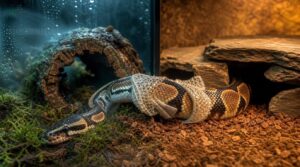
A humid hide isn’t something your ball python needs every day — but when the timing is right, it makes a real difference. Knowing when to use one helps you support your snake without overdoing it.
Placing your humid hide on the warm side maximizes its effectiveness — and setting up the right captive environment for your snake covers exactly how temperature and moisture work together to keep sheds clean and stress low.
Knowing exactly when to use one ensures you provide optimal care. This targeted approach supports your snake without overdoing it. Here’s when a humid hide actually earns its place in the enclosure.
Using a Humid Hide During The Blue Phase
The blue phase is your signal to act. When your ball python’s eyes turn milky and its skin dulls, the shedding cycle has begun — usually lasting 3–5 days. That’s when a humid hide setup for ball python shedding becomes essential. Here’s what to do:
- Activate your humidity gradient by raising the microclimate inside the hide to 85–95% RH.
- Focus on humidity spike control — damp moss, not soaking wet.
- Monitor for respiratory safety by ensuring ventilation holes prevent stagnation.
Stress alleviation happens naturally when your snake finds that perfect moist retreat.
Preventing Stuck Shed and Retained Eye Caps
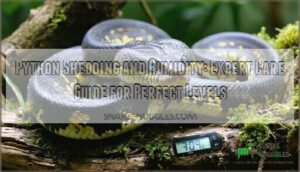
Stuck shed and retained eye caps almost always trace back to dry conditions or inconsistent moisture. Humidity stability logging matters because daily swings can leave eye caps dry, even with a humid hide setup for ball python shedding in place.
To address this, maintain a consistent water dish, use oil‑free handling, and provide rough shedding surfaces for friction. Regularly inspect eye caps to catch problems early, ensuring proactive care for your ball python’s health.
Supporting Skin Elasticity During Shedding
Think of your snake’s skin like a rubber band — dry conditions make it brittle, but proper hydration keeps it flexible. During the shedding cycle, skin surface moisture is everything. A moisture-retaining substrate inside your humid hide aids hydration cycle timing by keeping elasticity high when it matters most.
A snake’s skin is like a rubber band — without moisture, it breaks instead of bends
Gradually increasing humidity as the blue phase peaks gives skin elasticity the best conditions for a clean, complete shed.
Helping Mildly Dehydrated Ball Pythons Recover Moisture
A dehydrated ball python won’t bounce back from dry air overnight — but a humid hide gives it a real recovery tool. Pair it with these steps:
- Place the water dish away from heat to slow evaporation and support hydration levels
- Use damp sphagnum moss for substrate moisture and skin moisture aid
- Add a gentle misting routine and consider a warm electrolyte soak for stubborn cases
Hydration tracking matters — if wrinkled skin persists, see a vet.
Signs Your Ball Python Needs Extra Humidity
Your ball python’s skin tells the whole story. Watch for these warning signs:
| Sign | What It Means |
|---|---|
| Dry Wrinkled Skin / Sunken Eyes | Dehydration; humidity too low |
| Incomplete Shedding / Retained Eye Caps | Moisture deficit during blue phase |
| Labored Breathing / Lethargy | Chronic low humidity stressing the body |
| Decreased Appetite / Stuck Shed | Compounding stress from dry conditions |
Don’t wait — add a humid hide before stuck shed or scale rot develops.
When a Humid Hide May Be Unnecessary
Sometimes, a humid hide isn’t needed if your setup already meets these conditions:
- Consistent ambient humidity stays between 60–80%
- Adequate ventilation prevents condensation and controls humidity spikes
- Regular substrate maintenance keeps moisture balanced
When you also observe normal shedding — specifically clean, single-piece sheds — you can skip it. A stable temperature gradient and dry, skin-free sheds confirm your snake’s environment is healthy.
Ideal Placement and Temperature Gradient
Place each hide matters more than most keepers realize. Position affects temperature, humidity, and how comfortably your snake can move between them.
Here’s what you need to know about setting up each hide in the right spot.
Should a Humid Hide Be Warm or Cool Side?

Where you place the humid hide matters more than most keepers realize. The warm side speeds up evaporation, which affects microclimate stability and humidity retention. The cool side holds moisture longer but may not match your snake’s position preference during the blue phase.
| Factor | Warm Side Ambient | Cool Side Ambient |
|---|---|---|
| Evaporation Speed | Fast | Slow |
| Microclimate Consistency | Lower | Higher |
| Heat-Induced Mold Risk | Higher | Lower |
| Humidity Gradient Control | Moderate | Better |
| Temperature Gradient Fit | Strong | Weaker |
The warm side speeds up evaporation, which affects microclimate stability and humidity retention. The cool side holds moisture longer but may not match your snake’s position preference during the blue phase.
Best Location: Warm-to-middle Enclosure Zone
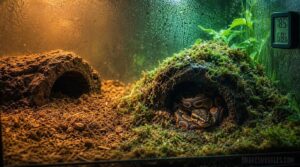
The sweet spot for your humid hide is the warm-to-middle enclosure zone, sitting between 84–88°F. This microclimate positioning keeps humidity stable without the rapid evaporation of the direct warm side. It maintains thermal gradient balance while airflow management remains manageable.
For hygrometer placement, tuck it just inside the hide entrance — that’s where readings matter most.
Why Dry Hides Belong on Both Warm and Cool Sides
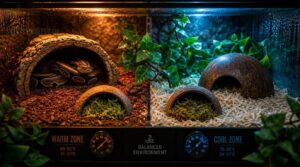
Your snake needs a dry hide on both the warm side and cool side — no exceptions. This gives it real temperature zone choice without crossing moisture barriers.
Distributed shelter use keeps the humid hide from becoming the only option, preventing hide saturation over time. A balanced heat access setup across the full thermal gradient means a calmer, stress-free snake.
Warm Dry Hide Temperature Range: 86–88°F
The warm dry hide needs to stay between 86–88°F — that’s the sweet spot for digestion, metabolism, and immune function. Nail this range and your ball python gets reliable warmth without a surface hotspot problem.
- Use thermostat calibration to lock the temperature
- Check probe placement at substrate level inside the hide
- Match your heat source types to the warm side setup
- Prioritize temperature stabilization before adding your snake
- Monitor the temperature gradient daily to prevent dry skin issues
Cool Dry Hide Temperature Range: 76–80°F
Your cool dry hide should stay between 76–80°F — a stable zone that lets your ball python drop its body temperature after basking. Proper thermostat calibration keeps the effects of fluctuation minimal. Use temperature loggers to track the gradient throughout the day.
Smart heat source choice and ventilation strategies for reptile tanks maintain steady airflow, supporting digestion without making the cool side too warm.
Avoiding Direct Heat Over Humid Hides
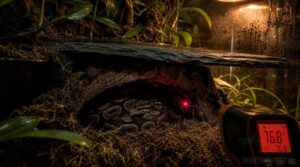
Direct overhead heat is one of the biggest mistakes keepers make with humid hides. Keep a clearance distance of at least 6–8 inches from any ceramic heat emitter or lamp. Use a heat shielding barrier—a flat rock or wooden board works—to block vertical heat flow.
Always perform surface temp monitoring with a laser thermometer, keeping the interior below 95°F to prevent humidity spikes.
Using Hides to Support Natural Thermoregulation
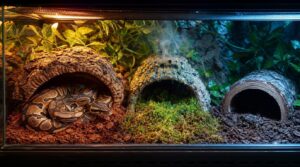
Your ball python is fundamentally its own thermostat — it moves constantly to regulate body temperature. Give it real options.
- Place a dry hide at 86–88°F on the warm side for digestion support
- Keep a second dry hide at 76–80°F on the cool side
- Position your humid hide in the warm-to-middle microclimate zone
- Monitor thermoregulatory behavior to guide seasonal hide adjustment
Setup, Materials, and Maintenance
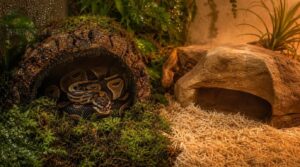
Getting the setup right makes all the difference between a humid hide that works and one that causes problems.
The materials you choose, how wet you keep them, and how often you clean everything will determine whether your snake sheds cleanly or struggles. Here’s what you need to know to build and maintain a humid hide that actually does its job.
Best Humid Hide Container Size and Shape
Size matters more than you’d think. Your hide should match your snake’s girth ratio — roughly 1.5 times its body width — with a low-profile design that keeps things stable. Use a rounded entrance aperture so your python slides in without snagging.
An elevated base prevents moisture from pooling underneath. Keep the footprint snug but not cramped, letting your snake press against the walls comfortably.
DIY Humid Hide Using Food-grade Plastic Tubs
You don’t need to spend much money here. A food-grade plastic tub — 4 to 6 inches tall, 8 to 12 inches long — works perfectly as a DIY humid hide.
Cut a smooth entry hole and apply edge rounding techniques to eliminate sharp edges.
Add lid seal enhancements to lock in moisture, and include a small vent to prevent stagnation.
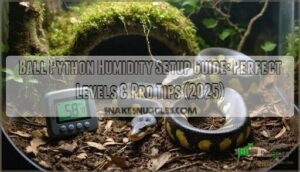
Place a digital hygrometer inside to track conditions accurately.
Choosing Sphagnum Moss or Coco Coir Filler
Once your tub is ready, filler choice matters. Sphagnum moss absorbs up to 20 times its weight in water, making it a powerful humidity buffer — but its mold susceptibility means weekly checks are non-negotiable.
Coco coir holds less moisture yet drains more freely, extending substrate lifespan with less fuss.
Budget considerations aside, both work well inside a humid hide when monitored properly.
Keeping Bedding Damp but Never Dripping Wet
Whether you go with moss or coir, the goal stays the same — damp, not soaked. Capillary moisture should keep your filler holding humidity without pooling at the bottom. Squeeze a handful before placing it: no drips means it’s right. Proper filler saturation facilitates microclimate regulation and condensation control through humidity buffering without oversaturation.
- Light misting restores moisture without creating surface pools
- Substrate moisture should feel like a wrung-out sponge
- Check pooling prevention by tilting the hide slightly after setup
Adding Ventilation Holes to Prevent Stagnation
Damp bedding controls moisture, but without airflow, stagnant air turns your hide into a mold trap fast.
Drill 2–4 mm vent holes near the top and opposite lower sides. This creates vertical airflow and cross ventilation without wrecking humidity balance. Add edge guard reinforcement so edges stay smooth.
| Hole Size | Placement | Function |
|---|---|---|
| 2–4 mm | Upper back wall | Warm air exits |
| 2–4 mm | Lower front side | Cool air enters |
| 3–6 mm | Side panel | Cross ventilation |
Start with 4–6 holes for proper condensation management and mold prevention.
Using Digital Hygrometers to Monitor Humidity
Once ventilation is sorted, you need accurate readings to confirm your hide functions properly. A digital hygrometer is your essential tool for monitoring humidity.
For optimal accuracy, place the device at hide level—this is the most critical placement tip. Calibrate every one to three months to prevent sensor drift and ensure reliability.
Many models offer data logging and alert settings, enabling instant notifications for humidity drops. These features help maintain consistent conditions effortlessly.
Target Humidity Inside a Humid Hide During Shed
Now that your hygrometer is in place, aim for 70 to 85 percent RH inside the humid hide during shed. That’s your target microclimate stability zone.
Key numbers to track:
- Ambient enclosure RH: 55–65% daily baseline
- Humid hide during blue phase: 70–85%
- Substrate feel: damp, never dripping
- Temp-RH interaction: warmer hide = faster evaporation, higher RH
Cleaning Humid Hides to Prevent Mold and Bacteria
Mold doesn’t wait — it builds fast in warm, damp spaces. Spot-clean the hide immediately after waste is spotted, and perform a full substrate swap every one to two weeks.
For deep cleaning, wash the container with warm water, apply a reptile-safe disinfectant, observe the full dwell time, and rinse thoroughly. Always confirm complete drying before reintroducing substrate.
| Step | Action | Frequency |
|---|---|---|
| Spot-Clean Routine | Remove feces or urates right away | As needed |
| Substrate Disposal | Replace moss or coco coir fully | Every 1–2 weeks |
| Residual Rinse Check | Rinse after disinfectant application | Each deep clean |
Avoiding Scale Rot From Overly Wet Conditions
Scale rot sneaks in when a humid hide stays wet instead of just damp. Three conditions accelerate bacterial growth prevention failures:
- Poor ventilation optimization traps moisture against the skin
- Inconsistent mist schedule management keeps surfaces soaking
- Skipped hygrometer calibration frequency lets humidity spikes go unnoticed
Substrate moisture control is your real defense — damp moss prevents stuck shed without creating the prolonged wet contact that causes scale rot.
Replacing Humid Hide Substrate Regularly
Replace the substrate every 2–3 weeks on a consistent Replacement Schedule — sooner if your enclosure runs warm. Temperature‑Based Frequency matters: hotter enclosures dry out or break down moss faster, so check every 10–14 days.
Watch for Mold Alert Indicators like musty smells or dark staining. Use Hygiene Gloves Protocol during swaps, track dates for Substrate Lifespan Tracking, and always refill with fresh humidity-buffer substrate options like sphagnum moss.
Top 4 Products Not Needed
Not every product marketed for pet care actually belongs in your ball python’s setup. Some items are designed for cats or dogs and have no real purpose in a reptile enclosure. Here are four products you can skip entirely.
1. Sankell Pet Hair Removal Glove
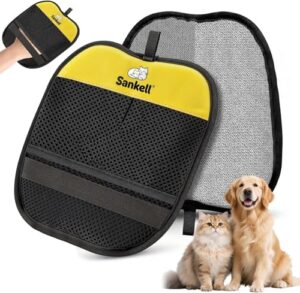
The Sankell Pet Hair Removal Glove is designed for dogs and cats — not reptiles. It utilizes silicone teeth and friction to lift loose fur from surfaces like sofas, clothing, and car seats. This functionality is genuinely useful for pet owners dealing with shedding mammals, such as a Labrador.
However, your ball python does not shed fur. During its blue phase, the snake requires moisture and a proper humid hide — not a tool intended for upholstery hair removal.
Skip this one entirely.
| Best For | Pet owners with dogs or cats who want a low-mess, reusable way to manage shedding at home and on furniture. |
|---|---|
| Primary Use | Pet hair removal |
| Reusability | Fully reusable |
| Surface Compatibility | Fabric and upholstery |
| Portability | Lightweight glove |
| Ongoing Cost | None |
| Pet Compatibility | Dogs and cats |
| Additional Features |
|
- Works as both a grooming glove and a fur remover, so your pet stays calm while you clean up
- No refills needed — just brush the hair off and you’re good to go
- Light enough to use one-handed on sofas, car seats, clothing, and more
- Heavy shedders might leave you doing a lot of passes before the surface looks clean
- Clearing collected fur off the glove itself can get a little tedious
- Not the best pick for short-haired cats or textured surfaces where fur tends to stick deep
2. ChomChom Reusable Pet Hair Roller
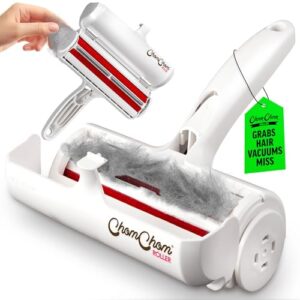
The ChomChom Roller is a clever tool — but it solves a mammal problem, not a reptile one. It uses static electricity and a built-in chamber to pull cat and dog hair off upholstery and car seats. That’s genuinely useful if your Labrador claims the couch.
Your ball python, though, doesn’t shed fur. During the blue phase, it needs a damp moss-filled hide, not a lint roller. This one has no place in your reptile setup.
| Best For | Pet owners with cats or dogs who want a reusable, waste-free way to remove fur from furniture, car seats, and upholstery. |
|---|---|
| Primary Use | Pet hair removal |
| Reusability | Fully reusable |
| Surface Compatibility | Fabric and upholstery |
| Portability | Handheld roller |
| Ongoing Cost | None |
| Pet Compatibility | Dogs and cats |
| Additional Features |
|
- No sticky sheets to replace — just roll, empty the chamber, and go again
- Works across a solid range of fabrics including microfiber, velvet, and leather without damage
- Compact and handheld, so it’s easy to keep in the car or a cleaning caddy
- The chamber latch can pop open mid-roll if your thumb drifts, spilling everything you just collected
- Hair gets caught in the hinge area and needs to be picked out by hand
- At 7.5 inches wide, it’s a bit clunky for tight spots like cushion edges or narrow clothing areas
3. Polardo White Pet Hair Lint Roller
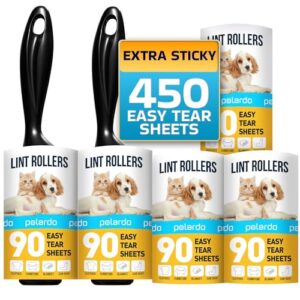
The Polardo White Pet Hair Lint Roller comes with two grippers and five refill rolls — 450 sticky sheets total — built to pull cat and dog hair off couches and car seats. That’s a solid product for pet owners with furry mammals.
But your ball python sheds skin, not fur. No adhesive sheet fixes a stuck shed. What it needs is damp sphagnum moss and the right humidity — not a lint roller.
| Best For | Pet owners with cats, dogs, or other furry animals who want a quick, portable way to de-lint clothes and furniture before heading out. |
|---|---|
| Primary Use | Lint and hair removal |
| Reusability | Handle reusable, sheets disposable |
| Surface Compatibility | Fabric and upholstery |
| Portability | Travel-size design |
| Ongoing Cost | Replacement sheets |
| Pet Compatibility | Dogs and cats |
| Additional Features |
|
- 450 sheets across five refill rolls means you’re stocked for a long time before needing to reorder.
- Works on pretty much any surface — couches, car seats, curtains, carpet — without roughing up the fabric.
- Compact enough to toss in a bag or glove compartment for last-minute touch-ups on the go.
- Sheets can be tricky to tear cleanly, especially when they’re loaded up with hair.
- Some rolls are missing the yellow stripe that marks the sheet edge, so finding where to peel gets annoying.
- Once a sheet’s full, it’s done — you’re peeling and tossing constantly, which adds up in cost over time.
4. Apple Find My Cat GPS Tracker Collar

The Apple Find My Cat GPS Tracker Collar tracks where your cat roams using Apple’s Find My network — and it does that job well. It’s lightweight, waterproof to IP67, and runs about a year on a single CR2032 battery.
But your ball python doesn’t wander the neighborhood. It needs stable humidity, a snug hide, and the right temperature gradient. No GPS collar changes that. This product solves a completely different problem.
| Best For | iOS users who want a lightweight, low-cost way to keep tabs on a cat that roams outdoors. |
|---|---|
| Primary Use | Cat location tracking |
| Reusability | Reusable device |
| Surface Compatibility | Cat collar compatible |
| Portability | Lightweight wearable |
| Ongoing Cost | CR2032 battery replacement |
| Pet Compatibility | Cats only |
| Additional Features |
|
- No subscription fees — just swap the CR2032 battery about once a year and you’re good to go.
- IP67 waterproofing means it holds up in rain or around water bowls without a second thought.
- The breakaway buckle is a nice safety touch, so the collar won’t trap your cat if it snags on something.
- Tracking leans on nearby Apple devices, so accuracy tanks fast in rural or low-traffic areas.
- Android users are completely locked out — this only works with Apple’s Find My app.
- Location updates can lag by several minutes, which isn’t great if your cat moves quickly.
Frequently Asked Questions (FAQs)
Should humid hide be on warm or cool side?
Place your humid hide on the warm-to-middle side of the enclosure. Warmer temperatures help the damp substrate release moisture, creating the humidity your ball python needs during shedding.
If you’re building the box yourself, this DIY humid hide box guide for shedding support walks through sizing and moss setup in more detail.
What can I use for a humid hide?
A plastic tub with damp sphagnum moss works great. Coco coir is another solid option — it holds moisture without getting soggy. Either way, keep it damp, not dripping.
Can ball pythons use both hides simultaneously?
Yes, ball pythons can use both hides at the same time. Each hide fulfills a different purpose, so having both available lets your snake choose what it needs throughout the day.
How often should humid hide substrate be replaced?
Replace the substrate every two to three weeks under normal conditions. If you spot mold, smell something off, or notice slime, swap it out immediately — don’t wait.
Can a humid hide help after a bad shed?
A humid hide can help after a bad shed. The added moisture softens stuck skin, making it easier to release it.
Keep the moss damp, not soaked, and let your snake work through it naturally.
Should hides be removed during feeding days?
No, you don’t need to remove hides on feeding days.
Leaving them in place keeps your snake calm, helps its natural routine, and actually makes it more likely to eat without stress.
Conclusion
Picture your ball python coiled inside a perfectly damp hide, skin loosening evenly, eyes clearing from blue to bright. That image isn’t luck—it’s the result of understanding the humid hide vs dry hide balance.
One hide keeps your snake secure and thermoregulated every day. The other steps in when shedding demands it.
Get both right, placed correctly and maintained clean, and stuck sheds become something that simply doesn’t happen in your enclosure.