This site is supported by our readers. We may earn a commission, at no cost to you, if you purchase through links.

A hatchling ball python fresh out of the egg carries roughly 60 billion years of predator-avoidance instinct packed into a 10‑inch body. That’s not a personality flaw—it’s survival architecture.
When your new snake coils tightly, retreats under its hide, or throws a defensive strike at your approaching hand, it’s running exactly the programming that kept its ancestors alive.
The trouble is, most new keepers read those behaviors as aggression and either panic or push harder, which compounds the stress.
Understanding newly hatched ball python disposition means learning to separate instinct from illness, and patience from neglect.
Table Of Contents
- Key Takeaways
- Normal Newly Hatched Ball Python Disposition
- Common Stress Signs in Hatchlings
- What Affects Hatchling Temperament
- How to Encourage a Calmer Snake
- When Behavior May Signal a Problem
- Frequently Asked Questions (FAQs)
- What is the temperament of a baby ball python?
- How long after hatching do ball pythons shed?
- What are signs of stress in a snake?
- Do hatchlings recognize their owners over time?
- Can siblings housed together affect each others temperament?
- Do morph genetics influence a hatchlings baseline behavior?
- How does shedding frequency affect a young hatchlings mood?
- At what age do hatchlings typically become fully confident?
- Conclusion
Key Takeaways
- Hatchling ball pythons aren’t being difficult — tight coiling, hiding, and defensive strikes are hardwired survival instincts, not personality flaws, and pushing through them only deepens stress.
- Your enclosure does more calming than your hands do in the first week, so stable temps (88–92 °F warm side, 75–78 °F cool side), 50–60 % humidity, and snug hides matter far more than early handling.
- Keep the first two weeks minimal — no handling in days 0–7, one short session in weeks 2–3 — because trust builds through predictable routine, not frequent contact.
- Feeding refusal past two weeks, stuck sheds, mouth breathing, or lethargy without nighttime activity aren’t normal acclimation — they’re signals to check your setup or call a reptile vet.
Normal Newly Hatched Ball Python Disposition
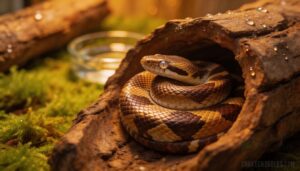
A newly hatched ball python can seem like a total mystery — one minute still, the next tucked so tightly into a hide you’d swear it disappeared. Most of what you’re seeing is completely normal, even if it doesn’t feel that way yet.
If you’re second-guessing every behavior, this guide on ball pythons hiding too much helps you tell the difference between a shy hatchling and one that actually needs attention.
Here’s what healthy hatchling behavior actually looks like.
Why Hatchlings Seem Shy at First
Because hatchling ball pythons emerge into a world full of unknowns, shyness isn’t a flaw — it’s survival logic. Size vulnerability and predator awareness drive most of their early behavior.
During the hatching process and hatchling care, sensory overload is real. Habitat novelty floods them with unfamiliar scents and textures, triggering stress hormones that promote hiding. The first shed phase(https://www.furrycritter.com/pages/articles/snakes/hatchling_behavior.htm) often leads to a short bout of heightened hiding.
Key drivers behind early shyness:
- Small body size increases perceived threat risk
- New environments overwhelm developing sensory systems
- Instinct prioritizes concealment over exploration
- Stress hormone levels stay elevated until surroundings feel mapped
Calm Behavior Versus Defensive Behavior
Once you understand why hatchlings hide, reading their body language becomes the next skill. Calm ball pythons show Coil Relaxation Patterns — loose, soft body posture with slow tongue flicking and gentle Eye Movement Cues.
Defensive hatchlings tense up noticeably; Body Tension Indicators, like a raised head, rigid coils, and Head Position Signals, pulled back signal discomfort.
That distinction matters for stress reduction in reptiles and long-term reptile husbandry success.
Hiding, Tongue Flicking, and Quiet Observation
Three behaviors you’ll spot right away reveal a lot about your hatchling’s comfort level:
- Microhabitat Preference — most choose tight, dark hides and rarely wander far.
- Chemical Sampling Rate — tongue flicking maps the enclosure through reptile physiology.
- Daytime Stillness — quiet immobility reflects natural flicking pattern variability and low stress.
Hide substrate choice and low ambient light support stress reduction in reptiles naturally.
Why “balling Up” is a Normal Response
Beyond tongue flicking, watch for the signature ball — that tight, tucked coil your hatchling defaults to when uncertain.
It’s not a sign of poor temperament; it’s a developmental reflex rooted in reptile physiology. Thermoregulatory compactness, predator mimicry strategy, and energy conservation posture all converge in that single curl.
Think of it as a built-in safety instinct — proof the snake is working exactly as designed.
Common Stress Signs in Hatchlings
Even the calmest hatchling will show stress sometimes — and knowing what to watch for makes a real difference. signs are obvious, while others are easy to miss if you don’t know what you’re looking for.
most common stress signals to keep an eye on.
Tight Coiling, Freezing, and Head Withdrawal
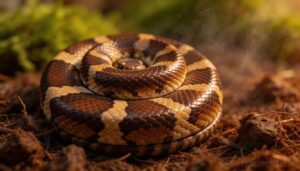
When your new ball python curls into a tight ball and goes completely still, that’s not a personality flaw — it’s instinct. Coil duration can stretch from minutes to hours depending on how safe the environment feels.
Freeze latency kicks in fast after sudden movement or light exposure. Head tuck angle deepens with repeated disturbance.
Keep the enclosure calm, and that tension gradually releases.
Hissing, Striking, or Puffy Defensive Posture

When a hatchling hisses, that sharp forced exhale is a real warning — don’t dismiss it. Hissing triggers include sudden movement, bright light, or improper support during handling.
Strike distance is short but quick, often a closed-mouth snap. A puffy body mechanics display expands the ribs and flattens the neck, inflating its silhouette.
Vocalization volume and posture timing escalate together, the longer stress continues.
Restless Movement and Trouble Settling
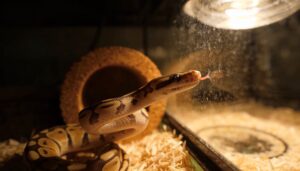
A snake that won’t settle is telling you something.
Restless movement — including glass banging, repeated perimeter pacing, or constant probing — usually points to an environmental mismatch rather than personality.
Watch for these common triggers:
- Gradient steepness that’s too extreme forces constant repositioning
- Hide proximity issues leave hatchlings seeking cover that feels too far away
- Substrate roughness disrupts anchoring and comfort underfoot
- Lighting glare keeps them scanning instead of resting
- Enclosure drafts near walls intensify contact-seeking behavior
How Stress Can Affect Feeding Behavior
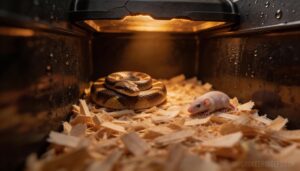
Stress doesn’t just make a hatchling nervous — it quietly rewires how it reacts to food.
| Stress Signal | Feeding Impact |
|---|---|
| Predator Cues | Extends hiding, delays feeding onset |
| Disrupted Circadian Timing | Misaligns hunger with prey presentation |
| Reduced Dopamine Reward | Weakens motivation to strike |
| Food Choice Fixation | Snake ignores new prey placement |
| Individual Variation | Some hatchlings fast longer than others |
What Affects Hatchling Temperament

Not every hatchling comes out of the egg with the same personality, and that’s completely normal. A lot of what shapes their temperament comes down to their environment and how you interact with them early on.
Several key factors directly influence how calm or defensive your hatchling turns out to be.
Individual Personality Differences
Not every hatchling reads from the same script. Some show bold vs shy tendencies from day one — one may investigate your hand within minutes, while another retreats and won’t budge for days.
These exploratory tendencies, handling tolerance, feeding motivation, and stress recovery rate are wired individually. Respect that range, and you’ll build a much smoother foundation for long-term trust.
Enclosure Security and Available Hides
Your enclosure is more than a container — it’s the hatchling’s entire world. A rattling lid or visible gap reads as a threat, not a home. Creating an escape-proof hatchling enclosure means covering every anxiety trigger:
- Use a lid lock mechanism to prevent accidental openings
- Match hide entrance size to the snake’s body width
- Maintain substrate stability so hides don’t wobble or shift
- Position heat source placement away from hide openings
- Install escape-proof barriers around any cord or equipment gaps
Temperature and Humidity Effects on Comfort
Temperature and humidity levels do more for your hatchling’s confidence than you might expect. Poor gradient consistency — where the warm side drifts or the cool end chills — triggers thermal stress that shows up as restlessness or refusal to feed. Aim for 88–92 °F on the warm end and 75–78 °F on the cool side.
| Condition | Hatchling Response |
|---|---|
| Warm side below 85 °F | Sluggish movement, poor digestion |
| Cool side above 82 °F | Restlessness, inability to thermoregulate |
| Humidity below 40% | Difficult shedding, irritability |
| Humidity peaks above 80% | Mold risk, respiratory stress |
| Inconsistent misting timing | Erratic humidity fluctuation, unsettled behavior |
Keep humidity between 50–60 % baseline. During hatching and aftercare, brief misting events help without soaking the substrate. Heat source placement matters too — position it correctly to maintain steady temperature control without hot spots that push your hatchling off its preferred resting zone.
Noise, Bright Light, and Frequent Disturbance
Beyond temperature and humidity, your hatchling’s nervous system reacts sharply to sound, vibration, impact, and light flash sensitivity. Vibrations from nearby speakers or heavy foot traffic travel through the enclosure stand, and register as threats.
Daylight cycle disruption — like motion-activated lights flickering on at night — unsettles natural rest patterns. Smart enclosure placement strategies and visitor traffic management during hatching and aftercare keep stress predictably low.
How Early Handling Shapes Confidence
How you handle a hatchling in its first weeks shapes its long-term confidence more than almost anything else. Gradual exposure, gentle support, and a predictable routine teach the snake that interaction isn’t a threat.
Consistent timing matters — short sessions spaced days apart work better than frequent, extended contact. When handling ends before stress peaks, confidence builds session by session.
How to Encourage a Calmer Snake
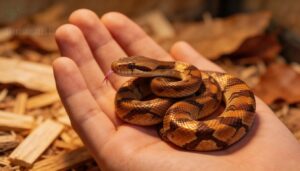
Building a calmer hatchling isn’t about luck — it’s about consistency in the small things you do each day. A few straightforward habits can make a real difference in how quickly your snake settles and starts to trust you.
For added context, rosy boa snake temperament traits show why patience and gentle routines matter.
Here’s what actually works.
Letting a New Hatchling Settle In
Think of the first 5–7 days like a decompression window — your hatchling needs time to map its new world before it check on it constantly. A Quiet Nighttime Routine, stable Gradual Temperature Ramp, and reliable Humidity Buffer Zones do most of the settling work for you.
- Keep the Secure Lid Mechanism closed and disturbances minimal during the first week
- Avoid Minimal Visual Disturbance violations like tapping glass or hovering overhead
- Let the hatchling explore on its own schedule, mostly after lights-out
- Consistent temperatures and humidity matter more than interaction right now
- Trust the enclosure setup — it’s doing the calming, not you
Using Short, Gentle Handling Sessions
Once your hatchling has settled in, short sessions work better than long ones. Keep session length under five minutes, and focus on hand placement that holds the full body — never let it dangle.
Move at a slow, consistent movement pace.
Watch for discomfort detection cues like stiffening or repeated escape attempts, then end immediately.
Your recovery routine is simple: return it to its hide.
Best Times of Day for Interaction
Timing your interactions around your snake’s natural rhythm makes a real difference. Ball pythons are nocturnal, so evening dim handling — after lights-out in a quiet room — usually goes more smoothly than midday contact.
- Avoid the post-feeding period; wait 48 hours after meals
- Morning low-light conditions work if the room stays calm
- Use nighttime quiet windows when your hatchling is naturally active
- Warm-zone handling matters — verify temperature control with digital thermometers and hygrometers before every session
Avoiding Overhandling in The First Weeks
Less is more in the first weeks. Sticking to a Minimal Interaction Schedule — no more than two brief sessions weekly — keeps stress low.
Before reaching in, practice Observation Before Handling: watch for calm tongue-flicking and a relaxed posture first.
| Handling Frequency Limits | Why It Matters |
|---|---|
| 0–7 days post-hatch | No handling; allow full acclimation |
| Week 2–3 | One short session only |
Building Trust Without Increasing Stress
Trust grows quietly — like any relationship, it runs on consistency, not pressure.
Trust, like any relationship, grows quietly through consistency rather than pressure
Wash your hands with unscented soap before every session; even faint odors can trigger hesitation.
Build confidence through:
- Scent-Free Interaction before each contact
- Predictable Feeding Schedule every 5–7 days
- Minimal Enclosure Disturbance between sessions
- Controlled Light Exposure using a 12-hour cycle
- Gradual Trust Building through short, calm handling
When Behavior May Signal a Problem
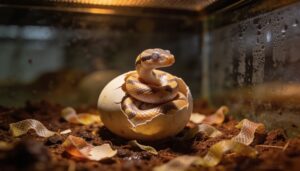
Most hatchlings settle down with time, but some behaviors are worth watching more closely. If something feels off after the first few weeks, it usually means something in the environment — or the snake itself — needs attention.
Here are the key signs that might point to a real problem.
Fearful Behavior That Lasts Too Long
Some fear during the first days is expected — but prolonged defensive coiling, chronic freezing episodes, and persistent hiding tendencies beyond the initial acclimation window aren’t normal.
If your hatchling shows a slow habituation rate to routine daily cues after a week or more, something in the environment likely needs adjusting.
Ongoing feeding reluctance paired with these behaviors warrants a post-hatch veterinary health check.
Repeated Refusal to Eat After Acclimation
A hatchling that still won’t eat two weeks after acclimation is waving a red flag. Check these three areas first:
- Metabolic Temperature Mismatch — cool, warm-side temps stall digestion and kill appetite
- Humidity Ventilation Balance — poor airflow or low humidity raises stress
- Odor Contamination Effects — handling residue or scent contamination deters feeding
Consistent prey size selection and feeding schedule consistency resolve most cases. Persistent refusal warrants post-hatch veterinary health checks.
Poor Sheds and Dehydration-related Irritability
Stuck sheds are another warning sign worth watching closely. When humidity management slips below 60%, the shed membrane dries out and clings — especially around the eye caps and tail tip.
That physical discomfort drives real irritability.
moisture gradient, hydration solutions like a shallow soak dish, and consistent temperature control all support skin health monitoring and smoother posthatch recovery.
Lethargy Versus Normal Daytime Hiding
Daytime hiding isn’t automatically a red flag. Ball pythons are nocturnal, so a hatchling tucked away at noon — especially during the Adjustment Timeframe after setup — is usually just following instinct.
Watch for these distinctions:
- Normal hiding paired with active nighttime movement and Feeding Behavior Signals like prey interest
- Lethargy that worsens daily, with absent tongue-flicking even during evening hours
- Poor Heat Zone Selection suggesting temperature control issues rather than illness
When to Contact a Reptile Veterinarian
When lethargy crosses into something more serious, don’t wait it out. Contact a reptile veterinarian if you notice mouth breathing, wheezing, blood in stool, or signs of mite infestation.
Scale rot, soft shell defects, or a sudden temperature drop that disrupts feeding, all warrant PostHatch Veterinary Health Checks.
Veterinary checkups aren’t overreacting — they’re part of responsible Hatching Process, Hatchling Care, and solid Feeding Strategies for Hatchling Ball Pythons.
Frequently Asked Questions (FAQs)
What is the temperament of a baby ball python?
Baby ball pythons lean toward docile by nature.
Genetic temperament plays a real role, but most are calm, curious explorers whose circadian activity peaks at night, making evenings your best window for interaction.
How long after hatching do ball pythons shed?
Most hatchlings complete their first shed within 7 to 14 days after hatching. Watch for pre-shed signs like cloudy eyes and dull skin, and keep humidity at 60–70% to support a clean shed.
What are signs of stress in a snake?
Stress shows up as tight coiling, freezing, hissing, or striking. Watch for eye cloudiness, mouth gaping, weight loss, abnormal defecation, and refusal to eat — all reliable warning signs.
Do hatchlings recognize their owners over time?
Over time, scent familiarity and consistent routine matter more than visual recognition.
Regular handling frequency and behavioral conditioning through calm, predictable contact help your hatchling associate you with safety rather than threat.
Can siblings housed together affect each others temperament?
Yes — siblings sharing space can quietly shape each other’s temperament through sibling competition, stress transmission, hide scarcity, and microclimate preference conflicts, making separate enclosures the smarter setup for calmer, more confident hatchlings.
Do morph genetics influence a hatchlings baseline behavior?
Morph genetics can influence a hatchling’s baseline activity, but individual variation remains substantial.
Morph color impact and pattern density effects may shape early startle responses, yet genetic temperament variance means no morph guarantees a set disposition.
How does shedding frequency affect a young hatchlings mood?
Young hatchlings shed often, and each cycle brings a brief mood dip. Shedding-induced irritability is normal — expect withdrawal, reduced feeding, and less tolerance for handling until the shed completes cleanly.
At what age do hatchlings typically become fully confident?
There’s no single "fully confident" goal — some hatchlings hit their Four Week Shift smoothly, while others need closer to Six Week Independence before consistent calm settles in during routine handling.
Conclusion
Fresh from their fragile, fledgling beginnings, newly hatched ball pythons fascinate with their fearful, fleeing ways. As you navigate their normal and not-so-normal behaviors, patience and perception are key.
By precisely pinpointing predator-avoidance instincts and stress signals, you’ll promote a peaceful, problem-free relationship.
A calm, curious keeper equals a calm, confident snake. Understanding the newly hatched ball python disposition helps you provide a supportive environment, ensuring a thriving, healthy pet for years to come naturally.