This site is supported by our readers. We may earn a commission, at no cost to you, if you purchase through links.

A rat snake stops eating a week before it sheds, and panicked owners often assume the worst. It’s not illness. It’s biology doing exactly what it should.
Rat snake diet and shedding stay tightly linked throughout the animal’s life. Prey size dictates growth rate, growth rate dictates shed frequency, and mineral balance from whole prey builds the very skin that gets replaced every few weeks in juveniles. Get one piece wrong, and you’ll see it in a stuck shed or a snake that refuses food entirely.
You’re about to learn how these two systems work together, and how to spot trouble before it becomes a real problem.
Table Of Contents
- Key Takeaways
- Rat Snake Diet and Feeding Schedule
- Rat Snake Shedding Cycle and Signs
- How to Support Healthy Shedding
- Top 5 Rat Snake Shedding Products
- Frequently Asked Questions (FAQs)
- How often do rat snakes shed?
- Why do rat snakes shed a lot?
- How to care for a rat snake?
- What do wild rat snakes eat?
- How often should rat snakes shed?
- Should I feed my snake when it’s shedding?
- What time of day do rat snakes come out?
- How often do you have to feed a rat snake?
- How long can rat snakes go without eating?
- Do rat snakes need UVB lighting in captivity?
- Conclusion
Key Takeaways
- Your snake losing its appetite a week before shedding is completely normal, not a sign of illness, so there’s no need to force feed it during this time
- Prey size should match your snake’s girth (about 1 to 1.5 times its body width) since diet and shedding are deeply connected, with whole prey providing the exact nutrients needed to build healthy new skin
- A full shed cycle takes 7-14 days and should come off in one clean piece, so keeping humidity at 70-80% and providing rough surfaces to rub against will help prevent stuck sheds
- If a stuck shed doesn’t clear up after two humid soak attempts, or you notice swelling, discharge, or wounds, it’s time to call an exotic animal vet rather than keep trying home remedies
Rat Snake Diet and Feeding Schedule
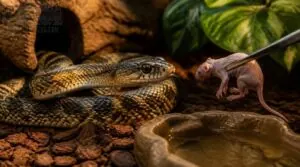
Feeding a rat snake well comes down to more than just tossing in a mouse and walking away. Get the diet right, and you’ll set the stage for steady growth, smooth sheds, and a genuinely healthy animal. Here’s what you need to know about prey, portions, and feeding schedules.
If you’re weighing prey size relative to your snake’s girth, this guide to feeding rosy boas offers a handy comparison point for portioning whole prey correctly.
Whole-Prey Nutrition
A mouse isn’t just meat—it’s a complete package. Whole prey delivers organ nutrients, mineral balance, and natural fiber from fur, giving hatchlings and adults what muscle meat alone can’t.
- Protein and fat for energy
- Calcium and phosphorus for bones
- Vitamin-rich organs
- Hydration source from moisture
That’s whole-prey nutrition working as nature intended.
Prey Size and Selection
Getting the nutrients right means nothing if the meal’s the wrong size. Prey width matching is your rule of thumb: pick rodents roughly 1 to 1.5 times your snake’s thickest body width.
Too big risks regurgitation; too small won’t satisfy. Hatchlings start on pinky mice, sizing up as girth increases—a rodent size progression matching natural growth, whether your snake’s a barn hunter or forest forager.
It’s important to recognize signs of overfeeding, such as visible fat deposits along the tail and neck, which can indicate excessive caloric intake. overfeeding in snakes
Feeding Frequency by Age
Age drives the clock here. Hatchling nutrition runs on a 5-7 day rhythm, dropping to 4-5 days once juveniles hit their growth spurt. Subadults settle into weekly meals, while adult maintenance stretches to 7-14 days.
Seasonal cooling or low activity often justifies lengthening any of these intervals—your snake’s body condition, not the calendar, should set the final feeding schedule.
Frozen-Thawed Feeding Safety
Whatever the feeding schedule, safety starts before prey ever reaches the enclosure. Thaw frozen-thawed prey in a dedicated thawing container, away from kitchen surfaces—freezing doesn’t kill germs, and even healthy-looking rodents can carry Salmonella. Refrigerate, never microwave.
Offer prey with feeding tongs, keep feeding zones separate from food prep, then wash hands thoroughly. Simple habits, real pathogen control.
Hydration and Water Needs
Rarely do keepers realize water matters as much for shedding as for digestion. Keep a shallow water bowl filled always; refresh it after soaking or defecation. Water regulates body temperature and aids healthy sheds—stagnant, dirty water invites bacteria.
Check water daily for contamination, especially when ball python mite signs and treatment include ash-like droppings near the bowl.
Occasional soaking opportunities help hydration, alongside a humid hide packed with damp sphagnum moss, which doubles as a natural, gentle warm compress shedding aid.
Rat Snake Shedding Cycle and Signs
Shedding is one of the clearest windows into your snake’s health, if you know what to watch for. It follows a predictable pattern, from the first signs of change to the final peel. Here’s what that cycle actually looks like, stage by stage.
If you’re curious how shedding ties into a snake’s broader biology, this guide to rattlesnake facts and behavior offers useful background on the species.
What’s happening beneath the surface during each stage often comes down to nutrition, so it’s worth understanding how diet shapes a healthy shed cycle before trouble starts.
Shedding follows a predictable pattern, offering one of the clearest windows into your snake’s overall health
Shedding Frequency by Age
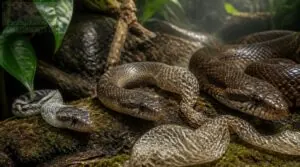
Think of shedding, or ecdysis, as a growth report card. Juveniles shed every 4-6 weeks, chasing rapid growth. The subadult change phase slows things gradually. Adults settle into 1-2 sheds annually, a steady adult shedding pattern.
This growth-linked shedding means age-based shedding variation is normal—your snake’s size, not the calendar, sets the true schedule, especially during seasonal shedding peaks.
Seven-to-Fourteen-Day Shedding Timeline
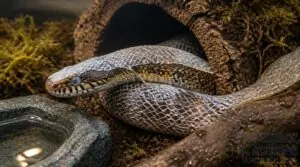
Two weeks. That’s the outside edge of a full shedding cycle, start to finish. Daily visual changes mark the way, paired with careful humidity adjustments, substrate transitions, and light nutritional modifications:
- Days 1-7: dulling skin, rising humid hide moisture
- Days 8-11: humidity control peaks, soaking begins
- Days 12-14: drying phase, watch for eye cap retention
A reptile shedding aid spray helps ecdysis finish cleanly.
Cloudy Eyes and Dull Skin
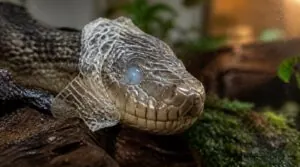
Milky, opaque eyes are the first tell — fluid pooling beneath old skin blurs your snake’s vision for days. Dull skin coloration follows, washed-out and gray.
Watch closely for eye cap issues once shedding starts. Humidity optimization (70-80%) in the humid hide prevents incomplete sheds and helps scale gloss restoration once your snake sloughs cleanly.
Appetite and Behavior Changes
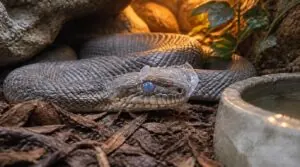
Your snake’s appetite often drops right before shedding — this is normal, not illness. Stress-induced appetite loss pairs with reduced activity as your snake goes inactive, conserving energy. Don’t force feeding; refusal during pre-shed is expected.
Once shedding completes, appetite usually rebounds, especially with proper hydration supporting digestion and prey preference restored to normal, active hunting behavior.
Complete Shed Indicators
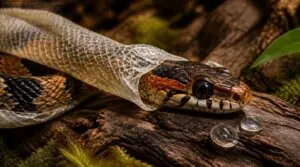
A complete shed peels away in one intact piece, snout to tail, no rips or stuck patches.
Check for full eye cap separation, uniform color, and bright new skin underneath — no wrinkled, dull eye caps or retained caps clinging to the head.
That’s your shed confirmation: even sheen, restored patterns, no lingering cloudiness or belly pinkness left over.
How to Support Healthy Shedding
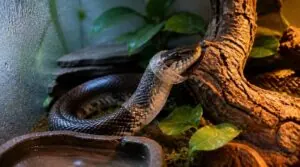
Shedding isn’t just something that happens to your snake—it’s something you actively help along. A few smart adjustments to its enclosure make the difference between a clean, smooth shed and a stuck, stressful one. Here’s what your setup needs to get right.
Humidity and Temperature Targets
Numbers don’t lie for shedding success. Keep humidity between 40-60% normally, climbing to 55-65% during shed cycles.
Your temperature gradient should run 28-32°C warm side, 24-26°C cool side—juveniles need warmer basking zones (31-32°C) than adults (28-30°C).
Adjust seasonally, since stable conditions prevent stress-related shedding problems and keep your rat snake sliding out of old skin smoothly.
Humid Hides and Rough Surfaces
Getting temperature right means little without a proper humid hide. Place one on the warm side, sized for your snake to coil comfortably, packed with damp moss.
Line it with cork bark or resin—rough surfaces let your snake rub against texture, loosening skin naturally. Clean weekly, and keep the humidity gradient distinct from the rest of the enclosure.
Diet’s Role in Shedding
Rough surfaces work from the outside in—but shedding really starts with what’s on the menu. Whole prey delivers protein for skin structure, fat for lubrication, and a calcium ratio near 1:1 that helps build strong new layers.
Hydration from prey matters too, keeping skin pliable. Watch appetite closely: nutritional deficiencies often show up first as rough, incomplete sheds.
Stuck Shed and Eye Caps
Even with good nutrition, sheds sometimes stick—especially around the eyes. Retained shed signs include grainy, cloudy caps and patchy skin near the head.
Try a humid bath method: soak 15-30 minutes in shallow warm water. Safe intervention steps:
- Raise humidity to 70-90%
- Warm soak
- Test gently with damp cotton
- Apply reptile shedding aid spray
- Never force eye cap removal
When Veterinary Care is Needed
If home methods fail after two attempts, or you spot open wounds, swelling, or discharge, call an exotic animal veterinarian.
Stuck eye caps left untreated risk infection; incomplete sheds can mask respiratory infection signs, mouth rot, or parasites.
Vets rule out metabolic bone disease and egg binding, too.
When in doubt, a quick veterinary consultation beats an infection risk later.
Top 5 Rat Snake Shedding Products
Good husbandry habits go further with the right gear on hand. You don’t need a shelf full of supplies, just a handful of proven tools that target humidity, texture, and skin health. Here are five products worth adding to your rat snake care kit.
If a snake ends up in your yard instead of your rat snake’s tank, this guide on how to safely remove a garter snake from your yard walks you through humane removal and prevention steps.
1. Reptile Fogger Mister Humidifier System

Dry air is the enemy of a good shed, and this ultrasonic fogger solves that problem quietly. It holds 3.8 liters and pushes out up to 380ml of mist per hour, enough to keep a 10-40 gallon enclosure sitting in that 70-80% humidity sweet spot rat snakes need.
You’ll get up to 26 hours of runtime on medium output, adjustable through a single front knob. The flexible 1.5-6.3 foot hose lets you aim mist exactly where it’s needed, and automatic dry-off protection shuts things down before the reservoir runs dry. At under 35dB, it won’t disturb nighttime activity.
| Best For | This fogger is best for reptile and amphibian owners who want simple, quiet, beginner-friendly humidity control for a 10-40 gallon terrarium. |
|---|---|
| Product Type | Ultrasonic Fogger |
| Primary Purpose | Humidity Control |
| Target User | Reptile Owners |
| Application Method | Automatic Misting |
| Ease Of Use | Beginner-Friendly |
| Key Limitation | No Timer |
| Additional Features |
|
- Ultrasonic misting keeps humidity in the ideal range without soaking the enclosure
- Runs under 35dB, so it won’t disturb nighttime activity
- Automatic dry-off protection helps prevent running the tank dry
- No built-in timer or humidity monitoring
- Power switch must be turned on manually each time
- Can’t move it or add water while it’s running
2. Smooth Out Rough Skin Exfoliator

Texture matters more than you’d think here. Textured rocks, resin branches, and manufactured logs aren’t just tank decoration — they’re friction points your snake needs to catch its snout skin and start peeling.
Without something rough to snag against, sheds stall out or come off in frustrating patches instead of one clean piece. That’s the difference between a complete head-to-tail shed and a week of picking flakes off your snake’s tail.
Placement matters too. Set these pieces where your snake already rubs and explores, not tucked in a corner it never visits. A few strategically placed rough surfaces, paired with the humidity levels we covered earlier, give your rat snake everything it needs to shed cleanly on its own schedule.
| Best For | This exfoliator is best for anyone with rough, flaky, or uneven skin—like on elbows, knees, or heels—who wants a gentle, daily-use option that won’t upset sensitive skin. |
|---|---|
| Product Type | Exfoliating Tool |
| Primary Purpose | Skin Exfoliation |
| Target User | Skincare Users |
| Application Method | Manual Rubbing |
| Ease Of Use | Daily Use |
| Key Limitation | Not For Compromised Skin |
| Additional Features |
|
- Non-abrasive, pH-balanced formula gentle enough for sensitive skin
- Affordable at just $1.29 per 100 ml unit
- Preps skin for better moisturizer and serum absorption
- Not suitable for active acne, eczema, or open wounds
- Overuse may cause mild irritation on compromised skin
- Results depend on skin type and consistent use, so it won’t work the same for everyone
3. Reptile shedding aid spray supplement
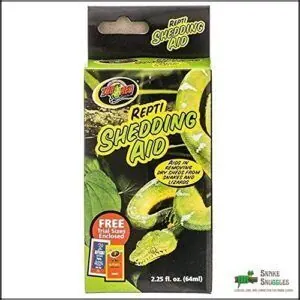
Some sheds just won’t cooperate, no matter how well you’ve dialed in humidity. That’s where a shedding aid spray earns its spot in your supply kit.
Formulated with glycerin, jojoba oil, and vitamin E acetate, it moisturizes dry patches and helps loosen skin that’s clinging past its welcome. Shake the bottle, spray directly onto stubborn areas, then rub gently with your fingers to work it in.
Use it monthly as a preventative, or reach for it whenever a shed drags on. It won’t fix poor husbandry, but as a targeted assist, it’s genuinely useful — just keep it away from the eyes.
| Best For | Reptile keepers dealing with stubborn, dry, or retained shed on species like geckos, bearded dragons, and corn snakes who want a targeted, low-stress solution. |
|---|---|
| Product Type | Shedding Spray |
| Primary Purpose | Shed Assistance |
| Target User | Reptile Keepers |
| Application Method | Spray & Rub |
| Ease Of Use | Low-Stress |
| Key Limitation | Requires Consistent Use |
| Additional Features |
|
- Loosens tough shed on toes, tail tips, and eyelid linings without soaking or handling stress
- Conditions and moisturizes skin while leaving a healthy sheen
- Safe for use across a wide range of reptile species
- Won’t fix underlying husbandry issues like poor humidity, temperature, or nutrition
- Needs regular, consistent use to see reliable results
- May not work the same for every species or individual animal
4. Reptile hide and small animal shelter
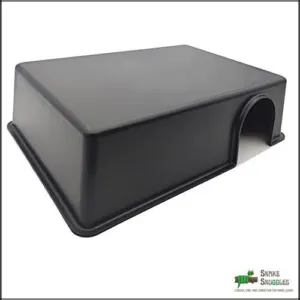
Good shelter design does double duty: it gives your rat snake a place to hide and a microclimate for shedding. The Leoterra hide (9.45 x 7.09 x 2.36 inches) works well for corn snakes, milk snakes, and king snakes under 200 grams, with a top-seal lid that traps humidity inside.
Rounded entrance edges prevent scale damage as your snake pushes through to rub against surfaces. Add damp sphagnum moss inside for extra moisture. It’s lightweight, though — active snakes may flip it, so weigh it down if needed.
| Best For | This hide is best for owners of small to medium reptiles like corn snakes, milk snakes, king snakes, and geckos, especially those under 200 grams. |
|---|---|
| Product Type | Reptile Hide |
| Primary Purpose | Shelter & Humidity |
| Target User | Small Reptile Owners |
| Application Method | Passive Enclosure Use |
| Ease Of Use | Easy To Clean |
| Key Limitation | Not For Large Snakes |
| Additional Features |
|
- Top-seal design locks in humidity, making shedding easier and more comfortable
- Rounded entrance edges protect delicate scales from injury during use
- Lightweight and easy to clean or reposition within an enclosure
- Not suitable for snakes over 200 grams without sizing up to L or XL
- Lightweight build means active snakes may flip or shift it out of place
- Plain black plastic look lacks the natural appeal of stone or wood hides
5. DeShedding Spray for Dogs Refresh
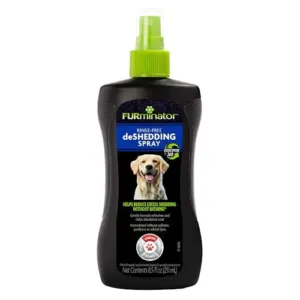
Ever seen a FURminator DeShedding Spray in a pet aisle and wondered if it’d work on your snake? It won’t, and here’s why that matters.
This formula was built for canine hair follicles, not for keratin-based reptile scales. Dogs shed hair year-round; your rat snake sheds its entire outer skin layer in one continuous piece through ecdysis. Aloe vera, vitamin E, and the sulfate-free base help condition fur, but they can leave residue that traps moisture against scales unevenly, interfering with a clean shed.
Skip cross-species shortcuts. Reptile-specific humidity tools and rough basking surfaces do the real work your snake needs for healthy, complete sheds.
| Best For | dog owners looking for a between-bath way to cut down on loose fur while conditioning their pet’s coat. |
|---|---|
| Product Type | Deshedding Shampoo |
| Primary Purpose | Coat Shedding Control |
| Target User | Dog Owners |
| Application Method | Topical Application |
| Ease Of Use | Regular Grooming Routine |
| Key Limitation | May Irritate Skin |
| Additional Features |
|
- Helps reduce shedding and neutralizes odor without needing a bath
- Enriched with aloe vera, keratin, and vitamin E to soften and condition the coat
- Free of sulfates, parabens, and dyes, and cruelty-free
- Can leave an oily or greasy residue on some coats
- May irritate dogs with sensitive skin
- Needs consistent use (about every 3rd day) to see real results
Frequently Asked Questions (FAQs)
How often do rat snakes shed?
Frequency shifts dramatically as your snake matures. Juveniles shed every 4 to 6 weeks, fueled by rapid growth, while adults slow to 2 to 3 times yearly—so don’t panic if your grown snake’s shed schedule looks nothing like it did as a hatchling.
Why do rat snakes shed a lot?
Rapid growth drives it. Juveniles outpace their skin fastest, shedding every 4 to 6 weeks, while adults slow to just once or twice yearly as growth tapers off with age.
How to care for a rat snake?
A healthy shed comes off in one continuous piece within 7 to 14 days. Care for a rat snake means matching prey size to body width, keeping humidity at 70-80%, and offering water daily.
As your rat snake grows toward that six-foot potential, tank size and feeding schedules need adjusting too—this Honduran milk snake care sheet offers a useful comparison for colubrid keepers navigating similar growth-stage changes.
What do wild rat snakes eat?
In the wild, rat snakes hunt rodents, birds, and bird eggs, plus lizards and frogs when small mammals run scarce. They rely on scent and heat cues, swallowing prey whole after constriction subdues it.
How often should rat snakes shed?
Your snake’s age sets the pace: juveniles shed every 4 to 6 weeks, subadults every 6-8 weeks, and adults slow to every 2 to 4 months once growth levels off.
Should I feed my snake when it’s shedding?
Cloudy eyes and dull, ghost-pale scales mean vision is fading fast. Offer food, but don’t force it—appetite often drops during shedding, so a refusal is normal. Try again once the old skin sloughs off.
What time of day do rat snakes come out?
Dawn and dusk are prime time, when cooler temps and active prey overlap. You’ll often spot them moving again briefly after rain showers, since rising humidity triggers crepuscular activity and better hunting odds.
How often do you have to feed a rat snake?
Feeding frequency depends on age. Hatchlings eat every 5 to 7 days, juveniles every 7 to 10, sub-adults every 10 to 14, and adults settle into a 14-day rhythm once growth slows down.
Watching for behavioral signs your snake is ready to eat can help you fine-tune these schedules as your snake grows.
How long can rat snakes go without eating?
Going hungry can mean thriving, not starving. Adults comfortably fast 2-6 months, dropping metabolic rate roughly 70%, living off fat reserves. Cooler seasons stretch this further, mimicking natural brumation, while stable weight and normal activity confirm you’ve got nothing to worry about.
Do rat snakes need UVB lighting in captivity?
No, UVB isn’t essential for rat snakes—these crepuscular hunters thrive without it given proper heat and photoperiod. Many keepers skip it entirely; when used, though, low-intensity UVB can gently support vitamin D synthesis and calcium metabolism.
Conclusion
Every old-time keeper knew the snake that stops eating is preparing, not suffering. That instinct hasn’t changed.
Rat snake diet and shedding remain two threads of one rope, twisted together from hatchling to adult. Feed properly sized prey, track sheds like a calendar, and you’ll rarely face a stuck shed or an emergency vet visit. Your snake isn’t fragile. It’s a finely tuned system, and you now hold the blueprint to keep it running smoothly for decades.