This site is supported by our readers. We may earn a commission, at no cost to you, if you purchase through links.
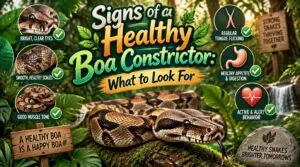
Boas are masters of disguise when something’s wrong. By the time you notice obvious symptoms, a health issue has often been brewing for weeks. That’s the catch with reptiles: they hide illness until they can’t.
Knowing the signs of a healthy boa constrictor flips that script. Instead of reacting to problems, you spot deviations from a solid baseline. Firm muscle tone, clean sheds, steady appetite, and calm behavior aren’t just nice to see. They’re your early warning system.
This guide breaks down exactly what a thriving boa looks like, head to tail.
Table Of Contents
- Key Takeaways
- A Healthy Boa Has a Firm, Muscular Body
- Clear Eyes, Smooth Scales, and a Clean Vent
- A Healthy Boa is Alert, Coordinated, and Calm
- Consistent Appetite, Digestion, and Waste
- Stable Weight and Health in a Proper Habitat
- Frequently Asked Questions (FAQs)
- How do I tell if my boa is happy?
- What’s the average lifespan of a boa constrictor?
- What are the signs that a snake is unhealthy?
- How hard are boa constrictors to take care of?
- How do you know if a boa constrictor is healthy?
- How do I know if my boa is healthy?
- Are boa constrictors prone to diseases?
- How do I choose a healthy boa constrictor?
- What color is a boa constrictor?
- What is boa constrictor care?
- Conclusion
Key Takeaways
- Boas instinctively hide illness, so learning what healthy looks like — firm muscle tone, clear eyes, smooth sheds, and calm behavior — is your best early warning system before problems get serious.
- A complete shed in one piece, quiet breathing, and a clean vent are your fastest physical checkpoints; any retained skin, discharge, or open-mouth breathing means something’s already gone wrong.
- Behavior tells you just as much as appearance — a healthy boa moves deliberately, flicks its tongue curiously, and handles calmly, while repeated thrashing, constant hiding, or poor coordination are red flags worth acting on immediately.
- Consistent feeding every 10–14 days, formed waste with white urates, and zero regurgitation confirm your boa’s digestion is on track — and maintaining a proper temperature gradient (90–95°F basking, 78–82°F cool side) with 50–70% humidity is what makes all of it possible.
A Healthy Boa Has a Firm, Muscular Body
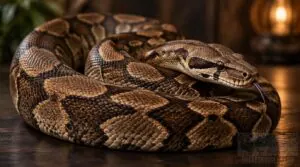
A healthy boa constrictor feels solid when you pick it up, not like a limp rope or a garden hose with nothing inside. Run your hands along the midsection. You want firm, consistent muscle with a rounded, even shape from head to tail.
Keeping that musculature consistent over time comes down to diet — a regular boa constrictor feeding schedule prevents the gauntness or soft puffiness that throws off that ideal shape.
Good muscle mass is your clearest clue about overall condition. A healthy boa with a strong appetite and normal digestion holds body weight evenly, with no sunken spots, no bony spine poking through, and no weirdly hollow trunk sections.
Watch how it moves, too. An active and alert boa navigates its enclosure with real control and purpose. Wobbly or floppy movement and constant drooping suggest muscle loss, and that’s a sign worth investigating sooner rather than later.
Clear Eyes, Smooth Scales, and a Clean Vent
Your boa’s skin and face tell you a lot about what’s going on inside. A few key checkpoints — eyes, scales, and the vent — give you a fast, reliable read on overall health. Here’s what a clean bill of health actually looks like.
Complete, Trouble-Free Sheds
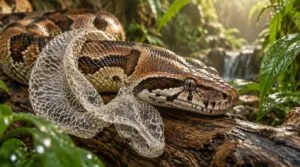
A complete shed comes off in one large piece, like a perfect sock peeled inside out. That’s your goal. Regular clean shedding tells you humidity and hydration are dialed in.
Once the shed is off, a few simple steps like checking the eyecaps and offering fresh water are covered in this guide on what to do after your snake sheds.
Check toes and the vent carefully. Retained skin on digits can cut off circulation fast. After a good shed, smooth glossy scales look fresh and uniform, with no patchy remnants. If you notice any sticking skin around the toes or vent, a boa constrictor shedding aid spray can soften stubborn remnants and help the rest release cleanly.
Eye caps deserve the same attention — retained shed there can disrupt tear distribution and vision, as detailed in this guide to common reptile skin shedding problems.
Clear Nose and Easy Breathing
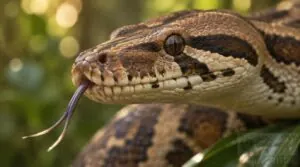
Now check that nose. A boa’s respiratory system should run quietly. No bubbles, no discharge, no crusty buildup around the nostrils.
Watch your boa breathe. Normal breathing is smooth and silent. Open-mouth breathing, tail-bobbing, or audible wheezing are classic respiratory distress signs. Persistent mucus that returns after wiping signals respiratory infection. Catch these signs of illness early, before they spiral.
A Healthy Boa is Alert, Coordinated, and Calm
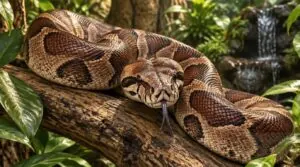
Beyond the physical stuff, behavior is one of your sharpest boa health indicators. A boa constrictor that’s truly thriving doesn’t just look good, it acts good too.
Watch for these five signs of an active and alert demeanor:
- Slow, curious tongue-flicking when you approach
- Smooth, controlled movement without stumbling or dragging
- Calm body tension during handling, not rigid or frantic
- Purposeful head tracking as it explores its enclosure
- Quick return to baseline behavior after mild disturbance
A healthy boa should move like it owns the place. Coordinated, deliberate, completely unbothered by routine interactions. If your snake behavior analysis flags repeated thrashing, constant hiding, or an inability to right itself, something’s off. Persistent stress postures aren’t quirks. They’re a clear signal.
Weekly hands-on checks help you spot these red flags early—common signs of a healthy ball python give you a clear baseline to compare against.
A healthy boa moves like it owns the place — persistent stress postures are never quirks; they’re a clear signal
Consistent Appetite, Digestion, and Waste
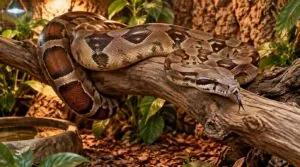
What goes in must come out, and with boas, both ends tell a story. Appetite, digestion, and waste are three of your clearest windows into how your snake is really doing. Here’s what healthy looks like across each one.
Normal Feeding Patterns
Think of your boa’s feeding routine as a baseline. Healthy adults eat every 10 to 14 days, strike quickly, and finish their meal in one sitting. Juveniles feed more often.
One skipped meal? No big deal. But repeated refusals outside of a shed or prolonged hesitation from a snake that used to eat confidently signal something worth paying attention to.
Stool, Urates, and Regurgitation
After each meal, your boa’s waste tells you a lot.
- Formed fecal matter, not liquid or mushy
- Off-white, paste-like urates passed alongside the stool
- A dry, clean vent with no crusting or residue
- Zero regurgitation after feeding
These four signs mean digestion is on track. Repeated regurgitation or weird urates in a clean and secure enclosure signal trouble. Log it.
Stable Weight and Health in a Proper Habitat
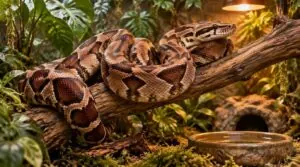
A healthy boa doesn’t just happen—it’s built on the right environment. Weight and long-term health come down to two things you fully control: temperature and cleanliness. Here’s what your setup needs to get right.
Temperature and Humidity
Your boa needs options. A proper temperature gradient lets her self-regulate, moving between the basking spot (90–95°F) and the cool side (78–82°F) like she’s choosing between a sauna and air conditioning.
Nail your humidity regulation too. Keep ambient humidity levels at 50–70%, bumping closer to 70% during sheds. Consistent conditions are what keep her thermoregulation running at its absolute best.
Hygiene and Health Tracking
Studies show reptile owners who spot-clean weekly catch health issues far earlier. For solid reptile health monitoring, track these three things: A reptile-safe disinfectant spray makes quick spot-cleaning between deep cleans easy and keeps your boa’s habitat germ-free.
- Vent cleanliness (no fecal staining)
- Shed completeness (no stuck patches)
- Waste consistency (formed stool plus white urates)
Good zoosanitation keeps your enclosure hygiene sharp and your boa constrictor care fully on point. Always spot patterns, not just single incidents.
Frequently Asked Questions (FAQs)
How do I tell if my boa is happy?
Like a coiled sentinel, a content boa speaks through body language. It flicks its tongue, explores its space, eats well, and tolerates handling calmly. Docile temperament and smooth shedding? Yeah, you’ve got a happy snake.
What’s the average lifespan of a boa constrictor?
Captive boas are the real marathoners of the snake world. With solid boa constrictor care, yours can easily live 20 to 30 years, and some individuals even push past Wild boas rarely clear
What are the signs that a snake is unhealthy?
Imagine your boa suddenly refusing meals and then gasping for air. Signs of illness in a boa constrictor include open-mouth breathing, cloudy eyes, lethargy, retained shed, regurgitation, and a visibly soft or emaciated body condition.
How hard are boa constrictors to take care of?
Boa constrictor care sits firmly in the intermediate to expert category. Daily tasks are simple, but you’re committing to decades of managing large enclosures, expensive prey, and a very strong feeding response. Not beginner territory!
Understanding key factors like enclosure temperature and humidity is essential, as boas require a basking spot of 88–92°F and humidity levels between 50–70% to thrive.
How do you know if a boa constrictor is healthy?
Turns out, you don’t even need a vet to spot a healthy boa. Clear eyes, smooth scales, a steady feeding response, quiet breathing, and confident movement say it all. Monitoring boa health is that simple.
How do I know if my boa is healthy?
A healthy boa constrictor is basically a green light you can hold. Look for a firm body, bright clear eyes, smooth glossy scales, frequent tongue flicking, a strong appetite, easy breathing, and clean, normal waste.
Are boa constrictors prone to diseases?
They’re tough, but boa constrictor diseases are very real. Respiratory infections, scale rot, parasites, and Inclusion Body Disease can all hit hard. Routine health monitoring and a clean enclosure help catch early warning signs fast.
How do I choose a healthy boa constrictor?
Pick one with clear, alert eyes, smooth scales, and a firm, muscular body. Easy breathing, a clean vent, and a docile temperament are all strong signs. Always confirm it’s eating consistently before you fully commit.
Once you’ve checked health, you can explore color and pattern options, and this complete hognose snake morph guide shows how melanin and xanthin changes create each look.
What color is a boa constrictor?
Boas rock browns, tans, and blacks with bold saddle patterns that beautifully break up their silhouette in the wild. Captive color morphs pull off creamy whites or vibrant reds, making every boa look totally unique.
What is boa constrictor care?
Think of it as hosting a tropical houseguest. Boa constrictor care means proper temperature gradients, steady humidity, right-sized meals, regular handling and socialization, and routine checks. Nail all that, and you’ll have a thriving snake.
Conclusion
Think of your boa like a finely tuned engine. When everything’s running right, you can feel it in every movement, every shed, every meal. That’s your baseline, and it genuinely matters.
The signs of a healthy boa constrictor aren’t complicated once you actually know what to look for. Firm body, bright eyes, steady appetite, calm behavior. Check in regularly, track what’s normal, and you’ll catch problems before they ever catch you. That’s real snake ownership.