This site is supported by our readers. We may earn a commission, at no cost to you, if you purchase through links.
Your ball python spends twenty hours a day tucked in a hide, motionless as a rolled-up sock. So how do you know if that stillness is contentment or a cry for help? The answer lives in small details: glossy scales, a clean pink mouth, a shed that peels off in one perfect piece from cap to tail.
Snake illness hides well. By the time a python stops eating or wheezes audibly, problems have often been brewing for weeks. Catching the signs of a healthy ball python early means you spot trouble before it becomes a vet emergency. Here’s your complete checklist, from eyes and scales to weight, behavior, and enclosure setup.
Table Of Contents
- Key Takeaways
- Physical Signs of a Healthy Ball Python
- Normal Behavior in a Healthy Ball Python
- Healthy Appetite, Digestion, and Waste
- Enclosure Conditions That Support Ball Python Health
- Weekly Health Checks and Veterinary Warning Signs
- Frequently Asked Questions (FAQs)
- What are the signs that a ball python is happy and healthy?
- What are the signs of a sick ball python?
- What are the signs that a ball python is unhappy?
- What are the signs that a ball python is dying?
- How do you know if your ball python is healthy?
- How do you know if a ball python is happy?
- What are signs of a sick ball python?
- What are the visual signs of ill health in a snake?
- How can I tell if my ball python is stressed?
- What should I do if my ball python bites me?
- Conclusion
Key Takeaways
- Clear eyes, a pink unstained mouth, and a complete single-piece shed are your three fastest physical indicators that a ball python is thriving.
- Ball pythons naturally spend over 20 hours a day hidden, so stillness alone isn’t a red flag — frantic pacing, glass-surfing, or refusal to eat are the real warning signs.
- Consistent enclosure conditions — warm side at 88–92°F, cool side in the high 70s, and 50–60% humidity — prevent most common health problems before they start.
- Weekly hands-on checks that log meals, sheds, weight, and waste turn vague worry into early detection, catching emergencies days or weeks before they become critical.
Physical Signs of a Healthy Ball Python
Your ball python can’t tell you when something’s wrong, but its body talks. You just need to know what to look for. Let’s walk through the three physical checkpoints that matter most: eyes and mouth, scales and sheds, and weight and muscle tone.
If you want to get fluent in these signals, our guide to ball python body language and stress breaks down what each behavior really means.
Clear Eyes and Clean Mouth
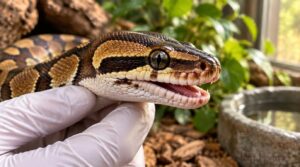
The eyes tell you plenty. Look for clear bright eyes with no cloudiness, crusting, or swelling, and pupils that sit evenly side to side.
Then peek inside: a clean pink mouth, not pale or stringy. That quick oral health assessment catches problems early. No bubbles, no mucus, no gaping.
Treat eye clarity as health marker number one, and you’ve got mouth rot prevention half won.
Smooth Scales and Complete Sheds

Eyes done? Now run a hand down the body. Healthy skin has a smooth glossy appearance, with even scales and no dents or flaky patches.
Watch shedding patterns too. A good shed should come off in one clean piece, cap to tail.
If you’re seeing stuck shed, patchy sloughing, or retained eye caps, our guide to corn snake shedding problems walks you through the fixes.
Watch for:
- Stuck shed at the tail tip or toes
- Dull, patchy skin days after shedding
- Repeated shedding problems across cycles
Multiple trouble spots usually mean humidity’s too low. Bump it up, and sheds get easy.
Healthy Weight and Muscle Tone
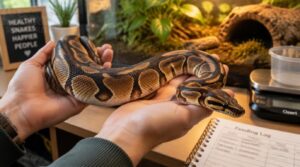
Sheds clean? Great. Now check the body itself. Pick your snake up. It should feel solid, not hollow. A well-rounded body holds its shape, with no sharp spine ridge running down the back. A healthy ball python feels firm, like a full water balloon, not bony or slack. Track body weight weekly and watch for localized thinning along the trunk.
Muscle tone assessment matters too: your snake should stay coordinated when handled, moving with smooth, continuous waves. Steady eating habits plus stable weight means calories are keeping up. Sudden drops between feeding habits cycles? That’s your cue to call your reptile vet.
Normal Behavior in a Healthy Ball Python

A healthy body deserves healthy behavior, so let’s talk about what your snake’s day should look like.
From spot-cleaning waste to refreshing the water bowl, a solid snake cage maintenance routine keeps their habitat as healthy as they deserve.
Ball pythons are crepuscular homebodies. Expect yours to stay hidden most of the day, then emerge at dusk to explore, drink, and stretch its coils. That evening wanderlust is a great sign. During daylight, a snake tucked snugly in its hide is a content snake, not a lazy one. This normal nighttime activity includes moving between hides and investigating its surroundings, followed by periods of rest.
Watch how it moves, too. Smooth, deliberate motion with relaxed muscles and loose coiling means your python feels secure. Frantic pacing, glass-surfing, or constant escape attempts suggest something’s off, like your temperature gradient or humidity levels being wrong.
Also keep an eye on tongue flicking behavior. Frequent, calm flicks mean your snake is investigating happily. A tongue held still for long stretches? Worth a closer look.
Healthy Appetite, Digestion, and Waste

Feeding habits tell you more about your ball python than almost anything else. A healthy adult eats on a steady feeding schedule, usually every one to two weeks, and takes prey with a confident strike and hold. No drama, no hesitation. If your snake refuses two or three meals in a row, check your setup before you panic, but don’t shrug it off either.
Digestion should be quiet and uneventful. A meal that comes back up within a day is a red flag, not a quirk. So is repeated mouth gaping or arched posture after eating.
Waste is your report card. Look for wellformed stool with a firm urate portion. Runny urates often mean dehydration. Tiny, fragmented droppings suggest your prey size is off. And if your snake skips waste far past its normal cycle, that’s constipation territory.
Track everything. Weigh your snake monthly, since steady body weight catches problems early. A simple log of meals, sheds, and droppings turns guesswork into data, and your vet will thank you.
A reliable digital reptile scale makes those monthly weigh-ins quick, accurate, and stress-free for both of you.
Enclosure Conditions That Support Ball Python Health

Your snake’s health starts with its habitat. Even a perfect diet can’t fix a bad setup. Here’s what you need to get right, from heat and humidity to hides and cleanliness.
Temperature and Humidity
Get the temperature gradient right and half your husbandry worries vanish. Aim for a warm side near 88–92°F and a cool side in the high 70s, controlled by a thermostat. Use a thermometer-hygrometer on the substrate, not just the air. A reliable digital thermometer hygrometer makes tracking those substrate readings effortless, so you catch drift before it becomes a problem.
For humidity control, hold humidity levels around 50–60%, bumping to 70% during shed cycles. Consistency beats last-minute fixes.
Hides, Substrate, and Cleanliness
Here’s a striking number: a ball python may spend over 20 hours a day hidden. That’s normal, so give it two snug hiding spots, one warm, one cool. A sturdy hide box in each spot gives your snake that dark, snug security it naturally craves.
If your snake seems stressed or restless despite a good setup, this guide on why snakes eat themselves and what to do about it explains the warning signs worth watching for.
Choose substrate that’s dry but comfy, like cypress mulch or paper, and skip dusty, crumbly stuff. Cypress mulch holds just enough humidity without getting soggy, making it a favorite for reptile-safe cypress substrate.
Spot-clean daily, scrub the water bowl weekly, and wash hides monthly. A heavy, shallow ceramic reptile water bowl works best since it won’t tip over when your snake goes exploring.
Clean cage, content snake.
Weekly Health Checks and Veterinary Warning Signs
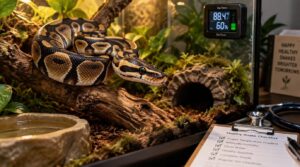
Here’s a number worth chewing on: many reptile vets report that most ball python health emergencies were visible to owners for days or even weeks before the crisis hit. You just need to know where to look.
Most ball python health emergencies show warning signs days or weeks before the crisis hits
Once a week, run this quick check:
- Respiratory health: no wheezing, open-mouth breathing, or bubbles at the mouth.
- Body condition: strong grip, no spine or hip bones sticking out sharply.
- Skin and shed: no stuck shed around eyes, mouth, or tail tip.
Also watch for red-flag patterns: regurgitation, no stool with straining, tremors, or blood in waste. Those mean call your vet now, not later.
Keep your temperature gradient and humidity levels steady, since stress from bad conditions can mimic illness. When in doubt, a same-day exam beats a regretful one.
Frequently Asked Questions (FAQs)
What are the signs that a ball python is happy and healthy?
A happy ball python shows clear alert eyes, smooth shiny scales, regular tongue flicking, and a well-rounded body. It eats reliably, sheds in one clean piece, and stays calm but curious.
What are the signs of a sick ball python?
What are the signs of a sick ball python? Watch for wheezing or gaping, bubbles at the nostrils, cloudy stuck eye caps, sunken spine, weak grip, refused meals, runny urates, and lethargy. Then book veterinary checkups promptly.
What are the signs that a ball python is unhappy?
An unhappy ball python refuses food, hides constantly, or paces restlessly. Watch for excessive salivation, open-mouth breathing, wheezing, lethargy, or poor sheds. Behavioral observation weekly catches these stress indicators early.
What are the signs that a ball python is dying?
What are the signs that a ball python is dying? Picture one lying flat, uncoiled, eyes sunken, wheezing with its mouth open. Watch for refusal to eat, respiratory distress, rapid weight loss, and lethargy.
If your snake is also showing tremors, a crooked spine, or a soft, swollen jaw, low calcium may be the cause, so check these signs of calcium deficiency in snakes right away.
How do you know if your ball python is healthy?
How do you know if your ball python is healthy? Check for clear eyes, a clean pink mouth, smooth complete sheds, quiet breathing, steady feeding habits, purposeful movement, and a solid body without a visible spine.
How do you know if a ball python is happy?
How do you know if a ball python is happy? Picture a lazy river, not a firehose. Your snake should show calm alertness, flick its tongue, use both sides of its temperature gradient, eat on schedule, and shed in one clean piece.
What are signs of a sick ball python?
What are signs of a sick ball python? Watch for refusal to eat, open-mouth breathing, wheezing, or sluggish hiding. Also flag stuck shed, cloudy sunken eyes, rapid weight loss, or runny, foul-smelling waste.
What are the visual signs of ill health in a snake?
What are the visual signs of ill health in a snake? Watch for sunken eyes, cloudy lenses outside shedding, stuck shed, wheezing, or open-mouth breathing. Add lumpy scales, sores, blood in waste, or refusal to eat, and call your vet.
How can I tell if my ball python is stressed?
How can you tell if your ball python is stressed? Picture mine, Biscuit: refusing meals, hiding constantly, striking at hands. Watch for those cues, then check temperatures, humidity, handling frequency, and enclosure enrichment.
What should I do if my ball python bites me?
Stay calm and don’t yank away. Rinse with running water, then wash thoroughly with soap. Apply antiseptic, monitor for swelling or infection, and see a doctor if bleeding persists or your tetanus shots aren’t current.
Conclusion
Studies show reptile owners who conduct weekly hands-on checks catch health problems up to three times earlier than those who observe from a distance. That stat matters because a ball python won’t tell you something’s wrong. Learning the signs of a healthy ball python turns casual watching into real care.
The same proactive approach applies across species, and reviewing signs of a healthy boa constrictor shows how consistent handling reveals what distant observation simply can’t.
Trust your checklist, weigh your snake regularly, and schedule that first vet visit before any red flags appear. Consistency is what keeps them thriving.