This site is supported by our readers. We may earn a commission, at no cost to you, if you purchase through links.

A regurgitated meal tells you something went wrong, but by then the damage is already done. Prey size, thaw method, and handling timing each carry real consequences for your snake’s digestive health, and mistakes in any one step can set back weeks of careful feeding progress.
Feeding snakes frozen mice is the standard choice among experienced keepers for good reason: no bite wounds, lower pathogen risk, and full control over prey condition before it ever enters the enclosure. Getting the process right requires precision at every stage, from measuring your snake’s midbody girth to monitoring output days after the feeding session.
Table Of Contents
- Key Takeaways
- Can Snakes Safely Eat Frozen Mice?
- Choose The Right Frozen Mouse Size
- Store Frozen Mice Safely
- Thaw, Warm, and Offer Mice Safely
- Support Digestion and Monitor Snake Health
- Frequently Asked Questions (FAQs)
- Can I feed my snake frozen mice?
- What snakes can eat frozen mice?
- How long can you freeze mice for snakes?
- How to prep frozen mice for snakes?
- Is it bad to feed snakes frozen mice?
- How long to thaw frozen mice for snake?
- Is it better to feed snakes live or frozen?
- How long to leave frozen rat in snake tank?
- Can frozen mice cause digestive problems?
- How often should different snake species eat?
- Conclusion
Key Takeaways
- Bacterial growth after thawing — not the freezing itself — is the primary health risk, so keep your thaw window short using either refrigerator (8–24 hours) or cold-water (30–60 minutes) methods, and never thaw at room temperature.
- Match prey girth to within 5–15 mm of your snake’s midbody measurement and keep prey weight between 0.8 and 1.2 times your estimate, since oversized prey is the leading driver of regurgitation and feeding refusal.
- Warm thawed prey to a surface temperature of 30–36°C before offering it, because your snake’s pit organs detect heat first — skipping this step causes most strike refusals with frozen feeders.
- Wait a full 48 hours after feeding before handling your snake, as premature contact is the single most common cause of regurgitation regardless of how well the thaw and feeding went.
Can Snakes Safely Eat Frozen Mice?

Three factors determine whether feeding snakes frozen mice is safe: your thawing method, the prey-to-body ratio, and how long prey sits in the enclosure after feeding. Frozen rodents aren’t inherently the problem. Bacterial growth after thawing is the real threat to snake health, not the freezing itself.
Proper thawing technique matters most, so reviewing safe frozen snake food brands and preparation guidelines can help you avoid the bacterial pitfalls that make post-thaw handling so critical.
Thawing a mouse slowly at room temperature creates a warm, wet surface where microbes multiply fast. Keeping that window short and controlled through proper safe thawing practices removes most of the risk. Done correctly, frozen feeders are actually safer than live prey because they prevent bite wounds and cut handling stress.
Frozen feeders are safer than live prey—if you control the thaw window and stop bacteria before they start
An oversized mouse raises snake regurgitation risk, since digestion stalls when prey exceeds your snake’s capacity. Proportioning meals correctly protects long-term health.
Choose The Right Frozen Mouse Size

Choosing the right size matters more than most new keepers expect. A mouse that’s too wide or too heavy increases the risk of regurgitation, jaw strain, and feeding refusal. The three factors below will help you get it right from the start.
Match Girth and Prey Weight
Calipers at the third body segment behind the head give you your most reliable snake midbody measurement. Your prey’s girth should fall within 5 to 15 mm of that figure. If it doesn’t, you’re creating a prey-to-body ratio mismatch and risking regurgitation. A good-quality digital caliper for reptiles makes it easy to get a consistent midbody reading without stressing your snake during the process.
Use a prey size chart to check weight. Prey sizing guidelines recommend 0.8 to 1.2 times your estimate.
A snake feeding size chart can take the guesswork out of that 0.8–1.2 range by mapping prey weight directly to your snake’s measurements.
Choose Mice by Life Stage
Once you’ve confirmed girth, life stage helps narrow your prey size selection further. Pinky mice suit hatchlings and small juveniles; their higher metabolic rate means your snake digests them quickly but needs feeding more often.
As your snake matures, adjusting prey size and feeding frequency becomes essential — this complete guide to feeding captive snakes walks you through every life stage, from hatchling pinkies to adult rodents.
Small Weaned Mice reduce regurgitation risk for mid-sized snakes. Hopper Mice match growing juveniles proportionally. Adult Mice suit larger, established feeders with a slower schedule.
Find Ethical Feeder Suppliers
Once you’ve matched prey to life stage, sourcing matters. Choose suppliers who publish third-party welfare audits and document humane euthanasia methods, since proper culling reduces pathogen load and aids zoonotic disease prevention.
Look for lot-level traceability linking each batch to its farm of origin. Certifications covering procurement, storage, and cold-chain handling confirm consistent prey quality control and herpetoculture standards.
Store Frozen Mice Safely

Keep your frozen mice in airtight, vacuum-sealed bags and maintain consistent freezer storage below 0°F. Freezer burn degrades prey quality fast, and loose packaging accelerates moisture loss from the carcass surface.
- Label each bag with the purchase date and batch number
- Practice FIFO rotation: use oldest stock before new batches
- Isolate prey from strong-smelling foods in a dedicated section
- Minimize door openings to avoid temperature fluctuations
Frozen food preservation depends on consistency. Temperature swings trigger partial thaw-refreeze cycles that break down tissue quality and raise spoilage risk, even if the prey still looks intact.
Don’t buy in large bulk quantities. Smaller batches limit how long any single package sits at an intermediate temperature during retrieval, supporting consistent prey quality control.
Thaw, Warm, and Offer Mice Safely
Once your mice are properly stored, the next phase is thaw-to-table preparation. Each step from thawing to offering prey directly affects whether your snake accepts the meal and digests it safely. The process breaks into four clear actions you’ll follow every feeding session.
Thaw Without Bacterial Growth
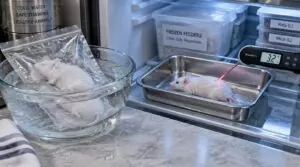
Bacterial contamination starts within 20 to 60 minutes at room temperature. You’ve got two safe thawing techniques to use.
| Method | Temp | Safe Window |
|---|---|---|
| Refrigerator thawing | 0-4°C | 8-24 hours |
| Cold water thawing | Under 15°C | 30-60 minutes |
| Room temperature | Danger zone | 2 hours max |
| Frozen storage | -18°C or below | 6-12 months |
Probe the thawed center; it must read below 4°C before warming.
Warm Prey to Feeding Temperature
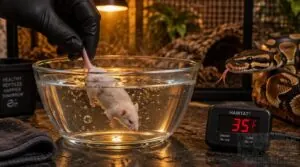
Pit organs read heat before anything else. Whether you used cold water thawing, refrigerator thawing, or other thawing techniques, frozenthawed prey still needs active warming.
- Submerge prey in 38°C water for 90 seconds
- Measure belly surface temperature; target 30-36°C
- Never exceed 42°C or you risk oral burns
- Pat prey dry, then offer immediately
Consistent prey temperature regulation reduces feeding refusals.
Use Tongs and Gloves

A strike happens fast. One misread moment and your fingers become the target instead of prey.
Feeding tongs extend your reach and keep your hands clear of strike range. When you need to reposition, they let you adjust without moving your hand forward. Gloves don’t replace tongs, but they lower bite risk while preserving enough dexterity for controlled tong work.
Remove Uneaten Prey Promptly

Don’t leave an uneaten mouse sitting in the enclosure.
- Set a 30-minute removal window after the last strike attempt
- Use tongs, not your hands, to pull it out
- Discard it and never attempt to refreeze
- Wipe your tongs clean after removal
- Log each refusal in your health records
This protects reptile enclosure hygiene and reinforces your overall snake health monitoring.
Support Digestion and Monitor Snake Health

Feeding is only half the job. Your snake’s digestion time depends on temperature, so keep the warm hide at proper levels; thermoregulation for digestion drives everything that happens after the meal.
Effective postfeeding care means hands off. Handling too soon is the leading cause of regurgitation, so skip snake regurgitation prevention problems entirely by waiting 48 hours before touching your snake.
Track outputs and behavior daily:
| Signal | What It Means |
|---|---|
| Calm resting posture | Digestion is proceeding normally |
| Regurgitation | Prey too large or handling too early |
| No feces after 7+ days | Possible impaction; check heat |
| Mouth-gaping, lethargy | Call your reptile vet |
Consistent urates and stool confirm snake health monitoring is on track. Log every meal; trends matter more than single events.
Frequently Asked Questions (FAQs)
Can I feed my snake frozen mice?
Yes, you can. Many keepers worry that frozen mice lack nutrition compared to live prey, but that’s not accurate. Your snake’s feeding response relies on scent and warmth, which properly thawed frozen mice deliver safely.
What snakes can eat frozen mice?
Any carnivorous snake that hunts rodents can eat frozen mice. Ball pythons, corn snakes, king snakes, and rat snakes all accept thawed prey well. Avoid offering frozen mice to insectivores or species with specialized diets.
How long can you freeze mice for snakes?
Frozen mice don’t stay reliably fresh indefinitely. Properly packaged prey stored at -18°C or colder stays viable for up to six months. Practice FIFO rotation and always discard any prey showing freezer burn after thawing.
How to prep frozen mice for snakes?
Want reliable strikes every feeding? Thaw frozen mice in the refrigerator overnight, then submerge in warm water until fully thawed. Always check the surface temperature before offering with tongs to minimize bite risk and contamination.
Is it bad to feed snakes frozen mice?
A ball python fed a correctly thawed frozen mouse will digest its meal without issue. Feeding snakes frozen mice isn’t inherently bad; poor thawing techniques drive most snake feeding risks and can compromise proper nutrition.
How long to thaw frozen mice for snake?
Like ice yielding gradually to warmth, your chosen thawing method determines how long it’ll take.
Warm-water thawing in a sealed bag takes 15-40 minutes. Refrigerator thawing needs 6-12 hours. Smaller prey, like pinkies, thaws faster.
Is it better to feed snakes live or frozen?
Live prey is a gamble your snake might lose, since bites and injuries happen during capture attempts. Frozen mice remove that risk and keep your feeding schedule consistent without compromising prey size or snake safety.
How long to leave frozen rat in snake tank?
There’s no fixed rule. Remove thawed prey as soon as your snake loses interest or after one clear feeding attempt. Leaving it any longer risks bacterial growth, substrate contamination, and an increasingly cooled, rejected meal.
Can frozen mice cause digestive problems?
Frozen mice themselves rarely cause digestive issues. The real culprits are improper thawing, prey size mismatches, and bacterial contamination from poor handling. With the correct prep, frozen prey is perfectly safe for your snake’s digestion.
How often should different snake species eat?
A clock resets at a different rate for each species. Your snake feeding schedule depends on size and age: hatchlings need feeding every 5-7 days, small colubrids every 7-14, and large boids every 2-4 weeks.
Conclusion
Some snakes do refuse thawed prey at first. Patience and consistent technique fix most refusals faster than switching to live feeders ever will.
Feeding snakes frozen mice correctly comes down to a repeatable system: right size, clean thaw, proper surface temperature, and calm post-feeding conditions. Each variable you control reduces the risk of regurgitation and promotes steady, predictable growth. Get the process consistent, and your snake’s feeding response will follow.