This site is supported by our readers. We may earn a commission, at no cost to you, if you purchase through links.
Most snake owners obsess over temperatures and feeding schedules, but bedding rarely gets the same attention—until something goes wrong. The substrate your snake lives on isn’t just décor.
It’s in constant contact with their ventral scales, and when it’s dirty, damp, or chemically hostile, that contact becomes a slow, quiet problem. Snakes can absolutely get sick from bad bedding, and the damage often builds before any obvious symptom appears. Scale rot, respiratory infections, and chronic stress all trace back to substrate issues more often than most keepers expect.
The good news: once you know what to watch for, the fixes are straightforward.
Table Of Contents
Key Takeaways
- Damp, soiled bedding silently damages your snake’s belly scales, airways, and immune system long before any obvious symptoms appear.
- Cedar, pine, sand, and walnut shells aren’t just bad choices — they actively release toxins and create impaction risks that can kill.
- Spot-clean waste daily and do full substrate swaps on schedule; no premium bedding saves a snake from a neglected enclosure.
- If you see open-mouth breathing, blistered belly scales, or two missed meals in a row, that’s a vet call — not a wait-and-see moment.
Yes, Bad Bedding Can Make Snakes Sick
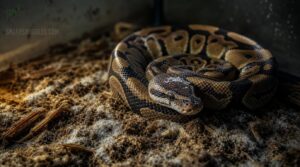
Bad bedding doesn’t just make an enclosure look messy — it can genuinely make your snake sick. substrate your snake lives on affects everything from its skin to its lungs to its immune system.
Getting the substrate right is one of the most overlooked parts of keeping a clean snake enclosure — and one of the most impactful.
Here’s exactly how poor bedding causes harm.
How Dirty or Wet Substrate Affects Health
wet bedding doesn’t just smell bad — it actively damages your snake’s health.
Prolonged skin contact with damp, soiled substrate causes Skin Barrier Damage and triggers a Microbial Load Surge at the belly surface.
Ammonia smell from decomposing waste irritates airways, raising the risk of respiratory infections and scale rot.
These stressors create Immune System Strain that shows up as Behavioral Stress Signs before anything looks obviously wrong.
Why Poor Bedding Raises Bacteria and Mold Levels
Damp substrate doesn’t just sit there. It becomes a living system working against your snake.
Four conditions drive bacterial growth and mold growth fast:
- Substrate Microclimates trap heat and moisture beneath the surface.
- Organic Nutrient Load from waste, shed skin, and urates feeds fungal colonies.
- Biofilm Formation locks microbes into a slimy, hard-to-clean layer.
- Spore Transfer spreads through air when you disturb compacted bedding.
How Bad Substrate Leads to Stress and Lowered Immunity
Bacteria and mold growth aren’t the only threats a dirty enclosure creates. Environmental stress compounds everything.
| Stress Pathway | What Happens | Result |
|---|---|---|
| Hormonal Stress Response | HPA axis stays chronically active | Immune system suppression |
| Immune Trafficking Disruption | Immune cells redistribute inefficiently | Slower pathogen clearance |
| Barrier Integrity Loss | Skin and mucosal defenses weaken | Easier infection entry |
Neuroendocrine Dysregulation and Nutrient Intake Decline follow. Behavioral Indicators of Poor Enclosure Hygiene — hiding, refusing food, lethargy — tell you the damage is already underway.
Signs Your Snake’s Bedding is Harmful
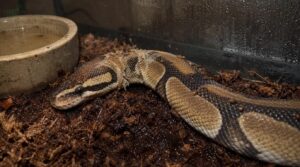
Your snake can’t tell you something’s wrong — but its body usually can. Knowing what to look for makes the difference between catching a problem early and dealing with a serious infection.
Even with all that built-in flexibility, things can still go wrong, so it helps to know what happens if a snake eats something too big and how to spot the warning signs.
Your snake cannot voice its suffering, but its body will — if you know what to look for
These are the key signs that your bedding might be making your snake sick.
Wheezing, Mouth Breathing, or Nasal Discharge
If your snake is breathing with its mouth open, that’s not normal — that’s a red flag.
Review these signs of stress during snake handling to spot escalating discomfort before it becomes an emergency.
Environmental stress — like the chemical runoff risks in reptile habitats — can quietly weaken a snake’s respiratory system over time.
Dusty substrates and ammonia smell from stale waste trigger airway obstruction and mucus production quickly.
Wheezing sounds mean narrowed airways.
Nasal congestion and visible discharge follow mold growth or poor humidity management.
These mouth breathing signs point directly to respiratory distress and early respiratory infections.
Soft, Discolored, or Blistered Belly Scales
Your snake’s belly tells you a lot. Scale barrier failure starts quietly — soft, wrinkled tissue where firm scales should be. Moisture-induced dermatitis and ammonia burn from soiled bedding strip the skin’s defenses fast.
Once bacterial skin overgrowth takes hold, blisters form and skin lesions spread. Scale rot can escalate to septicemia.
check the underside weekly. Early-stage lesions often appear as brownish scale discoloration of scales.
Reduced Appetite, Hiding, or Unusual Lethargy
Your snake going off food isn’t always about the prey item. Stress-Induced Anorexia from dirty bedding, GI Discomfort from bacterial infection, or Temperature Mismatch caused by soiled substrate blocking heat gradients can all trigger feeding refusal and hiding behavior.
Watch for these together:
- Skipping two or more consecutive meals
- Prolonged hiding behavior beyond normal rest cycles
- Lethargy with minimal response to gentle disturbance
Energy Conservation kicks in fast when a snake feels threatened internally.
Foul Odors, Damp Spots, and Visible Mold
Your nose is often the first diagnostic tool. A musty or sour scent signals early mold activity, while a sharp ammonia smell means buried waste is decomposing beneath the surface.
Don’t wait for visible mold — Fungal Volatile Compounds become airborne well before you see growth.
Damp spots indicate failed humidity management.
Dirty bedding releasing mold spores into enclosure air puts your snake at real respiratory risk.
Bedding Problems That Cause Illness
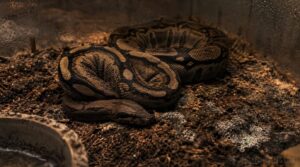
Bad bedding doesn’t just look messy — it actively works against your snake’s health. A few specific problems are behind most bedding-related illnesses, and they’re more common than you’d think.
Here’s what to watch for.
Ammonia Buildup From Waste and Stale Urates
Urate decomposition is happening in your enclosure right now — you just can’t always smell it yet. When waste sits on warm bedding, microbial ammonia generation kicks in fast.
Temperature-driven breakdown accelerates this process, and poor ventilation dilution effect lets ammonia concentrate near the floor where your snake breathes.
Ammonium ion accumulation soaks into damp substrate.
Spot cleaning dirty bedding immediately is your simplest defense.
Excess Moisture That Promotes Scale Rot
Wet bedding is one of the fastest paths to scale rot. Moisture Retention Layers trap humidity directly against your snake’s belly, and compacted wet zones under hides make it worse.
Here’s what that environment does:
- Belly Skin Maceration softens ventral scales within days, leaving them vulnerable.
- Biofilm Formation lets bacteria colonize the substrate surface and cling to skin.
- Temperature‑Moisture Interaction accelerates bacterial growth in warm enclosures.
Control substrate moisture retention before rot starts.
Dusty or Aromatic Substrates That Irritate Lungs
Cedar and pine shavings look harmless. They’re not. Volatile Oil Emissions and Phenolic Resin Dust are released the moment you open the bag.
| Substrate Risk | Health Effect |
|---|---|
| Fine Particle Inhalation | Airway inflammation, wheezing |
| Mold Spore Aerosols | Hypersensitivity lung reaction |
| Aromatic Oils | Chronic liver and mucosa damage |
| Airborne Microbial Load | Respiratory infection risk |
Hazardous snake substrates cause respiratory issues fast. Avoid them entirely.
Loose Substrates That May Cause Impaction
Lungs aren’t the only organ at risk. Loose substrates create a second, quieter problem: impaction.
Calcium Sand Clumping happens when grains hit gut fluids and compact. Wood Shavings Fiber, Bark Chip Ingestion, and Gravel Particle Blockage follow the same pattern — indigestible material accumulates.
Deep Substrate Exposure multiplies the risk. For impaction prevention, choose safe substrate options that eliminate digestive blockage entirely.
Contaminated Soil With Chemicals or Pathogens
Loose substrate isn’t the only soil-related threat. What’s in the substrate matters just as much.
Untreated or outdoor soil can carry heavy metals like lead, cadmium, and arsenic — Heavy Metal Bioaccumulation happens slowly, but the damage is real. PAH Toxicity from petroleum compounds, Xenobiotic Exposure Pathways through skin contact and accidental ingestion, Soil Chemical Leaching into moisture, and Pathogen Biofilm Persistence on contaminated particles all compound the risk.
- Cadmium binds weakly to soil, making it more mobile and easier to ingest.
- PAHs and chlorinated hydrocarbons persist long after initial contamination.
- Enteric pathogens from untreated manure can survive in substrate for weeks.
- Bacterial growth accelerates in biofilms, resisting basic cleaning attempts.
- Pathogen risk drops sharply with proper soil treatment and sterilization for reptile enclosures — always use sterile, additive-free substrate and a reptafe disinfectant during full cleans.
Chemical contamination in soil for reptiles is a hidden hazard. Your snake crawls through it, mouths it, and absorbs what’s there.
Safer Bedding Choices for Snakes
Choosing the right bedding doesn’t have to be complicated. A handful of well-tested options cover most snakes and most setups. Here’s what actually works.
Paper Towels and Newspaper for Simple Care
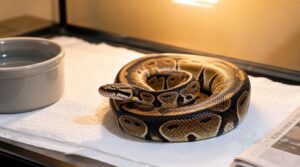
If you want simplicity without sacrifice, paper towels and newspaper are hard to beat. Both offer a Low Dust Surface, Easy Sheet Replacement, and Quick Waste Removal — you see the mess, you pull the sheet, done. Just build a consistent cleaning schedule around each bowel movement.
| Feature | Paper Towels | Newspaper |
|---|---|---|
| Ink Free Bedding | ✓ Yes | ✗ Use cautiously |
| Heat Transfer Monitoring | Easier | Easier |
| Spot Cleaning Speed | Immediate | Immediate |
Stick to your hygiene routine, and these basics genuinely protect your snake.
Aspen Shavings for Many Dry-enclosure Species
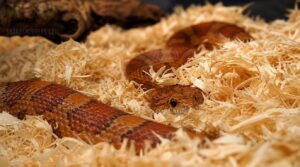
Aspen shavings are the go-to upgrade from paper towels for dry-enclosure species. They offer real Burrowing Support, letting snakes move naturally through loose bedding.
Their High Absorbency pulls moisture away fast — key for bedding odor management and Mold Prevention. Low humidity environments keep aspen performing well.
The Dust-Free Advantage protects lungs, and Heat Pit Safety makes aspen gentler on facial tissue than granular substrates, reducing scale rot risk.
Coconut Fiber for Humidity-loving Setups
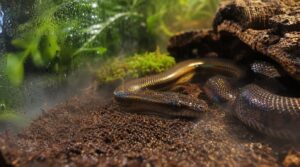
For humidity-loving species, coconut fiber is hard to beat. Its hygroscopic humidity control draws moisture into the fiber and releases it slowly — no wild swings.
Built-in drainage prevents soggy spots, and mold-resistant preparation means it’s triple-washed and heat-treated before use.
You still get mold risk if it stays soaking wet.
Odor-reducing properties and shedding support make it a strong long-term choice, though cleaning and maintenance practices and substrate lifespan depend on keeping it damp, not drenched.
Reptile Carpet and Its Cleaning Limits
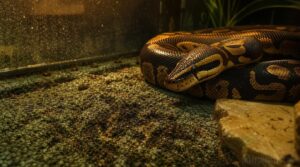
Reptile carpet looks convenient, but spot cleaning only goes so far. Fibers retain waste and chemical residue even when the surface looks fine — fiber retention makes deep contamination invisible.
You’ll need full removal, washing with mild soap, thorough rinsing, and complete drying before it goes back in. Skip the drying requirements, and you’re trading one moisture problem for another.
Odor control and hygiene both suffer fast.
Bedding Choices to Avoid for Snake Health
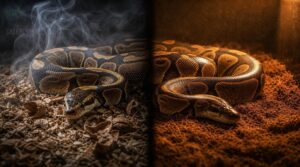
Some substrates are simply off the table. Pine Cedar and cedar shavings release aromatic oils that damage airways over time. Walnut Shell fragments are sharp and indigestible — substrate impaction risk is real. Calcium Sand clumps internally. Treated Mulch and Synthetic Granules carry pesticide residues.
If you’re noticing chalky white urates, a musty or sour scent, or dirty bedding buildup, toxic substrates may already be the problem.
How to Keep Bedding Clean
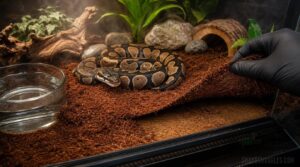
Good bedding means nothing if you don’t maintain it. Keeping the enclosure clean comes down to a few consistent habits that don’t take much time. Here’s what actually works.
Spot-cleaning Waste and Replacing Soiled Areas
Think of spot cleaning like triage — catch problems before they spread. Remove feces and urates daily using disposable scoops, and bag used substrate immediately for proper waste segregation. Don’t just scoop the visible waste; pull out any damp or clumped material underneath too.
area isolation matters — one contaminated scoop touching clean bedding undoes your work. Tool hygiene prevents cross-enclosure spread.
Full Substrate Changes on a Regular Schedule
Spot cleaning buys time — a full substrate change resets everything. Change frequency depends on what you’re using: paper towels weekly, aspen every four to twelve weeks, coconut fiber, similar or longer, in bioactive setups.
During a full substrate change, move your snake to a holding container with proper heat.
Verify equipment calibration before returning them and watch substrate depth carefully.
Post-change monitoring tells you if the new setup is working.
Managing Humidity to Prevent Mold and Clumping
Humidity is the silent culprit behind wet clumped substrate and mold. Keep your hygrometer placement consistent — away from misters and heat sources — so readings actually mean something.
spot-check damp zones under hides daily. Use desiccant placement near problem areas to support substrate drying techniques.
temperature-humidity balance matters too: stable warmth speeds evaporation. Good substrate moisture control directly extends substrate longevity.
Improving Airflow and Enclosure Ventilation
fresh air control only works if fresh air keeps moving. Stale enclosures trap ammonia, moisture, and mold — fast.
smart enclosure ventilation basics:
- intake vents low, exhaust vents high — that’s your airflow path design working with convection
- Vent size optimization matters: small openings restrict flow and let odors linger
- Fan speed control lets you match airflow to daily conditions
- Stick to a filter maintenance schedule — clogged screens kill ventilation quietly
When Bedding Problems Require a Reptile Vet
Fixing ventilation helps, but some problems need more than clean air and fresh bedding.
Call a reptile vet when you see these warning signs:
| Sign | What It May Indicate | Urgency |
|---|---|---|
| Severe respiratory distress | Bacterial or fungal lung infection | Immediate |
| Chronic skin infection or scale rot | Serious systemic health decline | Within 24–48 hours |
| Persistent impaction risk or toxic substrate ingestion | Gastrointestinal obstruction or poisoning | Same day |
Don’t wait. Early reptile veterinary care and solid infection control practices save lives.
Frequently Asked Questions (FAQs)
What bedding is bad for snakes?
Cedar, pine, sand, gravel, walnut shells, and non-sterile soil all pose real risks.
Phenolic oil exposure, sharp particle ingestion, low-absorbency substrate, and substrate compaction from dirty bedding can trigger scale rot, fungal infection, and worse.
Can bedding affect a snakes shedding process?
Yes, bedding directly affects shedding. Proper moisture microclimate, bedding traction, and skin hydration all support clean ecdysis.
Wrong substrate causes scale retention, shedding friction, and difficulty shedding by disrupting the skin shedding process through poor humidity control and moisture retention.
How does bedding interact with heating equipment safely?
Keep bedding at least three feet from any heat source. Flammable substrate near heaters ignites fast. Monitor your thermal gradient daily and check electrical cords for fraying before every use.
Do baby snakes need different bedding than adults?
Not exactly. Enclosure size impact matters more than age.
Baby snakes need shallower depth requirements, easier spot-cleaning, and growth stage hygiene focus.
Choosing appropriate snake bedding stays the same — safe, absorbent, and low-dust.
How long does it take for bedding illness to develop?
Symptoms can show up within a few days. Ammonia build‑up timeline, mold growth speed, and dust irritant onset all depend on humidity, ventilation, and how often you remove waste.
Conclusion
Changing bedding feels tedious, but it’s far cheaper than a vet bill for scale rot or a respiratory infection. Yes, snakes can get sick from bad bedding—and the damage usually builds quietly, long before you notice anything wrong.
You don’t need a perfect setup. You need a clean one. Check for moisture, remove waste promptly, and swap out substrate on schedule.
That single habit protects more than any premium product ever will.