This site is supported by our readers. We may earn a commission, at no cost to you, if you purchase through links.
Most snake owners obsess over heating and lighting—and rightly so—but the one thing sitting directly beneath their snake rarely gets a second thought. That’s a problem, because substrate does affect snake health, often in ways that sneak up slowly.
Dusty bedding quietly irritates lungs. Sand gets swallowed with dinner and parks itself in the intestines. Rough gravel scrapes scales that weren’t built to handle friction.
None of these feel urgent until they are. The good news: substrate is one of the easiest variables to get right once you know what you’re actually looking for.
Table Of Contents
Key Takeaways
- Dusty, abrasive, or particle-heavy substrates like sand, gravel, pine, and cedar can silently damage your snake’s lungs, gut, and skin long before any obvious symptoms show up.
- Matching substrate to your snake’s natural lifestyle — loose aspen for burrowers, bark-textured surfaces for climbers, moisture-retaining coconut fiber for tropical species — directly supports both physical health and natural behavior.
- Your substrate acts as the humidity engine of the enclosure, so uneven drying or poor moisture retention can cause incomplete sheds and respiratory issues even when your gauge reads normal.
- Daily spot-cleaning and timely full replacements aren’t optional extras — they’re what stand between a healthy enclosure and a slow buildup of mold, bacteria, and gut-disrupting microbes.
Does Substrate Affect Snake Health?
Yes, substrate absolutely affects your snake’s health — more than most people realize. The bedding you choose influences everything from how well your snake breathes to whether it sheds properly.
Getting the right fit for your boa specifically makes a real difference, so checking out the best substrate options for boa constrictors can help you avoid some common and costly mistakes.
Here’s what can go wrong when the substrate isn’t right.
Respiratory Irritation From Dusty Bedding
Dusty substrates are a hidden respiratory threat. Fine particles stay airborne longer than you’d think, settling right in your snake’s breathing zone.
Watch for these Behavioral Indicators of trouble:
- Wheezing or noisy breathing
- Frequent open-mouth gaping
- Nasal discharge
- Increased breathing effort
- Lethargy after bedding disturbance
Choose dust-free, hypoallergenic bedding and prioritize ventilation strategies to minimize dust inhalation risk and allergen load.
Impaction Risk From Sand or Gravel
Sand and gravel might look natural, but they’re a digestive blockage waiting to happen. Particle size influence matters more than most owners realize — finer grains cling to prey and slip right down with it.
Feeding placement strategies help, like using a separate feeding box.
Poor gut transit time lets particles accumulate, and impaction diagnosis methods often mean imaging. Preventive substrate design is simpler: just skip the sand.
| Risk Factor | Sand | Gravel |
|---|---|---|
| Ingestion likelihood | High | Moderate |
| Impaction risk | Severe | Moderate–High |
| Safe alternative | Aspen shavings | Reptile carpet |
| Gut impact location | Large intestine | Large/small colon |
| Recommended action | Avoid entirely | Avoid entirely |
Skin Damage From Abrasive Materials
Rough gravel and coarse bark aren’t just impaction risks — they scratch. Friction against your snake’s scales triggers microtear mechanisms that compromise the skin barrier, causing barrier lipid loss that leaves tissue vulnerable.
Pressure abrasion types vary, but friction redness and scale irritation tell the same story.
Extended healing time factors in, too. Substrate abrasiveness on snake scales before setup prevents skin irritation and scale rot before it starts.
Humidity Control and Shedding Problems
Skin damage opens the door to another sneaky problem — poor humidity control. Your substrate isn’t just bedding; it’s your enclosure’s moisture engine. When it dries unevenly, micro-dry spots form right where your snake rests, triggering incomplete sheds even when your humidity gauge reads fine.
Your substrate is your enclosure’s moisture engine — let it dry unevenly, and incomplete sheds follow
Ensuring proper baseline humidity levels of 40 %–60 % year‑round facilitates successful shedding.
Watch for these four humidity factors:
- Humid hide placement on the warm side boosts evaporation heat balance and loosens shed skin faster.
- Substrate depth and moisture balance matter — thinner layers dry overnight, disrupting snake shedding support mid-cycle.
- Misting schedule optimization prevents surface-only dampness that fades before shedding finishes.
- Temperature gradient effects let your snake choose moister zones — but only if substrate moisture management is consistent throughout.
Mold, Bacteria, and Contamination Risks
Damp bedding is basically a five-star hotel for bacteria and mold. Hidden Moisture Pockets — those wet zones trapped beneath hides or near water bowls — quietly fuel Biofilm Formation and Deep Substrate Colonization long before you spot a problem.
Disturbing the bedding can trigger Spore Aerosolization, spreading mold through the air.
Cross-Contamination Vectors like dirty tongs or hands make it worse.
Preventing mold and bacterial growth starts with substrate safety: keep it dry, replace it regularly, and never ignore a musty smell.
Safe Vs Unsafe Substrate Materials
Not all substrates are created equal, and the wrong one can quietly cause real harm. Some materials are genuinely safe, while others belong nowhere near your snake’s enclosure.
Here’s a breakdown of what works, what doesn’t, and why it matters.
Why Pine and Cedar Are Unsafe
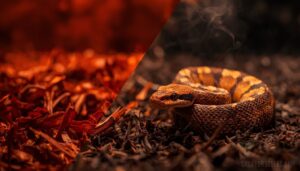
Pine and cedar might smell fresh to you, but to your snake, they’re a slow-burning hazard.
Switching to natural leaf litter is a safer bet—it’s worth reading up on green tree python humidity and substrate needs before your next enclosure refresh.
Both woods release volatile compound emissions and phenolic oil toxicity that irritate airways and damage liver tissue over time.
Resin acid irritation adds another layer of risk — think chronic liver damage from simply sleeping on bedding.
| Hazard | Pine | Cedar |
|---|---|---|
| Volatile Compound Emissions | Moderate | High |
| Phenolic Oil Toxicity | Present | Severe |
| Aromatic Oil Sensitization | Yes | Yes |
Benefits of Paper Towels and Newspaper
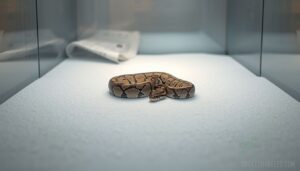
Paper towels and newspaper are honestly underrated. They’re cheap, disposable, and make cleaning and changing snake enclosure substrates almost easy.
Their dust-free surface protects airways, and the uniform surface lets you spot waste instantly — easy inspection without digging around.
Disposable layers mean rapid drying and quick replacement when things get damp.
| Feature | Paper Towels | Newspaper |
|---|---|---|
| Dust-Free Surface | Yes | Yes |
| Rapid Drying | Excellent | Good |
| Easy Inspection | High visibility | High visibility |
When Reptile Carpet Works Well
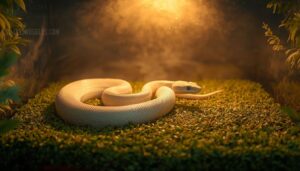
Reptile carpet is one of those safe alternatives that actually pulls its weight when used right. It gives smooth-bodied snakes real traction for smooth, confident movement.
Heat gradient uniformity stays consistent since the surface doesn’t shift. It’s dustfree, provides bacterial contamination control with a solid terrarium cleaning protocol, and easy spot-clean between full changes. Rapid noise dampening? Bonus.
| Feature | Benefit | Best Practice |
|---|---|---|
| Traction for Smooth Scales | Prevents slipping | Keep surface intact |
| Heat Gradient Uniformity | Stable warm zone | Monitor with thermometer |
| Easy Spot-Clean | Reduces bacterial contamination | Dry fully before reuse |
Cocoa Fiber and Cypress Mulch Uses
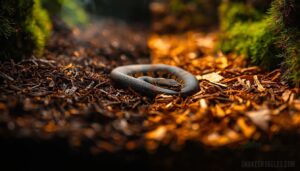
Both cocoa fiber and cypress mulch earn their place in a healthy enclosure.
Eco Earth Coconut Fiber excels at moisture buffering, keeping humidity steady without waterlogging—great for aeration improvement around your snake’s burrow.
Zoo Med Forest Floor Cypress Mulch slows evaporation and has a low decomposition rate, supporting temperature regulation and substrate safety.
| Substrate | Key Benefit |
|---|---|
| Eco Earth Coconut Fiber | Moisture buffering, drainage enhancement |
| Zoo Med Cypress Mulch | Low decomposition, temperature regulation |
| Both | Respiratory issues prevention |
| Both | Impaction prevention |
Choosing Low-dust, Non-toxic Bedding
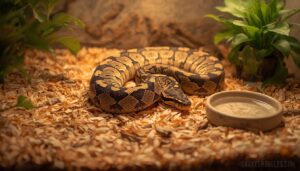
Low-dust, non-toxic bedding isn’t just a nice-to-have — it’s the difference between a thriving snake and a sick one. Check packaging claims carefully and prioritize ingredient transparency.
| Feature | What to Look For |
|---|---|
| Dust Measurement | Minimal airborne particles |
| Material Sourcing | Natural, untreated fibers |
| Packaging Claims | Non-toxic, hypoallergenic labeled |
| Safe Wood Shavings | Dust reduction confirmed |
| Shelf Life | No chemical preservatives |
Match Substrate to Snake Species
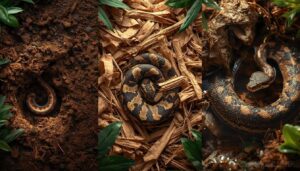
Not every snake lives the same life, and their substrate should reflect that. A burrower, a climber, and a water lover each need something different under their scales.
Here’s how to match the right bedding to your specific snake.
Burrowing Snakes and Loose Bedding
Burrowing snakes aren’t just digging for fun — it’s how they regulate temperature, feel secure, and stay healthy. That’s why substrate choices for burrowing snakes matter more than most keepers realize.
Aspen shavings tick every box: substrate aeration levels stay balanced, particle shape effects stay gentle on scales, and the loose texture facilitates natural burrow architecture design without impaction risk from inappropriate substrates.
Aim for at least 4–6 inches of depth.
Arboreal Snakes and Stable Climbing Bases
Arboreal species are built for life off the ground — they climb using concertina anchoring, gripping with their belly scales and pushing upward in rhythmic pulses. That’s why substrate choices for arboreal snakes start from the floor up.
Bark texture and surface roughness give them stable launch points.
Branch angle and incline stability matter too — smooth surfaces make natural behaviors nearly impossible and turn habitat enrichment into a safety hazard.
Semi-aquatic Snakes and Moisture Retention
Unlike their tree-dwelling cousins, semiaquatic snakes need a substrate that actually holds water — not just sits near it. Think of it as a moisture retention buffer built into the floor itself.
Coconut fiber and cypress mulch manage substrate evaporation rate well, keeping microclimate humidity zones stable around your snake’s body. Smart Water Dish Placement adds to that, supporting skin hydration dynamics without soaking everything constantly.
If you’re rounding out the enclosure with greenery, this guide to safe, humidity-friendly plants for ball pythons can help you pick options that thrive alongside your substrate setup.
Humidity Needs for Common Pet Snakes
Every snake has its own humidity sweet spot — and getting it wrong shows up fast.
Ball pythons need species-specific humidity around 55–70%, bumping closer to 80% during their shed cycle. Corn snakes are more forgiving, hovering around 40–65%.
Getting humidity right is much easier when your enclosure is properly sized — a complete ball python starter kit with adequate floor space gives you better control over airflow and moisture retention.
Humid hide placement helps with moisture retention without soaking the whole enclosure.
Ventilation-humidity interaction matters too — more airflow means faster moisture loss, so watch your readings.
Depth and Texture for Natural Behavior
Depth and texture aren’t just comfort features — they’re functional. Burrowing snakes depend on substrate depth and burrowing behavior to maintain tunnel integrity during natural digging. Aim for 4–6 inches minimum to support real digging efficiency.
Texture matters for climbing surfaces too — rough, uneven material improves scale traction and grip.
Match depth preference to your snake’s lifestyle, and you’ll support natural behaviors that keep them physically and mentally well.
Top 4 Snake Substrates
With so many substrate options out there, it’s easy to feel overwhelmed at the pet store. The good news is that a handful of tried-and-true choices cover most snakes’ needs really well.
Here are four worth considering.
1. TCYPUHL Reptile Tank Mat
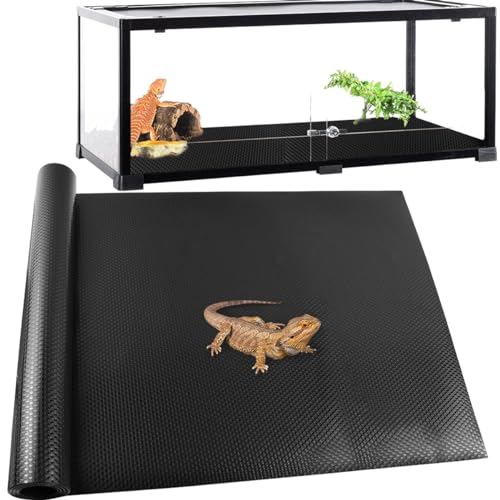
If you want something simple and low-maintenance, the TCYPUHL Reptile Tank Mat is worth a look. It’s a washable, non-absorbent liner that you can wipe down or rinse under the tap — no fuss.
The textured surface gives your snake decent traction, and the 24" × 118" size trims easily to fit most tanks.
It won’t regulate humidity or support burrowing, so it’s best for species that don’t need loose substrate.
Think corn snakes or hognoses in a basic setup.
| Best For | Reptile owners who want a no-fuss, easy-to-clean substrate for species that don’t need loose bedding — like corn snakes, hognoses, or leopard geckos. |
|---|---|
| Material | PVC reptile liner |
| Species Compatible | Snakes, lizards, turtles |
| Odor Control | Non-absorbing, wipe clean |
| Reusability | Washable, reusable |
| Burrowing Support | None |
| Humidity Regulation | None |
| Additional Features |
|
- Super easy to clean — just wipe it down or rinse it off under the tap
- Trims to fit almost any tank size, and it’s thick enough to actually stay flat
- Works with a wide range of reptiles and won’t snag delicate feet or nails
- Not great for burrowing species that need loose, natural substrate
- Can pick up faint mineral stains over time with repeated washing
- It’ll wear down eventually — plan on replacing it after heavy use
2. Zilla Coconut Husk Reptile Bedding
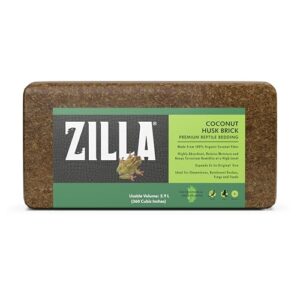
If your snake needs stable humidity, Zilla Coconut Husk Reptile Bedding is a solid pick. One compressed brick — just $6.79 — expands up to five times its size with hot water, covering a full 55-gallon tank bottom.
The soft coconut fiber holds moisture well, so tropical species like ball pythons stay comfortable between mistings. It also encourages natural burrowing behavior, which matters more than people think.
Just don’t oversoak it — soggy substrate invites mold, and that’s a problem you don’t want.
| Best For | Tropical reptiles and amphibians like ball pythons, chameleons, and frogs that need stable, high humidity in larger enclosures. |
|---|---|
| Material | Coconut fiber |
| Species Compatible | Snakes, frogs, geckos |
| Odor Control | Moderate natural absorption |
| Reusability | Single-use, biodegradable |
| Burrowing Support | High |
| Humidity Regulation | High |
| Additional Features |
|
- One $6.79 brick expands to fill a full 55-gallon tank — great value for the coverage you get.
- Holds moisture really well, so you’re not constantly misting to keep humidity levels up.
- Soft texture encourages natural burrowing, which keeps your animal less stressed and more active.
- Rehydrating the brick with hot water is a bit messy and takes some prep time.
- Easy to over-wet — soggy substrate can lead to mold if you’re not keeping an eye on it.
- The fine texture isn’t a great fit for every species, so double-check it works for yours before buying.
3. Flukers Tropical Cypress Reptile Bedding
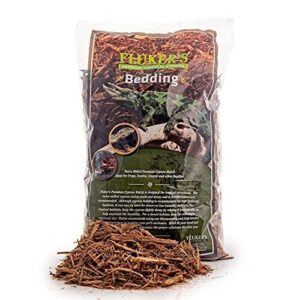
Cypress mulch is one of those substrates that pulls double duty — and Flukers does it well. Their Tropical Cypress Reptile Bedding is twice‑milled for a softer texture, which means less risk of sharp pieces irritating your snake’s belly.
At $6.96 for a 1.76 lb bag, it’s affordable and breeder‑tested.
It holds moisture nicely when misted but resists mold better than you’d expect.
It works as a standalone or mixed with coconut coir for species needing steadier humidity, like red‑tail boas.
| Best For | Reptile keepers who want a soft, natural substrate that works across tropical and desert setups — especially for snakes, tortoises, and burrowing species. |
|---|---|
| Material | Cypress mulch |
| Species Compatible | Snakes, tortoises, lizards |
| Odor Control | Low dust, spot-clean easy |
| Reusability | Spot-clean, partial reuse |
| Burrowing Support | Moderate |
| Humidity Regulation | Moderate |
| Additional Features |
|
- Twice-milled for a softer texture that’s gentle on bellies and feet
- Holds moisture well when misted without getting soggy or moldy
- Works great on its own or mixed with coconut coir for better humidity control
- Small bag for the price — you’ll go through it faster than expected
- Needs regular misting or it dries out quickly, limiting its use as a sole substrate
- Occasional sharp or pointy pieces reported, which could be a concern for sensitive animals
4. Kaytee Aspen Small Animal Bedding
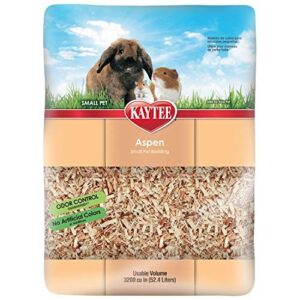
Aspen bedding isn’t just for hamsters — it’s genuinely one of the cleanest options for dry-habitat snakes like corn snakes or king snakes.
Kaytee’s version is 99.9% dust-free and contains no aromatic oils or chemical additives, which matters a lot for respiratory health.
It’s soft enough to encourage natural burrowing and absorbs moisture without staying damp.
At $10.99 for a 52-liter bag, the value is solid.
Just skip it for high-humidity species — it won’t hold enough moisture for them.
| Best For | Small pet owners — guinea pigs, hamsters, rats, rabbits, and dry-habitat reptiles like corn snakes — who want a clean, natural bedding that’s easy on sensitive respiratory systems. |
|---|---|
| Material | Aspen shavings |
| Species Compatible | Small mammals, some reptiles |
| Odor Control | High absorbency, weeks-long |
| Reusability | Single-use, biodegradable |
| Burrowing Support | High |
| Humidity Regulation | Low |
| Additional Features |
|
- 99.9% dust-free and free of aromatic oils or chemicals, so it’s genuinely safer for animals with delicate lungs
- Soft shavings support natural burrowing and nesting, which keeps small animals happier and less stressed
- Great absorbency at $10.99 for 52 liters — solid value for how long it keeps enclosures fresh
- Pricier than generic wood-chip beddings, which can add up if you’re doing frequent full changes
- Occasional oversized wood pieces or sticks may need to be sifted out, especially for smaller animals
- Rare reports of residual dust or mite contamination mean it’s worth inspecting the bag before use
Bioactive Substrate Benefits
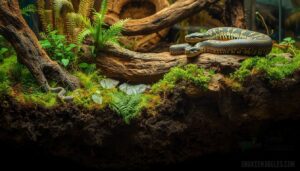
If you really want your snake’s enclosure to work for itself, a bioactive setup might be worth considering. It’s a living system that takes care of a lot of the dirty work for you.
Here’s what goes into making it work.
How Bioactive Substrate Supports Health
Think of a bioactive substrate as a tiny, self-regulating ecosystem working quietly beneath your snake. Microbial waste breakdown happens continuously — beneficial microbes handle decomposer ecosystem duties, processing waste before it becomes a problem.
This biological filtration keeps toxins low, while moisture stabilization facilitates consistent humidity control in reptile enclosures. The result? A healthier soil microbiome and real, measurable benefits of bioactive substrate for snake health through steady nutrient cycling.
Ideal Mix Ingredients for Terrariums
Building the right mix isn’t complicated, but every ingredient earns its place.
Coconut fiber manages moisture retention, while orchid bark structure keeps things from compacting.
Add perlite aeration so roots and air pockets coexist, plus sphagnum moss buffering to smooth out dry spells.
Horticultural charcoal filtration cuts odors, and a touch of compost nutrient boost feeds the whole system.
Cleanup Crew Roles in Waste Control
Once your mix is in place, the cleanup crew takes over — and they’re surprisingly efficient. Springtails and isopods are the tiny waste breakdown specialists of your bioactive substrate. They follow natural sorting protocols, consuming organic matter before it becomes a problem.
No spill containment issues, no equipment maintenance headaches.
They just work, quietly routing waste along nature’s own path through route optimization you never have to manage yourself.
Leaf Litter and Moisture Balance
Leaf litter does more than look natural — it quietly regulates moisture through capillary water retention, pulling water between fragments and releasing it slowly. That Litter Layer Insulation buffers your snake against sudden humidity swings.
Here’s what leaf litter brings to your bioactive substrate:
- Creates a natural Moisture Gradient from surface to deeper layers
- Leaf Shape Effects change how water is intercepted and stored
- Opens a Microbial Activity Window by keeping conditions consistently damp
- Reduces evaporation at ground level, supporting substrate safety
- Prevents near‑saturation that triggers snake health hazards like fungal growth
Cycling The Enclosure Before Use
Before your snake moves in, the bioactive substrate needs time to wake up. Substrate cycling lets microbial activity establish naturally — usually 6–8 weeks with consistent substrate moisture and a stable temperature gradient.
Pre-wet your substrate first, monitor conditions through cycle monitoring, and practice equipment quarantine between enclosures. Skip this step, and your substrate turnover schedule starts on shaky ground.
Keep Substrate Clean and Safe
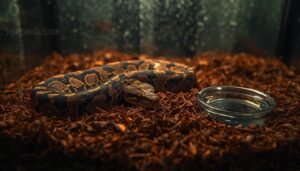
Even the best substrate can turn into a health hazard if you’re not keeping up with it. Cleaning isn’t just about smell — it’s about keeping your snake safe from bacteria, mold, and moisture problems.
Here’s what a solid maintenance routine actually looks like.
Spot-cleaning Waste Every Day
Think of spot cleaning like doing the dishes — skip it once and things pile up fast. Catching waste daily keeps enclosure odor under control and stops bacteria from setting in.
Here’s your daily reptile waste management routine:
- Use disposable gloves or tongs to lift feces cleanly
- Practice surface scraping to lift only affected substrate
- Follow waste bagging immediately after removal
- Maintain tool hygiene by cleaning scoops after each use
- Stick to a consistent cleaning schedule to simplify substrate turnover schedule planning
Full Substrate Replacement Timing
Even with daily spot-cleaning, waste accumulation rate and enclosure size influence how fast full substrate replacement becomes necessary. Paper towels may need a weekly deep cleaning swap, while coconut fiber often lasts four to eight weeks.
Factor in species waste output too — larger snakes fill substrate faster.
Batch change scheduling across multiple enclosures keeps your maintenance routine manageable without letting any setup go too long.
Checking Humidity and Moisture Levels
Your humidity gauge is only useful if it’s placed correctly. Keep it away from heat lamps and misting zones — those spots skew your readings quickly.
Check it at the same time each day to spot real trends, not just post-mist spikes. Also scan for dark, clumped patches across the substrate; uneven surface moisture quietly creates problem zones that your sensor won’t catch.
Preventing Mold and Bacterial Growth
Mold doesn’t knock before it moves in — it just finds damp bedding and settles.
Good airflow optimization keeps stale, humid air from sitting on your substrate. Pair that with consistent drying intervals between mistings, and you cut bacterial buildup substantially.
UV light exposure during cleanouts helps too.
A substrate rotation schedule, combined with antimicrobial bedding options, keeps preventing mold and bacterial growth manageable rather than overwhelming.
Warning Signs of Substrate-related Illness
Your snake can’t tell you something’s wrong — but its body will.
Learning to spot the early signs, like unusual stool, lethargy, or a sudden drop in appetite, starts with knowing what healthy looks like, which is exactly what this guide on recognizing snake parasites and prevention strategies walks you through.
Learning the warning signs of a snake struggling after eating something too large can help you catch trouble before it becomes an emergency.
Watch for these substrate-related red flags:
- Mouth breathing, or clicking sounds when breathing at rest
- Excess mucus, or bubbles near the mouth or nostrils
- Abdominal swelling and reduced activity, suggesting impaction
- Skin lesions, or redness from abrasive or contaminated bedding
- Rapid weight loss, linked to chronic stress or bacterial buildup
Frequently Asked Questions (FAQs)
What substrate is bad for snakes?
Think of substrate like the floor of a home—get it wrong, and everything suffers.
Pine and cedar shavings carry Chemical Oil Toxicity, sand poses Fine Grit Ingestion risks, and gravel causes Rough Substrate Abrasion.
Can substrate affect a snakes gut microbiome?
Yes, it can.
Dirty or damp bedding raises the microbe load that your snake contacts daily. Over time, that drives gut flora shifts — what vets call substrate dysbiosis — quietly disrupting digestion from the inside out.
How does substrate choice impact enclosure temperature?
Your substrate acts like a thermostat in disguise. Its thermal conductivity, moisture content, and depth all shape heat transfer rate, temperature gradient, and overall thermal mass effect throughout your enclosure.
Do wild snakes prefer specific ground materials?
Wild snakes absolutely do.
They instinctively seek ground moisture gradients, seasonal leaf litter, and thermal conductivity soils that match their hunting and resting needs — nature’s blueprint for choosing substrate based on natural habitat.
Can the wrong substrate stress a snake out?
The wrong environment is a slow poison. Absolutely — poor substrate raises stress hormone levels fast.
Dust content irritates airways, burrow depth deficiency frustrates natural instincts, and chemical volatiles from unsafe bedding quietly overwhelm your snake’s system.
How often should bioactive substrates be fully replaced?
Skip the calendar. Full substrate replacement in a bioactive setup depends on Replacement Indicators—odor, Moisture Stability, Cleanup Crew Health, and Waste Accumulation Rate—not a fixed date.
A thriving system can last years.
Conclusion
The ground beneath your snake tells a quiet story—one of safety, comfort, or slow harm. Does substrate affect snake health? Absolutely, and it speaks volumes before symptoms ever appear.
The right bedding isn’t just filler; it’s the foundation of everything else you’re doing right. Match it to your snake’s species, keep it clean, and stay alert to early warning signs. Get the floor right, and the rest of the enclosure has a real chance to work.