This site is supported by our readers. We may earn a commission, at no cost to you, if you purchase through links.

Forget everything you’ve heard about thawing rodents on the kitchen counter—one missed step can trigger bacterial explosions invisible to the naked eye. Every snake keeper knows that feeding frozen prey isn’t as simple as tossing a mouse in a cage. The difference between a healthy meal and a digestive disaster hinges on precise temperatures, airtight bags, and the rhythm of prey movement.
When you handle frozen feeders, safe frozen snake feeding tips aren’t just about avoiding food poisoning—they’re about safeguarding your animal’s gut, preventing regurgitation, and keeping your own hands clean. Ready to master the details that separate novices from experts? The guide ahead covers everything you need to feed with confidence, from thawing timelines to hygienic disposal.
Table Of Contents
- Key Takeaways
- Safest Ways to Thaw Frozen Snake Prey
- How to Warm Frozen-Thawed Prey Properly
- Safe Frozen Prey Feeding Techniques
- Choosing and Storing Frozen Prey
- Hygiene and Health Checks After Feeding
- Frequently Asked Questions (FAQs)
- How to feed frozen food to a snake?
- Can snakes hear you?
- Is it better to feed snakes live or frozen?
- How long can a snake stay frozen?
- Can snakes eat frozen food?
- How do you feed a frozen snake?
- Should I Feed my snake Frozen rodents?
- How do you get a snake to eat frozen mice?
- How do you feed a snake if it doesn’t want to eat?
- How do you feed a thawed snake?
- Conclusion
Key Takeaways
- Thaw prey safely in the refrigerator (24-48 hours) or cold water (30-60 minutes), never on the counter or in the microwave, and never refreeze or refeed thawed prey after 24 hours. For more guidance on keeping frozen feeders fresh and safe, check out these practical snake food storage tips from experienced keepers.
- Warm thawed prey to 100-105°F using a water bath, checking with an infrared thermometer and drying it fully before feeding to prevent thermal shock and regurgitation.
- Use tongs at least 24 inches long to mimic natural prey movement, feed in dim lighting during evening hours, and keep handling calm to reduce feeding stress.
- Practice strict hygiene after feeding—sanitize tools, wash hands for 20-30 seconds, and dispose of uneaten prey within 12-24 hours—to prevent salmonella and cross-contamination.
Safest Ways to Thaw Frozen Snake Prey
Thawing frozen prey the right way matters more than most owners realize. Do it wrong, and you risk bacterial growth, a burned snake, or a refused meal. Here’s exactly how to thaw safely, step by step.
If you’re still building confidence with the whole process, this guide on feeding a ball python safely and correctly walks you through every step from start to finish.
For more tips on keeping your snake’s meals safe and nutritious, check out the essential snake health checklist for responsible owners.
Refrigerator Thawing Timeline

Plan on 24 to 48 hours for refrigerator thawing, depending on prey size. Smaller mice finish in about 24 hours; rats or heavier rodents need closer to 48. Keep your fridge at or below 40°F for stable, safe thawing.
Ice buildup, vacuum sealing, and bone density all slow things down—place prey on a tray overnight, away from human food, and avoid opening the door repeatedly.
Cold Water Thawing Steps
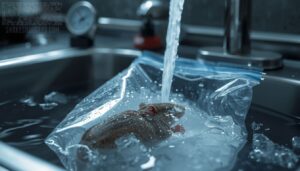
Short on time? Cold water thawing gets prey ready in 30 to 60 minutes. Seal prey in a leakproof bag first—no water ingress allowed—then submerge fully in cold running water below 40°F.
This method helps prevent entering the temperature danger zone where bacteria multiply.
Change water every 10 to 15 minutes to hold that temperature. Steady flow beats stagnant water every time, so keep it moving until thawing’s complete.
Checking Fully Thawed Prey

Once your timer’s up, don’t just eyeball it. Squeeze the abdomen gently—it should yield without snapping back, no icy center hiding at the middle.
Check for:
- Uniform pliability from head to tail
- Neutral, never sour, smell
- No gray or darkened patches
Surface temp should read 100-105°F on an infrared thermometer before you move forward.
Thawing Mistakes to Avoid
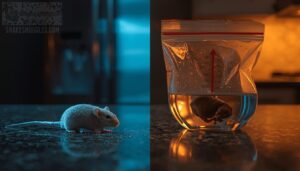
Countertop thawing invites bacterial growth as surface temps climb into the danger zone while the inside stays frozen. Skip the microwave, too—it cooks unevenly and can injure your snake internally.
Never refreeze thawed prey; it multiplies pathogens fast. Don’t thaw multiple rodents together, either. That’s cross-contamination waiting to happen, and it undermines the temperature control refrigerator or water bath thawing gives you.
Preventing Regurgitation Risks

Once thawing and warming go right, regurgitation risk drops fast. Temperature consistency matters most: icy cores force your snake to reposition prey repeatedly, raising handling stress.
Watch for:
- Curled, compressed swallowing posture
- Excessive repositioning during feeding
- Prey that’s cooled below 100°F
- Disturbance during post-feeding rest
Keep feeding duration short, prey properly warmed, and the enclosure calm afterward. Temperature control throughout prevents most digestive upset entirely.
How to Warm Frozen-Thawed Prey Properly

Thawing is only half the job. Your snake won’t strike at something cold, and warming it wrong can do real damage. Here’s exactly how to get the temperature right, step by step.
For tips on keeping your snake’s environment warm at night without disturbing its sleep, check out these red night bulb benefits for reptile terrariums.
Ideal Prey Temperature Range
Your snake can’t tell you when prey’s too cold or too hot—so the thermometer becomes its voice. Target 28 to 38°C at the center for feeding, checked with a calibrated thermometer or infrared thermometer for accurate temperature verification.
This range aids digestive motility and prevents thermal shock. Consistent prey temperature also limits scent variability, helping your snake recognize a proper meal instantly.
Warm Water Bath Method
Fill a shallow container with water at 40-43°C, then submerge the sealed prey bag for 5-10 minutes. This achieves precise warming without soaking the fur.
Swirl occasionally for even heating throughout. Check the center with your thermometer before feeding—target internal temperature should read 28-38°C. Water baths outperform other warming techniques because they’re gentle, controllable, and prevent thermal gradients that stress your snake’s gut.
Avoiding Dangerous Hot Spots
Heat doesn’t warm evenly—it pools. That’s the danger with pockets forming inside prey during warming.
Skip heat lamps entirely; they scorch fur and create localized overheating fast. Use an infrared thermometer to scan for thermal gradients before feeding. Any reading above 40°C means stop.
Water bath warming beats other methods for temperature control because insulating surfaces prevent heat retention, keeping every inch safely uniform.
Drying Prey Before Feeding
A wet rodent is a cooling rodent. Once you pull prey from the warm water bath, pat it fully dry with a clean cloth—surface moisture pulls heat away fast and dilutes scent cues your snake relies on. Give it 2-5 minutes to air dry.
Dry surfaces grip tongs better, transfer heat evenly, and prevent bacterial buildup before feeding.
Boosting Scent Appeal
Ever wonder why your snake ignores a perfectly thawed rat? It’s likely a scent problem, not a temperature one.
Try broth scent enhancement—a light rub of sodium-free chicken broth—or species scent rubbing with a live-prey scent your snake already favors. Both techniques trigger olfactory feeding triggers tied to instinct. This natural scent mimicry reliably improves strike response by simulating authentic predatory behavior.
Safe Frozen Prey Feeding Techniques

Warming your snake’s meal is only half the job—how you deliver it matters just as much. The right technique keeps your hands safe and your snake’s feeding instincts sharp. Here’s what proper feeding technique actually looks like in practice.
Using Feeding Tongs Safely
Grab tongs at least 24 inches long — this keeps your hand well outside striking range. Choose stainless steel or rigid, heat-resistant plastic with smooth, rounded, angled tips to avoid oral injury and bite risk.
Sanitize tongs after every session. Wash with hot water and mild detergent, rinse fully, and inspect for nicks. Damaged tips get replaced immediately — no exceptions.
Creating Natural Prey Movement
Wiggle those tongs like the rodent’s still running. Short, erratic bursts with random pauses trigger genuine natural strike triggers — mimicking escape behavior instead of a lifeless drop.
- Quick bursts, then a 5-10 second freeze
- Winding turns instead of straight lines
- Subtle height changes across the offer
- A dab of chicken broth for scent appeal
This taps real predatory instincts, not just hunger.
Feeding in Dim Light
Timing matters as much as technique. Snakes are nocturnal hunters, wired to rely on heat and scent over sight once the sun goes down. Feed during evening or dim hours to match natural circadian rhythms and trigger genuine predatory instincts.
Dim red or amber light lets you monitor without disrupting behavior. Reduced glare means less visual stress — and a stronger, more confident feeding response.
Reducing Feeding Stress
Good lighting alone won’t calm a stressed snake — the whole feeding process matters. Calm, slow handling cuts stress by roughly 40%. Keep routines consistent, disruptions minimal, and the room between 22-26°C.
Quiet spaces work best:
- Dim lighting
- Stable temperature
- Low traffic
- Consistent timing
- Minimal handling
Predictability breeds confidence — your snake learns feeding means safety, not threat.
Separating Multiple Snakes
Never feed cohabitating snakes in the same enclosure. Move each snake to its own individual feeding container first — this stops scent crossover and prevents one snake from striking prey meant for another.
Watch for dominance conflict signs like defensive posturing before mealtime. If detected, separate permanently. Use enclosure labeling systems noting species and schedule, and sanitize tools between snakes to avoid cross-contamination and microbial risks.
Choosing and Storing Frozen Prey

Feeding your snake correctly starts long before the strike. You need the right prey, sized and stored the right way, to keep every meal safe. Here’s what to get right, from picking prey to keeping it properly frozen.
Matching Prey to Snake Size
Size mismatches cause most feeding emergencies vets see. Match prey diameter to your snake’s widest body point, not length—gape width sets the real limit.
- Prey shouldn’t exceed 1.5x body width
- Juveniles need pinky or fuzzy mice
- Choose slender, elongated profiles
- Match species-appropriate shapes
- Increase size as gape expands
Proper nutrition depends on this fit—too large risks impaction; too small shortchanges dietary requirements.
Prey Weight Guidelines
Weight matters as much as width. Aim for prey at roughly 10-15% of your snake’s body weight—this ratio helps with proper digestion without straining the gut. Rely on ideal weight ratios rather than eyeballing size alone.
A snake fed consistently oversized meals risks regurgitation; undersized meals shortchange caloric intake. Weigh both snake and prey monthly to keep dietary management on track.
Juvenile Snake Prey Options
Not every hatchling wants a pinky mouse. Corn snakes and ball pythons usually start there, but garter snakes favor fish and aquatic invertebrates, while hognose hatchlings prefer amphibians.
Match species-specific preferences to your pet snake’s natural diet. King snakes may accept eggs early on.
Whatever you choose, proper snake nutrition depends on prey size progression—gut-loaded insects included—as your juvenile grows.
Frozen Rodent Storage Tips
Your freezer setup matters as much as the prey itself. Keep frozen prey at 0°F or below, checked regularly with a freezer thermometer for accuracy.
- Vacuum seal to prevent freezer burn
- Double bag for odor control
- Label with freeze dates
- Rotate stock using FIFO
- Store away from human food
Sealed plastic bags and consistent temps protect proper snake nutrition long-term.
Avoiding Refrozen Prey
Once prey thaws, it can’t go back in the freezer. Bacterial growth accelerates fast during the thaw cycle, and refreezing only compounds microbial contamination instead of stopping it.
If your snake refuses a thawed meal or you’ve got leftovers, don’t gamble on quality. Discard within 24 hours. Repeated freeze-thaw cycles also degrade nutritional value, so treat "just this once" refreezing as a food safety protocol violation.
Hygiene and Health Checks After Feeding

Feeding your snake is only half the job—what happens after matters just as much. Bacteria don’t care that dinner’s over, so your cleanup routine needs to be as deliberate as the feeding itself. Here’s what to check and clean once the meal is done.
Sanitizing Feeding Tools
Sanitizing tongs and feeding tools stops microbial contamination before it starts. Wash with hot soapy water, scrubbing crevices with a bottle brush, then submerge in a bleach solution (1:10) for 1-5 minutes. Boiling for 5 minutes kills most bacteria. Never mix chemical sanitizers—dangerous reactions can occur.
Rinse thoroughly, air-dry completely, and inspect weekly for cracks harboring salmonella prevention risks.
Handwashing After Prey Handling
Your hands touch the same pathogens your tools just soaked off, so treat them like contaminated surfaces too.
Wash with soap for 20-30 seconds, covering nails, thumbs, and between fingers. Gloves don’t excuse this—residue clings even when they look clean.
- Gloves lull you into false confidence
- Salmonella spreads silently through touch
- Sanitizer alone won’t cut grease or dirt
- One missed wash risks the whole household
Disposing Uneaten Prey
If you leave prey longer than 12 to 24 hours, you’re inviting mold, bacteria, and flies. Seal uneaten rodents in bags, double-bag if needed, and use outdoor bins for disposal. Never flush or compost unless local rules allow—meat attracts pests and spreads pathogens. Clean removal tools after use. Here’s a quick guide:
| Disposal Step | Odor/Pest Control |
|---|---|
| Seal in bag | Reduces smell |
| Outdoor trash | Limits pests |
| Double-bag | Blocks leakage |
| Disinfect tools | Stops bacteria |
Preventing Cross-Contamination
Cross-contamination is a silent threat—if you don’t keep snake prey storage and preparation strictly separate from human food, you risk salmonella and other bacterial hazards. Use color-coded utensils for snake feeding, follow a clear sanitization schedule, and wash hands for at least 20–30 seconds after handling. Always clean surfaces and tools, store rodents in dedicated freezers, and never refreeze thawed prey.
Keep snake prey prep strictly separate from human food to prevent salmonella—use color-coded tools, dedicated freezers, and rigorous sanitization
- Dedicated reptile freezer
- Color-coded prep tools
- Routine sanitization
- Strict handwashing
- Separate cleaning equipment
Monitoring Digestive Problems
How do you spot trouble early? Track every feeding outcome—log stool frequency and type using the Bristol Scale, and rate symptoms on a 1–5 severity scale.
Weigh your snake weekly, watch for unexplained weight loss, and flag regurgitation, diarrhea, or constipation.
If you see blood in stool, persistent vomiting, or severe pain, seek prompt veterinary evaluation without delay.
Frequently Asked Questions (FAQs)
How to feed frozen food to a snake?
To feed frozen food to a snake, thaw prey in the refrigerator or under cold water, warm it to 100–105°F, dry thoroughly, and use feeding tongs. Present head-first, mimic live movement, and monitor the snake’s response closely.
Can snakes hear you?
Snakes don’t hear you in the way humans do. They detect jawbone vibrations and sense low-frequency sounds—mainly groundborne movement cues. Airborne noises are muffled, and response varies by species. Speaking softly won’t trigger a feeding response.
Is it better to feed snakes live or frozen?
Choosing frozen prey is like installing a safety net under your pet snake—injury risk drops, parasite transmission plummets, and escape is impossible. Frozen options align with ethical feeding, deliver consistent nutrition, and simplify thawing and warming techniques.
How long can a snake stay frozen?
Most snakes can’t survive freezing—cellular ice damage is fatal. Garter snakes are an exception, recovering after up to three hours at minus 5°C, thanks to metabolic slowdown and extracellular ice formation. Beyond ten hours, survival drops sharply.
Can snakes eat frozen food?
Yes, your snake can eat frozen prey safely, but you must thaw it in the refrigerator overnight and then warm it to 100–105°F. Proper thawing prevents bacterial growth and ensures the prey offers the best nutritional value.
How do you feed a frozen snake?
Think of it like defrosting a TV dinner, minus the microwave. Thaw overnight in the fridge, then warm in a water bath to 100-105°F. Offer with feeding tongs, keeping 12-15 inches between your hand and the strike zone.
Should I Feed my snake Frozen rodents?
Frozen rodents beat live prey for safety and consistency—no bite risk, less stress, guaranteed nutrition.
Master proper thawing and warming techniques, rotate prey species for balance, and use gut-loaded rodents.
It’s cost-effective, practical reptile husbandry every keeper should adopt.
How do you get a snake to eat frozen mice?
Success starts with proper thawing and warming technique—refrigerate overnight, then warm to 100-105°F. Boost the natural feeding response by adding chicken broth scent, wiggling prey with tongs to mimic movement, and offering reluctant eaters a smaller size.
How do you feed a snake if it doesn’t want to eat?
For reluctant eaters, try scenting techniques like chicken broth or a nick to release scent. Wiggle prey gently with tongs for natural motion, feed at night, downsize prey, or consult your vet if refusals persist past several weeks.
How do you feed a thawed snake?
Warm thawed prey to 6–2°F in a warm water bath, dry it off, then present it with feeding tongs 12-15 inches away, wiggling gently to trigger a strike response.
Conclusion
Every seasoned keeper remembers their first regurgitated meal—a small disaster that taught a lasting lesson. That lesson is simple: safe frozen snake feeding tips exist because biology doesn’t forgive shortcuts.
Thaw slowly, warm precisely, handle cleanly—each step builds trust between you and your snake’s gut. Skip one step, and you invite risk. Follow them, and feeding becomes routine, not roulette.
Master these details, and you’ll feed with the calm confidence of a true expert.