This site is supported by our readers. We may earn a commission, at no cost to you, if you purchase through links.

A small brown patch on your snake’s belly scales looks easy to dismiss as a bruise or shed remnant. It rarely is. Scale rot progresses fast, moving from surface discoloration to tissue-deep infection within days if conditions don’t change.
Moisture and bacteria are the culprits, and most enclosures already carry both. A substrate that stays damp too long, a water dish that never fully dries, a temperature gradient that’s off: any of these can tip the balance.
Treating scale rot in pet snakes early is the difference between a simple home remedy and a vet prescription for systemic antibiotics.
Table Of Contents
- Key Takeaways
- Scale Rot in Snakes: Signs and Health Risks
- What Causes Scale Rot in Pet Snakes
- How to Treat Mild Scale Rot at Home
- When Scale Rot Requires Veterinary Care
- How to Prevent Scale Rot From Returning
- Frequently Asked Questions (FAQs)
- Will scale rot go away on its own?
- How long does it take for snake scales to heal?
- Can snake mouth rot heal on its own?
- Can snakes grow back scales?
- How to get rid of scale rot on a snake?
- Is scale rot easy to treat?
- Is scale rot an emergency?
- What antibiotic ointment is good for scale rot?
- How long does it take for scale rot to heal?
- Can scale rot spread to other pet snakes?
- Conclusion
Key Takeaways
- Scale rot can escalate from a small discolored patch to a life-threatening bloodstream infection within days, so acting at the first sign of discoloration — not waiting for blisters or oozing — is critical.
- Nearly every case of scale rot traces back to husbandry failures: sustained moisture against the skin, poor temperature gradients that prevent drying, and bacterial buildup from infrequent enclosure cleaning.
- Mild infections respond well to home treatment — betadine cleaning, reptile-safe antibiotic ointment, and quarantine on dry paper towels — but lethargy, foul-smelling discharge, open-mouth breathing, or spreading lesions mean you need a vet the same day.
- Long-term prevention requires keeping humidity between 40–60%, fully replacing substrate after any infection (not just spot-cleaning), and checking your snake’s belly daily so you catch changes before they escalate.
Scale Rot in Snakes: Signs and Health Risks
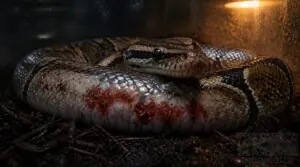
Scale rot doesn’t always announce itself loudly — early signs are easy to miss if you don’t know what to look for. Catching it quickly is the difference between a simple home treatment and a veterinary emergency. Here’s what to watch for.
Familiarizing yourself with the earliest visual signs of snake scale rot can help you act before a minor issue becomes a serious infection.
Scale Discoloration
Noticing a brown, black, or faded patch on your snake’s scales is often the earliest sign of scale rot. Scale discoloration can appear without any obvious swelling, yet bacterial infection may already be spreading beneath the keratin layer.
Persistent wetness from poor humidity control, an inadequate temperature gradient, and poor enclosure sanitation all weaken skin and let infection take hold.
Blisters And Swelling
When discoloration goes untreated, fluid-filled blisters can develop as bacteria invade deeper tissue layers beneath the scales. Swelling in those areas signals that infection has moved well past the surface.
Elevated humidity keeps moisture trapped against already damaged skin, and insufficient temperature gradients slow your snake’s normal immune response. Consistent enclosure disinfection helps limit the bacterial load driving this progression.
Raised
Raised scales mean infection has pushed deeper, lifting the scale layer from the tissue beneath. Three signs to watch for:
- Scales lifting at the edges without shedding
- Inflamed skin beneath raised patches
- Lesions expanding around the lifted area
Wipe affected spots with chlorhexidine solution, then clean the enclosure thoroughly. Adjust your humidity control terrarium and temperature gradient enclosure to aid recovery.
Oozing Scales
When lifted scales begin oozing, the infection has moved into deeper tissue. That wet, sticky discharge signals active bacterial infection, not just surface damage.
Clean the area with chlorhexidine and tighten your humidity control right away.
Persistent oozing won’t resolve on its own, and enclosure sanitation becomes critical to prevent spread.
At this stage, veterinary consultation is strongly recommended.
Commonly Affected Areas
Along the belly, ventral scales take the most damage because they press against damp substrate constantly. The cloacal region is especially vulnerable, and you’ll often spot discolored patches or raised scales there first. Watch these areas closely:
If you notice raised or discolored scales near the cloaca, understanding whether you’re seeing early infection or shedding complications helps you catch problems before they require more intensive vet care.
- Ventral belly surface
- Cloacal and groin region
- Underside of the tail
- Skin beneath the water dish
Ulcerations here mean the infection has worsened.
Septicemia Risk
Two or more open lesions can let bacterial infection reach the bloodstream, causing septicemia. Elevated humidity and filthy enclosure risks keep your snake’s skin barrier vulnerable. Antibiotic ointment alone won’t stop systemic spread. Watch for these signs.
| Warning Sign | Severity | Action |
|---|---|---|
| Rapid spread | High | Vet now |
| Lethargy | High | Vet now |
| Foul discharge | High | Vet now |
| No appetite | Moderate | Monitor |
What Causes Scale Rot in Pet Snakes
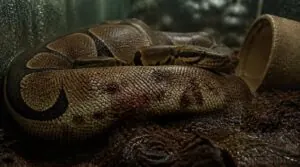
Scale rot doesn’t appear out of nowhere — it’s almost always the result of something going wrong inside the enclosure. Several common husbandry mistakes make snakes vulnerable, and most of them are easier to fix than you’d think. Here are the main causes to look out for.
Excessive Humidity
Moisture is one of the most common triggers for scale rot. Excessive humidity softens your snake’s keratin layer, letting bacteria invade beneath the scales. When your substrate stays wet or condensation builds inside the enclosure, that prolonged contact breaks down the skin barrier fast.
Good humidity control and routine substrate hygiene stop the wet conditions that let infection take hold.
Improper Temperature Gradients
Surveys of reptile veterinarians suggest poor thermal management contributes to more than half of scale rot presentations. Since snakes can’t generate their own body heat, they rely on proper temperature gradients for thermal regulation.
Once temperatures are dialed in, our guide to setting up a home for a new baby snake covers the other essentials, from enclosure setup to the first quiet days.
Insufficient temperature on the warm side slows evaporation and keeps skin damp longer than it should. Put thermometers at both ends to catch temperature fluctuations early.
A dual-zone reptile thermometer lets you monitor both ends of the enclosure simultaneously, so you catch dangerous dips before they affect your snake’s skin health.
Unsanitary Enclosure Conditions
A filthy enclosure is one of the fastest ways to trigger scale rot. Waste on the substrate builds biofilms pressing bacteria against your snake’s scales. Sanitation can’t be an afterthought, so clean the enclosure fully, not just spot-clean.
Contamination risks to address:
- Soiled substrate left between full refreshes
- Dirty water dishes and soaking tubs
- Shared tools moving pathogens between enclosures
Burns And Skin Injuries
Hot rocks and faulty heat mats are common culprits. When your snake presses against an overheated surface, the skin breaks down, giving bacteria a direct entry point. Those burns and skin injuries quickly trigger scale rot and blister disease.
You’ll notice discolored patches where contact was heaviest. Clean the enclosure and replace any unregulated heat source right away.
How to Treat Mild Scale Rot at Home
If the scale rot is mild, you can often treat it at home before it has a chance to progress. Acting quickly and methodically gives your snake the best shot at a full recovery. The steps below walk you through exactly what to do.
Set Up a Hospital Enclosure
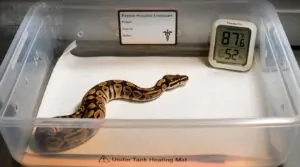
Every recovery starts with a dedicated quarantine enclosure. A simple, clean enclosure reduces bacterial load and lets you spot lesion changes fast. Strip it down to essentials only.
- Small, clear plastic tub for easy visibility
- Paper towel liners for simple substrate management
- Under-tank heater to create temperature gradients
- Controlled proper humidity levels, no soaking
- Isolated completely from your main setup
Clean and Disinfect Affected Scales
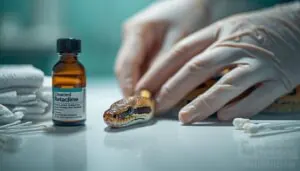
With your hospital enclosure ready, clean affected scales carefully. Wipe debris first, apply diluted betadine solution, then let it sit.
| Step | Tool | Why It Matters |
|---|---|---|
| 1 | Paper towels | Removes debris before disinfecting |
| 2 | Betadine solution | Kills surface bacteria effectively |
| 3 | Debridement | Clears buildup; stops deeper spread |
| 4 | Clean gloves | Prevents cross-contamination of scales |
| 5 | Substrate management | Reduces ongoing reinfection risk |
Apply Reptile-Safe Antibiotic Ointment
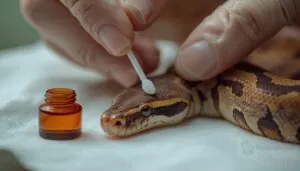
Once the betadine solution has dried completely, apply a thin layer of reptile-safe antibiotic ointment directly to each affected scale.
Triple antibiotic ointment like Neosporin can work for mild cases, but always check with a reptile-knowledgeable veterinarian first, since many common ingredients aren’t actually safe for snakes.
Use only a small amount; heavy coverage quickly traps moisture and slows healing.
Support Recovery Through Proper Husbandry
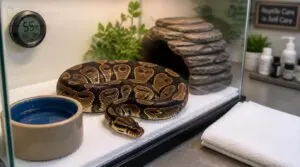
The ointment only works if the environment backs it up. Quarantine your snake in a clean enclosure lined with paper towels, which makes daily swaps both quick and easy. Unscented paper towel reptile substrate liners are especially practical here, since they’re easy to inspect for discharge and swap out before bacteria get a foothold.
Keep humidity control tighter than normal so the affected scales can actually dry between treatments. Replace soiled substrate right away, since bacterial buildup in dirty bedding will quietly undo your progress.
When Scale Rot Requires Veterinary Care
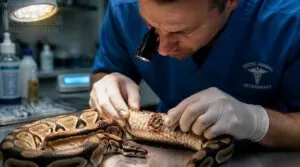
Home treatment works for mild cases, but some infections need professional intervention. Knowing when to stop treating at home and call a vet can mean the difference between a full recovery and a life-threatening crisis. The following signs will tell you when it’s time to make that call.
Knowing when home treatment ends and veterinary care begins can mean the difference between recovery and crisis
Severe Infection Warning Signs
Some scale rot infections escalate into septicemia, a bloodstream infection that can kill your snake within days. Watch for these five warning signs:
- Lethargy or refusal to eat
- Open-mouth breathing or wheezing
- Foul smell from open lesions
- Bacterial abscesses or pus-filled blisters
- Petechiae on the ventral scales
Septicemia develops when scale rot infection spreads through the bloodstream, causing widespread inflammation and lesions across the body. If you’re seeing any of these signs, your snake needs a vet today.
Veterinary Diagnosis and Medication
Expect your vet to start with a thorough physical exam and collect samples for bacterial and fungal cultures before prescribing any medication.
| Treatment | When It’s Used |
|---|---|
| Enrofloxacin | Systemic bacterial infection |
| Doxycycline | Broad-spectrum bacterial cases |
| Topical antibiotic | Mild, superficial lesions |
A reptile-knowledgeable veterinarian tailors dosing to your snake’s weight and will adjust the regimen if early signs of treatment failure appear.
How to Prevent Scale Rot From Returning
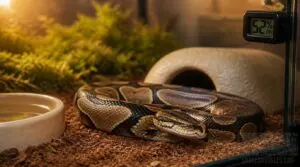
What’s the point of treating scale rot if the same conditions bring it back? Prevention comes down to three habits:
- Humidity control: keep levels at 40-60% for most species and make sure surfaces dry quickly after soaks
- Substrate sterilization: fully replace all bedding after recovery, not just spot-clean
- Daily monitoring: check your snake’s belly and lower sides every day for early changes
Consistent enclosure hygiene is your best defense. Remove waste before it compacts, maintain your warm basking zone, and watch for visible dampness under hides even when the humidity gauge reads normal.
If you’re adding a new animal, always quarantine your snake for at least 30 days first.
Frequently Asked Questions (FAQs)
Will scale rot go away on its own?
Will scale rot go away on its own? Not reliably. Without correcting a filthy enclosure or insufficient temperature gradients, blistering and oozing indicate active bacterial infection is already underway, and things will only get worse.
How long does it take for snake scales to heal?
Wondering how deep the damage goes? Mild surface lesions can show healing progress in just 1–2 weeks, but if your snake has deeper or actively oozing tissue, expect several weeks before scale regeneration looks normal.
Can snake mouth rot heal on its own?
Rarely. Mouth rot is bacterial, so without addressing humidity, sanitation, or injury, lesions usually persist or worsen. Temporary improvement is possible, but recurrence is common without treating the root cause.
Can snakes grow back scales?
A ball python recovering from scale rot often heals with irregular scale texture, not a perfect replacement. Snakes can’t truly regrow scales; the skin beneath repairs itself, but final cosmetic results depend heavily on infection depth.
How to get rid of scale rot on a snake?
To treat scale rot, clean affected ventral scales with betadine, apply reptile-safe antibiotic ointment, and quarantine your snake on dry paper towels. Keep temperatures correct and humidity low, and see a vet if lesions worsen.
Is scale rot easy to treat?
Picture discolored, softening scales spreading overnight. Scale rot’s difficulty depends entirely on how deep the infection goes: mild surface cases respond to antibiotic ointment and good husbandry, but severe lesions need a reptile-knowledgeable veterinarian immediately.
Is scale rot an emergency?
Early-stage scale rot isn’t immediately life-threatening, but you shouldn’t wait to act. Worsening signs like raised scales or oozing can progress to septicemia quickly, so contact a reptile-knowledgeable veterinarian within 24 to 48 hours.
What antibiotic ointment is good for scale rot?
With so many options, where do you even start? Stick with generic triple antibiotic ointment containing bacitracin, neomycin, and polymyxin B. Just avoid any formula with pain relievers like lidocaine, which can seriously harm reptiles.
How long does it take for scale rot to heal?
Mild cases usually resolve in 2–3 weeks with consistent wound care, proper humidity levels, and daily monitoring. Deeper or widespread infections push healing time to 4–6 weeks and often require antibiotic ointment and vet supervision.
Can scale rot spread to other pet snakes?
Yes, scale rot can spread to your other snakes. Shared equipment like tongs, water bowls, and hides transfers bacteria between animals even without direct contact. Isolate your infected snake immediately and disinfect everything it’s touched.
Conclusion
Roughly 70% of reptile illness cases tie back to husbandry failures, and scale rot ranks among the most preventable of all. Treating scale rot in pet snakes comes down to catching it early and correcting the exact conditions that allowed it to start.
Keep humidity controlled, substrates dry, and surfaces consistently clean. Your snake can’t alert you that something’s wrong until it’s already spreading, so your enclosure choices have to do all the talking first.