This site is supported by our readers. We may earn a commission, at no cost to you, if you purchase through links.

You pick up your snake and spot it: a thin line of pink along the gumline, maybe a small red spot near a tooth socket. Your first thought is probably a scratch from last week’s prey item. Sometimes that’s exactly what it is.
But snake gums bleeding infection cases don’t always announce themselves clearly at first. A minor nick heals within a couple days, while a true infection worsens, spreads, or starts producing discharge. The difference matters, because one needs nothing more than watching, and the other needs a vet fast.
Knowing which signs point where can save your snake real trouble down the road.
Table Of Contents
- Key Takeaways
- What Do Bleeding Snake Gums Mean?
- Signs of Snake Gum Infection
- Why Snake Gums Become Infected
- What to Do About Bleeding Gums
- Diagnosing and Treating Gum Infections
- Preventing Future Snake Gum Infections
- Frequently Asked Questions (FAQs)
- What does sepsis look like in snakes?
- Can snake mouth rot heal on its own?
- What are the signs of a sick snake with an open mouth?
- What does mouth rot look like in snakes?
- Can snake gum infections spread to other snakes?
- How long does treatment recovery typically take?
- Can a snake fully recover from mouth rot?
- Are certain snake species more prone to infection?
- Is snake gum infection contagious to humans or pets?
- Conclusion
Key Takeaways
- A minor scratch heals steadily within a couple days, but if bleeding gums come with swelling, pus, or a foul odor past that point, you’re dealing with a real infection that needs a vet, not a wait-and-see approach.
- Infections usually take root because something opened the door for bacteria, like a prey bite, wrong tank temperature or humidity, a dirty water bowl, dehydration, or ongoing stress that weakens your snake’s immune defenses.
- Once you spot trouble, contact an exotic animal vet right away, remove any live prey with tongs, and skip home remedies like hydrogen peroxide since they can burn tissue and mask a spreading infection.
- Treatment often involves sedated oral exams, cultures and bloodwork, debridement of dead tissue, and antibiotics, with costs ranging from around $150 for mild cases to well over $1,500 for advanced care.
What Do Bleeding Snake Gums Mean?
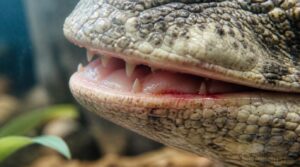
Bleeding gums can mean a lot of different things, and not all of them are serious. Some cases are simple, healing on their own, while others point to a deeper infection brewing beneath the surface. Here’s what you need to know to tell the difference.
Minor Injury Versus Infection
When your snake’s gums bleed, don’t panic right away. A minor oral injury from sharp prey or cage decor causes brief redness that steadily improves.
But if you notice persistent swelling, pus, or a foul odor, it could signal something more serious, so check out this guide on identifying and treating mouth rot in snakes before it worsens.
Infection looks different: worsening swelling, spreading redness, or discharge past day two signals bacteria overwhelming the tissue, often worsening with husbandry stress. If healing stalls, schedule an oral exam.
Gingivitis and Periodontal Disease
That two-day window matters because it marks where early gum inflammation turns into something bigger.
Reversible gingivitis stage shows red or purple gums with mild bleeding, bacterial overgrowth still contained. Left alone, it becomes periodontal infection: tissue support loss, deeper oral inflammation, and severe periodontitis signs like loose teeth or bone structure damage.
Early intervention through proper oral hygiene can prevent gingivitis from progressing.
Infectious Stomatitis Explained
Once gingivitis moves past that reversible stage, you’re often dealing with infectious stomatitis — inflammation involving the whole mouth lining, not just gums. Bacterial overgrowth, sometimes fungal, drives ulcers and tissue breakdown.
Watch for:
- Painful mouth ulcers
- Thick, ropey saliva
- Reduced appetite
- Slow oral tissue healing
Dehydration and weak immune response worsen outcomes. An oral exam guides whether prescription antibiotics or debridement follows.
How Oral Infections Progress
Left untreated, stomatitis doesn’t stay put. Infection spreads through soft tissue into the jaw, risking bone involvement (osteomyelitis) and tissue necrosis.
| Stage | What You’ll See |
|---|---|
| Early | Redness, mild bleeding |
| Progressing | Pus, ulcers, odor |
| Expert | Dead tissue, swelling |
| Systemic | Lethargy, appetite loss |
Healing timelines lengthen dramatically once infection turns systemic.
Signs of Snake Gum Infection
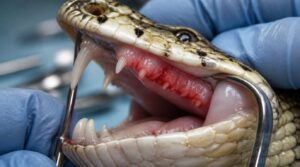
Not every case of gum trouble looks the same in a snake’s mouth. Some signs are easy to spot, while others need a closer look to catch early. Here’s what to watch for at each stage of infection.
Red, Purple, Swollen Gums
Color tells a story here. Bright red gums usually mean fresh inflammation, while purple or violet tissue signals a chronic, oxygen-starved problem lasting days.
Watch swelling too: mild puffiness (1-2mm) is manageable, but if gums bulge 6mm or more and interfere with mouth opening, that’s a veterinary emergency, not a wait-and-see situation.
Thick Saliva and Discharge
A stringy, ropey texture clinging around your snake’s mouth is often the next clue after discoloration sets in. Thick saliva causes range from simple dehydration to early stomatitis, so consistency matters as much as color.
Watch for changes alongside bad odor—that combination points toward infection rather than a passing dry spell. An oral exam settles the question.
If low temperatures seem to be the culprit instead, dialing in proper warmth with a snake heating pad suited for cold climates can help prevent future shedding troubles.
Yellow Pus and Dead Tissue
By the time thick saliva turns to true drainage, you’re looking at established infection. Yellow pus, sometimes cheesy pus or caseous material wedged between teeth, signals purulent drainage from active bacterial breakdown.
Gums may show tissue necrosis—dull, ulcerated patches instead of smooth pink tissue. This dead tissue requires debridement; it won’t resolve alone. See your vet immediately.
Bad Breath and Facial Swelling
Get close and you’ll notice it fast: a foul, rotten odor rising off the mouth. That smell means bacteria are actively breaking down tissue.
Watch for facial tissue swelling too—puffiness along the jaw or cheek signals infection spreading beyond the gumline. Combined with thick saliva, this is an emergency care trigger. Call your vet immediately; oral exam and antibiotic therapy shouldn’t wait.
Appetite Loss and Open Mouth
Refusing food is one of the clearest early infection clues, especially when it follows a missed feeding or two. Watch for open mouth posture during rest, sometimes paired with thick saliva or mucus—these are real oral discomfort signs.
Don’t wait this out. Reduced feeding interest plus open-mouth breathing means it’s time for veterinary attention and a proper oral exam.
Why Snake Gums Become Infected

Healthy gum tissue doesn’t break down on its own. Something usually opens the door for bacteria, whether it’s an injury or a gap in daily care. Here’s what usually sets the stage for infection.
Prey Bites and Mouth Injuries
A live rodent fighting for its life can do real damage. Prey bite wounds often cause oral trauma along the gumline, driving bacteria deep into tissue. Watch for:
- Punctures or tears near the teeth
- Mouth swelling after feeding
- Reluctance to strike at prey again
These bite infection risks grow when wounds go unnoticed, so check your snake’s mouth after every meal.
Incorrect Temperature and Humidity
Bites aren’t the only trigger. Wrong basking temperatures suppress your snake’s immune response, so bacteria linger instead of clearing. Ball pythons need 88-92°F; corn snakes, 75-85°F.
Humidity above 80% breeds Pseudomonas and Aeromonas near water bowls. Below 40%, oral tissue dries and cracks. Check your temperature gradient and humidity daily—inaccurate thermometers hide dangerous enclosure microclimate problems.
Dirty Enclosures and Water
Temperature isn’t the only hidden threat—unsanitary housing breeds bacteria just as fast. Stagnant water bowls grow biofilm within days, causing water contamination every time your snake drinks. Waste accumulation on substrate spreads microbes to hides and décor.
Scrub bowls with hot water, disinfect with reptile-safe solutions, and use separate tools per enclosure. Watch for open-mouth breathing—it signals bacterial overgrowth already underway.
Dehydration and Poor Nutrition
A clean tank means little if your snake isn’t drinking or eating well. Dehydration thickens saliva, slowing its protective flow across gum tissue. Poor nutrition limits protein and vitamin A, weakening healing and immune defenses.
Watch for:
- Sticky, stringy saliva
- Sunken eyes
- Reduced appetite
- Weight loss
- Slow wound healing
Both husbandry problems fuel bacterial infection and delayed recovery.
Stress and Weakened Immunity
Nutrition and hydration aren’t the whole story. Ongoing environmental stress raises cortisol, and chronic stress effects include weaker immune surveillance and blunted inflammation "switch-off" signals.
This causes immune cell shifts, leaving fewer defenders ready when bacteria invade damaged gum tissue. Poor sleep compounds the problem, slowing recovery.
The result? Immune compromise that turns minor mouth injuries into lasting infections.
What to Do About Bleeding Gums
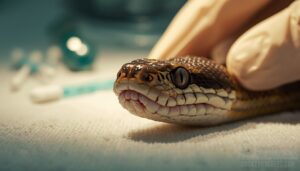
Bleeding gums are a signal, not something to wait out. What you do in the next day or two can make a real difference in how quickly your snake heals. Here’s exactly where to start.
Bleeding gums are a signal, not something to wait out—what you do next can shape how quickly your snake heals
Contact an Exotic Animal Veterinarian
Bleeding gums call for a real exam, not guesswork. Contact an exotic animal veterinarian who treats reptiles specifically for oral lesion assessment.
Booking usually means a phone call, possibly a referral from your regular vet. Ask about prescription antibiotics, debridement of dead tissue, and cost ranges upfront—so you’re prepared, not blindsided, when the plan comes together.
Review Enclosure Conditions Immediately
While you wait for your vet appointment, walk over to the enclosure and take stock. Unsanitary housing is often the root cause behind gum infections, so check these four things now:
- Temperature gradient check across warm and cool zones
- Humidity balance using a hygrometer, not guesswork
- Water bowl clean, free of debris and saliva
- Substrate hygiene—spot-clean soiled bedding immediately
A husbandry correction plan starts here.
Remove Live Prey Safely
If a live rodent shares the cage with an injured snake, the wounds only get worse. Remove uneaten prey immediately using long tongs—never bare hands—to prevent further bites. This step matters most when gums are already bleeding, since prey-related trauma compounds existing damage.
| Risk | Safer Practice |
|---|---|
| Bare-hand removal | Long-reach tongs |
| Prey left loose | Immediate removal |
Avoid Unsafe Home Treatments
Grabbing hydrogen peroxide from the medicine cabinet feels productive, but it isn’t. Household chemicals cause real harm:
- Burned, blistered oral tissue
- Masked infection that keeps spreading
- Wrong dosages from guesswork
- Delayed care while symptoms worsen
- Bacteria pushed deeper into the jaw
Self-treatment dangers outweigh any comfort of "doing something." Skip the home remedies. Call your exotic vet instead.
Recognize Emergency Infection Signs
Some signs can’t wait for a "we’ll call you back." Fever, rapid symptom changes, or lethargy signal spreading infection. Watch for breathing trouble, blue lips, or collapse.
| Emergency Sign | Why It’s Urgent |
|---|---|
| Facial swelling + bleeding gums | Infection reaching deeper tissue |
| Pus with foul odor | Active bacterial spread |
| Confusion or collapse | Whole-body illness |
| Breathing difficulty | Oxygen delivery failing |
These warrant same-day care.
Diagnosing and Treating Gum Infections
Once your vet suspects infection, the real work begins. Diagnosis and treatment happen in stages, each one building on the last to get your snake healthy again. Here’s what that process usually looks like, from first exam to full recovery.
If your female snake is straining without producing eggs, this guide to snake egg binding signs and treatment options can help you tell normal labor from a true blockage.
Oral Examination and Sedation

Why does a snake need to "go under" just to have its gums checked? Because a proper look inside that mouth requires stillness your snake won’t give you awake.
Your vet performs a pre-sedation airway check, reviews health history, then monitors oxygen and breathing throughout the sedated oral exam.
- Airway and jaw assessment
- Sedation drug selection
- Continuous monitoring tools
Cultures, Bloodwork, and X-Rays
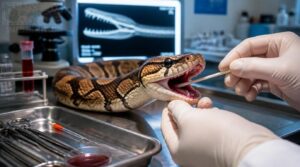
Once your snake is sedated, your vet often gathers more than a visual exam. Bacterial culture with sensitivity testing identifies resistant organisms; oral cytology adds quick insight. Bloodwork flags organ stress; radiographs reveal bone involvement invisible to the eye. Timing matters, samples work best before treatment begins. Together, these tests build a fuller diagnostic picture than any one alone.
Cleaning and Tissue Debridement
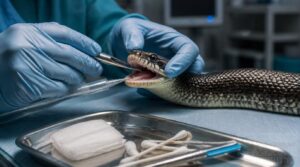
With culture and radiograph results guiding the plan, your vet moves to physically clearing the infection. Cleaning and debridement work together: oral irrigation flushes debris, while sharp or surgical debridement cuts away necrotic tissue.
Methods include:
- Saline irrigation
- Sharp debridement
- Surgical excision
- Wound reassessment
Oral cytology confirms progress. Aftercare involves gentle drying and monitoring, since dead tissue often returns.
Antibiotics, Fluids, and Pain Relief
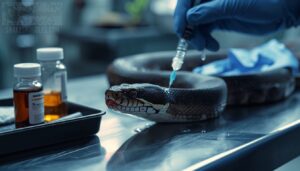
Once dead tissue is cleared, medicine takes over. Antibiotic selection often means enrofloxacin or ceftazidime, guided by culture results. Fluid therapy corrects dehydration through oral or injectable routes. Pain management with meloxicam keeps your snake comfortable enough to eat.
| Support | Drug Example | Purpose |
|---|---|---|
| Antibiotic | Ceftazidime | Fight infection |
| Fluids | Subcutaneous | Rehydrate |
| Pain relief | Meloxicam | Reduce discomfort |
Treatment Costs and Advanced Care
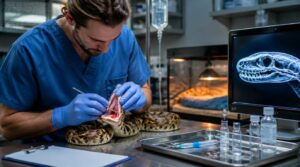
Costs vary by severity. Mild cases with cleaning and antibiotics may run $150–$1,500, while more serious care—imaging, cultures, surgery, hospitalization—climbs higher.
Here’s what drives the bill:
- Hospital care expenses for monitoring
- Expert imaging costs (X-rays)
- Surgical procedure fees for debridement
- Diagnostic testing charges and cultures
- Supportive care services, fluid support, assisted feeding, follow-up care
Ask your vet for estimates upfront.
Preventing Future Snake Gum Infections

Once treatment clears up the infection, your job shifts to keeping it from coming back. Most gum problems trace back to something in the enclosure, not bad luck. Here’s what to check and adjust to keep your snake’s mouth healthy from now on.
Maintain Species-Specific Temperatures
Every species has its own heat range, and guessing simply doesn’t work. Build a proper thermal gradient with a warm side and cooler side, control basking spot temps directly, and allow a safe night temperature drop. Use digital probe thermometers at multiple points.
Incorrect temperature slows digestion and immunity, inviting husbandry problems that stress your snake and pave the way for gum infection.
Control Humidity and Hydration
Dry mouths tear easier than moist ones, and torn gums invite bacteria in.
Aim for species-appropriate humidity using a digital hygrometer at head height, not a wall-mounted dial.
- Keep a heavy water bowl on the warm side
- Check for stuck shed around the jaw
- Mist lightly if levels drop overnight
Watch for thick, ropey saliva—it signals dehydration and rising infection risk.
Clean Enclosures and Bowls
Since bacteria thrive on leftover food and waste buildup, wash bowls daily with soap and hot water, using dedicated pet-only tools.
| Neglected Bowl | Clean Bowl |
|---|---|
| Bacterial film | Sanitized surface |
| Recurring gum infection | Healthy pink gums |
| Vet bills climb | Prevention saves money |
| Slime and odor | Fresh water daily |
Stainless steel dries fastest and resists scratches where germs hide.
Feed Appropriately Sized Prey
Prey too wide for your snake’s body can tear delicate mouth tissue, opening the door to bacterial infection. Match prey width to your snake’s thickest point, not its head.
Beyond feeding, a proper enclosure matters just as much, and this rosy boa care and husbandry guide covers the habitat details that keep shedding and appetite on track.
For safety and convenience, see our live versus frozen snake feeding guide before choosing prey.
Follow growth-stage feeding—pinky to fuzzy to hopper—so meals scale up gradually. Choose frozen-thawed prey over live to avoid bite wounds, and skip anything over 1.5 times body girth.
Schedule Routine Veterinary Checkups
Think of checkups as insurance against surprises. Early detection catches gum trouble before it’s serious.
- Baseline health tracking
- Oral hygiene review
- Husbandry optimization tips
- Diagnostic imaging when needed
Healthy adults need yearly visits; older or chronic-condition snakes need more. Always book follow-up scheduling before leaving—sensitivity testing and bloodwork mean nothing without consistent monitoring over time.
Frequently Asked Questions (FAQs)
What does sepsis look like in snakes?
Could a mouth infection really turn deadly this fast? Yes. Watch for a septic blush, petechial hemorrhages, muscle weakness, open-mouth breathing, facial swelling, and lethargy—signs your snake’s infection has gone systemic and needs emergency vet care now.
Can snake mouth rot heal on its own?
Rarely on its own. Natural healing limits apply here—better heat and hygiene may ease mild oral inflammation, but established infection needs veterinary intervention. Left alone, it risks systemic infection and deeper tissue damage requiring prompt followup care.
What are the signs of a sick snake with an open mouth?
A gasping snake is a snake crying for help. Watch for open-mouth breathing at rest, facial swelling, thick or blood-tinged saliva, trouble striking prey, and airway blockage—signs pointing to respiratory distress or severe infection needing urgent veterinary care.
What does mouth rot look like in snakes?
Mouth rot starts subtle: red or purple gums, mild oral bleeding, gumline swelling. As it progresses, you’ll notice thick discharge, foul smell, yellow pus, gray necrotic patches, and facial swelling—signs demanding immediate veterinary attention.
Can snake gum infections spread to other snakes?
Not directly—infectious stomatitis usually isn’t contagious mouth-to-mouth. The real danger is environmental transmission: shared water bowls, tools, and enclosures spread bacteria. Practice strict isolation protocols and enclosure sanitation to protect cage mates from cross-contamination risks.
How long does treatment recovery typically take?
Slow and steady wins the race. Mild cases often clear in several weeks with prompt care, while complicated infections involving bone or the lungs may need months of supportive therapy and follow-up monitoring.
Can a snake fully recover from mouth rot?
Yes—with early detection and prompt care, most snakes recover fully. Prognosis worsens once bacterial infection reaches bone or lungs. Correcting husbandry, finishing antibiotics, and post-treatment monitoring give your snake the best shot at complete healing.
Are certain snake species more prone to infection?
The gentlest habitats often breed the worst risk. Species susceptibility varies—water-loving snakes like Natrix tessellata show higher infection rates, since damp shelters and communal denning boost bacterial exposure, oral injury, and coinfection prevalence tied to geographic and social behavior patterns.
Is snake gum infection contagious to humans or pets?
Not directly. The infection itself won’t jump to you or your pets, but zoonotic transmission risks exist through contaminated saliva or waste, especially for immunocompromised people—so wash hands and disinfect surfaces after handling.
Conclusion
A snake’s mouth can feel like the smallest battlefield in your entire home, yet infection there can spiral into something devastating within days. That’s the real weight behind snake gums bleeding infection cases: small signs, serious stakes.
Trust your eyes. A pink scratch heals quietly; spreading redness, pus, or a swollen jaw doesn’t. When in doubt, call your exotic vet. Quick action isn’t overreacting, it’s what keeps a minor wound from becoming a lasting battle.