This site is supported by our readers. We may earn a commission, at no cost to you, if you purchase through links.
Your snake starts wheezing, and your gut says "cold." But snakes can’t actually catch one — they don’t get the sniffly viruses we pass around at work or school. What looks like a snake respiratory infection vs cold situation is really something else entirely: a bacterial or fungal invader taking hold, often because the tank’s humidity or temperature slipped somewhere along the way.
That distinction matters. Human colds clear up with rest and time. Snake infections don’t work that way — left alone, they turn serious fast, sometimes in days.
Here’s how to tell the difference, spot trouble early, and get your scaly buddy back to breathing easy.
Table Of Contents
- Key Takeaways
- Snake Cold Vs Respiratory Infection
- Signs Your Snake is Sick
- Causes of Breathing Problems
- When to Call a Reptile Vet
- Preventing Future Respiratory Infections
- Frequently Asked Questions (FAQs)
- How can you tell if a snake has a respiratory infection?
- How to tell the difference between a cold and respiratory infection?
- Can a snake recover from a respiratory infection?
- Can a respiratory infection kill a snake?
- How long does snake respiratory treatment usually take?
- Is snake respiratory infection contagious to other reptiles?
- Can respiratory infections in snakes resolve on their own?
- What vitamins support a snakes immune system?
- Conclusion
Key Takeaways
- Snakes can’t catch human colds since human viruses target human cells, so wheezing or clicking sounds almost always signal a bacterial or fungal respiratory infection instead.
- Poor husbandry—wrong humidity, weak temperature gradients, dirty air, or irritating bedding—is usually the root cause that lets these infections take hold.
- Warning signs like open-mouth breathing, nasal bubbles, lethargy, and refusing meals mean it’s time to call a reptile vet, not wait it out at home.
- Prevention comes down to species-specific humidity targets, reliable thermostats, clean ventilated enclosures, and quarantining new snakes for 60-90 days before introducing them to your collection. Even with good prevention, it helps to know the early warning signs of pneumonia in snakes, like wheezing or open-mouth breathing, so you can act quickly.
Snake Cold Vs Respiratory Infection
Your snake sneezing doesn’t mean it caught your cold—snakes just aren’t built that way. But something else might be going on, and the symptoms can look confusingly similar at first. Let’s break down what’s really happening, and how to tell the difference.
Instead, that repeated wheezy sound often points to a respiratory infection, and understanding how snakes get viruses and other infections can help you catch the real problem early.
Why Snakes Do Not Catch Colds
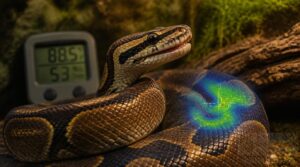
Ever wonder why your snake can’t just "catch a cold" like you do? Simple — snakes don’t get viral rhinoviruses; they battle bacterial respiratory diseases instead. As ectotherms, they can’t spike a fever to fight microbial pathogens, which makes early husbandry-based prevention critical.
| Human Cold | Snake Respiratory Infection |
|---|---|
| Viral | Bacterial |
| Fever | No fever |
| Mild | Serious |
Human Colds Versus Snake Illness
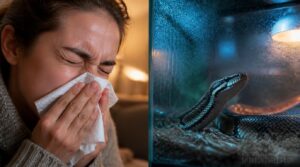
Here’s a myth worth killing: your sniffles can’t jump to your snake. Human viruses target human airway cells — reptile tissue just isn’t compatible.
| Factor | Human Cold | Snake Illness |
|---|---|---|
| Cause | Virus | Bacteria/fungus |
| Progression | Days, mild | Fast, severe |
| Transmission | Person-to-person | Husbandry-driven |
Your snake’s "cold" comes from tank conditions, not your congestion. Owners should monitor for various parasitic infestations that can compromise their health.
Bacterial Infection Differences
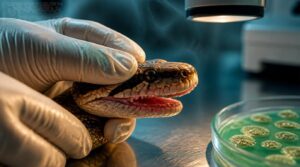
That bacteria driving snake illness isn’t one villain — it’s usually gram-negative pathogens like Pseudomonas or Aeromonas, multiplying fast and releasing toxins that damage tissue.
| Bacterial Trait | Why It Matters |
|---|---|
| Toxin production | Worsens tissue damage |
| Rapid growth | Speeds up illness |
| Antibiotic resistance | Complicates treatment |
| Immune trigger | Fuels inflammation |
Your snake’s immune system fights back hard, sometimes making symptoms worse before antibiotics help.
When Symptoms Look Similar

Here’s the tricky part — a stressed snake can look sick even when it’s not. Stress-induced breathing changes, temperature-driven lethargy, odd posturing… they all mimic real illness.
Brushing up on common snake behavior problems can sharpen your eye for the subtle signs that separate a stressed reptile from a genuinely unwell one.
| Symptom | Environmental Cause | True Infection |
|---|---|---|
| Heavy breathing | Cold tank | Yes |
| Hiding | New home | Maybe |
| Wheezing | Rarely | Always |
| Lethargy | Often | Often |
When in doubt, don’t guess — call your vet.
Signs Your Snake is Sick

Snakes can’t tell you when something’s wrong, so you’ve got to read the clues yourself. The good news? Their bodies usually give you a heads-up before things get serious. Here’s what to watch for.
If your snake keeps trying to slip out of its tank, it’s worth checking out these common reasons snakes attempt to escape and how to prevent it.
Wheezing or Clicking Sounds
Put your ear near your snake’s face — hear a whistle, click, or rattle? That’s your first red flag.
Wheezing sounds high-pitched and continuous, caused by air squeezing through narrow airways. Clicking or crackling is different — short, snappy, popping sounds from small airways reopening as your snake inhales. Gurgling means mucus is sloshing around in there. Any of these noises signal airway vibration from inflammation or fluid, and none of them are normal.
Bubbles Around Nostrils
Take a peek at your snake’s nostrils — see tiny bubbles forming as it breathes? That’s breathing-induced bubbling, and it means fluid’s sitting right at the airway opening.
- Clear, watery bubbles: early irritation
- Thick, cloudy bubbles: worse inflammation
- White or yellowish discharge: infection brewing
- Crusty residue: dried mucus buildup
- Sudden onset: often tied to husbandry changes
Discharge color and consistency tell you how far things have progressed — don’t ignore it.
Open-mouth Breathing
Ever notice your snake breathing with its mouth hanging open, like it just can’t get enough air? That’s compensatory mouth gaping — a real red flag, not a quirk.
It signals airflow resistance and respiratory turbulence in the airway. Pair it with heavy breathing or breathing rate irregularity, and you’ve got a clear clinical severity indicator pointing straight to respiratory distress from infection — time to call your vet.
Lethargy and Hiding
Suddenly your snake’s gone from bold explorer to permanent hide-dweller? That’s your body language alarm bell.
Behavioral withdrawal often beats visible symptoms — breathing takes more effort, so energy gets conserved. Watch for reduced tongue-flicking, skipped basking, less exploring.
A shift that happens over hours, not weeks, matters most. Persistent hiding plus lethargy means it’s time for real veterinary care, not a wait-and-see approach.
Refusing Meals
Your snake turns its nose up at dinner? That’s a red flag, not pickiness.
Watch for loss of appetite paired with weird prey strike patterns — hesitating, striking slow, or grabbing prey then dropping it. Swallowing hurts when breathing’s already a struggle, so incomplete feeding behaviors follow.
Document refusal patterns: date, prey size, what happened. Two skipped meals with labored breathing? Time for veterinary care, not patience.
Causes of Breathing Problems

Respiratory trouble rarely comes out of nowhere — something in the enclosure usually set it up. Most of the time, it’s a habitat issue you can actually fix once you know what to look for. Here are the five usual suspects behind those breathing problems.
Low Humidity Levels
Dry air is sneaky — it doesn’t just crack your skin, it dries out your snake’s whole airway.
If you notice cloudiness or color changes creeping into one eye, it’s worth checking this guide on what causes snake eye discoloration to figure out whether dry air or something else is to blame.
- Retained shed around the mouth and eyes
- Thicker mucus that’s hard to clear
- Clouded eyes during shed cycles
- Worsened irritation in already-inflamed tissue
Check your hygrometer’s placement — near the substrate, not the room air — since low humidity quietly invites respiratory infection.
Poor Temperature Gradients
Humidity’s only half the battle — your snake also needs a real choice between warm and cool, not a lukewarm mess. Weak thermal gradients confuse their whole system.
Check thermostat sensor placement — if it’s reading air instead of the basking surface, you’ll get hotspots or a flat, useless range. Thick substrate blocks heat too, leaving snakes chilled and immune-compromised, right where infections take hold.
Dirty Enclosure Air
Dirty enclosure air is the sneaky one — you can’t always see it, but your snake breathes it in all day long.
Three big culprits:
- Airborne dust from bedding and debris
- Ammonia vapor off old urine
- Mold spores from damp corners
Add cleaning chemical fumes and biofilm buildup, and poor ventilation traps it all. Sanitation protocols matter as much as heat lamps.
Irritating Bedding Choices
Pick your substrate like it matters — because it does. Dusty pine shavings or cedar? Both release fine particulates that settle right where your snake breathes and eats.
| Bad Choice | Why It Hurts |
|---|---|
| Cedar/Pine | Toxic fumes |
| Dusty aspen | Airway irritation |
| Damp substrate | Mold growth |
| Rough bark | Skin abrasion |
Odors, mold, and rough texture all add up fast.
Stress After Rehoming
New digs aren’t always cozy right away. Transport stress, unfamiliar smells, a totally new enclosure layout — it all adds up fast.
Watch for feeding hesitation and extra hiding during those first weeks. That’s normal acclimation, not illness. But stress lowers immune defenses, too, which means minor respiratory infection signs can creep in. Keep handling frequency low, routines predictable, and give your snake time to settle before worrying.
When to Call a Reptile Vet
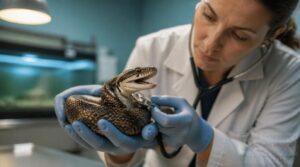
So how do you know when it’s time to stop watching and start dialing the vet? Some signs mean "keep an eye on it," and some mean "drop everything, right now." Here’s what tells you which one you’re dealing with.
Emergency Breathing Symptoms
Gasping with the head lifted up, mouth wide open, ribs working overtime—that’s your snake telling you it can’t wait. This is true respiratory failure territory.
Gasping with the head lifted, mouth wide open, ribs heaving—that’s a snake in respiratory failure and it can’t wait
- Open-mouth breathing
- Rapid rib movements
- Gasping patterns
- Head held unnaturally high
Don’t wait it out. Airway obstruction and labored breathing can turn fatal within hours. Call your reptile vet now, not tomorrow.
Culture and Sensitivity Testing
Once your vet suspects a bacterial pathogen, guessing gets tossed out the window—it’s time for a culture and sensitivity test. A swab from the mouth or trachea goes into transport media, keeping bacteria alive for the lab.
There, microbial growth reveals the exact culprit, and sensitivity testing shows which antibiotics actually work, sorting them as susceptible, intermediate, or resistant.
Antibiotic Treatment Options
Waiting on lab results while your snake struggles to breathe just isn’t an option—so your vet often starts empiric antibiotics right away, guessing at the likely bug based on symptoms and severity.
Injectable drugs usually beat oral ones for serious cases; better absorption, faster action. Once culture and sensitivity results land, treatment gets narrowed to the right drug class, cutting antimicrobial resistance risks and actually curing the infection instead of just masking it.
Supportive Heat and Fluids
Antibiotics only work if your snake’s body has the fuel to fight back — that’s where heat and fluids come in.
Keep the warm side steady at 90-95°F during recovery, no cold snaps allowed. Offer fresh water daily, watch drinking behavior, check stool for proper urates.
Severe cases need vet-administered fluid therapy or nebulization. Skip risky home soaking — let your vet guide that.
Mouth Rot Warning Signs
Here’s the sneaky part: mouth rot often rides along with respiratory trouble, so check both ends while you’re at it.
Look for yellow pus discharge, oral tissue swelling, or facial skin peeling near the jaw. Wiggle-test teeth gently — loose tooth stability is a red flag. Combined with appetite loss indicators, this screams infectious stomatitis, and it needs veterinary care fast, not a wait-and-see approach.
Preventing Future Respiratory Infections

Good news — once your snake’s on the mend, you can keep this from happening again. It really comes down to a handful of habits in how you set up and manage the enclosure. Here’s what to lock in.
Species-specific Humidity Targets
Humidity isn’t one-size-fits-all — a desert ball python parent and a rainforest green tree python parent are playing totally different games.
- Desert species: 20-40%
- Ball pythons: 60-80%
- Green tree pythons: 70-90%
Match your substrate to your target — coconut fiber holds moisture, aspen stays dry. Adjust seasonally, and use a humidity box during shed when whole-tank moisture is tricky.
Reliable Thermostat Use
Get a thermostat rated for your heater’s wattage, with a safety cutoff that kills power if things overheat.
Mount the probe securely — loose wiring means bad readings and wild cycling.
Check probe placement often; verify with a separate thermometer.
Good thermal regulation isn’t optional — it’s the backbone of solid husbandry, and your snake’s lungs depend on it.
Clean, Ventilated Enclosures
Clean, ventilated enclosures matter just as much as heat and humidity. Stale air lets moisture and dust build up fast — bad news for lungs. Aim for airflow that moves in low and out high, not trapped in corners.
Spot-clean waste daily, wipe down surfaces, and let hides dry fully. Filtered vents cut down on dust too — small habit, big payoff.
New Snake Quarantine
Got a new snake? Don’t let it near your collection yet. Set up a separate isolation room with its own airspace — this is your best shot at pathogen containment.
Keep tools separate too:
- Feeding tongs
- Cleaning supplies
- Water bowls
- Hides
- Gloves
Run 60-90 days minimum, plus vet-checked baseline testing before introductions.
Stress-free Handling Routines
Quarantine keeps new arrivals safe, but daily handling matters too — stress wears down immune defenses just like bad husbandry does.
Handle at the same time each day, with full body support under the mid-body and tail. Watch for stress signals — thrashing, repeated strikes, tense muscles — and stop immediately. Keep sessions short, quiet, and low-light. A calm snake breathes easier, literally and figuratively.
Frequently Asked Questions (FAQs)
How can you tell if a snake has a respiratory infection?
Like a squeaky door hinge that needs oil, a sick snake sounds off. Watch for wheezing or clicking sounds, nasal froth, open-mouth breathing, an odd raised posture, lethargy, and appetite loss.
How to tell the difference between a cold and respiratory infection?
Watch how symptoms move: a mild sniffle that fades in a day or two is nothing. But wheezing, clicking, open-mouth breathing, thick nasal bubbles, or a snake going off food and hiding? That’s a real infection, not a passing cold.
Can a snake recover from a respiratory infection?
Yes — with early symptom detection and prompt antibiotics, most snakes bounce back. Recovery depends on whether it’s caught before spreading to the lungs. Lower respiratory involvement makes healing harder, so don’t wait around if you spot symptoms.
Can a respiratory infection kill a snake?
Sadly, yes — untreated respiratory distress can lead to fatal breathing failure. As infection worsens, labored breathing progresses toward oxygen deprivation, and eventually the lungs just can’t keep up. That’s why catching clinical symptoms early makes all the difference between recovery and tragedy.
How long does snake respiratory treatment usually take?
Mild cases often clear in 4 to 6 weeks of antibiotics, but moderate ones stretch 6 to 12 weeks. Severe pneumonia? Could take 3 to 6 months, with nebulization and monitoring continuing until breathing sounds and appetite fully normalize.
Is snake respiratory infection contagious to other reptiles?
One sick snake can torch an entire collection faster than a wildfire through dry grass. Respiratory droplets and shared air carry pathogens between enclosures, and subclinical carriers hide illness while spreading it—so strict quarantine protocols and separate ventilation aren’t optional, they’re survival.
Can respiratory infections in snakes resolve on their own?
Rarely without help — that’s the honest answer. Symptoms might fade for a bit, but the root infection often persists, quietly progressing. Fix the husbandry, sure, but wheezing or labored breathing almost always needs a vet’s diagnostic eye, not just time.
What vitamins support a snakes immune system?
Think of your snake’s diet like a toolbox — each vitamin’s a different tool. Vitamin A guards barriers, Vitamin C and E fight oxidative stress, D3 regulates immunity, and B vitamins fuel the whole operation. Skip one, and repairs stall.
Conclusion
Picture a snake wheezing so loud it could rattle the whole terrarium glass — that’s your cue, not some sniffle to shrug off. The snake respiratory infection vs cold mix-up costs precious time your snake doesn’t have. Snakes never actually catch colds; it’s bacteria or fungus creeping in once the tank slips out of range.
Fix the humidity, watch your temps, and call your vet fast. Quick action keeps your snake breathing easy, not gasping by tomorrow.