This site is supported by our readers. We may earn a commission, at no cost to you, if you purchase through links.

A corn snake can flatten itself to fit through a gap smaller than a quarter, and a ball python will test every inch of its enclosure’s perimeter if something feels off inside. Most escapes aren’t accidents—they’re your snake voting with its body that something in its environment needs fixing.
Chronic stress, wrong temperatures, poor humidity, or plain hunger all push a snake toward the nearest exit. These triggers follow predictable patterns, and once you understand what drives escape behavior, stopping it becomes a matter of steady, practical habits.
Table Of Contents
- Key Takeaways
- Why Snakes Try to Escape
- Spot Escape Warning Signs
- Build an Escape-Proof Enclosure
- Fix Husbandry Escape Triggers
- Prevent Future Snake Escapes
- Frequently Asked Questions (FAQs)
- What should I do if my snake escapes during travel?
- Can certain snake species escape more easily than others?
- How do I snake-proof my entire home safely?
- Are there insurance options for escaped pet snakes?
- What legal responsibilities exist if my snake escapes?
- How often should enclosure silicone sealant be replaced?
- Should juvenile snakes use different locks than adults?
- Conclusion
Key Takeaways
- Most snake escapes aren’t random—they’re a direct response to fixable problems like wrong temperatures, low humidity, hunger, or chronic stress, so treat every escape attempt as a clue.
- A secure enclosure means more than a good lid—sealed seams, reptile-rated locks, and the right materials all work together, and skipping any one of them leaves the door open.
- Your snake will always show you when something’s wrong before it actually escapes, so watch for glass surfing, lid pushing, nose rubbing, and food refusal as early warning signs.
- Prevention is a daily habit, not a one-time fix—routine lock checks, habitat inspections, stable feeding schedules, and yearly vet visits keep your snake comfortable and where it belongs.
Why Snakes Try to Escape
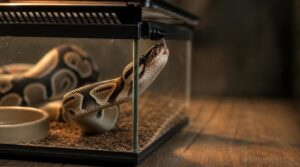
Snakes don’t escape because they’re troublemakers — they escape because something in their environment isn’t working for them. Most of the time, it comes down to a handful of fixable triggers.
Getting ahead of those triggers starts at the design stage — building a snake escape-proof enclosure means treating every latch, joint, and material choice as a potential weak point before your snake does.
Here’s what’s likely driving your snake to test every seam and corner of its enclosure.
Stress and Insecurity
Your snake isn’t trying to be dramatic — chronic stress genuinely drives escape attempts. When routine disruption, handling frequency, noise disturbance, odor aversion, or inadequate hiding pile up, your snake treats the enclosure as a threat rather than a home.
Three common environmental triggers to eliminate:
- Loud, unpredictable noise near the tank
- Too-frequent handling without recovery time
- Missing hides that force constant exposure
Wrong Temperatures
Temperature problems are sneakier than they look. Even when your thermometer shows the right numbers, sensor placement errors or thermometer calibration drift can mean your snake is actually overheating or chilling in the wrong direction. Poor thermoregulation pushes it to escape-test its enclosure.
| Temperature Issue | What It Causes |
|---|---|
| Heat source malfunction | Dangerous heat stress |
| Airflow temperature spikes | Unstable gradient readings |
| Glass distortion bias | False cool-side readings |
| Sensor placement errors | Inaccurate zone monitoring |
| Thermometer calibration drift | Chronic cold stress buildup |
Low or High Humidity
Humidity matters just as much as heat. Drop below 30 percent and you’re looking at shedding issues, static electricity buildup, and seriously stressed snakes. Push above 60 percent and mold prevention becomes your new full-time job. Both extremes trigger stress and escape attempts.
Smart humidity control means steady humidity levels, no wild fluctuations, proper microclimate management inside hides, and checking seal degradation to maintain retention. Research shows that low indoor humidity risks include higher virus transmission.
Hunger or Feeding Confusion
Hunger-driven probing is a surprisingly common escape trigger. Irregular feeding times create feeding schedule confusion — your snake detects feeding odor cues and starts testing weak points when a meal doesn’t arrive on cue.
Prey size mismatch compounds this, causing snakes to refuse food and lose weight.
A consistent feeding schedule keeps that restless searching behavior in check.
Natural Roaming Instincts
Exploring is simply what snakes do—it’s wired in. Through sensory navigation and cue-driven roaming, they constantly sample their surroundings, reading thermal and scent signals. Territory surveillance, microhabitat sampling, and thermal exploration are daily drives, not signs of distress.
Key factors shaping their behavior include:
- Enclosure size directly shapes escape behavior
- Habitat design affects how often they roam
- Environmental enrichment reduces restless searching
- Free roam sessions satisfy natural curiosity safely
- Snakes follow scent and heat cues instinctively
These instincts highlight the importance of aligning captivity conditions with their innate need to investigate and respond to environmental stimuli.
Sealing enclosure surfaces with reptile-safe wood housing materials and sealants helps create a stimulating yet safe environment that supports these natural exploratory behaviors.
Spot Escape Warning Signs
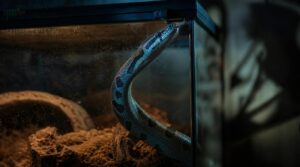
Your snake won’t send you a text message when something’s wrong, but it will absolutely show you. Before an escape happens, most snakes give clear, repeated warning signs that something in their world needs fixing.
Changes in shedding, breathing, or activity can signal incorrect snake enclosure humidity before they become serious problems.
Snakes cannot tell you something is wrong, but they will always show you
Here’s what to watch for.
Glass Surfing
Glass surfing is your snake’s way of saying something’s off. When your snake repeatedly slides along the enclosure walls, it’s usually a sign of chasing a temperature gradient or reacting to reflective surfaces triggering its own reflection.
Check your glass cleaning routine first — smudges can intensify reflections. Ensure the enclosure is free of streaks or residues that might distort light.
A smooth substrate, proper lighting adjustments, and consistent conditioning techniques are key escape prevention methods that reduce this behavior quickly. Addressing environmental triggers and maintaining a stress-free habitat will help curb glass surfing effectively.
Lid Pushing
Lid pushing is one of the clearest distress signals your snake sends. When it repeatedly presses against the enclosure lid, something in its environment isn’t right. Age and species strength both matter here — younger snakes explore constantly, while larger species can exert surprising force on snap-on lids.
Watch for these warning signs:
- Sustained head contact with the lid edge
- Repeated lifting attempts targeting the same corner
- Body coiling near the top for extra leverage
- Restless circling right after you walk away
Maintenance slack — skipping daily checks on lid locking mechanisms — turns a minor gap into a full escape. Neglecting security routines allows small vulnerabilities to escalate rapidly.
Strong conditioning techniques and consistent enclosure security routines prevent escapes. Lid sensor monitoring adds an extra layer of escape prevention, catching issues before they become critical.
Repeated Climbing
Repeated climbing tells you something is wrong. When your snake keeps scaling the same wall, its muscles develop grip fatigue and tendon stiffness—that’s stress behavior, not enrichment.
Poor enclosure security, missing visual barriers, or weak lid locking mechanisms drive this behavior.
Better escape prevention techniques, like adding cover and checking locks daily, restore movement economy and calm.
Nose Rubbing
Nose rubbing is your snake’s version of a stress signal — a self-soothing signal you shouldn’t ignore. When your snake repeatedly drags its snout along the glass, that’s a social discomfort cue and cognitive load indicator rolled into one behavior. It’s not allergy irritation cues or a conversation pause gesture — it’s stress-induced escape behavior.
Check habitat security and add visual barriers fast.
Food Refusal
A snake that won’t eat is waving a red flag. Food refusal often signals something deeper than picky eating — it’s a reliable sign of snake stress. Watch for these triggers:
- Prey size mismatch or incorrect prey type
- Feeding schedule irregularities
- Environmental feeding stress or handling stress
- Illness anorexia causing rapid weight loss
Fix the trigger, and appetite usually returns.
Build an Escape-Proof Enclosure
Your enclosure is your first line of defense, and getting it right makes all the difference. A few targeted upgrades can turn a flimsy setup into something your snake genuinely can’t beat.
Here’s what to focus on.
Secure Tank Materials
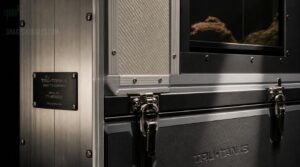
Your tank is the first line of defense. Choose materials that won’t warp, crack, or let your snake exploit weak points over time.
| Material | Best For | Key Strength |
|---|---|---|
| Stainless Steel 304 | Heavy-duty setups | Corrosion resistance |
| Fiber-Reinforced Polymer | Humid environments | Lightweight, strong walls |
| High-Density Polyethylene | Chemical exposure | Impact resistance |
Aluminum alloy frames paired with chemical-resistant coatings add structural reliability.
Always seal seams with reptile-safe silicone sealant and add tank clips for extra hold.
Tight Snap-on Lids
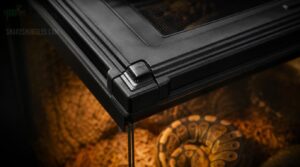
A quality snap-on lid uses corner snap tabs and a compressed gasket to create a watertight seal — no gaps, no wiggle room. Check snap tab alignment every time you close up.
Gaskets flatten with age, so watch for seal longevity issues. Material compatibility and temperature tolerance also matter — warped plastic breaks escape-proof seals.
Reptile-rated Locks
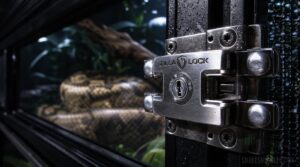
Even a great snap-on lid needs backup. That’s where reptile-rated locks earn their place.
Look for these security features when choosing yours:
- Spring-loaded cam mechanisms lock automatically when the door closes
- Dual-point engagement stops prying from either side
- Corrosion-resistant materials like stainless steel handle high humidity
- Tamper-resistant screws stay put through routine cleaning
- Gasket-sealed integration pairs perfectly with your wire lock or enclosure latch mechanisms
Sealed Gaps and Seams
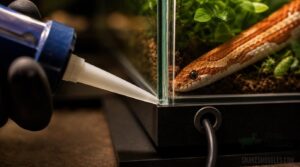
Locks handle the big openings, but tiny gaps are where escapes actually happen. A solid grommet blocks small apertures completely, and door wraps reduce door-to-door clearance to nearly nothing.
Before sealing, clean surfaces grip sealant far better—surface preparation techniques matter.
Sealant material comparison comes down to flexibility: silicone stays elastic, polyurethane expands. Follow curing time guidelines strictly, and choose UV-resistant sealants near lighting.
Build a weekly gap inspection routine and you’ll stay ahead of trouble.
Safe Door Tracks
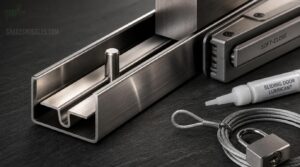
Sliding glass doors are only as secure as the track system behind them. Stainless steel tracks resist corrosion and ensure smooth operation for years, while U-shaped channels prevent doors from derailing. Pair these with anti-lift devices to stop intruders from lifting the door upward.
A soft-close mechanism eliminates accidental gaps, and door wraps combined with a wire lock significantly tighten security. These features collectively reinforce protection against forced entry.
Adhere to a simple lubrication schedule every six months to maintain reliability and prevent escape risks. This routine ensures long-term functionality of all components.
Fix Husbandry Escape Triggers
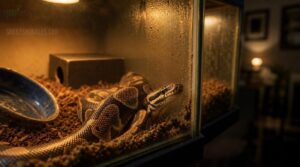
Even a perfectly sealed tank can fail your snake if the conditions inside are off. Most escape attempts aren’t about the locks — they’re about stress, discomfort, and a snake looking for somewhere better.
Here’s what to fix first.
Proper Temperature Gradients
Think of your enclosure as a thermal map — one side warm, one side cool, and your snake shuttling between them for temperature regulation.
- Keep basking temp between 88–92°F using radiant heat sources
- Cool side stays 70–75°F for comfortable retreat
- Use gradient monitoring tools like dual-probe digital thermometers
- Apply insulation strategies around enclosure edges to reduce heat loss
- Do seasonal gradient adjustment to mimic natural shifts
Gradient calibration and smart heat source placement keep escape attempts low.
Stable Humidity Levels
Humidity fluctuations stress snakes more than most keepers realize — and stressed snakes look for exits. Maintain humidity levels between 50–60% for most species, increasing to 65–70% during shedding to support healthy ecdysis. Substrate moisture management is critical: cypress mulch retains humidity naturally without causing waterlogging, reducing stress and respiratory risks.
| Parameter | Target Range |
|---|---|
| Standard RH | 50–60% |
| Shedding Window | 65–70% |
Automated misting systems and humidistat calibration eliminate guesswork in humidity regulation, while proper enclosure ventilation prevents mold growth. These measures ensure a stable, healthy environment that minimizes escape attempts and promotes snake welfare.
Hides in Every Zone
Your snake needs a hide on both the warm and cool side — no exceptions. Terrain-matched hides and temperature-linked refuges provide the visual security snakes instinctively seek. Without proper hide availability, they will pace, glass surf, and push against lids, exhibiting stress behaviors.
Moisture-adaptive burrows and camouflage-integrated shelters further enhance enclosure design, creating a secure, naturalistic environment. These elements address both thermal regulation and psychological comfort, reducing anxiety-driven activity.
A simple zone rotation schedule maintains enclosure novelty, minimizing boredom and escape attempts. This proactive approach ensures long-term well-being while preserving the setup’s functional integrity.
Visual Barriers
Your snake sees the world through glass — and that constant outside activity makes it anxious. Opaque side panels block external motion, while acrylic glare reduction and diffuser lighting placement create calm, shadow-free interiors. Visual isolation matters more than most keepers realize.
Three barriers that actually work:
- High-contrast borders around openings guide movement
- Frosted panels improve visual security without blocking your view
- Edge seal inspections confirm zero gaps weekly
Enrichment and Climbing Options
A bored snake is an escape artist. Add vertical ladders, textured climbing ramps, and natural branch networks to break up the space and give your snake something to do.
Hanging rope hammocks and bamboo poles create hiding opportunities at different heights.
Scented enrichment trails encourage wall climbing and exploration. When enrichment issues disappear, so do most escape attempts.
Prevent Future Snake Escapes
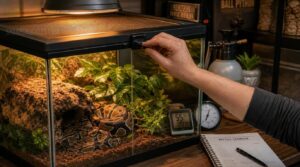
Once you’ve fixed the environment, the next job is keeping it fixed. Prevention isn’t a one-time task — it’s a handful of simple habits that become second nature fast.
Here’s what to build into your routine.
Daily Lock Checks
Consistent daily routine is your first line of defense against escapes. Daily Lock Audits take only minutes but catch problems before they matter. Each morning, run through these three checks:
- Pull-test every latch and wire lock firmly
- Log Lock Tolerance Monitoring notes and flag wear beyond 0.5 mm
- Timestamp your Documentation Workflow entry with photos
Your Failure Response Protocol is simple: lock fails, don’t open it — call your supervisor immediately.
Routine Habitat Inspections
Beyond lock checks, a quick daily walk-around catches what latches can’t. Run your eyes along every seam for cracked glass, door bowing, and substrate edge compaction near corners.
Check your Vent Cover Fit, Probe Mount Security, and Cable Entry Sealing for wear and tear. Regular maintenance and the habit to seal any gaps early keeps small problems from becoming big ones.
A Latch Tightness Check rounds it out.
Safe Handling Procedures
Handling your pet snake safely is the next layer of escape prevention. Gear up with Protective Gear—gloves, closed-toe shoes, long sleeves—before every session.
Use proper Hand Support under the body, not just the tail. Keep Transfer Container nearby and work in a Clutter-Free Space with doors shut.
Watch behavioral cues and always have an Emergency Rescue plan ready.
Supervised Free-roam Rooms
Free roam sessions are a great enrichment tool — but only when you’ve got the right Room Selection locked down. Pick a small, clutter-free space like a bathroom, and prep it carefully before letting your snake explore.
- Use Escape-proof Flooring with no gaps or drains
- Apply Monitoring Technology like cameras for real-time tracking
- Follow a 1:1 handler ratio during free roam sessions
- Practice Staff Training so everyone knows Emergency Containment steps
- Document each session to strengthen long-term snake enclosure security
Safe free-roaming and preventing escape attempts go hand in hand.
Veterinary Health Checks
A yearly vet visit catches problems before they trigger escape behavior. During a veterinary assessment, your vet performs a cardiac evaluation, ocular screening, dental inspection, skin assessment, and abdominal palpation — checking for anything that quietly raises stress hormones.
Respiratory infections and hidden pain often trigger restlessness. Routine health monitoring keeps your snake calm, comfortable, and far less motivated to push that lid.
Frequently Asked Questions (FAQs)
What should I do if my snake escapes during travel?
Keep calm. Close all windows and doors first to secure your search zone.
Then use a controlled capture method — move slowly, locate the snake visually, and transfer it into a transport container, check-ready tub.
Can certain snake species escape more easily than others?
Corn snakes are notorious escape artists, using climbing adaptations and slim bodies to slip through tiny gaps. Ball pythons rely on body size and raw strength.
Aquatic species exploit water for escape.
Locomotion modes, terrain interaction, and species-specific requirements all influence escape strategies.
How do I snake-proof my entire home safely?
Snake-proofing your home starts at the foundation. Seal foundation cracks, add door sweeps, and use vent screening on crawl spaces.
Blocking utility gaps, installing perimeter fencing, and controlling yard vegetation complete your escape prevention plan.
Are there insurance options for escaped pet snakes?
Some insurers offer exotic pet riders that cover snakes. Liability coverage, premium determinants like species and age, and claim documentation requirements vary by provider.
Therefore, review policy exclusions carefully before committing.
What legal responsibilities exist if my snake escapes?
If your snake escapes, you carry a public safety duty. Report it immediately, cooperate with authorities, and expect liability for search costs.
Regulatory compliance and owner cooperation aren’t optional — they’re your legal floor.
How often should enclosure silicone sealant be replaced?
Inspect your reptile enclosure’s silicone sealant every 6–12 months. Humidity and sunlight degradation speed up wear and tear.
Replace it the moment you spot cracking, peeling, or separation — condition checks matter more than age.
Should juvenile snakes use different locks than adults?
Juvenile and adult snakes require different locks. Age‑Based Lock Sizing is critical because smaller snakes can slip through gaps that adults cannot.
Lighter polymer locks are suitable for juveniles, whereas adults necessitate hardware with a high Force Resistance Rating.
Conclusion
Steady snakes signal a setup that’s working. Snake escape behavior prevention isn’t a one-time fix—it’s a rhythm of daily checks, dialed-in temperatures, and a habitat your snake actually wants to stay inside. When every hide is placed, every lock clicks shut, and every meal lands on schedule, escapes stop being a concern.
Your snake settles, your stress drops, and the enclosure becomes what it was always meant to be: a place they choose.