This site is supported by our readers. We may earn a commission, at no cost to you, if you purchase through links.
Every exam room visit tells the same story: a wheezing owner, a healthy snake, and a substrate that’s been quietly seeding the air with dust and mold spores for weeks. Organic beddings like cypress mulch and coconut fiber harbor mites and fungal spores that trigger asthma and rhinitis in sensitized humans, even when the reptile shows zero signs of distress. That mismatch, a thriving animal and a struggling owner, is what sends people searching for reptile substrates for allergy sufferers in the first place.
The good news? Clinical evidence points to specific, low-allergen options that protect both your lungs and your pet’s skin integrity, and choosing the right one comes down to understanding particle size, moisture retention, and species-specific husbandry needs.
Table Of Contents
- Key Takeaways
- Best Reptile Substrates for Allergy Sufferers
- Natural Versus Synthetic Substrate Allergens
- Choose Substrates by Reptile Species
- Control Mold, Dust Mites, and Humidity
- Maintain and Change Substrates Safely
- Frequently Asked Questions (FAQs)
- What are some good substrates for reptiles?
- Can you get an allergic reaction to dubia roaches?
- What’s the safest substrate for bearded dragons?
- Can I be allergic to a gecko?
- Can feeder insects themselves trigger allergy symptoms?
- Are certain reptile species riskier for allergy sufferers?
- Can allergy symptoms develop after years of reptile keeping?
- Should allergy sufferers avoid keeping reptiles entirely?
- Conclusion
Key Takeaways
- Nonporous surfaces like ceramic tile, slate, paper towels, and washable reptile carpet keep allergens low because they don’t hold moisture or trap dust the way organic beddings do.
- Organic substrates such as coconut fiber and cypress mulch can harbor mold spores and dust mites that trigger asthma and rhinitis in owners, even when the reptile itself looks perfectly healthy.
- The right substrate depends on your reptile’s needs too, so desert species like bearded dragons do best with dry, nonporous options while tropical species like crested geckos need humidity paired with real ventilation.
- Good habits, like spot-cleaning daily, freezing or rinsing organic bedding before use, wearing an N95 mask during cleanings, and storing unused substrate airtight, matter just as much as the material you choose.
Best Reptile Substrates for Allergy Sufferers
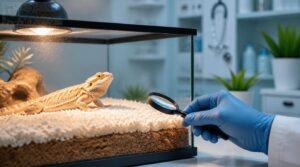
If you’re managing allergies while keeping a reptile, your substrate choice matters as much as your medication does. Some materials trap dust, mold, and mites; others simply don’t give allergens a place to hide. Here are five substrates that veterinary experience and clinical reasoning both support.
For a deeper breakdown of low-dust, low-mold options, this guide to choosing the safest snake tank substrates walks through what actually keeps allergens out of your enclosure.
Disposable Paper Towels
When allergies complicate reptile keeping, disposable paper towels offer the simplest fix: single-use hygiene means no mold, no mites, no allergen buildup.
- Decent absorbency for waste
- Wet strength holds until soiled
- Recycled content labeling for eco-conscious buyers
- Cheap, disposable, replaceable daily
Pair with proper enclosure ventilation and a HEPA air purifier if allergy blood testing confirms sensitivity.
Easy-Clean Ceramic Tile
For desert species like bearded dragons, easy-clean ceramic tile beats paper towels on durability. The glazed surface resists scratches, spills, and staining, wiping clean with mild detergent in seconds.
Nonporous glaze blocks moisture absorption, discouraging mold. Just watch grout lines: reseal every 1-2 years, since unsealed grout darkens and traps allergens. Proper substrate prep (flat, stable subfloor) prevents cracking.
Nonporous Slate Stone
Ceramic tile isn’t your only nonporous option; quarried slate offers similar allergen resistance with a naturalistic look bearded dragons and other desert species seem to favor.
With water absorption under 0.5%, slate resists mold colonization even in humid setups. Its density (2.7–2.9 g/cm³) gives excellent durability, and damp mopping with non-abrasive cleaners keeps allergens low without acidic etching.
Washable Reptile Carpet
Some owners want texture underfoot without sacrificing hygiene, which is where washable reptile carpet earns its place. Nylon or polyester fibers resist staining, tolerate machine washing, and offer decent odor control with a baking soda pre-treatment. Non-slip backing prevents shifting, and regular laundering helps allergen reduction, making it a practical reptile substrate for sensitive skin and overall substrate safety.
For best results, follow a proper reptile carpet cleaning routine that includes weekly washing and disinfecting to keep allergens at bay.
Low-Dust Aspen Chips
For snake keepers craving a natural look, low-dust aspen chips deliver without the respiratory gamble. Processed to a fine, non-powdery grade, quality aspen shavings emit under 2 mg of dust per square meter hourly.
Store bedding airtight, avoid rapid pouring, and you’ve got dustfree, breathable reptile substrates for sensitive skin, silica-tested and safe.
Natural Versus Synthetic Substrate Allergens
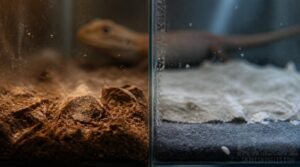
Not all bedding behaves the same once it’s tucked inside a warm, humid enclosure. Organic materials and synthetic ones carry distinct risks—some kick up dust, others harbor mold or mites—and knowing which is which changes how you protect your lungs and skin.
Here’s how natural and synthetic substrates stack up across the five factors that matter most.
Dust and Airborne Particles
Ever notice the haze in a beam of sunlight after cage cleaning? That’s respirable particulate matter, some under 2.5 microns, penetrating deep lung tissue. Dust-free substrates cut this risk:
Switching to coconut fiber or cypress mulch not only tames airborne dust but also pairs well with the other essential items for a healthy snake habitat that keep humidity and cleanliness in balance.
That haze in a sunbeam after cage cleaning is respirable particulate matter penetrating deep into lung tissue
- Large-chip aspen
- Ceramic tile
- Slate
- Paper towel
Handle bedding gently, run HEPA filtration, make sure enclosure ventilation, and don a snug N95 during changes. Avoid dry-sweeping; it recirculates particles rather than removing them.
Mold and Mite Risks
Beneath humid terrarium glass, mold spores don’t wait for an invitation; they colonize damp coconut fiber, moss, and wood within days. Dust mites follow the same script, thriving on organic bedding and shedding Der p 1 allergens into the air you breathe.
Non-porous substrates starve both threats. No moisture retention, no mold growth, no mite colonization, just an inert surface that’s genuinely allergen-resistant.
Moisture Retention Differences
Moisture holding capacity varies wildly by material. Ceramic tile retains 3 to 5 times more moisture than cardboard, while paper towels wick loosely and dry fast. Slate resists absorption entirely.
- Damp coconut fiber
- Tile beading condensation
- Quick-drying paper
- Dense slate surfaces
- Absorbent aspen chips
Substrate depth impacts drying time too; shallower layers release humidity faster, aiding humidity control.
Cleaning and Replacement Needs
How often you clean matters as much as what you clean with.
Spot-clean daily for waste and uneaten prey; swap paper towels or aspen every 1 to 3 days, tile every 6 to 12 months. Use reptile-safe, phenol-free agents, rinsed thoroughly, and ventilate the room during deep cleaning. Seal soiled bedding before disposal.
Reptile Skin Safety
Your reptile’s stratum corneum is its first line of defense, and substrate choice shapes it. Damp, dirty bedding softens this barrier, inviting dermatitis and bacterial invasion.
Stable humidity prevents brittle sheds that fragment onto surfaces. Gentle misting aids clean molts.
Keep substrate moisture control consistent, remove shed skin promptly, and inspect for irritation. Skin integrity reflects enclosure hygiene as much as diet.
Choose Substrates by Reptile Species
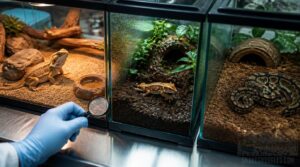
No single substrate works for every reptile, since each species carries its own humidity needs, skin sensitivity, and allergen risk profile.
What suits a bone-dry bearded dragon enclosure could spell trouble for a moisture-loving crested gecko, and vice versa.
Here’s how substrate choice shifts based on the species you’re keeping.
Corn Snake Substrates
Corn snakes are burrowers by instinct, so your substrate choice needs teeth behind it. Aspen shavings offer low-dust odor control ideal for allergy-prone households. For sensitized owners, paper towel substrate wins on hygiene, disposability, and near-zero impaction risk.
Prefer solid ground? Ceramic tile safety comes from its nonporous, disinfectable surface. Provide 3-4 inches depth wherever loose bedding’s used, supporting natural burrowing behavior your snake craves.
Ball Python Substrates
Where corn snakes tolerate dry bedding, ball pythons demand humidity control above all else. Coconut fiber holds moisture better than aspen, supporting the 55-65% range needed for clean sheds.
Allergy-sensitive owners can still succeed:
- Paper towel substrate over humid hides
- Reptile carpet with daily misting
- Bioactive setups with sealed drainage layers
Keep depth at 3-4 inches for burrowing.
Boa Constrictor Substrates
Where ball pythons need moderate humidity, boas want more room to move: they’re bulkier, and they burrow. A 4-6 inch layer of coconut fiber or cypress mulch allows this at 60-70% humidity without souring.
| Substrate | Burrowing | Allergy Risk |
|---|---|---|
| Coconut fiber | Excellent | Moderate |
| Reptile carpet | None | Low |
| Paper towels | Poor | Low |
Skip cedar, pine, and loose sand entirely.
Desert Reptile Substrates
Bearded dragons and leopard geckos need dry, low-humidity setups where fungal growth simply can’t take hold. Ceramic tile wins here: nonporous, easy to disinfect, and pairs well with under-tank heating for even thermal gradients.
Prefer digging? Reptile carpet won’t support burrowing, but silica-free sand substitutes let dragons tunnel without the dust clouds loose sand kicks up during cleaning.
Tropical Reptile Substrates
Crested geckos and other humidity-loving species need moisture, but that’s precisely what invites mold growth. Bioactive setups with coconut fiber substrate work if you commit to real ventilation.
Reduce risk with:
- Springtail cleanup crews
- Cross-ventilation screens
- Weekly drainage checks
- Leaf litter rotation
- Spot-drying basking zones
Skipping humidity control turns paradise into a petri dish.
Control Mold, Dust Mites, and Humidity
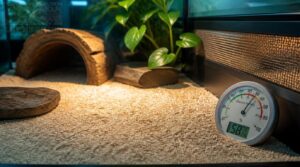
Choosing the right substrate is only half the battle; how you manage humidity and airflow around it determines whether mold and dust mites ever get a foothold. Even the best bedding can turn into an allergen factory if moisture builds up or air stops moving through the enclosure. Here’s what you need to get right, from ventilation to storage.
Maintain Proper Ventilation
Stagnant air breeds trouble: without exchange, allergens hang suspended for hours. Screentop enclosures paired with room-level airflow dilute dander and spores far better than sealed tanks ever could.
Fresh air intake matters as much as exhaust fan use; you’re pulling clean air in while pushing humid, particle-laden air out. This dual action curbs mold growth and keeps ventilation efficiency high, protecting your airway with every breath.
Monitor Enclosure Humidity
You can’t manage what you don’t measure. Place a humidity sensor at breathing zone height, with a second near substrate level, and check readings daily. Set alarm thresholds so deviations trigger alerts before mold takes hold.
Calibrate sensors every six months, track dew point, and use real-time monitoring to catch moisture creep before it becomes a respiratory hazard.
Improve Substrate Drainage
Water pools; mites and mold follow. A permeable base layer keeps moisture moving instead of sitting against skin.
- Slight slope toward a drain point
- Balanced particle size to resist compaction
- Shallow drainage channels beneath substrate
- Rinse or replace underlays regularly
Depth matters too: thick, waterlogged layers trap humidity longer than thin, well-graded ones ever will.
Prepare Organic Substrates Safely
Coconut fiber and moss aren’t allergy-friendly straight from the bag. Rinse thoroughly to cut dust, then freeze for 24 hours to kill dust mites before use. Baking at low temperature further reduces microbial load without leaving chemical residue, keeping things genuinely chemical-free.
This simple prep routine dramatically lowers mold spores and airborne allergens before substrate ever touches the enclosure.
Store Bedding Airtight
Bedding left loose in a closet invites the very allergens you’re trying to avoid.
Seal unused substrate in airtight containers, glass jars with silicone gaskets or stackable bins work well, and toss in a desiccant pack. Keep storage between 50 and 70°F, check seals regularly, and label with dates so nothing sits forgotten past its safe window.
Maintain and Change Substrates Safely
Choosing the right substrate solves only half the problem; how you maintain it determines whether allergens actually stay under control. Even the best material will accumulate dander, mold spores, or mite debris if handling and cleaning habits fall short.
Here’s what a consistent, allergy-conscious maintenance routine should look like.
Spot-Clean Waste Daily
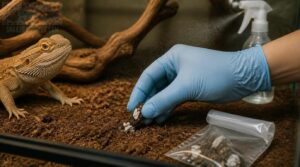
Rarely does allergen control succeed without a daily habit, and spot-cleaning waste is that habit. Remove droppings with a fresh glove each time, seal them in a lined bag, then disinfect the area.
For sensitive skin, replace only the soiled substrate patch, not the whole enclosure. This simple routine curbs mold, dust, and mite buildup between full changes.
Follow Replacement Schedules
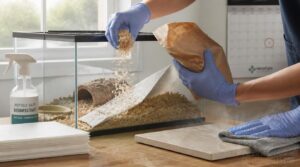
Daily habits handle waste, but a full substrate replacement schedule prevents allergens from ever accumulating. Swap soiled paper towels daily; ceramic tile and slate need weekly deep cleaning with monthly full replacement; aspen chips renew every 1-2 weeks.
- Paper towels: daily swaps
- Tile/slate: weekly cleaning, monthly replacement
- Aspen chips: 1-2 week renewal cycles
A calendar reminder keeps this routine consistent.
Wear Allergy Protection
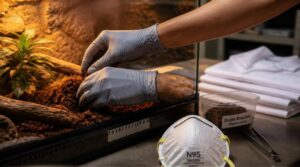
A replacement schedule only helps if you’re protected while doing it. Powder-free nitrile gloves guard against mold and mite allergens; an N95 mask, properly fitted, filters spores far better than a surgical mask ever could.
Handling crickets or dubia roaches? Gloves and tongs limit Bla g 1/Bla g 2 exposure. Launder protective clothing separately, then finish with thorough handwashing.
Disinfect Solid Surfaces
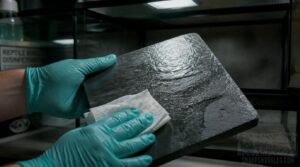
Ceramic tile and slate demand real disinfection, not just a wipe-down. Preclean first, since debris blocks contact.
Apply chlorhexidine or F10 with paper towel, never a spray bottle, avoiding aerosolized particles your airways don’t need.
Keep surfaces wet for the full labeled contact time, then run your ventilation before returning your reptile.
Monitor Skin and Breathing

Track your body the way you’d track a patient chart. Log symptom onset against feeding and cleaning times, checking hands for dermatitis and lungs for wheeze.
- Peak flow readings if breathing tightens
- Rash checks after substrate handling
- Nighttime cough correlated with humidity
- Symptom relief during vacations
- Notes on carpet versus bioactive exposure
Consistent logging reveals patterns clinical visits alone can’t catch.
Frequently Asked Questions (FAQs)
What are some good substrates for reptiles?
For sensitive owners, paper towels, ceramic tile, slate stone, and washable reptile carpet minimize dust and mold.
Aspen chips suit low-allergy setups too, while coconut fiber and bioactive substrates work best when your skin tolerates organic materials well.
Can you get an allergic reaction to dubia roaches?
Ironically, the "harmless" feeder bug can turn on you: dubia roach frass, cast skin, and saliva carry allergens triggering IgE-mediated reactions, from contact dermatitis to sneezing and wheezing, especially with frequent handling or existing sensitization.
What’s the safest substrate for bearded dragons?
For bearded dragon safety, non-loose surfaces win: ceramic tile, slate, paper towels, or reptile carpet. Each avoids substrate impaction risk from sand or loose bedding, offering easy maintenance and true allergy-friendly options for sensitive owners.
Can I be allergic to a gecko?
Absolutely, though it won’t feel like a sneezing fit from a cat. Gecko dander proteins, shed skin, and even feeder insect allergens can trigger contact dermatitis or mild respiratory symptoms in sensitized owners.
Can feeder insects themselves trigger allergy symptoms?
Yes. Dubia roaches carry Bla g 1 and Bla g 2, crickets cause documented occupational allergy in handlers, and insect proteins trigger dermatitis, rhinitis, or asthma through direct contact, cross-reactivity, and airborne exposure during feeding or cleaning.
Are certain reptile species riskier for allergy sufferers?
The gentlest-looking pets often pose the biggest risk. Species allergy risk hinges less on scales, more on habitat: humidity-loving tropical species (like crested geckos) breed mold and dust mites, while dry-adapted bearded dragon and leopard gecko setups trigger far less allergic rhinitis.
Can allergy symptoms develop after years of reptile keeping?
Sensitization often builds slowly through long-term allergen accumulation and chronic respiratory exposure, causing delayed symptom onset even years in.
Hidden pathways, dust, feed insects, or damp bedding, keep triggering rhinitis and asthma long after initial exposure seemed harmless.
Should allergy sufferers avoid keeping reptiles entirely?
Picture a terrarium’s quiet hum masking hidden risks: not necessarily. Reptiles can still trigger allergic rhinitis, asthma, or IgE-mediated reactions via feeder insects and indoor allergens, so unclear symptoms warrant medical evaluation before assuming any setup is safe.
Conclusion
A snake’s enclosure works like a sealed terrarium habitat: what you put in stays in, for better or worse. Selecting reptile substrates for allergy sufferers isn’t about compromise. It’s about precision, matching moisture control, particle size, and species needs to protect two patients at once, you and your reptile.
Choose wisely, clean consistently, and monitor both sets of lungs. That’s how you build a household where scales and sinuses finally thrive together, side by side, breath after easy breath.