This site is supported by our readers. We may earn a commission, at no cost to you, if you purchase through links.

Your snake’s mouth hangs open, and it stays that way. No yawn, no stretch. Just slow, labored breaths that you can hear from across the room.
Brief gaping after a meal is normal. Open-mouth breathing that lingers for minutes is not. A snake breathing with its mouth open is telling you something is wrong in its lungs, its mouth, or its enclosure, and snakes hide illness until it’s serious. Waiting costs you time your pet may not have.
Watch for wheezing, bubbles, or a limp body. Here’s what causes this, what a vet will do, and how you can help.
Table Of Contents
- Key Takeaways
- Why is My Snake Breathing With Mouth Open?
- Normal Snake Gaping Versus Open-Mouth Breathing
- When Snake Breathing Problems Need Emergency Care
- How Vets Diagnose and Treat Breathing Problems
- Supporting Recovery and Preventing Snake Breathing Problems
- Frequently Asked Questions (FAQs)
- What does it mean when a snake has its mouth open?
- What does a snake respiratory infection sound like?
- How to tell if a snake has a respiratory infection?
- How to tell if a snake is in distress?
- Why is my snake breathing with its mouth open?
- How to tell if your snake has respiratory issues?
- What does it mean if a snake has its mouth open?
- Can snakes breathe underwater with mouth closed?
- Do all snake species breathe the same way?
- How long can snakes hold their breath naturally?
- Conclusion
Key Takeaways
- If your snake keeps its mouth open for more than a few seconds with no meal or wake-up to explain it, you’re looking at respiratory distress, and you need to call an exotic vet the same day.
- Infections often start as mouth rot or come from enclosure problems like low temperatures, dry air, or stale ventilation, so check your gradient, humidity, and airflow with real gauges while you wait.
- Wheezing, bubbles, heavy mucus, a limp body, or blue or gray tissue mean you should stop watching and head to the clinic, because snakes can’t cough mucus out and hide illness until it’s serious.
- Handle your snake as little as possible, finish every dose of the vet’s treatment plan and follow-up visits, and quarantine new snakes for 60 to 90 days to keep the problem from coming back.
Why is My Snake Breathing With Mouth Open?
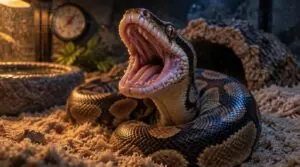
If your snake is breathing with its mouth open, treat it as urgent. It isn’t normal, and it means something is wrong with the airway or the lungs. Two main problems cause it, and you need to know both.
Along with the open mouth, watch for bubbling or wheezing sounds and a raised head, and this guide to respiratory distress signs in snakes can help you tell how serious things are.
If your snake is breathing with its mouth open, treat it as urgent, because something is wrong with its airway or lungs
Respiratory Infections and Mouth Rot
Many snakes showing openmouth breathing have a respiratory infection, and mouth rot is often the source. Bacteria from infected gums can slip past the glottis into the lungs. That’s how a mouth problem becomes pneumonia. Respiratory infections are almost always tied to temperature-related husbandry problems, since a few degrees below the preferred range suppresses a reptile’s immune function.
Check your snake’s mouth now. Look for pus, swelling, or bubbling saliva. Don’t wait. Don’t guess. Get veterinary care fast, then fix your husbandry management.
Airway Blockages and Enclosure Problems
Infection isn’t the only culprit. Sometimes the problem is your enclosure, and airway obstruction can follow quickly. Dry air thickens mucus into plugs, which triggers openmouth breathing.
Check these now:
- Humidity: match your species’ range, with a hygrometer.
- Temperature gradient: warm side, cool side, measured with probes.
- Ventilation: stale, ammonia-heavy air irritates the lungs.
Fix any problem today. Don’t wait.
Normal Snake Gaping Versus Open-Mouth Breathing
Not every open mouth is an emergency, so learn the difference.
If your snake keeps gaping with no feeding or shedding to explain it, this guide to what snake yawning really means can help you tell normal stretching from a real warning sign.
Normal gaping is brief. It lasts a few seconds, usually after your snake eats or wakes up. It stretches the jaw and realigns the bones after swallowing big prey. Your snake may also gape to taste the air with its Jacobson’s organ.
Open-mouth breathing is different. It lingers, and it comes with other signs.
| Normal gaping | Open-mouth breathing |
|---|---|
| Lasts seconds | Continues for minutes |
| After eating or waking | Happens at random |
| Breathing looks quiet | Wheezing or clicking |
| No mucus | Nasal discharge, bubbles |
Watch the clock. If the mouth stays open, treat it as mouth breathing, not gaping.
If open-mouth breathing continues beyond a few minutes during the pre-shed cloudy eye stage, this guide to the snake blue phase and what’s normal can help you tell routine shedding changes from real respiratory trouble.
Check for lethargy. A snake that’s sluggish, limp, or refusing food while gaping has respiratory distress.
When Snake Breathing Problems Need Emergency Care
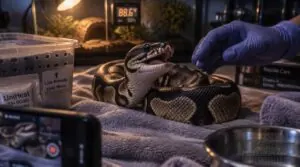
Some signs mean you stop watching and start moving.
If your snake keeps its mouth open at rest and every breath looks like work, that’s respiratory distress. Don’t wait to see if it passes.
Call a reptile vet right now if you see any of these:
- Gurgling, bubbles, or heavy mucus with each breath
- Wheezing paired with extreme lethargy or a limp body
- Blue or gray tissue, blood, or a swollen mouth
Snakes have one working lung. They can’t cough mucus out the way you can. Poor appetite alongside these signs makes it worse.
Keep handling to a minimum. Don’t try to clear mucus or give medicine. Plan your emergency transport, and bring temperature logs plus a video with sound.
How Vets Diagnose and Treat Breathing Problems
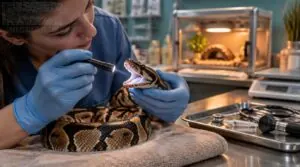
Once you reach the clinic, your vet takes over, and you’ll want to know what happens next. Here’s what to expect, from the first exam to the treatment plan and what it may cost. Read both parts below so you can ask the right questions and follow every instruction exactly.
Examinations and Diagnostic Tests
Your vet won’t guess. They’ll start by watching how your snake breathes, then check the mouth for pus, blood, or swelling.
Next come radiographs to look for pneumonia or fluid. Bloodwork shows how sick your snake is.
For a real answer, your vet may collect a tracheal wash, also called a lung wash. That sample goes to a lab for culture and PCR.
Treatment Options and Cost Factors
The right veterinary care starts with a plan, and costs vary. Expect antibiotics, fluid therapy, and sometimes oxygen therapy. Diagnostic imaging adds cost, but it guides treatment.
- Your snake is counting on you now.
- Delay makes recovery harder and costlier.
- Half-finished treatment invites a painful relapse.
- Hospitalization and repeat visits can reach $1,200.
- Healthy breathing is worth every dollar.
Supporting Recovery and Preventing Snake Breathing Problems
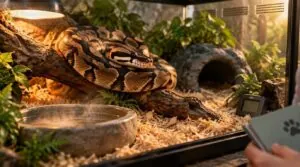
Picture a ball python named Juniper, wheezing after a week of chilly nights. Her owner finished the antibiotics but skipped the follow-up. Two weeks later, the open-mouth breathing returned.
Recovery is your job now. Follow your vet’s plan, and keep the basics tight.
| Recovery Step | What To Do |
|---|---|
| Hydration | Offer warm water soaks as your vet advises |
| Temperature | Keep the full gradient in the proper range |
| Humidity | Balance it with steady ventilation |
| Handling | Leave your snake alone while it heals |
Clean waste fast. Ammonia irritates airways. Quarantine new snakes for 60 to 90 days. Schedule preventive care visits, and call your vet if your snake refuses food or the respiratory infection signs return. Don’t ignore mouth rot or humidity either.
Frequently Asked Questions (FAQs)
What does it mean when a snake has its mouth open?
A snake with its mouth open is struggling to breathe. That’s not normal. Look for wheezing, nasal discharge, and an elevated head posture. These point to a respiratory infection. Call a reptile vet today.
What does a snake respiratory infection sound like?
A respiratory infection often sounds like wheezing, crackling, or a faint clicking sound with each breath. Wet, bubbling breaths mean mucus. Watch for elevated head posture and mouth breathing. Quiet snakes can still be sick.
How to tell if a snake has a respiratory infection?
Picture your snake’s mouth, a thin line of bubbles at the corner. Listen close. Wheezing, gurgling, or raspy breaths mean trouble. Check for mucus, nasal discharge, lethargy, and poor appetite. Don’t wait. Call your vet today.
How to tell if a snake is in distress?
Humidity outside 50%-70% invites trouble. Watch for open mouth breathing, head elevation, nasal discharge, lethargy, and poor appetite. Wheezing, clicking, or bubbles mean distress. Don’t wait. Call your vet now, before it gets much worse.
Why is my snake breathing with its mouth open?
Picture your snake’s jaws parted, throat working like a bellows. That’s your answer’s starting point. With the mouth open, it’s usually respiratory disease, worsened by poor humidity, wrong temperature, or stress. Check your enclosure today.
How to tell if your snake has respiratory issues?
Watch for snake respiratory distress: mouth breathing at rest, wheezing, clicking, bubbles or mucus at the nose, and a raised head. Don’t wait. Respiratory disease worsens fast, so call your vet early for veterinary treatment.
What does it mean if a snake has its mouth open?
An open mouth is your snake’s alarm bell. Sometimes it’s harmless, like a yawn or scent check. But mouth breathing at rest signals snake respiratory distress, overheating, or a blockage. Check husbandry, then call veterinary care.
Can snakes breathe underwater with mouth closed?
Your ball python sits submerged in water, mouth shut. Can it breathe there? No.
Snake lung function needs air. Water in the airway risks pneumonia, lung wash, nebulization, and mouth breathing. Don’t let it soak.
Do all snake species breathe the same way?
No, they don’t. Most snakes rely on one working right lung, but some species keep a sizable left one. Aquatic snakes have longer lungs for buoyancy. Always match your reptile husbandry to your species.
How long can snakes hold their breath naturally?
Some sea snakes stay underwater for up to eight hours.
Pet snakes aren’t. A corn snake can hold its breath over 30 minutes, but temperature, humidity, and stress shorten that. Mouth breathing signals real trouble.
Conclusion
Think it’s probably just a yawn? Maybe. But a yawn ends in seconds, and a snake breathing with mouth open for minutes is asking for help. Don’t wait and hope.
Call an exotic vet the same day. Check your temperatures and humidity while you wait, and limit handling. Snakes hide illness until it’s serious, so your attention is their only warning system.
Catch it early, and treatment is simple. Catch it late, and you’re grieving.