This site is supported by our readers. We may earn a commission, at no cost to you, if you purchase through links.
Your snake stretches its jaws wide open, holds the pose for a second, and snaps its mouth shut again. Your pulse jumps. Is that a yawn, a warning, or the first sign of something wrong with its lungs?
Here’s the reassuring truth: most gaping is routine maintenance, not a medical emergency. Snakes reset their jaw joints after meals, stretch stiff ligaments, and loosen skin before shedding — all through the same open-mouth motion that can look alarming to an untrained eye.
Understanding what does snake yawning mean starts with reading the pattern, not just the pose. Once you know what calm, healthy gaping looks like, spotting a real warning sign becomes second nature.
Table Of Contents
- Key Takeaways
- Snake Yawning is Usually Normal
- Why Snakes Open Their Mouths
- Normal Versus Worrying Yawning
- Health Problems Linked to Gaping
- When Your Snake Needs a Vet
- Frequently Asked Questions (FAQs)
- Do snakes yawn when they’re stressed?
- How to tell if snakes are happy?
- Is a snake’s yawn contagious?
- Why does my snake keep opening his mouth at me?
- Do snakes yawn when they are comfortable?
- What does it mean when a snake opens its mouth?
- Do snakes yawn before they eat?
- Do different snake species yawn differently?
- Can snakes yawn while sleeping or resting?
- How long does typical snake yawning last?
- Conclusion
Key Takeaways
- Most snake gaping is normal maintenance behavior tied to jaw resetting after meals, ligament stretching, shedding, or scent detection rather than illness.
- Brief, occasional yawns lasting 1-3 seconds with calm body language and a fully closing mouth are typical signs of a healthy, relaxed snake.
- Warning signs like frequent open-mouth breathing, wheezing, mucus discharge, or white patches on the mouth point to real health problems such as respiratory infection or mouth rot.
- Persistent gaping without an obvious trigger, especially combined with labored breathing, repeated food refusal, or sudden behavior changes, means it’s time to see a reptile vet.
Snake Yawning is Usually Normal

If you catch your snake gaping wide, don’t panic—it’s rarely a red flag. Most of the time, this behavior fits into a handful of everyday situations you’ll recognize once you know what to look for. Here’s when a yawn is nothing more than routine snake business.
If the gaping shows up alongside other odd feeding cues, it’s worth reading about common causes of ball python regurgitation to rule out a bigger issue.
Jaw Resetting
Watch a snake stretch its jaws wide after a big meal, and you’re seeing jaw resetting in action—not distress. Ligament elasticity lets the mandible widen during swallowing, but bones shift out of place. Gaping restores proper bone alignment and jaw symmetry.
- Mandible repositioning
- Muscle tension relief
- Ligament recovery
- Restored bite function
This yawning is mechanical housekeeping, plain and simple.
After Eating
After a meal, your snake’s jaw doesn’t just snap back—it needs a few good gapes to settle. Since it swallowed prey whole, stretchy ligaments stay stretched briefly while jaw anatomy realigns.
Digestion pace quickens with warmth, appetite suppression cues kick in, and your snake retreats to quiet microhabitats. This gaping is metabolic housekeeping, not worry.
During Shedding
Shedding, or ecdysis, brings its own reason for a yawn. As old skin loosens around the mouth, gaping helps work it free—especially near blue eye caps, which turn milky before separating.
Skin looks dull and pale beforehand. Since energy conservation matters during this process, and humidity keeps things supple, gaping fits naturally into your snake’s shedding routine.
Occasional Mouth Gaping
Sometimes a gape has no big trigger at all—it’s just routine stretching reflexes after a long stillness. Think of it like your own jaw cracking after a nap.
This kind of yawning stays calm, brief, and isn’t paired with hissing or striking.
Why snakes yawn this way often comes down to simple natural muscle relaxation, nothing more.
Why Snakes Open Their Mouths
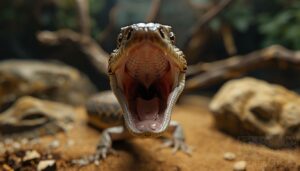
A wide-open mouth isn’t just one behavior with one meaning. Snakes gape for several distinct reasons, tied to anatomy, biology, and survival instincts. Here’s what’s really going on each time you catch your snake mid-yawn.
Stretching Jaw Ligaments
Ever notice how a good stretch feels before a big task? Snakes do something similar. Their stylomandibular and sphenomandibular ligaments connect the mandible to the skull, and gentle gaping tensions these fibers, improving ligament elasticity and collagen fiber alignment for smoother, wider openings without sacrificing joint stability or proprioception feedback.
Since snakes mask discomfort so well, pairing these gentle stretches with awareness of common pet snake health issues helps you catch trouble before it escalates.
| Ligament | Function | Benefit |
|---|---|---|
| Stylomandibular | Limits motion | Joint protection |
| Sphenomandibular | Stabilizes hinge | Prevents hyperextension |
| Fiber alignment | Helps rotation | Wider opening |
Realigning Jaw Bones
Watch a snake after a big meal, and you’ll likely catch it gaping wide—this isn’t random. Jaw bone separation happens naturally during prey consumption mechanics, since snakes swallow whole meals larger than their skulls. That temporary dislocation needs correcting.
Post-feeding gaping snaps the mandible back into proper position, restoring facial profile balance and normal function. It’s simple reptilian maintenance, not distress.
Moving Old Skin
Molting brings a subtler kind of gaping. Between the first and second biological shedding stages, snakes rely on mouth muscle function to loosen to loosen and shift old skin—mechanical skin movement that peels the mouth’s lining first. This shedding-related gaping helps ease skin stretching mechanics along, guiding the shift from tired scales to a brighter layer beneath.
Smelling Their Surroundings
Ever notice how a snake seems to "taste" the air? A wide gape lets airborne particles flood straight to the vomeronasal organ on the mouth’s roof for deeper chemosensory analysis, working alongside tongue-flicking.
- Detects prey, mates, and predators
- Analyzes scent trails left behind
- Distinguishes fresh odors from stale ones
- Sharpens hunting decisions using pheromone cues
This chemical read of the surroundings often outperforms sight alone.
Defensive Warning Display
A gaping mouth can be pure bluff — no bite intended, just theater. Cottonmouths use this visual threat signal in over 42% of predatory encounters, often paired with tail vibration sounds and body inflation.
The flash of white mouth tissue, sometimes alongside coloration exposure, screams "back off." It’s strike readiness posture without commitment — one of nature’s cheapest, most effective biological defense mechanisms.
A flash of white mouth tissue is nature’s cheapest bluff: strike readiness without any real commitment
Normal Versus Worrying Yawning
So how do you tell a harmless yawn from a real warning sign? It usually comes down to timing, frequency, and what your snake’s body is doing at the same moment. Here are the key patterns worth watching for.
Rare, Brief Yawns
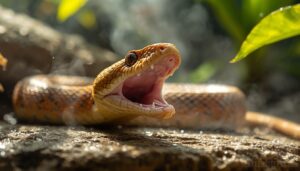
Blink and you’ll miss it — a rare brief yawn lasts just 1-2 seconds, no lingering inhale involved.
- Spontaneous jaw ligament repositioning
- Linked to thermoregulation, not distress
- Common after post-rest jaw resets
One theory suggests that yawning cools the brain during temperature increases.
These quick gestures reflect a comfortable, healthy snake — sometimes even doubling as a subtle threat gesture when alert but calm.
Post-Meal Gaping

Post-meal gaping looks different from that quick reflex yawn — it lingers longer, tied to jaw ligament recovery after swallowing large prey. You’ll notice it once digestion begins, as quadrate joint realignment finishes the job the jaw started mid-swallow.
Think of it as swallow completion mechanics wrapping up. Paired with post-feeding resting habits, this gaping helps digestive energy conservation — completely normal reptilian behavior, not open-mouth breathing distress.
Calm Body Language
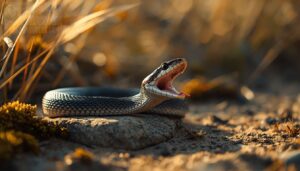
A relaxed snake tells you a lot without making a sound. Watch for a smooth, uncoiled posture, steady tongue-flicks, and a mouth that closes fully between gapes. That’s normal reptilian behavior — not the tension you’d see in defensive stances.
Once you know what calm looks like, spotting the early warning signs becomes much easier — safe snake handling techniques can help you read both moods and respond confidently before tension escalates.
Nonvenomous snakes especially rely on this quiet composure over drama, trusting stillness and survival instincts rather than open threats to get through the day.
Repeated Open-Mouth Breathing
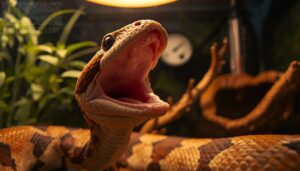
Openmouthed breathing that repeats throughout the day isn’t automatically a red flag. Snakes use it for evaporative cooling and temperature regulation when their enclosure runs warm or humidity dips.
Stress-induced breathing after handling counts too — a corrective breath pattern, not distress. Watch for actual respiratory sounds, discharge, or labored effort; those separate normal humidity adjustment from real respiratory infections needing attention.
Gaping Without Clear Cause

Sometimes gaping shows up with no obvious trigger—no meal, no shed, no threat nearby. That’s your cue to start monitoring subtle changes: enclosure humidity, recent handling stress, or twitching that hints at neurological irritation rather than routine behavior.
- Unexplained gaping patterns lasting days
- Hidden environmental stressors (drafts, temperature swings)
- Subtle discomfort cues alongside normal openmouth breathing
If it persists, don’t dismiss it as quirky personality.
Health Problems Linked to Gaping

Not every open mouth is harmless, though, and that’s where things get serious. Once gaping shows up without an obvious trigger like feeding or shedding, it’s worth paying closer attention to what your snake’s body is telling you. Here are the warning signs that point toward an actual health problem.
Respiratory Infection Signs
A snake that gapes without having eaten is telling you something’s wrong. Watch for audible breathing sounds like wheezing, reduced energy, and repeated openmouth breathing at rest. Persistent feeding refusal often tags along too.
These signs point to true respiratory distress, not routine jaw resetting, and they warrant a closer look rather than a wait-and-see approach.
Mucus or Bubbles
Ever notice bubbles clinging around your snake’s mouth or nostrils after a gape? That’s oral or nasal discharge, and color matters. Clear, watery bubbles often mean mild irritation, while frothy yellowish mucus signals infection progression. Thick, sticky secretions trap air longer.
Poor hydration and humidity worsen buildup, so check tank conditions alongside any discharge you spot.
Wheezing or Gurgling
Listen closely when your snake breathes: a whistling wheeze means air’s forcing through narrowed passages, often polyphonic with multiple notes during exhalation. Gurgling sounds different—wet, bubbling—signaling mucus buildup or fluid in the airway. Both point to respiratory tract inflammation.
Persistent airway turbulence, unlike brief post-gape sounds, suggests genuine respiratory infections rather than normal jaw resetting.
Mouth Rot Concerns
A gaping mouth isn’t always about breathing—check for white or gray patches on the lips too. That’s often the first sign of mouth rot, a bacterial infection linked to injury, poor water quality, or high ammonia. Left unchecked, discoloration turns into tissue erosion and ulcers. Catching it early, before it spreads deeper, makes treatment far more manageable.
Substrate or Mouth Blockage
Sometimes the cause isn’t infection at all — it’s something stuck. Loose substrate like bark or sand can get lodged in the mouth during feeding, creating a mechanical obstruction that triggers repeated gaping as your snake tries to clear it.
Check for crusted nares or visible debris. Cleaning oral cavities gently and switching to safer substrate prevents both ingestion risks and inhalation problems.
When Your Snake Needs a Vet
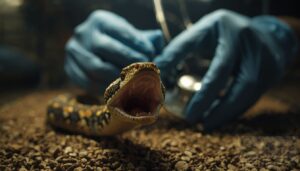
Not every gape means trouble, but some signs are worth taking seriously. Knowing when ordinary behavior crosses into a medical concern can save your snake real distress. Here are the warning signs that mean it’s time to call a reptile vet.
If your corn snake is making unusual noises, understanding what corn snake clicking sounds mean for their breathing health can help you decide whether a vet visit is urgent.
Frequent Open-Mouth Breathing
Frequent open-mouth breathing that isn’t tied to a meal or shedding is a red flag. Unlike brief post-feeding gaping, this pattern often signals respiratory infection or airway obstruction.
Watch for mucus, wheezing, or nasal discharge alongside it. Environmental triggers—poor humidity, dirty substrate—can worsen things too.
If gaping persists without an obvious cause, it’s time to have your vet take a look.
Labored Breathing Sounds
Your ears can catch what your eyes miss. Identifying stridor sounds—harsh, high-pitched noise on inhale—signals real obstruction, not simple gaping. Recognizing wheezing patterns or listening to rhonchi rhythms (rattly, mucus-clearing sounds) helps too.
Crackling or gurgling during breathing points toward fluid or infection, not routine jaw resetting.
Monitoring gas exchange matters most: if breathing sounds labored alongside gaping, don’t wait—call your vet.
Refusing Food Repeatedly
A single skipped meal rarely means much—but three or four in a row, especially paired with weight loss or lethargy, deserves attention. Rule out simple causes first: temperature gradient errors, prey size issues, or seasonal appetite shifts.
If inappetence continues despite fixing husbandry, or shows up alongside other clinical symptoms like gaping or wheezing, it’s time to call your vet.
Swollen or Red Mouth
Appetite issues are one thing, but color and swelling changes inside the mouth point toward active oral tissue irritation or infection. Watch for:
- Persistent redness beyond a day
- Puffy tissue near the tongue (salivary gland blockage)
- Raw, patchy sores (mouth rot)
- Bleeding lesions when touched
Any of these, especially alongside labored breathing, warrants a vet visit before mild irritation progresses into deeper reptile pathology.
Sudden Behavior Changes
A snake that suddenly hides, stops responding, or acts disoriented alongside gaping may be signaling more than jaw mechanics. Neurological disorders, acute injury, or metabolic disorder signs can all shift snake behavior fast. Environmental stressors and circadian rhythm disruption matter too—check recent changes.
| Cause | Behavior Sign | Action |
|---|---|---|
| Neurological | Disorientation | Vet visit |
| Medication | Lethargy | Review dosage |
| Metabolic | Weakness | Bloodwork |
Frequently Asked Questions (FAQs)
Do snakes yawn when they’re stressed?
Calm, relaxed jaws one moment; a tense, wide-open yawn the next. Yes—stress coping mechanisms trigger it, often paired with body stiffness and handling impact.
It usually fades once calmness recovery signs, like slower breathing and settled posture, return.
How to tell if snakes are happy?
Look for loose, relaxed coils, steady tongue-flicking, calm handling, and consistent appetite. Regular shedding, clear eyes, and curious enclosure exploration round out a genuinely content snake—no stress-driven mouth gaping or respiratory concerns involved.
Is a snake’s yawn contagious?
No, contagion myth debunked here: unlike mammalian yawn spreading, snakes don’t catch yawns from neighbors. Each individual yawn trigger stays isolated—jaw stretching, feeding, or shedding—reflecting reptilian social behavior that skips the group-level empathy response driving contagious yawning elsewhere.
Why does my snake keep opening his mouth at me?
Think of it as your snake flashing a warning flag: that gaping mouth is likely a defensive threat signal, meant to look intimidating and buy space. If he’s coiled or tense too, back off calmly and let him settle.
Do snakes yawn when they are comfortable?
Yes — a relaxed posture, slow jaw stretch after rest, and steady daily cycles all signal comfort. Stable habitat conditions reduce stress-related gaping, so a brief, easy yawn without defensive body language usually just means routine jaw maintenance, not distress.
What does it mean when a snake opens its mouth?
Usually it signals jaw ligament stretching after a meal, shedding-related skin loosening, scent detection via the Jacobson’s organ, or predator deterrence.
Less often, frequent gaping without cause points to respiratory infections or mouth rot needing veterinary attention.
Do snakes yawn before they eat?
Like a runner stretching before a sprint, snakes yawn to prep for the meal ahead. This pre-meal jaw stretching relaxes ligaments, expanding mouth capacity and preventing prey impaction—essential prep for carnivores tackling meals wider than their own heads.
Do different snake species yawn differently?
Absolutely, species vary quite a bit. Constrictor jaw stretching runs longer after big meals, while colubrids show more sensory yawning with tongue flicking. Hatchlings yawn to fit growing jaws, and climate affects frequency too.
Can snakes yawn while sleeping or resting?
Picture your snake stretched out mid-bask, utterly still, then—right on cue—it yawns. That’s resting jaw stiffness releasing through post-rest muscle stretching, not distress.
Brief, infrequent mouth opening during sleep cycles is normal, sometimes doubling as passive threat assessment.
How long does typical snake yawning last?
Most yawns clock in at 1 to 3 seconds, whether tied to jaw realignment, post-meal stretching, or shedding. Brief ones under 2 seconds are normal. Anything longer, paired with respiratory sounds or mouth rot signs, deserves a vet’s attention.
Conclusion
You don’t need a herpetology degree to tell routine from risky. What does snake yawning mean, ultimately? Context is everything.
A single stretch after dinner is your snake resetting its jaw, nothing more. But repeated gaping, wheezing, or mucus signals something your eyes alone can’t diagnose.
Trust the pattern, not the panic. Watch closely, note the frequency, and when in doubt, let a reptile vet confirm it. That instinct will serve your snake well for years.