This site is supported by our readers. We may earn a commission, at no cost to you, if you purchase through links.

Corn snakes aren’t demanding pets—but "low maintenance" and "no maintenance" aren’t the same thing. Get the basics wrong, and a snake that could live 20 years in captivity starts refusing food, failing sheds, or worse. The margin for error is narrower than most first-time owners expect.
What do corn snakes need to genuinely thrive? The short answer: the right enclosure size, a precise temperature gradient, a frozen-thawed feeding routine, and a cleaning schedule you’ll stick to. Nail those four things, and you’ve got one of the most rewarding reptiles you can keep.
Table Of Contents
- Key Takeaways
- Safe Corn Snake Enclosure Needs
- Temperature, Humidity, and Lighting
- Diet and Feeding Schedule
- Health, Cleaning, and Handling
- Top 7 Corn Snake Supplies
- Frequently Asked Questions (FAQs)
- Is it okay if a corn snake bites you?
- How friendly is a corn snake?
- What snake is mistaken for a corn snake?
- Are corn snakes for beginners?
- Are corn snakes a good pet?
- Do corn snakes like to be held?
- Is a corn snake a good pet for a 10-year-old?
- How long can corn snakes go without being fed?
- What is toxic to corn snakes?
- What makes a corn snake happy?
- Conclusion
Key Takeaways
- Nail four basics—a properly sized enclosure, a stable temperature gradient, frozen-thawed prey on schedule, and a consistent cleaning routine—and your corn snake can thrive for 20 years.
- Enclosure security isn’t optional: adults need at least a 40-gallon tank with a 36×18-inch footprint, a gasketed lid, and two hides positioned across a warm side (85–88°F) and a cool side (72–78°F).
- Match prey width to your snake’s midbody girth, feed hatchlings every 5–7 days and adults every 10–14, and always wait 48 hours after a meal before handling—skipping this causes regurgitation.
- Watch for appetite loss beyond two weeks, wheezing, or retained shed at the tail tip and eye caps, and book an exotic vet checkup annually—early diagnosis is what separates a minor issue from a serious one.
Safe Corn Snake Enclosure Needs
Getting the enclosure right is the foundation of keeping a corn snake healthy. Before you buy anything, it helps to know exactly what their space needs to look like. Here’s what matters most when setting one up.
Once the enclosure is sorted, you’ll want to dial in temperature, humidity, and lighting—everything covered in this complete guide to keeping corn snakes as pets.
Adult Tank Size
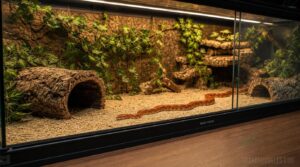
Adult corn snakes need at least a 40-gallon enclosure — but length emphasis matters more than volume. Aim for footprint dimensions of 36 by 18 inches minimum; a 48-inch-long tank is even better. These snakes are horizontal travelers, so vertical space minimalism is fine.
Modular tanks work too, as long as total floor space holds up. Skip the 30-gallon aquarium — it’s just too cramped. Remember to leave the recommended minimum rear clearance space for equipment and access.
Juvenile Enclosure Size
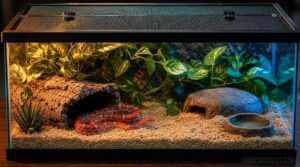
Juvenile corn snakes don’t need the same space yet. Start hatchlings in a 20-gallon enclosure with a footprint of 20 by 12 inches and at least 6 inches of vertical clearance. Follow this upgrade timeline: upgrade to a 40-gallon tank with dimensions of 40 by 12 inches before their first birthday.
Your juvenile corn snake enclosure checklist:
- Minimum habitat size: 20-gallon for hatchlings
- 30-gallon aquarium works for mid-growth stages
- Distribute hides along warm and cool zones
- 2–3 inches of burrowing substrate
- Secure latch on every panel
Escape-proof Lid
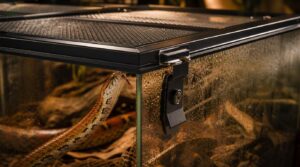
Corn snakes are natural escape artists — and a secure lid isn’t optional.
Look for a Secure Latch Design with a Silicone Gasket Seal that compresses flush against the rim, eliminating gaps.
Vent Mesh Barriers maintain enclosure ventilation without giving your snake a foothold.
Choose Impact-Resistant Material that won’t flex under pressure.
Schedule regular Lid Maintenance Checks to catch gasket wear before it becomes an escape route.
Warm and Cool Hides
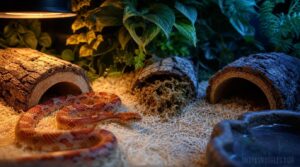
Once the lid is locked down, your next priority is providing a secure environment for your snake. Ensure there are at least two hides: one warm hideout box placed on the heat source side (maintained at 85–88°F) and one cool-side retreat (72–78°F).
Consistent size between both hides matters; match them so your snake feels equally secure on either end of the thermal gradient.
Add a humid hide to support shedding, maintaining proper moisture levels for your snake’s health.
Burrowing-friendly Space

Beneath the surface is where corn snakes feel safest. Aim for 6–12 inches of substrate depth using aspen shavings, cypress mulch, or coconut coir — all support stable burrowing behavior without compacting. Blended substrates hold tunnel walls better than single materials.
Add multi-level hides with angled tunnel entrances and enough vertical dig space for layered resting pockets. Uniform depth prevents collapses during exploration.
Temperature, Humidity, and Lighting
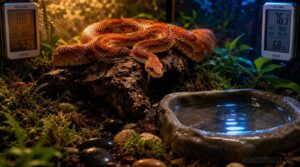
Getting the climate right inside your corn snake’s enclosure isn’t complicated, but the details matter. Temperature, humidity, and lighting each play a specific role in keeping your snake healthy and comfortable.
Here’s what you need to nail down.
Warm-side Gradient
Think of your warm side as a thermal runway — your corn snake uses it to dial in exactly how much heat it needs. The basking spot design should land at 88–92°F, with a deliberate temperature drop ratio of 10–15 degrees toward the enclosure’s middle. Nail heat gradient mapping with a heat mat thermostat and thermometers at multiple points.
- Keep the corn snake’s temperature gradient consistent 24/7
- Use a calibrated heat mat thermostat for gradient calibration
- Position heat source selection — mat plus overhead — to eliminate hot spots
- Monitor thermal gradient maintenance with dual thermometers
- Shield any heat source placement to prevent direct snake contact
Cool-side Range
While the warm side gets all the attention, the cool side is just as critical for your corn snake’s temperature regulation. Keep it at 72–78°F — a stable, draft-free position away from windows and vents. Good foliage cover helps maintain that microhabitat. Your temperature gradient setup only works if both ends are maintained.
| Condition | Cool-Side Target |
|---|---|
| Daytime ambient | 72–78°F (22–26°C) |
| Nighttime temperature drop | 70–75°F (21–24°C) |
| Seasonal adjustments | Monitor with cool-side thermometer |
| Thermal gradient maintenance | Consistent, draft-free zone |
Shedding Humidity Boost
When your corn snake enters a shedding cycle, its baseline humidity of 40–50% isn’t enough. Bump it to 70% using misting techniques — a light daily spray works well. A humid hide packed with damp sphagnum moss creates the microclimate your snake actually needs.
Use moisture-retentive substrate like coco coir, monitor with a hygrometer for microclimate monitoring, and watch for condensation — preventing mold growth matters just as much as humidity control.
Thermostat-controlled Heating
A heat mat without a thermostat is just a fire hazard waiting to happen. Thermostat temperature control is non-negotiable — pair your heat mat or ceramic heat emitter with a controller that includes overheat protection and relay safety to handle high-wattage loads cleanly.
- Probe positioning matters: Keep it away from the heat source to read ambient temps accurately
- Thermostat calibration should be verified monthly using dedicated temperature monitoring devices
- Multi-zone scheduling lets you automate day/night drops automatically
Maintain your temperature gradient within ±1–2°C.
Optional Low-output UVB
Corn snakes don’t strictly need UVB, but low-output UVB enhances vitamin D3 synthesis and overall corn snake health in ways diet alone can’t fully replicate. Use a 5.0 T8 fixture, placing it 12–18 inches above the basking zone.
Run it 8–12 hours daily for proper exposure timing, and replace the lamp every 6–12 months even if it still glows.
Diet and Feeding Schedule
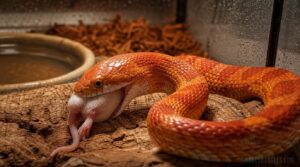
Feeding a corn snake isn’t complicated, but getting it wrong can cause real problems. Prey size to how often you feed depends on your snake’s age and size.
Here’s what you need to know to keep meals safe and stress-free.
Frozen-thawed Rodents
Every meal your corn snake gets should come from frozen-thawed rodents—never live prey. Proper thawing requires using a warm water thawing container to reach body temperature, not a microwave.
Before feeding, check odor assessment and discard prey with off smells or discoloration.
Use tongs for handling tools, maintain portion consistency by weighing each fresh-frozen mice serving, and never refreeze thawed prey.
Prey Size Guidelines
Match prey width to your snake’s midbody girth—that’s the feeding size rule that prevents regurgitation. Start with pinky mice, then follow incremental size increases using the 10–15% body mass rule as your guide.
A proper prey width ratio and smart digestive timing keep your feeding schedule guidelines on track.
Hatchling Feeding Frequency
Hatchlings enter their initial appetite window 3 to 7 days after hatching—then settle into a feeding every 5 to 7 days.
Stress-free feeding means a warm hide, thawed prey, and minimal handling.
Weekly weight monitoring tells you whether to adjust interval timing or prey size selection.
Follow that rhythm consistently, and the feeding schedule practically runs itself.
Adult Feeding Frequency
Once your corn snake reaches adult size, interval timing shifts — every 10 to 14 days is the standard range. Males often do well every 7 to 10 days; females every 10 to 14.
Seasonal appetite naturally dips during cooler months, so let body condition metrics guide you.
Weight-based adjustments beat rigid scheduling every time — the 48-hour waiting period after feeding is non-negotiable.
Feeding Mistakes to Avoid
Three mistakes that hinder even experienced keepers’ progress:
- Improper prey thawing — frozen-thawed mice fed while still cold cause feeding refusal and digestive stress.
- Overfeeding juveniles — weekly oversized portions lead directly to obesity.
- Feeding after stress — skip the meal if handling was rough or illness signs appear.
Live prey use and low-temperature feeds invite injuries and regurgitation. Always investigate feeding refusal before assuming picky behavior — nutrient deficiency may be the underlying cause.
Health, Cleaning, and Handling
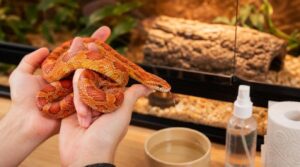
Keeping a corn snake healthy isn’t complicated, but it does require staying consistent with a few key habits. Knowing what to watch for — and when to act — makes all the difference between catching a problem early and dealing with something serious.
Here’s what you need to know about monitoring health, keeping the enclosure clean, and handling your snake the right way.
Common Illness Signs
Your snake can’t tell you something’s wrong — but its body can. Watch for appetite loss that stretches beyond two weeks, lethargic behavior, or digestive upset like persistent regurgitation.
Your snake speaks through its body — watch for appetite loss, lethargy, or regurgitation before silence becomes a crisis
Respiratory distress shows up as wheezing, open-mouth breathing, or mucus near the nostrils.
Skin discoloration, scale rot, and mouth rot signal infection.
Common health issues like respiratory infections need an exotic vet — fast.
Shedding Problems
When corn snake shedding goes wrong, humidity is usually the culprit. Retained shed causes the most trouble at the tail tip and eyecaps — narrow areas where stuck skin can constrict.
To address this, raise humidity to 70% and provide a humid hide. These steps help prevent skin from sticking during the shedding process.
Substrate traction effects matter too; aspen offers better grip than slick surfaces, aiding natural shedding behavior.
For assisted shedding safety, soak the snake briefly in warm water — never peel stuck skin, as this risks injury.
Weekly Spot Cleaning
Weekly spot cleaning prevents your enclosure from becoming a slow-building problem. Remove feces, shed skin, and spilled water immediately—don’t let moisture sit. Targeted debris removal around the water bowl and high-traffic zones covers most odor control tactics without disrupting your snake’s territory.
Swap soiled substrate with fresh aspen, lightly fluff the area, then observe your corn snake for 5–10 minutes post-clean.
Safe Handling Timing
Timing your handling sessions around your corn snake’s natural rhythms is half the battle. A Post-Feeding Pause of 48 hours prevents regurgitation—stick to it without exceptions.
Shedding Sensitivity is real; once their eyes cloud over, step back. Apply Warm-Up Handling when the snake is alert and enclosure temps are stable.
- Skip handling during the shedding cycle—opaque skin tears easily.
- Follow a consistent feeding schedule to keep handling frequency predictable.
- Use an illness protocol immediately if the snake seems lethargic or defensive.
Exotic Vet Checkups
Annual reptile veterinary care catches problems before they snowball. Your exotic vet runs a full physical exam—eyes, skin, lungs, abdomen—plus parasite screening and, when warranted, a blood panel or radiographic imaging.
Preventive care visits also cover your husbandry setup, feeding schedule, and humidity levels. These checks ensure your reptile’s environment supports long-term health.
Respiratory infection treatment and scale rot treatment both improve with early diagnosis, so prioritize that yearly checkup.
Top 7 Corn Snake Supplies
Getting the right gear from the start saves you a lot of backtracking later. These seven supplies cover the core of what your corn snake actually needs — housing, heat, humidity, and bedding.
Here’s what’s worth having before your snake comes home.
1. Zilla Glass Reptile Terrarium
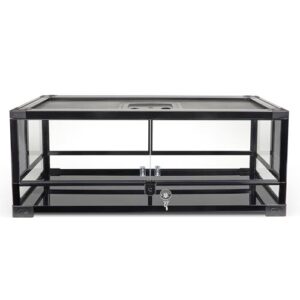
The Zilla QuickBuild 20-gallon terrarium checks most boxes for juveniles and smaller adults.
Its front-opening sliding door lets you feed and spot-clean without disturbing heat fixtures on top — a small detail that makes a real difference in daily care. The tempered glass holds heat well, and the lockable top screen secures your snake without hassle.
One caveat: seal any side screen gaps with metal tape, since corn snakes will find even the smallest exit.
| Best For | Hobbyists keeping small to medium reptiles — geckos, corn snakes, small lizards, or frogs — who want a practical, easy-to-maintain setup without a lot of fuss. |
|---|---|
| Primary Use | Reptile enclosure |
| Target Species | Snakes, lizards, frogs |
| Material | Tempered glass |
| Color | Black |
| Indoor Use | Yes |
| Warranty | Not specified |
| Additional Features |
|
- Front sliding door makes daily feeding and spot-cleaning quick and low-stress for both you and your animal.
- QuickBuild design means you’re up and running in about 10 minutes — no tools, no headaches.
- The water-holding base is a nice bonus if you keep species that need a shallow soak area.
- Side screen gaps are a real escape risk for small snakes — you’ll want metal tape on hand before your animal moves in.
- The plastic frame feels a little flimsy and probably won’t hold up well if you’re stacking heavy lighting or heating gear on top.
- No built-in cable entry means you’ll have to improvise for thermometers and cords, which is a minor but annoying oversight at this price.
2. Exo Terra Terrarium Combination Lock
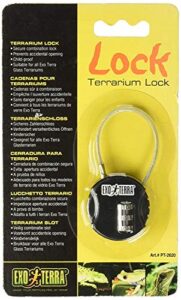
Once your tank is sealed up, the next weak point is the door. Corn snakes are problem solvers — if a latch can be nudged open, they’ll figure it out.
The Exo Terra Terrarium Combination Lock snaps into the existing locking holes on Exo Terra glass terrariums without tools, and you set your own three-digit code.
It’s not a vault, but it reliably stops curious toddlers and accidental openings. Lightweight, humidity-resistant, and straightforward — exactly what a secondary safety layer should be.
| Best For | Exo Terra glass terrarium owners who want a simple, no-tools lock to keep curious kids and escape-artist reptiles safely contained. |
|---|---|
| Primary Use | Enclosure security |
| Target Species | Reptiles, amphibians |
| Material | Plastic |
| Color | Black |
| Indoor Use | Yes |
| Warranty | Not specified |
| Additional Features |
|
- Snaps right into the existing locking holes — no drilling, no tools, done in seconds
- Set your own three-digit code, so it’s easy for you and a real obstacle for a toddler or a nosy corn snake
- Lightweight and humidity-resistant, so it won’t rust or warp in a tropical setup
- Only works with Exo Terra glass terrariums — if you have a different brand or a custom build, this won’t fit
- A determined person with a tool can get past it, so it’s a deterrent, not a security lock
- The plastic construction can feel a little cheap, especially if you’re used to heavier hardware
3. Aiicioo Reptile Under Tank Heater Thermostat
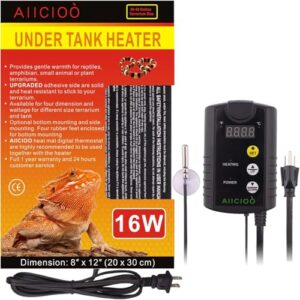
A locked door means nothing if the heat inside is wrong. The Aiicioo Under Tank Heater pairs a 16-watt, 8×12-inch pad with a digital thermostat that lets you dial in a precise set point — no guesswork.
The built-in probe monitors surface temperature continuously, ensuring your warm side stays in the 85–88 °F sweet spot without manual adjustments. Bottom or side mounting options work seamlessly, while rubber feet maintain airflow under the tank.
One clean combo, zero overheating surprises.
| Best For | Reptile owners who want a simple, set-it-and-forget-it heating solution for snakes, lizards, frogs, or hermit crabs in glass tanks. |
|---|---|
| Primary Use | Substrate heating |
| Target Species | Snakes, lizards, frogs |
| Material | Plastic housing |
| Color | Black/gray |
| Indoor Use | Yes |
| Warranty | Not specified |
| Additional Features |
|
- Built-in digital thermostat lets you dial in an exact temperature without guessing or constant adjustments.
- Flexible mounting — bottom or side — with rubber feet to keep airflow going underneath the tank.
- Upgraded adhesive holds firmly to glass and won’t melt or peel under regular heat cycles.
- On/off thermostat style can swing temps by 10–15 °F between cycles, which might stress more temperature-sensitive animals.
- Struggles to hit higher set points in cooler rooms — ambient temperature matters a lot here.
- Adhesive bonds pretty permanently to glass, so moving it to a different tank later can be a real headache.
4. BN LINK Reptile Under Tank Heat Pad
Not every setup needs 16 watts. If your corn snake is in a 10–20-gallon starter tank, the BN LINK Heat Pad is worth a look. Its 8-watt, 6×8-inch pad heats up fast, runs quietly, and sticks directly to glass with no tools.
The waterproof, flexible surface holds up in humid conditions, and the 15-month warranty adds peace of mind. Just pair it with a thermostat — the pad can hit 122 °F unregulated, which is far too hot for any snake.
| Best For | New reptile owners with a small 10–20 gallon tank who want a simple, affordable way to keep temperatures steady without a lot of setup. |
|---|---|
| Primary Use | Substrate heating |
| Target Species | Reptiles, amphibians |
| Material | Flexible polymer |
| Color | Black |
| Indoor Use | Yes |
| Warranty | 15 months |
| Additional Features |
|
- Heats up fast and runs completely silent — you won’t notice it’s there
- Waterproof and flexible, so it handles humidity and slightly curved tanks just fine
- Energy-efficient at 8 watts, and the 15-month warranty is a nice safety net
- You must use a thermostat — unregulated, it can reach 122 °F and hurt your animal
- Adhesive isn’t always pre-attached, which can make installation a little fussier than expected
- Only works for small enclosures; bigger tanks will need more than one pad
5. Paizoo Digital Aquarium LED Thermometer
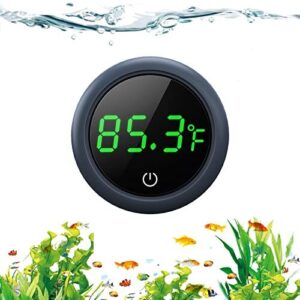
Knowing your exact temperatures isn’t optional — it’s how you catch problems before they become emergencies.
The Paizoo Digital Aquarium LED Thermometer sticks to the outside of the glass with an induction probe, ensuring nothing inside the tank interferes with your snake. It delivers readings within ±0.9 °F, updates every five seconds, and features a bright LED display for easy visibility day or night.
One small caveat: readings can run slightly cool, so occasional secondary spot-checks are recommended.
| Best For | Hobbyists and breeders who want a simple, no-fuss way to monitor aquarium temps for sensitive species like shrimp, corals, or axolotls. |
|---|---|
| Primary Use | Temperature monitoring |
| Target Species | Aquatic species |
| Material | ABS plastic |
| Color | Black |
| Indoor Use | Yes |
| Warranty | 12 months |
| Additional Features |
|
- Sticks right to the outside glass — nothing goes in the water, so setup is quick and clean.
- Bright LED display is easy to read day or night, and it wakes up with a single touch.
- Accurate to ±0.9 °F with 5-second updates, giving you a solid real-time read on your tank.
- The battery is sealed inside — when it dies, the whole unit needs replacing.
- Readings can run a few degrees cool, so you may want a backup thermometer for precision-critical tanks.
- The adhesive can lose its grip over time, especially if curious tank inhabitants bump the glass from inside.
6. Zilla Mini Heat UVB Light Fixture
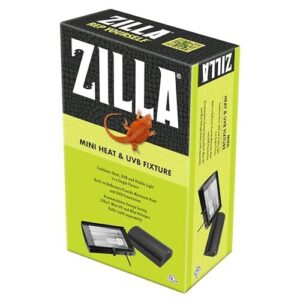
UVB lighting is optional for corn snakes, but the Zilla Mini Heat UVB Light Fixture simplifies its addition. This fixture accommodates both heat and UVB bulbs simultaneously, offering versatility for reptile care.
Its low-profile, 2-inch design fits discreetly under screen covers, avoiding clutter in compact setups. The two interchangeable mini sockets enable efficient use of space while maintaining functionality.
This makes it a genuine space-saver for smaller 12–18 inch terrariums, optimizing limited habitats without sacrificing performance.
Note that bulbs aren’t included, requiring separate purchase. Additionally, monitor socket temperatures closely, as surfaces can become hot enough to cause skin burns, posing a safety risk.
| Best For | Reptile owners with compact 12–18 inch terrariums who want heat and UVB in one tidy fixture. |
|---|---|
| Primary Use | Lighting fixture |
| Target Species | Lizards, geckos, frogs |
| Material | Metal housing |
| Color | White |
| Indoor Use | Yes |
| Warranty | Not specified |
| Additional Features |
|
- Combines heat and UVB in a single low-profile unit, keeping your setup clean and simple
- Two interchangeable mini sockets give you flexibility to mix and match bulb types
- Only 2 inches tall, so it fits neatly under screen covers without crowding the enclosure
- Bulbs aren’t included, and the proprietary 2-pin mini format can be tough to find in stores
- Some users report socket failures and bulbs burning out faster than expected
- The surface gets seriously hot — you’ll want to keep an eye on temperatures, especially in smaller or less-ventilated setups
7. Zoo Med Aspen Snake Bedding
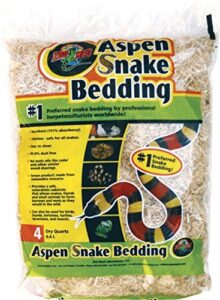
Substrate matters more than most beginners expect. Zoo Med Aspen Snake Bedding is a solid everyday choice — it’s 99.9% dust-free, free of toxic oils, and rated at 191% absorbency, trapping moisture before humidity becomes an issue. Your corn snake can burrow naturally through the soft shavings without risking skin irritation.
At $11.39 for 4 qt, it’s affordable for standard adult enclosures. However, larger setups will go through a bag quickly, so buying the 24 qt option saves money long-term. A heads-up: prioritize bulk purchases for bigger habitats to avoid frequent replacements.
| Best For | Beginner and intermediate reptile keepers who want a safe, low-maintenance substrate for snakes, lizards, or other small reptiles in standard-sized enclosures. |
|---|---|
| Primary Use | Substrate bedding |
| Target Species | Snakes, lizards, turtles |
| Material | Aspen wood fiber |
| Color | Natural |
| Indoor Use | Yes |
| Warranty | Not specified |
| Additional Features |
|
- Nearly dust-free and free of toxic oils, so it’s gentle on your reptile’s lungs and skin
- High absorbency (191%) keeps moisture in check without turning the enclosure damp
- Works for a surprisingly wide range of species — not just snakes
- A 4 qt bag won’t last long in bigger enclosures, and the cost adds up fast
- Some buyers have received bags that arrived ripped or wet, which is frustrating
- Pricier per unit than bulk bedding options, so it’s not the best fit for large-scale breeders
Frequently Asked Questions (FAQs)
Is it okay if a corn snake bites you?
Think of it like a cat scratch — startling, mildly sharp, but not dangerous.
Corn snakes are nonvenomous, so a bite leaves small punctures at worst.
Clean it with soap and water, and you’re fine.
How friendly is a corn snake?
Corn snakes are genuinely one of the most easygoing reptiles you can keep. They’re docile, rarely aggressive, and usually calm right down with regular, gentle handling.
What snake is mistaken for a corn snake?
The copperhead is most often confused with the corn snake. Look for the copperhead’s triangular head, hourglass crossbands, and slit pupils — three details corn snakes simply don’t have.
Are corn snakes for beginners?
Yes, corn snakes are ideal for beginners.
They’re docile, hardy, and forgiving of minor husbandry mistakes. Their manageable size and simple diet make them one of the easiest reptiles to care for responsibly.
Are corn snakes a good pet?
Absolutely. Corn snakes are forgiving, handleable, and stay manageable at 4–5 feet.
With a proper setup and frozen prey, they thrive for 15–20 years — making them one of the smartest reptile choices you can make.
Do corn snakes like to be held?
Most corn snakes won’t send you a formal invitation, but they do tolerate — and gradually warm up to — regular handling, especially when you’re calm, consistent, and respectful of their signals.
Is a corn snake a good pet for a 10-year-old?
For a 10-year-old, a corn snake is one of the better starter reptiles — calm, manageable in size, and forgiving of beginner mistakes.
As long as an adult stays involved in daily care, it remains a suitable choice.
How long can corn snakes go without being fed?
Adult corn snakes can safely go 2–4 weeks without food. Hatchlings shouldn’t fast longer than 7–10 days. If yours is refusing meals, check temps and shedding status first.
What is toxic to corn snakes?
Corn snakes are vulnerable to toxic plants like dieffenbachia and daffodils, as well as organophosphate pesticides.
Using cedar or pine substrates in their enclosures can also pose significant risks.
Feeding live prey or providing oversized feeder rodents may harm the snakes, while contaminated feeders can introduce dangerous Salmonella.
What makes a corn snake happy?
A happy corn snake needs stable temperatures, regular meals, secure hides, and minimal stress.
Get those basics right, and you’ll see an active, curious snake that explores confidently and sheds cleanly.
Conclusion
What do corn snakes need that most owners overlook? Consistency. A locked enclosure, a stable temperature gradient, frozen-thawed prey on schedule, and a cleaning routine you don’t skip—these aren’t optional upgrades. They’re the difference between a snake that survives and one that genuinely thrives for two decades.
Get those four pillars right, and you won’t be troubleshooting refused meals or problem sheds. You’ll just be watching one of the best beginner reptiles do exactly what it’s built to do.