This site is supported by our readers. We may earn a commission, at no cost to you, if you purchase through links.
Your ball python doesn’t need light to survive—it needs the right light, delivered on a schedule its body can predict. Skip that distinction, and you’ll end up with a snake that eats inconsistently, sheds poorly, and never quite settles into the confident basking behavior you’re hoping to see. Vitamin D3 synthesis, calcium metabolism, circadian rhythm—these processes run on UVB exposure and photoperiod, not guesswork.
A ball python lighting setup essential to master before anything else: intensity and timing matter more than wattage. Get the UVI right at the basking zone, hold a steady 12-hour cycle, and you’re building the foundation everything else depends on.
Table Of Contents
- Key Takeaways
- Ball Python Lighting Essentials: UVB, UVA, and Daylight
- How to Set Up UVB Lighting Safely
- Create a Consistent Day-Night Light Cycle
- Integrate Lighting, Heat, and Humidity
- Top 3 Ball Python Lighting Products
- Frequently Asked Questions (FAQs)
- What lighting do ball pythons need?
- Is 70 degrees too cold for a ball python at night?
- Do ball pythons need two lights?
- Do ball pythons need a heat lamp 24 7?
- How do you light a ball python?
- How do I setup heating for a ball python?
- How to light a ball python tank?
- Do ball pythons need light?
- Which light is best for ball python’s mental health?
- What wattage do I need for a ball python tank?
- Conclusion
Key Takeaways
- Aim for a UVI of 2.0–3.0 at the basking spot using a low-intensity UVB bulb (4–15 watts, 290–305nm), mounted 10–14 inches away with mesh or 15–18 inches without it.
- Run a strict 12-hour light and 12-hour dark cycle on an automated timer, since consistent photoperiod supports appetite, shedding, and healthy circadian rhythm.
- Keep basking temperatures at 88–92°F and cool-side temperatures at 76–80°F using thermostat-controlled heat, and maintain 70–78°F at night without any light source.
- Replace UVB bulbs every 6–12 months regardless of how bright they look, since output degrades invisibly long before the bulb appears dim. For a full breakdown of wattage, placement, and replacement schedules, choosing the right vivarium lighting for your snake covers everything you need to keep UVB levels safe and effective. Getting the rest of your setup dialed in matters just as much, and a solid ball python terrarium setup guide can help you nail substrate, heat gradients, and humidity before small oversights become vet bills.
Ball Python Lighting Essentials: UVB, UVA, and Daylight
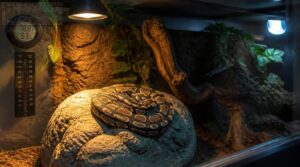
When you get lighting wrong, your ball python pays for it in stress, poor shedding, or worse. Getting it right means understanding what UVB, UVA, and daylight actually do for your snake — not just that they’re supposed to be there. Here’s what you need to know before you buy a single bulb.
For a full breakdown of bulb types, wattages, and safe placement, this complete ball python lighting setup guide walks you through building a setup your snake will actually thrive under.
How Lighting Supports Health
Flip a light switch, and you’re doing more for your ball python than illuminating its tank. Proper spectrum drives vitamin D3 synthesis, regulates metabolism, and anchors circadian rhythm. UVB exposure helps immunity; UVA shapes natural behavior. Photoperiod length signals your snake’s internal clock, governing feeding and rest. Get the spectrum right, and health follows naturally—skip it, and problems compound quietly.
UVB Benefits and Limitations
UVB exposure drives vitamin D3 synthesis, which your snake needs for calcium metabolism—skip it, and hypocalcemia risk climbs.
But UVB limitations matter too: intensity drops with distance, dosing must stay low, and skin safety limits exist. Excess causes erythema.
Shaded hides let behavioral avoidance work; seasonal sensitivity shifts mean you’ll adjust exposure as your python grows or seasons change. For proper UVB provision, understanding UVB exposure peaks helps tailor lighting schedules to natural patterns.
UVA and Visual Enrichment
Beyond D3 synthesis, UVA shapes how your snake actually sees its world. This part of the reptile vision spectrum drives color perception, exploratory behavior, and basking-spot recognition.
Textured decor, varied substrates, and sunlit patches encourage natural visual exploration patterns—more scanning, less hiding, better behavioral enrichment overall.
Albino Ball Python Considerations
That visual enrichment logic shifts once you’re working with an albino. Their lack of melanin brings genuine albino light sensitivity, so full spectrum lighting needs dimming, hides need shade, and basking sessions stay shorter.
- Keep UVB minimal or vet-directed
- Watch for albino color fading under intense light
- Maintain 50–60% humidity for clean sheds
- Handle gently after bright exposure to ease eye strain
Lighting Myths Versus Facts
Cranking up wattage won’t fix a dim setup—brightness comes from lumens and placement, not raw power.
Real husbandry rests on UVB exposure facts: it drives calcium metabolism, degrades over 6–12 months regardless of visible light, and pairs with UVA for natural foraging behavior.
A steady 12-hour light cycle anchors circadian rhythm at the basking spot—no gadget substitutes for consistency.
How to Set Up UVB Lighting Safely
When you get UVB wrong, you either shortchange your ball python’s health or overexpose it—so precision matters here. Bulb selection, distance, and placement all work together, and skipping one throws the rest off balance. Here’s exactly how to set it up right, piece by piece.
If you’re unsure why UVB matters so much in the first place, this breakdown of why UVB lighting is essential for snake health lays out exactly what’s at stake before you start dialing in bulb type and distance.
Choosing Low-Intensity UVB Bulbs
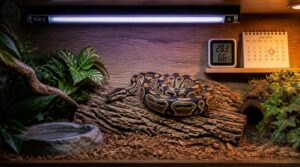
Not every UVB bulb suits a ball python’s mellow needs. Look for low-intensity UVB bulbs rated 4–15 watts, with a spectral peak near 290–305nm. Confirm fixture compatibility—no special ballasts required—and check UVB bulb lifespan claims (6–12 months).
Since UVB degradation happens invisibly, mark replacement schedules on a calendar rather than trusting appearances.
Target UVI at Basking Zone
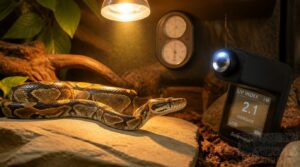
When your snake stretches out on its basking spot, that’s your cue to measure. Aim for a UVI of 2.0–3.0, ideally 2.5–3.0, checked at eye or back height with a calibrated meter—not the enclosure floor. Reassess after any equipment change or shift in basking behavior, and log readings so drift over weeks doesn’t sneak past you unnoticed.
Correct Distance and Mesh Placement
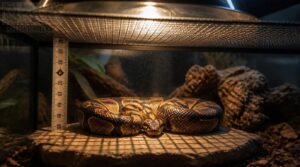
Distance makes or breaks your UVB output. With mesh in the way, mount bulbs 10–14 inches above the basking spot; without it, go 15–18 inches.
- Check reflector angles monthly
- Confirm mesh doesn’t block emission
- Recalibrate after any fixture swap
Align the basking rock directly beneath the lamp—fixture height adjustment keeps intensity within your 2.0–3.0 UVI target.
Shade, Hides, and Exposure Control
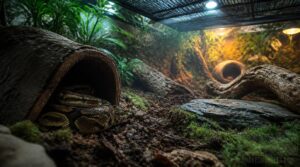
Even good UVB needs an escape hatch. Place hides on both the warm and cool sides, with one near the basking zone for controlled exposure, not forced confinement.
Use shade cloth or diffused fixtures to soften glare, and skip reflective surfaces behind hides. This balances UVB access with retreat, letting your ball python self-regulate exposure naturally.
UVB Replacement Schedule
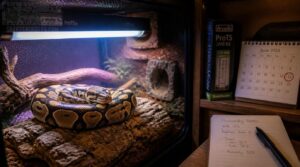
A bulb that still glows doesn’t mean it’s still working. UVB output degradation happens invisibly, so track installation dates, not brightness.
- Compact bulbs: 6 months
- T5 tubes: 10–12 months
- Mercury vapor/metal halide: 8–12 months
Watch replacement timing indicators like sluggish shedding. Adjust seasonally, and keep a backup bulb ready—gaps in UVB exposure risk metabolic bone disease.
Create a Consistent Day-Night Light Cycle
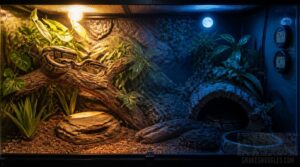
Once your UVB is dialed in, the next job is timing everything around it. Your ball python’s body runs on light cues, so consistency matters as much as intensity. Here’s what that schedule actually looks like in practice.
12. Hour Light and Dark Schedule
Rarely does a captive reptile thrive without routine, and your ball python is no exception. Run a strict 12-hour light and dark cycle using automated timers—photoperiod consistency benefits appetite, shedding, and stress levels. Night darkness matters just as much as daylight; no stray glow allowed.
When breeding season arrives, shift gradually, in small seasonal increments, never abruptly.
Full-Spectrum Daytime Lighting
Once your 12-hour cycle is locked in, pair it with full-spectrum lighting rated 5000–7000K. This isn’t about UVB bulbs—it’s daylight mimicry that sharpens color accuracy, feeds visual stimulation, and helps with mood regulation.
Your python’s circadian rhythm reacts to this spectral cue, reinforcing the light cycle you’ve already set. Even your own eye comfort improves during feedings and enclosure checks.
Automating Lights With Timers
Manual light-switching invites human error—forget once, and your 12 hour on 12 hour off rhythm collapses. A digital timer with accurate programming fixes that permanently.
Confirm proper load capacity safety for your bulb wattage, plug into a surge protection outlet, and choose units with battery backup reliability so outages don’t erase schedules. Most also offer manual override for quick checks without disrupting automated cycles.
Keeping Nights Completely Dark
Timers handle the "on" half of your cycle, but darkness is where Ambient Light Sealing matters most. Block seams, hide LED indicators, and keep UVB bulbs off after hours.
True Behavioral Darkness Response means calm, undisturbed rest. Run Night Light Monitoring with a lux meter—readings should stay under 1.0 lux to protect thermoregulation and appetite rhythms tied to your snake’s internal clock.
Seasonal Breeding Cycle Adjustments
Nudge breeding readiness by shifting the schedule to 10L:14D each winter—this photoperiod shift drives melatonin seasonal regulation and hormonal cascade adjustment.
- Cool basking zones slightly for temperature cue timing
- Watch body condition; energy reserve breeding depends on fat stores
- Return to 12-hour light cycle after the season
Skip drastic swings—your snake’s circadian rhythm and thermoregulation habits need gradual, predictable change.
Integrate Lighting, Heat, and Humidity
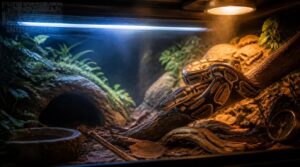
Light and dark cycles only work when temperature and humidity back them up—your enclosure operates as one connected system, not separate parts. Get the heat source wrong or ignore ventilation, and even perfect UVB placement won’t keep your ball python healthy.
Here’s how to bring these elements together, starting with the temperature gradient that makes thermoregulation possible.
Basking and Cool-Side Temperatures
Picture a snake pressed against glass, refusing to move—that’s a thermal gradient gone wrong.
A snake frozen against the glass, unwilling to move, is the clearest sign of a thermal gradient gone wrong
Your basking surface temperature needs 88–92°F, cool-side sitting at 76–80°F. That 2–3 degree band matters for real thermoregulation.
Use dual-probe thermometers at the basking spot and cool hide temperature zones. Watch for temperature drift; readings shift 2–5°F daily as heat sources and ventilation change.
Thermostat-Controlled Overhead Heating
Wire a thermostat-controlled overhead heater rated for your enclosure size, sensor probe positioned right at basking level, not the wall. Set hysteresis tight—1–2°F swing—so temps don’t drift past 92°F.
Digital units offer programmable scheduling and remote monitoring via app. Fused safety circuits and correct thermostat calibration keep that basking spot stable without wasting energy on constant cycling.
Safe Nighttime Heat Sources
Once lights click off, your snake still needs 70–78°F—achieved without a single visible bulb. A ceramic heat emitter or deep heat projector delivers infrared warmth invisibly; radiant heat panels work similarly.
Under tank heaters, placed beneath one enclosure side (never centered), warm floors gently—add insulation underneath to curb heat loss. Keep thermostat hysteresis tight, around 1–2°F, preventing overnight drift.
Heat Guards and Burn Prevention
A bare bulb near a coiled snake is a burn waiting to happen—heat guards aren’t optional. Cover heat sources with perforated ceramic or metal, keeping guards 15cm above the source with a 2cm gap.
Checklist:
- Secure mounting, no sharp edges
- Monthly cleaning
- Corrosion inspection
Pair guards with thermostat-controlled heating, maintaining basking areas at 88–92°F safely.
Monitoring Humidity and Ventilation
Lighting and heat mean little if humidity swings wildly. Keep RH between 40-60%, spiking to 70% during sheds. Place your digital hygrometer at snake level, not enclosure walls, and calibrate it every 3-6 months.
Balance ventilation to avoid drafts while preventing mold. Log readings over 7-14 days—patterns reveal what smart controllers alone can’t.
Top 3 Ball Python Lighting Products
Once you understand the theory behind UVB, photoperiod, and heat, the next step is picking equipment that actually holds up in daily use. Not every bulb or fixture on the market delivers the output or reliability your ball python needs. Here are three products worth considering for your setup.
1. Lucky Herp Reptile UVB Light
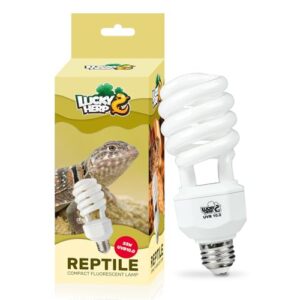
When you’re shopping for a beginner-friendly bulb, the Lucky Herp Reptile UVB 10.0 is a solid starting point. This 23-watt compact fluorescent puts out 10% UVB and 30% UVA, screws into any standard E26 dome fixture, and helps with vitamin D3 synthesis and calcium metabolism without much fuss.
Aim for a UVI of 2.0–3.0 at the basking spot, and keep glass or plastic out of the light path—either one ruins the purpose.
Swap bulbs every 6–12 months regardless of brightness, since output degrades long before the light looks dim. Some users note shorter-than-expected lifespans, so don’t wait for total failure to replace it.
- Long-lasting UVB output (up to 1 year) means less frequent bulb changes
- High 90% color rendering index makes your reptile’s colors look vibrant and natural
- Easy to install with a standard E26 base that fits most dome fixtures
- Only works on 120V systems, so it’s not an option for homes with 220–240V wiring
- Doesn’t produce heat, so you’ll still need a separate basking bulb
- A few users have reported units arriving defective or wearing out sooner than expected
2. TORCHSTAR Dusk to Dawn Barn Light
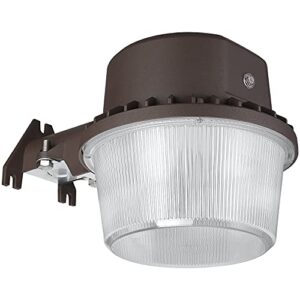
Once your UVB bulb is handled, don’t overlook the room lighting around the enclosure itself. The TORCHSTAR Dusk to Dawn Barn Light isn’t made for basking, but it’s worth knowing about if you need reliable ambient light nearby.
Its 5000K output mimics daylight, and the dusk-to-dawn photocell switches automatically, no timers required. At 40W, it replaces a 400W incandescent while running cooler.
The IP65 rating and aluminum housing shrug off humidity, rain, or dust—handy in reptile rooms. ETL and FCC certification confirms safe wiring standards. Just remember: this supplements room lighting, not your python’s UVB or heat setup.
- Dusk-to-dawn photocell turns the light on and off automatically, no timer needed
- Energy-efficient 40W LED replaces a 400W incandescent while running cooler
- IP65-rated aluminum housing resists humidity, rain, and dust, ideal for reptile rooms
- Requires hardwired AC power, so it’s not a plug-and-play or battery solution
- Installation may call for professional electrical work
- Not designed for basking or UVB needs, so it only supplements room lighting
3. Commercial Grade Food Heat Lamp
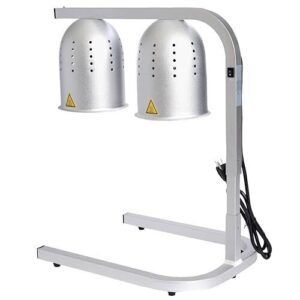
Once your barn light’s sorted, resist the urge to grab a commercial food heat lamp for your enclosure’s basking spot. Restaurant models push 250W to 1000W, built for holding buffet trays at 140–165°F—wildly excessive for a snake needing 88–92°F.
They lack thermostat-controlled heating, so overheating and burns become real risks fast.
- Stainless housings built for kitchen abuse, not vivarium precision
- Fixed heat output with no proportional thermostats
- Reflector guards sized for trays, not mesh screen tops
- Cords rated for countertops, not humid reptile rooms
Choose halogen flood bulbs or ceramic emitters instead—they pair with proper thermostats and support nighttime heat without light, exactly what your python needs.
Frequently Asked Questions (FAQs)
What lighting do ball pythons need?
Getting it right isn’t rocket science, but the devil’s in the details: you need low-intensity UVB (UVI 0–0), UVA for enrichment, a 12-hour light cycle, and total night darkness for healthy thermoregulation and circadian rhythm.
Is 70 degrees too cold for a ball python at night?
Right at the edge, not dangerously cold. Keep nights at 70–78°F using thermostat-controlled heat—never light. Below 70°F risks cold stress, sluggish digestion, and respiratory issues, so maintain the thermal gradient and monitor humidity closely overnight.
Do ball pythons need two lights?
Two lights isn’t a rule carved in stone — it’s a myth. A single light setup works fine when you pair proper UVB bulbs with thermostat-controlled heating, keeping UVB and heat separation intact through smart timer-based consistency.
Do ball pythons need a heat lamp 24 7?
No. Thermostat-controlled heating should run continuously, but light shouldn’t. Maintain your temperature gradient with a heat source, then let a 12-hour light cycle govern illumination separately, dropping to darkness with a safe night temperature drop to 70–75°F.
How do you light a ball python?
Mount a low-intensity UVB bulb over the basking zone for a UVI of 0–0, run a 12-hour automated light cycle, and keep thermostat-controlled heating separate so darkness stays undisturbed at night.
How do I setup heating for a ball python?
Think of your enclosure as a sunbaked trail with shade patches nearby. Position a thermostat-controlled heat emitter overhead, probe near the basking spot, creating a thermal gradient: 88–92°F basking area, 78–80°F cool side—never bare heat rocks.
How to light a ball python tank?
Position a low-intensity UVB tube 10–14 inches above the basking zone (12–18 inches if mesh-free), targeting a UVI of 0–0. Pair it with full-spectrum daylight, a 12-hour light cycle on a timer, and shaded hides for choice.
Do ball pythons need light?
A snake that hunts by heat and scent still needs light to thrive. Ball pythons don’t strictly require it, but a 12-hour light cycle helps circadian rhythm, feeding patterns, and — through low-level UVB — healthy vitamin D3 synthesis.
Which light is best for ball python’s mental health?
Low-intensity full-spectrum lighting (5000–7000K) paired with gentle UVB works best — it helps circadian rhythm and UVA enrichment without harsh glare, encouraging natural behavioral thermoregulation and stress reduction rather than the bright exposure your snake would actually avoid in the wild.
What wattage do I need for a ball python tank?
Wattage isn’t one-size-fits-all. Use 40–60 watts for 20–40 gallon juvenile tanks, 60–100 watts for adult 40–60 gallon setups, always under thermostat-controlled heating to maintain your 88–92°F basking gradient safely.
Conclusion
Think of your snake’s enclosure as a tiny planet, spinning on an axis only you control. Every ball python lighting setup essential you apply—UVB intensity, photoperiod, basking heat—shapes that planet’s seasons.
Get the cycle right, and your snake thrives on predictable rhythm, not chance. Skip it, and the planet wobbles, health falters, confidence fades.
Master the light, and you master the world you’ve built. Consistency is the whole secret.