This site is supported by our readers. We may earn a commission, at no cost to you, if you purchase through links.

A ball python can slip through a gap the width of your thumb, and a stressed one will try. Most snake owners learn that lesson at the worst moment: standing in a parking lot, holding a loose carrier lid.
Snakes hide illness well. By the time one wheezes or stops eating, the problem has often progressed, and a single bumpy car ride can make it worse. Knowing how to prepare a snake for a vet visit keeps your pet secure, your records complete, and your appointment productive.
Start with one phone call, then work through the carrier, the paperwork, and the exam itself.
Table Of Contents
- Key Takeaways
- Contact a Reptile Vet Before Your Visit
- Pack Your Snake’s Records and Appointment Essentials
- Choose a Secure, Ventilated Snake Transport Carrier
- Transfer Your Snake Calmly Into The Carrier
- Manage Temperature and Stress During Snake Transport
- Know What Your Snake’s Vet Visit Involves
- Frequently Asked Questions (FAQs)
- How should I bring my snake to the vet?
- What material can snakes not bite through?
- Can I leave a snake alone for a week?
- How expensive is it to take a snake to the vet?
- Should I feed my snake before the appointment?
- Can I bathe my snake before the vet visit?
- Is it safe to bring my snake into the waiting room?
- Should I clean the enclosure before or after the visit?
- How long should I wait before handling my snake afterward?
- Conclusion
Key Takeaways
- Call the clinic before you book, since you’ll learn whether they treat snakes, whether to bring a fresh fecal sample or skip feeding, and what the exam and any add-on tests will cost.
- Treat open-mouth breathing, wheezing, nostril bubbles, blue or gray gums, seizures, heavy bleeding, or a prolapse as emergencies, because snakes hide pain and illness until problems are advanced.
- Transport your snake in a dark, secure, ventilated hard-plastic carrier with locking closures, and keep it between 75 and 85°F with a towel-wrapped heat source placed outside the carrier.
- Bring a folder with feeding records, medical history, enclosure details, and photos or videos of the problem, so your vet gets the full picture and the visit stays productive.
Contact a Reptile Vet Before Your Visit

A quick phone call before the appointment saves you time, money, and stress. You’ll learn whether the clinic treats snakes, how to prepare, and what to expect for cost. Start with the signs that mean your snake can’t wait, then move on to the pre-visit instructions and price estimates below.
If your snake seems constipated or bloated, these impacted snake symptoms and remedies can help you describe the problem clearly when you call the clinic.
When Does Your Snake Need Urgent Care?
When should you stop waiting and call a vet? Treat open-mouth breathing, wheezing, or nostril bubbles as urgent. Blue or gray gums need emergency veterinary care immediately.
Seizures, collapse, uncontrolled bleeding, or a cloacal prolapse also can’t wait. Cloacal discharge, blood in droppings, or severe weakness warrants a same-day call, because your snake won’t show pain clearly. Call right away.
Seizures, collapse, heavy bleeding, or a prolapse can’t wait, because your snake hides pain, so call a vet right away
Pre-Visit Instructions and Cost Estimates
Once you’ve decided your snake needs a visit, call the clinic before you book transport. Ask whether the vet wants a fresh fecal sample, and how to store it. Check if you should withhold food, since fasting isn’t universal. Request an exam-only price and likely add-ons. Diagnostic testing is billed separately, so ask for approval limits first.
Pack Your Snake’s Records and Appointment Essentials

Once the clinic confirms your appointment, gather everything the vet will ask about. Put it in one folder so nothing gets left on the counter.
While you’re packing that folder, a few tips for keeping snakes warm during car trips can help you hold the carrier steady in that safe 75-85°F range.
Start with reptile medical records: past exams, lab results, and the previous clinic’s contact details. Add your snake’s species information, age, and sex. Then write down the basics of your setup, including enclosure measurements, substrate, and your temperature and humidity readings.
Bring these three items first:
- Feeding records with dates, prey type, and prey size
- Diagnostic history, including any pending results or medications
- Photos or short videos of the problem
Note when the signs began and whether they’re changing. If the clinic requested a fecal sample, seal it in a clean container and ask how to store it. Pack your payment method and a short list of questions.
Choose a Secure, Ventilated Snake Transport Carrier
With your folder packed, turn to the carrier. A snake that gets loose in a car or a waiting room is a safety problem for everyone, so carrier safety comes first.
Because cancer is fairly common in snakes, it helps to know the early signs and symptoms of cancer in snakes before your vet visit, so you can describe changes accurately.
Pick an impact-resistant polypropylene tub with a lid that locks. Ball pythons will push at a loose lid all trip, so choose snap-lock fasteners or a gasket seal. Some travel carriers combine layered closure systems with parachute-style clips to stop ball python escapes.
Check these three things before you commit:
- Secure closures: Use double clips or snap-locks, and look for reinforced seams.
- Smooth ventilation: Small, smooth-edged holes in the upper walls or lid keep air moving without giving your snake an exit. Short trips need only a few. Longer ones need more holes, each kept small.
- Right size: Your snake should stretch out, not slide around.
Choose opaque or translucent plastic. Darkness calms most snakes.
Transfer Your Snake Calmly Into The Carrier

Wash your hands, then set the open transport carrier in a dark, quiet room. Good snake handling starts with calm, confident movements, because nervous energy transfers to your snake.
Place the snake directly into the carrier, supporting its body evenly. Never force it. If it hesitates, guide it gently with a snake hook and let it coax itself inside.
| Snake Size | Best Container |
|---|---|
| Hatchling | Small cloth bag |
| Most adults | Pillowcase |
| Large snake | Duvet cover |
Open the bag fully before the snake goes in. Fold the opening over two or three times, add side folds, and knot it tightly. Set the bag inside a secure, hard carrier.
Keep handling brief if your snake is shedding or ill; stress reduction matters most.
Manage Temperature and Stress During Snake Transport
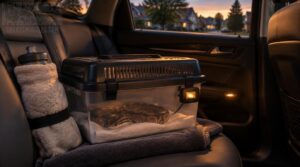
You’ll want your snake’s carrier temperature stable before you leave the house. Pre-warm your car in cold weather and pre-cool it in summer, then set the carrier inside. Clip a probe thermometer to the carrier and check it often. Most common pet snakes do best at 75 to 85°F, though your vet can confirm the right range for your species.
Wrap any heat source, like a warm water bottle, in a towel and place it outside the carrier at one end. That lets your snake move toward or away from warmth for thermal regulation. Never use ice directly, and never leave your snake in a parked car.
Keep the carrier dark, quiet, and lined with paper towels. Skip loud music and don’t keep opening the lid, since handling adds stress.
Know What Your Snake’s Vet Visit Involves

Knowing what happens in the exam room helps you stay calm and in control. Most visits follow the same two stages, so you can prepare for each one ahead of time. Here’s what your vet will cover, starting with your snake’s health history.
Health History and Physical Examination
Your reptile vet will start with questions, so bring answers. Share feeding, shedding, and husbandry details, plus any previous fecal analysis results.
During the initial examination, expect a hands-on check of body condition, mouth, spectacles, vent, and breathing. The vet will also palpate gently for lumps. Calm handling at home keeps this veterinary examination smooth and protects your snake’s health.
Diagnostic Tests and Follow-Up Instructions
Expect questions, then samples, then a plan. Your vet may ask for a fresh stool sample, so bring one collected within two hours and kept refrigerated, never frozen. Fecal analysis and parasite screening show what’s living in your snake’s gut.
Blood testing and radiographs check organ function and bone health. Radiographs often require sedation. Ask your vet to explain every result and next step.
Frequently Asked Questions (FAQs)
How should I bring my snake to the vet?
Why risk a stressed, injured snake over a rough ride? Use a secure, ventilated carrier just slightly larger than your snake. Keep the temperature steady, handle gently, and secure the transport so nothing slides.
What material can snakes not bite through?
No material is truly bite-proof, but thick hard plastic comes closest. A hardsided carrier or plastic tub made from HDPE resists fangs well. Avoid a pillowcase or heavy-duty canvas bag, since fangs can penetrate fabric.
Can I leave a snake alone for a week?
Yes, a healthy adult snake can stay alone a week. Feed it two days before leaving, check heat, and lock the enclosure. Carrier transport and handling add stress, so skip boarding. Juveniles? Ask your vet.
How expensive is it to take a snake to the vet?
A routine snake vet exam usually runs $85 to $185, and a fecal screen adds $25 to $ Budget $200 to $500 yearly for a healthy snake. Emergencies climb fast, from $200 to $1,
Should I feed my snake before the appointment?
Feeding your snake right before the appointment is a recipe for disaster. Skip the meal, since fasting lowers regurgitation risk. Ask your reptile vet first, because feeding management varies by species, age, and snake health.
Can I bathe my snake before the vet visit?
Does a clean snake make a better patient? Not really. Skip the bath unless your vet says otherwise, since handling adds stress and chills your snake.
Stick to reptilesafe cleaning, like a damp towel wipe.
Is it safe to bring my snake into the waiting room?
Snakes can carry Salmonella without looking sick, so waiting room precautions matter. Keep yours in a secure, well-ventilated rigid carrier, covered for stress control and escape prevention. If the room’s loud, wait in your car.
Should I clean the enclosure before or after the visit?
A spotless enclosure won’t save a sick snake from a stressful scrubbing. Clean it before the visit only if your snake is stable and you have a warm, secure spot for it. Otherwise, wait.
How long should I wait before handling my snake afterward?
Follow your vet’s discharge instructions first. If none apply, give your snake a day or two to settle at home. Skip handling after sedation until your vet clears it. Keep snake handling techniques gentle and brief afterward.
Conclusion
Picture a corn snake named Biscuit, tucked in a ventilated carrier with a warm pack, her feeding log on your phone, and the clinic already expecting you. That calm scene is what knowing how to prepare a snake for a vet visit buys you.
Call ahead, secure the carrier, keep the temperature steady, and bring all your records. Each step is small, but together they protect your snake and give your vet the full picture.