This site is supported by our readers. We may earn a commission, at no cost to you, if you purchase through links.

A ball python tucked into a pillowcase on a warm car seat can overheat in under an hour. Temperatures above 35°C (95°F) can kill a snake, whatever the species.
Most keepers focus on getting the snake from point A to point B. Few think about what the thermometer inside the container reads at mile 80. Safe temperatures for transporting pet snakes sit in a narrow window, and that window shifts with species. Ball pythons need 24-30°C, while corn snakes tolerate 21-29°C.
You control that window with the right container, the right monitoring, and a plan for emergencies. Here’s how to build all three.
Table Of Contents
- Key Takeaways
- Safe Temperatures for Transporting Pet Snakes
- Prepare a Temperature-Stable Snake Travel Container
- Use Heat and Cold Packs Safely
- Monitor Container Temperatures Throughout Your Trip
- Manage Temperature Emergencies and Post-Travel Acclimation
- Frequently Asked Questions (FAQs)
- What temperature can snakes not move?
- What is the best way to transport a pet snake?
- Is 90 degrees too hot for a snake?
- Are snakes out in 100 degree weather?
- Can I transport my snake by airplane?
- How long can snakes safely stay in transit?
- Should I feed my snake before traveling?
- Does covering the container help calm my snake?
- What supplies should I carry for travel emergencies?
- Conclusion
Key Takeaways
- Keep your snake’s container within its species range, such as 24-30°C for ball pythons and 21-29°C for corn snakes, and never let it pass 32°C, since anything above 35°C can kill quickly.
- Run transport temperatures a bit cooler than your basking spot, because your snake can’t move to a cooler zone in a small container and heat builds fast.
- Place a probe inside the container with the display outside, check it every 2-3 hours, and keep any heat pack outside the snake’s compartment so it can’t cause burns.
- If your snake gapes, thrashes, or goes limp, cool it gradually without ice or cold water, then bring it back to normal enclosure temperatures slowly and call a reptile vet.
Safe Temperatures for Transporting Pet Snakes
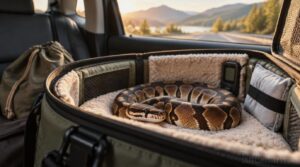
Your snake’s safety on the road depends on keeping the container within a safe temperature range. Below, you’ll find two points to guide your planning. Each one shows how transport temperatures differ from what your snake needs at home.
Since a thermostat and a heat mat do very different jobs, it helps to understand the difference between a thermostat and a heat mat before you set up any travel heating.
Species-Specific Transport Temperature Needs
A safe temperature range depends on your snake’s species, so don’t guess. Species temperature tolerance varies, and species-specific needs matter more than general rules. Use these targets:
- Ball pythons: 24-30°C (75-86°F)
- Corn snakes: 21-29°C (70-84°F)
- Boa constrictors: 26-30°C (79-86°F)
- Temperate snakes: 18-26°C (64-79°F)
Don’t let any snake pass 32°C (90°F) in an enclosed container. Anything above 35°C (95°F) can kill quickly, regardless of species.
Since digestion also stalls when the cool side drops too low, this snake feeding temperature guide helps you keep your enclosure within a safe, species-appropriate range.
Plan thermal monitoring before you leave, because temperature fluctuations build fast in closed spaces. It also helps to use a temperature gun to check the exact temperature where your snake is positioned, since a thermostat reading alone may not show it. Know your species’ lower limit, since chilling harms digestion.
Transport Temperatures Versus Enclosure Temperatures
Your snake’s enclosure and its travel container work very differently, so don’t copy your home setup. At home, your snake moves between a warm basking zone and a cooler area. In a container, it can’t. That’s why transport temperatures should run 5-10°F cooler than your basking spot.
Keep the ambient temperature range steady and below 86°F (30°C). Small containers trap heat fast, so temperature control depends on you. Insulation helps buffer temperature fluctuations, and good temperature monitoring catches problems early. Temperature management starts well before you leave.
Prepare a Temperature-Stable Snake Travel Container
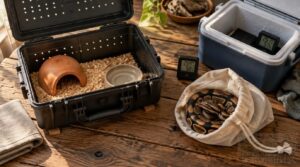
Once you know your snake’s target range, build a container that holds it. Start with a secure, rigid box with a latching lid, then place a cloth bag inside for double containment.
Choose an insulated transport container or set the box inside a cooler in cold weather. Add absorbent bedding on spacers, a hide, and a water dish. Keep ventilation in reptile enclosures in mind: you’ll want airflow, not drafts.
For a closer look at how to balance fresh air and warmth, this guide to snake enclosure air circulation explains how vent placement keeps humidity steady without chilling your pet.
Test everything in a temperature-controlled environment first, using portable thermometers.
Use Heat and Cold Packs Safely
Your container is built and tested. Now decide whether it needs a heat pack at all. Use one only when the surrounding air would let the inside drop below your snake’s range.
Keep every pack outside the snake’s compartment. Direct contact causes burns. Leave an air gap and a barrier between the pack and the box wall. Don’t seal it airtight, since these chemical warmers need airflow.
Skip cold packs, hand warmers, and heating devices. Move insulated transport containers somewhere cooler instead.
Check portable thermometers for temperature fluctuations.
Monitor Container Temperatures Throughout Your Trip
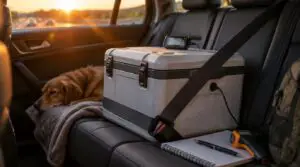
You can’t judge your snake’s safety by feel, so rely on temperature monitoring devices from the start. Place a probe inside your insulated transport containers, and keep the display outside so you never open the lid mid-drive.
Record readings at departure, midpoint, and arrival. On long trips, check every 2-3 hours during fuel stops or meals. Portable thermometers work well for these checks.
Aim to stay between 65°F and 90°F. Temperature stability for reptiles depends on balanced ventilation and insulation.
Manage Temperature Emergencies and Post-Travel Acclimation

Even with careful planning, a snake’s container can run too hot or too cold on the road. You’ll need to know how to spot the problem and fix it fast. Below, you’ll find two steps to protect your snake’s health: how to respond to overheating or chilling, and how to return your snake to its proper enclosure temperatures.
Respond to Overheating or Chilling
Temperature fluctuations can turn a calm trip into an emergency fast, so know what to do before it happens.
If your snake shows signs of overheating, like gaping, frantic movement, or limpness, act now. Move the container out of the heat and into a dim, cooler spot. Never use ice or cold water. Cool your snake gradually and offer room temperature water.
For chilling, warm your snake slowly with heat packs wrapped in cloth, never touching it. Call a reptile vet today, even if it looks fine.
Return to Appropriate Enclosure Temperatures
Think of the trip’s end as a door you open slowly, not a threshold you rush through.
Bring your snake home slowly, easing it back to normal temperatures like opening a door gently rather than rushing through
Keep your snake in its insulated transport container until it reaches room temperature. Don’t place a cold snake straight into a warm enclosure.
Before the snake arrives, check the gradient with temperature monitoring devices. Confirm a full day and night of stable readings.
Temperature regulation matters most. Ball pythons need an 88-92°F warm side, so match your species’ range. Allow recovery time: five days before feeding, two weeks before handling.
Frequently Asked Questions (FAQs)
What temperature can snakes not move?
Wondering when your snake just stops moving? It happens at its critical thermal minimum, roughly 5°C to 7°C for garter snakes and about 5°C for ring-necked snakes. Below that, cold narcosis sets in.
What is the best way to transport a pet snake?
Good journey planning comes first. Place your snake gently in a secure transportation container with soft substrate lining, then keep it in a temperature-controlled environment. This helps in minimizing stress, so check stable temperatures often.
Is 90 degrees too hot for a snake?
Ninety degrees feels like a lovely beach day, until your snake disagrees. It’s too hot. In insulated transport containers, overheating happens fast because temperature regulation is impossible. Check portable thermometers, and respect species specific needs.
Are snakes out in 100 degree weather?
Rarely. Snakes avoid direct sun in 100-degree heat and hide in shade or burrows to prevent overheating. They’ll venture out at dawn, dusk, or night. Keep your pet in a temperature-controlled environment during every trip.
Can I transport my snake by airplane?
Yes, but check airline rules first. Confirm legal compliance for your route, then book cargo, since few airlines allow snakes in the airplane cabin.
Use an escapeproof container, ventilated adequately, and plan your temperature management.
How long can snakes safely stay in transit?
Picture a snake curled in a dark, insulated box, warmed by one steady heat pack. That calm can last up to 72 hours, but aim for overnight shipping. Past 24 hours, dehydration and stress climb.
Should I feed my snake before traveling?
Don’t feed your snake right before travel. Pretravel fasting for reptiles means skipping meals for at least 72 hours, ideally a week. This digestive system preparation for travel lowers your regurgitation risk in transported snakes.
Does covering the container help calm my snake?
Yes. Covering your escape proof container creates a dark and quiet environment for reptiles, supporting stress reduction through habitat mimicry. Snakes feel secure when they can’t see movement, so cover with a breathable towel while preserving ventilation.
What supplies should I carry for travel emergencies?
Think of your travel kit as a safety net. Pack a reptile-safe heat pack, backup heat packs, portable thermometers, and insulated transport containers. Add reptile-safe disinfectant, gloves, and spare water.
Conclusion
A snake in transit is a passenger in a tiny, sealed climate, and you’re its weather forecaster. Know your species’ range, pack a stable container, and check the thermometer often. Safe temperatures for transporting pet snakes aren’t luck. They’re built from preparation and steady attention.
If readings drift, act fast. Cool or warm the container gradually, then return your snake to its normal enclosure heat slowly. Stay calm and watchful, and your snake arrives safe.