This site is supported by our readers. We may earn a commission, at no cost to you, if you purchase through links.

A ball python needs a warm side of 88-92°F. A corn snake wants 80-85°F. A Western hognose basks at 90-95°F. Mix those numbers up and you’ve got a stressed, hungry animal.
Hitting those numbers reliably takes the right equipment, so it helps to compare the best snake enclosure heaters for beginners before you set up your tank.
That’s why generic advice fails new keepers. Every species has its own temperature gradient, feeding schedule, and humidity range, and a wrong guess shows up as a stuck shed or a refused meal.
The right snake care books for first time owners give you species-specific answers, written by vets, zoo keepers, or breeders who’ve done the work. Below are nine picks worth shelving, plus how to spot a reliable one.
Table Of Contents
- Key Takeaways
- Top 9 Snake Care Books for First-Time Owners
- 1. Corn Snake Owners Guide
- 2. Ball Python Care Guide for Beginners
- 3. Corn Snake Care Guide for Beginners
- 4. Ball Python Care Guide
- 5. Snake Keepers Logbook Journal
- 6. Corn and Rat Snakes Complete Herp Care
- 7. Ball Python Care Handbook for Beginners
- 8. Corn Snake Care and Ownership Guide
- 9. Western Hognose Snake Care Guide
- How to Choose a Reliable Care Book for Your Snake Species
- Enclosure Setup Advice Every Beginner Snake Book Should Cover
- Feeding, Handling, and Health Guidance to Look for in Snake Care Books
- Using Snake Care Books and a Logbook to Plan Long-Term Care
- Frequently Asked Questions (FAQs)
- What is the best first pet snake for a beginner?
- What are some tips for first-time snake owners?
- Will a snake crawl in my bed?
- Can I leave a snake alone for a week?
- What do I need to know as a first time snake owner?
- Can snakes recognize their owners over time?
- How do snakes behave during breeding season?
- What enrichment activities benefit captive snakes?
- Do snakes need companions or prefer solitude?
- How does molting frequency change with age?
- Conclusion
Key Takeaways
- Every snake species needs its own temperature, humidity, and feeding setup, so you’ll want a book written for your exact species rather than generic advice.
- You can judge a book’s reliability by checking that the author is a vet, zoo keeper, or experienced breeder, that the publication date is recent, and that it gives exact numbers and step-by-step instructions.
- A good beginner book should cover a secure enclosure, a thermostat-controlled temperature gradient, a hide on each side, feeding schedules by age, safe handling, and clear signs of illness.
- You’ll get the most out of a care book when you pair it with a logbook, since the book shows what’s normal for the species while your notes on feeding, shedding, and weight show what’s normal for your snake.
Top 9 Snake Care Books for First-Time Owners
Picking the right book is your first big step toward a healthy, happy snake, and you’ve got this.
A solid snake breeding guide for beginners walks you through pairing, housing, and egg care, so you can start with real confidence.
Below, you’ll find nine picks covering Corn Snake, Ball Python, and Western Hognose care, plus one handy Husbandry Logbook.
Each one gets a quick pro and a fair caveat, so you’ll know exactly which fits your species and your skill level.
1. Corn Snake Owners Guide

A corn snake deserves a solid reference, and this Expert Vivarium Systems guide is a smart place to start. You get 224 pages of corn snake care, all in one used copy in good condition.
Beginners will like the basics of feeding and housing. Experienced keepers get breeding, genetics, and color variation, too.
Safety matters, and you’ll find help with parasites, mouth rot, mites, and respiratory disorders. Spotting trouble early protects your snake.
One caveat: CompanionHouse Books published it in 2006, so newer research and morphs may be missing. It’s also corn snakes only, so skip it for other species.
Still, if you want solid fundamentals you can trust and reread often, this one really earns its spot on your shelf.
| Best For | Corn snake owners, from beginners learning feeding and housing to experienced keepers interested in breeding, genetics, and color variation, who want a printed reference. |
|---|---|
| Species Focus | Corn snakes |
| Page Count | 224 pages |
| Publication Year | 2006 |
| Price | N/A |
| Health Coverage | Parasites, mouth rot, mites, respiratory |
| Format | Used copy, good condition |
| Additional Features |
|
- Offers 224 pages of detailed corn snake care information in a used copy in good condition.
- Covers the basics for beginners and breeding, genetics, and color variation for experienced keepers.
- Gives guidance on health problems such as parasites, mouth rot, mites, and respiratory disorders.
- Published in 2006, so it may lack the latest research and morph developments.
- Focuses only on corn snakes, so it won’t help with other snake species.
- Includes only printed text and photos, with no digital or supplementary materials.
2. Ball Python Care Guide for Beginners

Maybe ball pythons are more your speed. They’re calm, manageable, and forgiving, which makes them a favorite first snake.
This 2025 guide covers enclosure setup, feeding schedules, handling, and early signs of illness. You’ll learn the temperature gradient ball pythons need: 88-92°F on the warm side, 76-80°F on the cool side. Humidity should stay between 60 and 80 percent.
At 167 pages and $14.99, it won’t overwhelm you. The 6 x 9 inch size fits easily on a shelf.
Two caveats. It covers ball pythons only, and it isn’t veterinary advice, so call a vet if your snake wheezes. Morph info is descriptive, not a breeding guide.
Still, it’s a friendly, practical starting point for building real confidence from day one.
| Best For | First-time snake owners who want a practical, beginner-friendly guide to caring for a ball python. |
|---|---|
| Species Focus | Ball pythons |
| Page Count | 167 pages |
| Publication Year | 2025 |
| Price | $14.99 |
| Health Coverage | Early signs of illness |
| Format | 6 x 9 inch book |
| Additional Features |
|
- Covers the essentials for beginners, including enclosure setup, feeding schedules, handling, and early signs of illness.
- Gives clear temperature and humidity targets: 88-92°F on the warm side, 76-80°F on the cool side, and 60 to 80 percent humidity.
- Short at 167 pages and priced at $14.99, with a 6 x 9 inch size that fits easily on a shelf.
- Covers ball pythons only, so it won’t help if you want to keep other snake species.
- Is not veterinary advice, so you will still need a vet if your snake shows problems like wheezing.
- Describes morphs but is not a breeding guide, so it won’t help anyone interested in breeding.
3. Corn Snake Care Guide for Beginners

If ball pythons feel a little too exotic for day one, corn snakes might be your sweet spot. They’re a beginner-friendly species, and the Corn Snake Care Guide for Beginners treats you that way.
Once you’ve settled on a species, snake care books for ball python owners can help you compare temperature gradients, humidity targets, and feeding schedules before bringing one home.
It packs 49 pages of habitat setup, feeding schedules, humidity tips, and handling basics into $12.97. Check its enclosure specs against the 4’×2’×2′ adult minimum, and make sure it covers a warm side of 80-85°F.
Bonus points for the maintenance checklists, hatchling feeding protocols, and stress-reduction handling tips. Pair them with a simple logbook to record feeding shedding and weight, and trends show up fast. Hatchlings are usually fed every 5-7 days while adults eat every 14-21 days, so compare the book’s advice with these life stage feeding schedules.
One caveat. It’s written for corn snakes only, and it isn’t veterinary advice, so call a vet if your snake wheezes or breathes with its mouth open.
| Species Focus | Ball pythons |
|---|---|
| Page Count | 128 pages |
| Publication Year | January 2009 |
| Price | N/A |
| Health Coverage | Health care |
| Format | 8 oz book |
| Additional Features |
|
4. Ball Python Care Guide

Corn snakes not your thing? Ball pythons are a bigger commitment, and the Ball Python Care Guide from TFH Publications is built for that jump.
A respected breeder wrote it, and its 128 pages cover housing, health care, breeding, and genetics. That suits you whether you’re just starting out or already eyeing a first clutch.
Test it against the basics: a warm side of 88-92°F, humidity of 60-80%, and an enclosure of at least 36"x18"x12". If it nails those, you’re in good hands.
One caveat. It was published in January 2009, so check its advice against current husbandry. Some customers say it isn’t worth the price, so read reviews first. It weighs 8 ounces, which makes it a light reference to keep beside the enclosure.
| Best For | Beginning reptile hobbyists who are ready to move up to ball pythons and want a single guide covering housing, health care, breeding, and genetics. |
|---|---|
| Species Focus | Any species (up to 9 snakes) |
| Page Count | 94 pages |
| Publication Year | N/A |
| Price | $8.14 |
| Health Coverage | Tracks data for vet visits |
| Format | Soft cover, 8.5″ x 11″ |
| Additional Features |
|
- Written by a respected ball python breeder
- Covers housing, health care, breeding, and genetics in 128 pages
- Suitable for both beginners and those starting to breed
- Published in January 2009, so its advice may not match current husbandry practices
- Several customers say it is not worth the price
- At 8 ounces and 128 pages, it may be lighter on depth than some readers want
5. Snake Keepers Logbook Journal

Logbooks rarely get the credit they deserve, but the Snake Keepers Logbook Journal earns its spot on your shelf. At $8.14, it gives you 94 pages for feeding, shedding, weight, cleaning, and poop schedules, plus basic info for every snake.
The 8.5" x 11" pages mean no cramped handwriting. It covers nine snakes, or you can reuse it for one snake across repeated cycles.
At 0.22" thick and 9.1 ounces, the soft cover is easy to handle and tosses in a bag for vet visits. Spot trends early, like a feeding refusal or a rough shed, and show your vet real data.
Heads up: there’s no app, it’s English only, and nothing is pre-filled for your species. You’ll write your own entries. Consistent notes build real husbandry mastery over time. Still, if you want to stay organized from day one, this is a smart, simple pick.
| Best For | Snake keepers who want a simple, paper-based way to track feeding, shedding, weight, and cleaning for up to nine snakes, or for one snake over many cycles. |
|---|---|
| Species Focus | Corn and rat snakes |
| Page Count | 128 pages |
| Publication Year | 2006 |
| Price | N/A |
| Health Coverage | Health care |
| Format | Used copy, good condition |
| Additional Features |
|
- Large 8.5" x 11" pages leave plenty of room for handwriting, with 94 pages to cover feeding, shedding, weight, cleaning, and poop schedules.
- Handles up to nine snakes, or can be reused for a single snake, and has space for basic info on each one.
- The soft cover is light at 9.1 ounces and 0.22" thick, so it’s easy to carry to vet visits.
- There is no app or digital integration, so everything must be recorded by hand.
- It’s available in English only.
- Nothing is pre-filled for specific species, so you have to write all your own entries.
6. Corn and Rat Snakes Complete Herp Care
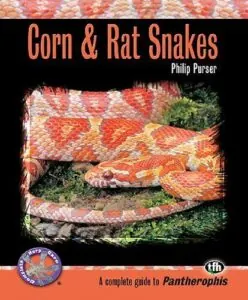
A compact, fully illustrated guide, Corn and Rat Snakes: Complete Herp Care packs a lot into 128 pages. Sidebars and tip boxes break up the text, so you can find answers fast. It covers housing, nutrition, health care, and breeding, and it spans all species and subspecies of North American rat snakes.
You’ll even get a section on finding and photographing snakes in nature, which is a fun bonus.
Here’s the catch. It was published in 2006, and the heating advice never mentions thermostats. It also skips properly vented vivariums. Treat it as a solid starting point, then pair it with a current source for equipment and ventilation. The used copy is in good condition, and it weighs only about 8 ounces.
| Best For | Beginner and hobbyist keepers of corn and rat snakes who want an affordable, compact, illustrated starting guide covering housing, feeding, health, and breeding. |
|---|---|
| Species Focus | Corn snakes |
| Page Count | 92 pages |
| Publication Year | 2026 |
| Price | $15.99 |
| Health Coverage | Health and handling |
| Format | Book with bonus video |
| Additional Features |
|
- Fully illustrated with sidebars and tip boxes that make answers quick to find
- Covers all species and subspecies of North American rat snakes, plus housing, nutrition, health care, and breeding
- Includes a bonus section on finding and photographing snakes in nature
- Heating advice never mentions thermostats
- Leaves out information on properly vented vivariums
- Relies on older care methods despite its 2006 publication date
7. Ball Python Care Handbook for Beginners
Think of the Ball Python Care Handbook for Beginners as a co-pilot on setup day. It rides beside you while you build the enclosure, calling out each turn.
This 46-page guide, published in December 2025, covers hide placement, thermostat use, temperature gradient control, and humidity regulation. Ball pythons are a beginner-friendly species, and this book keeps things refreshingly simple. You’ll also find a clear, practical section on feeding, shedding, and weight, plus a handy list of normal versus concerning behaviors.
At $12.97, it’s a bargain you can keep within reach and flip open mid-setup, no scrolling required.
The catch? It sticks strictly to ball pythons and won’t replace your vet. Still, as a quick-reference guide for daily care, it earns its spot on your shelf.
| Species Focus | N/A |
|---|---|
| Page Count | N/A |
| Publication Year | N/A |
| Price | N/A |
| Health Coverage | N/A |
| Format | N/A |
8. Corn Snake Care and Ownership Guide

Imagine this: your new corn snake refuses its first meal, and you’re not sure whether the tank is too cool or you’re just worrying. A good guide settles that fast.
The Corn Snake Care and Ownership Guide is a 92-page book, published in 2026 for $15.99. It walks you through habitat setup, feeding, handling, and health, plus history, behavior, breeding basics, morphs, and bioactive ideas. Beginners get a clear roadmap, not a flood of jargon.
The bonus video is the real draw. You see enclosure setup, safe feeding, and handling techniques in action, so you can copy them with confidence.
One catch: it covers only corn snakes, and it includes no supplies. You’ll still need to buy the snake and gear separately.
| Best For | First-time corn snake owners who want a clear, step-by-step guide to setting up a habitat, feeding, handling, and health care. |
|---|
- Gives beginners step-by-step feeding guidance for hatchlings, juveniles, and adults, and helps them choose a healthy snake and avoid common pitfalls
- Includes a bonus video that shows habitat setup and handling techniques in action
- Covers extras like breeding basics, morphs, and bioactive enclosure ideas for long-term care
- Focuses only on corn snakes, so it won’t help with other snake species
- Includes no supplies such as substrates, heating elements, or enclosure materials
- Requires a separate purchase of the live snake and all husbandry gear
9. Western Hognose Snake Care Guide

Want a book that stays in its lane? Western Hognose Snake Care Guide does exactly that.
At 137 pages and $13.99, it covers hognose behavior, temperament, color morphs, and growth stages, plus enclosure size, substrate, lighting, and décor. You’ll get exact heating and temperature guidance, which matters because hognoses need a 90–95°F basking spot and a cooler 70–75°F side.
It also helps you pick a healthy snake from a breeder or shop, then walks you through feeding hatchlings, juveniles, and adults, including picky eaters. The health section covers warning signs and when to call a vet.
The catch? It’s independently published, so double-check key details against a vet or another trusted source. It also has no video content or digital extras, and it offers little troubleshooting for rare genetic morphs.
| Best For | New and prospective Western Hognose snake owners who want a single, focused guide to choosing, housing, feeding, and caring for this species. |
|---|
- Gives exact enclosure and heating guidance, covering size, substrate, lighting, humidity, décor, and temperature, to help prevent stress and illness.
- Explains feeding for hatchlings, juveniles, and adults, with solutions for picky eaters.
- Helps you choose a healthy snake and spot warning signs of illness, including when to see a vet.
- It is independently published, so key details are worth double-checking against a vet or another trusted source.
- It has no video content or other digital resources.
- It offers little troubleshooting for rare genetic morphs beyond general care advice.
How to Choose a Reliable Care Book for Your Snake Species

Not every snake book earns a spot on your shelf, and a bad one can cost your snake far more than it costs you.
Before you buy, run each title through five quick checks so you know it’s a Reliable Husbandry Guide for your species.
Let’s walk through them one by one, starting with species-specific care guidance.
Species-Specific Care Guidance
Would you hand a corn snake a ball python’s heat setup? Please don’t. Species-specific care guidance is the first thing to check, because "snake" isn’t a care profile.
A solid Corn Snake Care Guide for Beginners covers 30–32°C warm sides and climbing. A Ball Python Care Guide for Beginners explains humidity. The Western Hognose Snake Care Guide should stress deep digging substrate.
Qualified Authors And Sources
Right species info only helps if the person behind it knows snakes. Check reputable author credentials first. Look for veterinarians, zoo keepers, or experienced breeders with years of hands-on work.
Qualified herpetologist sources add scientific backbone. Cited research is always a good sign.
Think of a good book as your personal reptile mentor. Only truly trusted resources earn that title.
Current Husbandry Recommendations
Good authors know snakes. Great ones keep up with them. Husbandry advice shifts as keepers learn more, so check the publication date.
A solid Snake Care Guide for Beginners recommends temperature gradient control with a hot basking spot and cooler side, plus humidity regulation by species. It should also mention UVB lighting and smart substrate selection. Outdated books skip all of that.
Practical Care Instructions
Facts only help if you can act on them. Look for step-by-step instructions you can follow tonight, like a sample feeding schedule by age, exact temperature gradient numbers, and humidity control tips with target ranges.
Bonus points for shedding problem recognition photos. Good beginner reptile care books show you what to do, not just what to know.
Health And Safety Coverage
Tonight’s checklist is great, but it needs a safety net. A solid book covers disease identification with clear photos of respiratory wheezing, sunken eyes, and retained shed. It should explain health monitoring habits, like daily logs and weighing.
Look for emergency preparedness tips and guidance on finding a reptile veterinary medicine pro. Handwashing and quarantine rules matter too.
Enclosure Setup Advice Every Beginner Snake Book Should Cover
Every good beginner book should walk you through a secure enclosure first. Snakes test every corner and vent, so look for advice on locking lids and front-opening designs. Adults need roughly a 40-gallon breeder or 4x2x2 feet.
Next, check the temperature gradient coverage. A warm side of 80-88°F and a cool side of 70-75°F lets your snake regulate itself. The book should insist on a thermostat, plus probes on both sides.
Good guides explain hide box importance: one hide per side, so safety never competes with warmth. They also cover humidity control (40-60% for many beginner species), digital gauges, and a damp moss hide for shedding. Look for substrate options like aspen or coconut fiber, plus a heavy water bowl.
Feeding, Handling, and Health Guidance to Look for in Snake Care Books

How does a good book handle feeding? Start with a clear feeding frequency schedule. Juveniles usually eat every 5-7 days, adults every 7-14. Then look for prey size matching: the meal shouldn’t be wider than your snake’s midsection. Frozen-thawed rodents warmed to about 100°F, offered with tongs, keep everyone safe.
Good books also cover three essentials:
- Safe handling techniques: support the mid-body, move slowly, and wait 48 hours after meals.
- Shedding cycle management: humidity tips and what to do about retained eye caps.
- Health monitoring indicators: refusal to eat, nasal discharge, mites, or wheezing.
If a book skips these, put it back. You deserve guidance that keeps your snake healthy. Your snake depends on you. Choose wisely.
Using Snake Care Books and a Logbook to Plan Long-Term Care

Say your corn snake refuses a meal in November. Panic? Nope. Flip back through your notes and you’ll spot the pattern: she did the same thing last year right before a shed.
That’s the power of pairing a good book with a Snake Keepers Logbook Journal. The book tells you what’s normal. The journal shows you what’s normal for your snake.
A good book tells you what’s normal for snakes, but only a logbook shows you what’s normal for yours
Start with beginner-friendly species, then build your long-term care planning around real numbers. Track feeding, shedding, and weight every month, and you’ll catch small problems early.
Also add vet contacts and enclosure specs for emergency preparedness. When a heat lamp fails at midnight, you’ll be glad you wrote it down. Tape it somewhere obvious, never buried in a drawer.
Frequently Asked Questions (FAQs)
What is the best first pet snake for a beginner?
Picture a calm snake draping over your hand like a warm rope. A captive-bred corn snake is your best beginner-friendly species.
Ball python runs second. Track enclosure specs, feeding, shedding and weight, and you’re set.
What are some tips for first-time snake owners?
Ready to skip rookie mistakes? Nail your enclosure setup first, including a proper temperature gradient.
Practice hand hygiene before and after handling. Use a quarantine protocol for any new snake. Keep feeding frequency steady, too.
Will a snake crawl in my bed?
Worried about midnight visitors? Only if your snake escapes. Keep temperature consistency and calm environment maintenance inside a secure enclosure, use stress reduction handling tips with gradual exposure handling, and follow a hand hygiene protocol.
Can I leave a snake alone for a week?
Mia left her adult corn snake for a week, and he thrived. Healthy adults can manage it with fresh water, temperature consistency, and enclosure size and security requirements covered.
Add a friend for emergency preparedness.
What do I need to know as a first time snake owner?
Slow and steady wins the race. Pick beginnerfriendly species, then use a Corn Snake Care Guide for Beginners or Ball Python Care Guide for Beginners to master temperature regulation and track feeding shedding and weight.
Can snakes recognize their owners over time?
Your snake definitely adores you, right? Sorry, it just knows your smell.
Scent memory recognition and conditioned feeding routines build calm, scent-based recognition, so good reptile husbandry and handling safety keep your familiar hands boring.
How do snakes behave during breeding season?
Calm one day, restless the next? That’s breeding season behavior. Seasonal cues like cooler temps and longer days kick it off. Males cruise, refuse meals, and chase scent trails. Expect combat, courtship rituals, and possibly mating balls.
What enrichment activities benefit captive snakes?
Picture a corn snake tracking a scented trail to a hidden mouse. Mix things up: try food puzzle feeders, climbing elements, texture variety, water enrichment, and scent rotation.
Your snake stays curious, active, and thriving.
Do snakes need companions or prefer solitude?
Ever wonder if your snake gets lonely? Nope. Their solitary housing preference is real, and feeding rivalry makes cohabitation risks serious. Conspecific tolerance exists, but a quick snake temperament assessment won’t change the answer: house them solo.
How does molting frequency change with age?
Why does your snake shed often? Molting frequency change with age follows growth. Juvenile molt frequency runs high, while adult molt intervals stretch out. Growth rate correlation explains it, shedding condition stability keeps sheds intact.
Conclusion
Pick your species. Pick your book. Pick your setup before the snake comes home.
That’s the whole game. The right snake care books for first time owners turn guesswork into a plan, with temperatures, feeding schedules, and health warning signs you can trust. Pair one with a logbook, and you’ll spot small changes before they become vet bills.
Your snake can’t tell you what it needs. Your bookshelf can. Start reading, start logging, start enjoying.