This site is supported by our readers. We may earn a commission, at no cost to you, if you purchase through links.

Most first-time breeders lose an entire season not from bad genetics or poor pairing choices, but from skipping six weeks of preparation. Pre-breeding conditioning is where reproductive success is won or lost, long before the male ever enters the female’s enclosure.
Learning how to breed pet snakes means understanding that brumation, body condition scoring, and veterinary screening aren’t optional extras. Get the timing wrong on any one of them, and you’ll spend months nursing a non-responsive female or watching infertile eggs collapse in the incubator.
The biology is precise. Your husbandry needs to match it.
Table Of Contents
- Key Takeaways
- Choose Healthy, Compatible Pet Snakes
- Condition Snakes for The Breeding Season
- Set Up The Enclosure and Pair Snakes
- Manage Pregnancy, Egg Laying, or Live Birth
- Incubate Eggs and Care for Hatchlings
- Frequently Asked Questions (FAQs)
- How to breed snakes for beginners?
- How hard is it to breed snakes?
- What’s the easiest snake to breed?
- How to make snakes reproduce?
- What permits are required for breeding snakes?
- How long does snake egg incubation take?
- Can different snake species interbreed successfully?
- What are common snake breeding morph combinations?
- How do you determine snake breeding maturity?
- How do I sell or rehome baby snakes?
- Conclusion
Key Takeaways
- Pre-breeding conditioning—covering brumation, body condition scoring, and vet screening—determines reproductive success far more than the pairing itself does.
- Your female won’t cycle reliably unless she hits a body condition score of 6–7 out of 9 and gains 10–15% over her baseline weight before any introduction happens.
- Never rotate eggs after collection, house every neonate separately from the start, and wait for the first shed before offering any food—these three steps alone protect the majority of your hatch rate.
- Breeding snakes in captivity demands precise numbers at every stage: temperature within ±1°C, humidity dialed to species-specific ranges, and pairings spaced 3–5 days apart to avoid burning out your male.
Choose Healthy, Compatible Pet Snakes
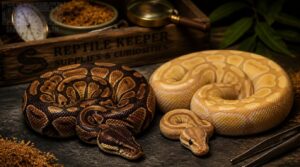
Getting breeding off to the right start means everything hinges on the animals you choose before you ever attempt a pairing. Species compatibility, size thresholds, and health history all determine whether your breeding project succeeds or stalls at the first hurdle. Here’s what to evaluate before introducing any two snakes.
Understanding how traits are inherited can sharpen your selection process—this guide on breeding ball pythons for specific traits breaks down the genetics behind pairing decisions before you commit to any project.
Beginner-Friendly Species and Reproductive Type
Not every snake belongs in a first breeding program. For beginners, docile species like ball pythons, corn snakes, and California king snakes offer manageable temperaments and fairly predictable clutch sizes.
Ball pythons rely on oviparous reproduction, consistently producing 4 to 10 eggs per clutch. Knowing each species’ reproductive type before you even start is the foundation of responsible reptile husbandry.
Understanding how sexual reproduction generates genetic variation can also help breeders make more informed pairing decisions to improve offspring health and diversity.
Breeding Age, Size, and Condition
Choosing the right species is only part of the equation. Age and physical condition determine whether your snake is actually ready to breed.
Reviewing signs your snakes are ready to breed can help you assess both factors before you commit to the process.
Small species like corn snakes reach sexual maturity around 2 to 3 years; larger constrictors need 4 to 6. Target 60 to 90 percent of adult size, a body condition score of 3 to 4, and weight stability within 5 percent over 6 to 8 weeks.
Veterinary Screening and Quarantine
Once weight and condition check out, don’t skip the vet. A pre-breeding physical exam catches skin lesions, scale problems, and mouth abnormalities before they can compromise a pairing.
Fecal testing and a baseline blood panel should precede any breeding contact. New acquisitions always require a 60 to 90 day quarantine in a fully separate space, with dedicated tools and equipment.
Sex Confirmation by Experienced Handlers
Sex confirmation comes down to one method that actually works: cloacal probing. A lubricated stainless steel probe enters the cloaca and tracks toward the tail. Males allow penetration of 9-15 sub-caudal scales; females stop at 2-4.
Don’t attempt sex determination yourself until you’ve completed 50+ supervised attempts. Morphological sexing alone, tail shape and spurs, isn’t reliable enough for breeding decisions.
Lineage Records and Genetic Ethics
Before you pair snakes, lineage records determine the quality of every clutch that follows. Breeding without them risks inbreeding depression and unpredictable morph inheritance.
Track five essentials before any pairing decision:
- Parentage and bloodline origin
- Known morph genetics and combinations
- Coefficient of relatedness
- Documented heritable health conditions
- Generation depth in your line
Genetic diversity shrinks fast in any closed collection.
Condition Snakes for The Breeding Season
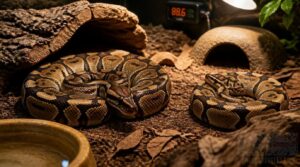
Getting your snakes breeding-ready isn’t just about putting two animals together and hoping for the best. Before any pairing happens, you need to walk through a deliberate conditioning process that gets their bodies ready for reproduction. Here’s what that process involves, step by step.
Once eggs arrive, you’ll also want to be ready for the incubation stage — ball python clutch sizes and what to expect can help you plan ahead before you ever start the conditioning process.
Pre-Breeding Nutrition and Body Condition
Before you introduce snakes, body condition determines reproductive readiness more than timing alone. Underweight females won’t cycle reliably, and overfat animals face equal risk.
| Metric | Target |
|---|---|
| Body condition score | 6–7 out of 9 |
| Pre-breeding weight gain | 10–15% over baseline |
| Feeding frequency | Every 7–10 days |
| Calcium supplementation | Weekly prey dusting |
Keep gains steady, not rushed.
Species-Specific Cooling and Brumation
Not every snake needs brumation, but temperate species like corn snakes and kingsnakes won’t cycle reliably without it. A proper cooling period of 6 to 12 weeks, with ambient temperatures held between 6 and 12°C, resets their thermal regulation and sets up reproductive behavior.
Desert-origin species usually need only a modest temperature drop with a narrowed temperature gradient, not full dormancy.
Safe Temperature Cycling
Temperature cycling works only when the ramp rate stays controlled. Heat or cool your enclosure at 0.5 to 2.0°C per hour, using a slower rate for fragile individuals. Rapid shifts cause condensation and spike stress responses, undermining weeks of careful conditioning.
Recalibrate your sensors monthly, keep humidity at 40 to 60 percent, and log actual ramp rates after each cycle.
Gradual Photoperiod Changes
Light duration drives hormonal readiness as powerfully as brumation. Increase day length 1 to 2 hours per week, building from 8 to 12 hours over 4 weeks.
Use programmable dimmers to simulate gradual dawn and dusk transitions; abrupt switching disrupts melatonin signaling and delays reproductive conditioning inside the breeding enclosure.
Match the schedule to your species’ native latitude.
Weight and Health Monitoring
Weight is your most objective early-warning system. Weigh each snake weekly at the same time, before feeding, and log every number. A drop of more than 5% body weight across two consecutive weigh-ins signals a problem worth investigating before pairing begins. A reliable reptile digital gram scale makes it easy to catch those subtle weight shifts before they become serious health concerns.
Pair that data with body condition scoring along the spine, and you’re tracking health from two critical angles simultaneously.
Set Up The Enclosure and Pair Snakes

Once your snakes are conditioned and ready, the next step is pairing them correctly — and that starts with the environment. Getting the enclosure setup right before introductions begin makes a real difference in how smoothly things go. Here’s what you need to know to do it safely and effectively.
Species-Appropriate Breeding Conditions
Before pairing begins, the enclosure must replicate your species’ natural breeding conditions. For ball pythons, that means a warm-side gradient of 88-92°F, cool-side ambient around 76-80°F, and humidity between 60-80%. Corn snakes run drier, closer to 40-50%.
A deep, burrowing substrate and at least one enclosed hide give snakes the nesting privacy that triggers receptive behavior.
Introduce The Male Safely
Once the enclosure is dialed in, always place the male into the female’s space, never the reverse. Moving her disrupts the territorial familiarity that helps her stay calm and receptive.
Once you’ve introduced the pair, watching for signs of readiness and receptivity matters, and these ball python reproduction tips explain what to look for next.
Do this early in the day, when activity peaks naturally. Watch closely for the first 15-30 minutes, hooks and a spare container within reach, ready to separate if hard biting or repeated musking occurs.
Recognize Courtship and Copulation
Once both snakes settle, watch for head weaving and tongue flicking from the male as he actively tracks pheromones across the substrate. A receptive female often responds with tail tilting and body stillness.
Copulation begins when the male carefully aligns his cloaca with hers, lasting anywhere from a few seconds to several minutes. Steady, controlled movement confirms a successful lock.
Schedule Repeat Pairings Carefully
After confirmed copulation, schedule repeat pairings every 3-5 days throughout the female’s receptive window. Males need 48-72 hours to replenish sperm reserves between sessions, so rotating males carefully prevents burnout.
Log each session date and duration in your record keeping system to accurately predict ovulation timing. Two to three pairings per breeding cycle usually maximizes fertilization without causing unnecessary stress.
Separate Snakes Showing Stress
The moment you spot a stress signal, end the session. Lunging, wall-pushing, and stiff body posture all indicate the interaction has crossed a threshold.
Recognizing these warning signs early is essential — hook training techniques for reducing snake biting reinforce that patience and consistency matter far more than pushing through your snake’s discomfort.
Watch for:
- Freezing or lunging at the glass
- Climbing or pushing against walls
- Rapid, jerking body movements
- Tail flicking
- Tight, stiff body posture
Move the stressed snake to a separate heated hide to recover.
Manage Pregnancy, Egg Laying, or Live Birth

Once successful pairing is confirmed, your role shifts from matchmaker to monitor. The weeks ahead will test your attention to detail—pregnancy in snakes is silent but full of signals worth catching early. Here’s what to watch and do at each stage, from the first signs of ovulation through birth or egg-laying.
Identify Ovulation and Pregnancy Signs
After successful pairing, a gravid female signals her status through measurable physical changes rather than dramatic overnight shifts. Watch for visible mid-body swelling developing over 2–4 weeks as follicles or embryos enlarge.
Many females also refuse food entirely during this window. Track her weight weekly: consistent gain confirms normal gestation, while sudden or persistent loss warrants prompt veterinary evaluation.
Provide a Secure Lay Box
Build your lay box at least one week before expected laying, giving the female time to acclimate. Use an opaque container with ventilation design that helps with humidity control without enabling escape.
- Nesting substrate: vermiculite at a 1:1 water-to-weight, clumping but not dripping
- Substrate depth of 5-15cm, scaled to body size
- Secure lid resisting nesting pressure
- Placement on cooler enclosure end
Support Live-Bearers During Gestation
Viviparous species like boa constrictors carry live young for 4 to 6 months, making your daily management the most critical variable for offspring viability.
Hold a thermal gradient of 85-95°F warm-side and 75-80°F cool-side, with humidity at 50-70%. Track temperatures with multiple thermometers. Reduce handling to near zero, as stress disrupts maternal thermoregulation and can trigger premature birth.
Watch for Reproductive Emergencies
Egg binding kills fast. A gravid female straining for more than 24-48 hours without passing eggs, or digging restlessly for days without laying, risks embryo mortality and oviductal rupture.
Sudden lethargy, swelling near the vent, or labored breathing all signal active dystocia. Contact a reptile vet immediately. Don’t wait because she still looks okay. Prey species naturally hide pain well.
Provide Post-Breeding Recovery Care
Recovery begins the moment laying ends. Offer fresh water immediately, limit handling to essential checks for the first 3-5 days, and keep her enclosure in a quiet, low-traffic area to minimize stress hormones. Most females won’t feed for 1-2 weeks.
Document weight, feeding response, and shedding progress to track maternal recovery accurately and quickly flag any deviations requiring veterinary attention.
Incubate Eggs and Care for Hatchlings
Getting eggs from the lay box to a healthy hatchling is where all your preparation either pays off or falls apart. Each decision you make during incubation — from how you handle the eggs to the humidity you maintain — directly shapes your hatch rate and the health of every neonate that emerges. Here’s exactly what to do, step by step.
Collect Eggs Without Rotating Them

With egg-laying species, never rush the clutch incubation setup. Rotating an egg even slightly can kill the embryo within hours. Mark the top of each egg with a pencil before transferring to the incubator, where humidity control begins. A reliable reptile egg incubator with precise humidity and temperature controls takes much of the guesswork out of this critical stage.
- Use clean hands for precise tactile feedback
- Cup each egg fully to prevent rotation
- Confirm fertility via egg candling before final incubation
Set Species-Specific Incubation Conditions

Once positioned yolk-side up, configure your incubator before the clutch goes in.
| Species | Temp (°C) | Humidity (%) |
|---|---|---|
| Ball Python | 31-32 | 95-100 |
| Corn Snake | 26-28 | 70-80 |
| King Snake | 26-29 | 75-85 |
Incubation temperature must hold within ±1°C, since small deviations cut hatch rates. Place a calibrated thermometer near the yolk sac area and verify your incubator’s setpoint. Humidity control via vermiculite keeps shells stable, and that consistency is what hatchling care depends on.
Monitor Fertility, Mold, and Hatching

Candle each egg at day 7 and 14, holding a light source against the shell in darkness. A viable embryo shows veining by day 7 and movement by day 14.
Any egg with gray or green fuzz, or a musty odor, carries mold and must come out immediately. Pipping signals hatch is near, with neonates arriving within 24 to 48 hours.
House Neonates Individually

Once hatchlings emerge, house each neonate individually without exception. Cannibalism among siblings is common within 24 hours of hatching, and a single shared container can eliminate an entire clutch overnight.
House every neonate separately — one shared container can erase an entire clutch overnight
Separate enclosures let you monitor each animal’s feeding response and body condition without interference, isolate sick individuals before pathogens spread, and build growth records that directly support hatchling survival.
Plan First Sheds and Feedings
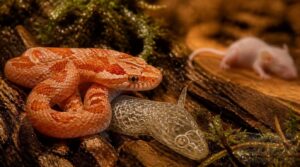
Before offering any food, wait for the first shed to complete, usually within 7-10 days post-hatch. After that, match prey to the snake’s widest body point and begin a feeding schedule: every 5-7 days for corn snakes, every 7 days for ball pythons.
Avoid handling for 24-48 hours post-feeding. A poor feeding response often signals incomplete shedding or incorrect temperatures.
Frequently Asked Questions (FAQs)
How to breed snakes for beginners?
Start with two healthy adults: one mature male, one conditioned female. Get temperatures, humidity, and feeding dialed in before pairing. Everything else follows from that foundation.
How hard is it to breed snakes?
Snakes breed in the wild without any keeper assistance, but in captivity, success rarely happens by chance. Species complexity, genetic health, environmental precision, and hatchling viability each shape how demanding the process becomes for you.
What’s the easiest snake to breed?
Ball pythons top the list for beginners, combining predictable seasonal behavior, manageable clutch sizes of 4-10 eggs, and forgiving temperature and humidity tolerances that don’t demand specialized equipment or extensive husbandry experience.
How to make snakes reproduce?
Getting a snake to reproduce takes a thousand perfectly timed decisions. Drop temperatures gradually to trigger brumation, improve body condition through consistent pre-season feeding, then introduce a healthy mate at precisely the right seasonal window.
What permits are required for breeding snakes?
Most states require breeding permits for commercial sales of native or exotic species. Federal law applies when shipping across state lines. Health certificates from a licensed vet and liability insurance are mandatory in several states.
How long does snake egg incubation take?
Miss the temperature by a few degrees and your 45 to 70 day hatch window shifts by a week. Ball pythons average 55 to 60 days; corn snakes run closer to 65 under stable conditions.
Can different snake species interbreed successfully?
Some snake species can hybridize in captivity, but genetic incompatibility often reduces offspring viability and fertility. Reproductive isolation mechanisms prevent most interspecies pairings from succeeding long-term, though documented hybrid cases exist within closely related genera.
What are common snake breeding morph combinations?
Dominant morphs like Spider crossed to normals yield 50% Spider offspring. Two albino carriers produce 25% visual albinos per clutch. Co-dominant morphs like Pinstripe deliver varied phenotype ratios that you can track and predict reliably.
How do you determine snake breeding maturity?
Breeding readiness isn’t just about age. You need age, weight, and hormonal alignment to all converge before any pairing happens, with males usually maturing at 1–2 years and females closer to 2–3 years.
How do I sell or rehome baby snakes?
List neonates only after two confirmed feeding responses and a completed first shed.
Post on online reptile marketplaces with species, morph, age, and weight. Include hatchling enclosure specs and your full record keeping documentation.
Conclusion
Breeding snakes is less like flipping a switch and more like calibrating a precision instrument, where one misaligned variable throws off the entire sequence.
Learning how to breed pet snakes rewards the breeder who respects the biology, not the one who rushes the calendar.
Nail the conditioning window. Confirm ovulation. Pull eggs without rotating them. Every step compounds the one before it, building steadily toward a successful clutch. Get it right, and the hatchlings follow.