This site is supported by our readers. We may earn a commission, at no cost to you, if you purchase through links.

A snake that can’t find a snug hide will often stop eating. I’ve watched a hatchling ball python refuse meals for three weeks in a roomy cave, then strike within a day after I swapped in a tighter one.
Now multiply that by six enclosures. Each snake needs its own warm, cool, and humid hides, sized to its body and cleaned on a schedule. Snake hiding hides for multi snake collections also have to resist moisture, shrug off bleach, and stay put when a 4-foot boa shoves past.
These ten picks handle all of it, and you’ll learn exactly how to size every one.
Table Of Contents
- Key Takeaways
- Top 10 Snake Hides for Multi-Snake Collections
- 1. JIHAQUA Medium Reptile Rock Hide
- 2. Leoterra Medium Reptile Hide
- 3. Zilla Reptile Bark Bend
- 4. Zipefy Reptile Hide Box XL
- 5. Pangea Large Reptile Hide Box
- 6. Exo Terra Medium Gecko Cave
- 7. Reptizoo Moisture Retaining Hide Cave
- 8. Cavachew Triple Function Reptile Hide
- 9. Zoo Med Small Reptile Shelter
- 10. Repti Zoo Dual Function Hide
- Why Snake Collections Need Secure Hides in Every Enclosure
- Choosing Snake Hide Sizes for Each Species, Life Stage, and Enclosure
- Placing Warm, Cool, and Humid Snake Hides in Each Enclosure
- Snake Hide Materials, Cleaning, and Collection-Wide Hygiene
- Frequently Asked Questions (FAQs)
- How many hides should a snake have?
- What snake is worth $100,000?
- How much do snake hides cost?
- What attracts snakes out of hiding?
- How many hides does a snake need?
- How to get rid of a hiding snake?
- How many hides should each snake have?
- Can two snakes safely share a single hide?
- Do larger enclosures need extra hides for snakes?
- Whats the best hide setup for rack systems?
- Conclusion
Key Takeaways
- Pick a snug hide for each snake, since an oversized one can make it stop eating, and size it to your snake’s body and recheck as it grows.
- Give every snake a warm hide over the heat source, a cool hide at the opposite end, and a humid hide packed with damp sphagnum moss to help shedding.
- Choose nonporous resin or ABS plastic hides that you can wipe down, scrub, and soak in diluted bleach, and avoid toxic cleaners like Lysol, pine oil, and citrus.
- Check each hide’s entrance size, weight, and footprint against your largest snake and your enclosure or rack tub before you buy, because many hides run small, tip easily, or crack on the hot side.
Top 10 Snake Hides for Multi-Snake Collections
I’ve tested hides in my own racks for years, and the right one makes a real difference in how your snakes settle.
If you’re unsure where to start, this guide to what makes a good snake hide walks through sizing, cleaning, and placement so your snake feels secure.
The ten picks below cover a range of sizes, materials, and humidity options so you can match each hide to each animal.
Use them to build a setup where every snake in your collection has a secure place to rest.
1. JIHAQUA Medium Reptile Rock Hide
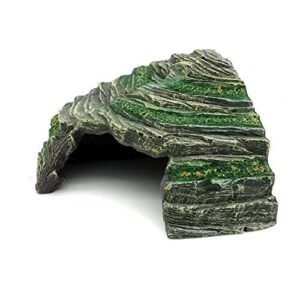
Resin hides like the JIHAQUA Medium Reptile Rock Hide suit corn snakes, kingsnakes, and juvenile ball pythons. It measures 6.7 x 6.7 x 4 inches and weighs 1.01 lbs, yet the heavy base won’t tip.
The entrance fits snakes up to 2 inches thick, and the interior allows full coiling. It holds a humid microclimate that aids shedding. The hide also offers a secure hiding space that helps reduce stress for medium-sized reptiles and amphibians.
The nonporous surface wipes clean fast, unlike many ABS plastic Reptile Hides. Pangea Reptile and other Habitat Supplies brands offer larger options.
| Material | N/A |
|---|---|
| Dimensions | N/A |
| Weight | N/A |
| Suited Animals | N/A |
| Cleaning | N/A |
| Humidity Support | N/A |
| Additional Features |
|
2. Leoterra Medium Reptile Hide
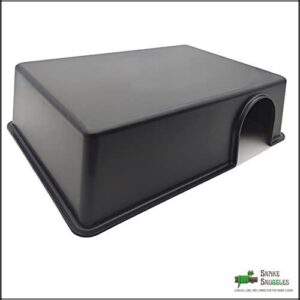
If your snakes have outgrown the JIHAQUA, the Leoterra Medium Reptile Hide gives them more room. It measures 9.45 x 7.09 x 2.36 inches, so it’s long and low, and it weighs just 5.11 ounces. The black plastic is lightweight, smells like nothing, and wipes clean fast. Rounded edges protect your snake as it slides in and out.
The entrance is 2.75 inches wide and 2.36 inches tall. Check that against your snake’s thickness before you buy. Corn snakes, milk snakes, and king snakes fit well, and geckos and lizards use it too. The top seal design holds humidity in the covered area, which helps during shedding.
Two caveats. The adhesive is very difficult to remove, so decide on placement first. Some owners also find it smaller than advertised, so measure your enclosure and your largest snake. Get that right and it’s a solid, dependable pick.
| Best For | Owners of small to medium snakes like corn snakes, milk snakes, and king snakes, as well as geckos and lizards, who want a lightweight, easy-to-clean hide that helps hold humidity during shedding. |
|---|---|
| Material | Black plastic |
| Dimensions | 9.45 x 7.09 x 2.36 in |
| Weight | 5.11 oz |
| Suited Animals | Small-medium snakes, geckos, lizards |
| Cleaning | Wipes clean quickly |
| Humidity Support | Top seal holds humidity |
| Additional Features |
|
- Lightweight, odor-free black plastic that wipes clean quickly
- Rounded edges protect animals as they slide in and out
- Top seal design holds humidity in the covered area, which helps during shedding
- The adhesive is very difficult to remove, so placement has to be decided first
- Some owners find it smaller than advertised
- The 2.75 x 2.36 inch entrance may not suit larger snakes, so it needs to be checked against the snake’s size before buying
3. Zilla Reptile Bark Bend
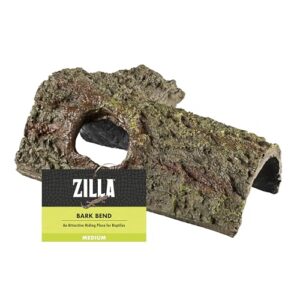
If you want a hide with more shape than the Leoterra’s flat box, the Zilla Reptile Bark Bend is worth a look. It’s a curved, open-ended burrow that measures 8 x 4 x 3.5 inches and weighs 1.1 pounds. The plastic is non-porous, so bacteria have a harder time settling in. Cleanup takes soap and a wipe.
Set it with the open ends alongside the glass. You’ll see burrowing, shedding, and nesting without lifting a thing. Your snakes get privacy and overhead cover, and the synthetic bark finish looks natural. It’s safe in terrestrial and aquatic setups too.
Check a few things first. Reviews are mixed on whether it fits adult bearded dragons, so measure your biggest animal. Some buyers got broken corners in shipping, and some sanded sharp edges before use.
| Best For | Owners of small to medium burrowing reptiles who want a natural-looking hide that gives privacy while still letting them watch burrowing, shedding, and nesting through the glass. |
|---|---|
| Material | Non-porous plastic |
| Dimensions | 8 x 4 x 3.5 in |
| Weight | 1.1 lb |
| Suited Animals | Small-medium burrowing reptiles |
| Cleaning | Soap and wipe |
| Humidity Support | N/A |
| Additional Features |
|
- Non-porous plastic resists bacterial growth and cleans easily with soap and a wipe
- Open ends set alongside the glass let you watch your reptile’s activity
- Synthetic bark finish looks natural and works in both terrestrial and aquatic setups
- Reviews are mixed on whether it fits adult bearded dragons
- Some buyers received units with broken corners from shipping
- Some units have sharp edges that need sanding before safe use
4. Zipefy Reptile Hide Box XL
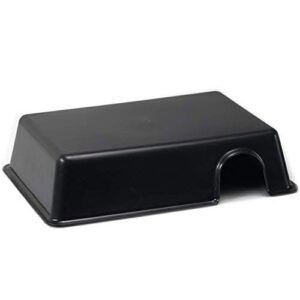
If the Bark Bend is your scenic overlook, the Zipefy XL is your storage unit. It’s built for room, not looks.
Since a ball python spends most of its day tucked away, it pays to compare the best type of hide for ball pythons before choosing your pair.
The box measures 13 x 8.6 x 3.1 inches, and the single opening is 2.75 inches wide and 2.5 inches tall. That’s plenty of space for an adult ball python to coil and disappear. One customer even fit a 24-inch skink inside.
The plastic resin is smooth inside, so you can wipe it down fast. Nothing hides in seams or textures. It weighs 0.51 lb, so it’s easy to move during cleaning day. It also suits lizards, spiders, and geckos. It suits the warm side.
Check two things first. Measure your enclosure, since the footprint is large. Some customers also find the price a bit expensive. At 0.51 lb, it’s light, so anchor it with substrate.
| Best For | Owners of ball pythons, skinks, geckos, or other mid-sized reptiles who want a roomy, easy-to-clean hide and have enclosure space to spare. |
|---|---|
| Material | Plastic resin |
| Dimensions | 13 x 8.6 x 3.1 in |
| Weight | 0.51 lb |
| Suited Animals | Ball pythons, skinks, geckos, spiders |
| Cleaning | Smooth, wipes clean |
| Humidity Support | N/A |
| Additional Features |
|
- Roomy interior with a smooth surface that wipes clean fast
- Fits adult ball pythons and even a 24-inch skink
- Suitable for lizards, spiders, geckos, and snakes
- Some customers find the price a bit expensive
- Large footprint, so you need to measure your enclosure first
- Lightweight at 0.51 lb, so it may need anchoring with substrate
5. Pangea Large Reptile Hide Box
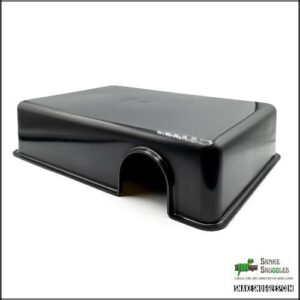
Rack tubs between 28 and 41 quarts take this hide snugly, no modifications needed. Its 13.25 x 9 x 3.25 inch shell wipes clean, and the 1/8-inch plastic stands up to daily use. The offset door keeps the inside darker and more secure for ball pythons, boas, and kingsnakes.
Know the trade-offs. At 9.59 ounces, it’s light, so add weight to stop tipping. It looks plain next to naturalistic hides, and some keepers report wear under prolonged heat. Skip direct heat.
| Best For | Keepers of ball pythons, boas, and other reptiles who want a durable, easy-to-clean hide that gives their animal a dark, secure spot in a terrarium, tub, or rack. |
|---|---|
| Material | 1/8-inch plastic |
| Dimensions | 13.25 x 9 x 3.25 in |
| Weight | 9.59 oz |
| Suited Animals | Ball pythons, boas, kingsnakes |
| Cleaning | Wipes clean easily |
| Humidity Support | N/A |
| Additional Features |
|
- The offset door keeps the inside darker and more secure, with extra hiding space.
- The smooth 1/8" plastic wipes clean easily and holds up to daily use.
- Rounded edges are safer for pets and add durability.
- At just 9.59 ounces, it’s light and may tip unless you add weight.
- It looks plain next to naturalistic hides.
- Some keepers report wear after prolonged heat exposure.
6. Exo Terra Medium Gecko Cave
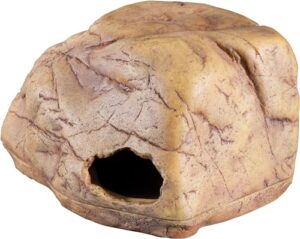
The Exo Terra Medium Gecko Cave isn’t a snake hide, but it earns a spot if your room mixes species. It measures 5 x 6 x 3.7 inches, and the resin design resists tipping. Pack it with sphagnum moss and you’ve got a moist hide that eases stress. Here’s the catch: the entry hole is small for adult leopard geckos, and some owners sand down sharp edges.
Never offer it to snakes, since they can get stuck in the opening.
| Best For | Keepers of Frog Eyed Geckos, Rough Knob Tail Geckos, and Paroedura species who want a sturdy hide that works in both desert and tropical setups. |
|---|---|
| Material | Resin |
| Dimensions | 5 x 6 x 3.7 in |
| Weight | N/A |
| Suited Animals | Geckos, not snakes |
| Cleaning | N/A |
| Humidity Support | Moist hide with moss |
| Additional Features |
|
- Heavy resin design resists tipping by larger geckos
- Can double as a moist hide when filled with sphagnum or forest moss
- Gives shy reptiles and amphibians a secure resting spot that helps ease stress
- Entry hole may be too small for adult or larger leopard geckos
- Some customers report sharp edges on the entry hole that need sanding
- Not safe for snakes, which can get stuck in the round opening
7. Reptizoo Moisture Retaining Hide Cave
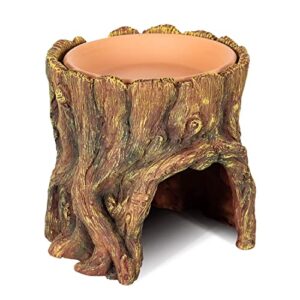
Picture a tree stump with a damp clay bowl set on top, quietly breathing moisture into the hollow below. That’s this hide.
The terracotta water basin sits in the resin top and releases water slowly. The humidity drifts into the cavity underneath, so you skip daily misting. Just refill the bowl when it runs dry. The cave stays humid for hours after you top it off, which helps your snakes shed cleanly when your room air runs dry.
It measures 5.2 inches on each side and weighs 1.64 pounds. That’s compact, so it suits small snakes best. The interior is open with no fixed entrance.
Lift the basin out to clean and refill it.
Be realistic, though. Some keepers say moisture retention fades over time, and durability reviews are mixed. Check the bowl often and test the humidity with a hygrometer.
| Best For | Keepers of small reptiles who want a compact hide that adds humidity to help with shedding without daily misting. |
|---|---|
| Material | Resin with terracotta basin |
| Dimensions | 5.2 in per side |
| Weight | 1.64 lb |
| Suited Animals | Small snakes and reptiles |
| Cleaning | Removable basin |
| Humidity Support | Terracotta basin releases moisture |
| Additional Features |
|
- The terracotta water basin slowly releases moisture, raising humidity inside the hide to support shedding.
- The removable water dish makes cleaning and refilling simple.
- The spacious interior gives reptiles a comfortable shelter and works as a spawning spot.
- Some keepers report that moisture retention fades over time.
- Reviews on durability and long-term reliability are mixed.
- At 5.2 inches on each side, it’s compact and best suited to smaller reptiles.
8. Cavachew Triple Function Reptile Hide
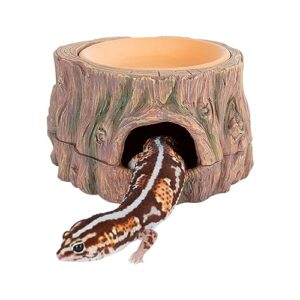
Say you keep three hatchling corn snakes on a rack shelf with no room for extra gear. I’d put one Cavachew in each tub. It’s a hide, a humidity dish, and a food platform in a single brown resin stump.
The cave opening measures 2 inches wide and 1.4 inches tall. That’s tight, so I only recommend it for geckos and small snakes. Adult ball pythons won’t fit. The whole unit is 6 inches long, 6.4 inches wide, and 3.5 inches tall, so it won’t crowd your setup.
Add water to the terracotta dish and you get extra humidity during shed. The base also works as a food dish, and both parts detach for cleaning.
Standing water can turn the dish slimy and grow algae, so change it often. A few buyers also reported chipping on arrival, and replacements fixed the problem.
| Best For | Keepers of geckos, small snakes, and other small reptiles or amphibians who want a hide, humidity dish, and food platform in one compact piece. |
|---|---|
| Material | Resin with terracotta dish |
| Dimensions | 6 x 6.4 x 3.5 in |
| Weight | N/A |
| Suited Animals | Geckos, small snakes |
| Cleaning | Both parts detach |
| Humidity Support | Terracotta dish adds humidity |
| Additional Features |
|
- Gives small reptiles and amphibians a secure hiding place
- Adds humidity when water is put in the terracotta dish, which helps during shed
- Both parts detach for cleaning, and the base doubles as a food dish
- The 2" x 1.4" cave opening is too small for larger animals like adult ball pythons
- Standing water can make the dish slimy and grow algae, so it needs frequent changing
- Some buyers received chipped units, though replacements fixed the problem
9. Zoo Med Small Reptile Shelter
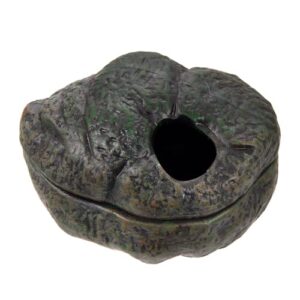
Small snakes feel exposed fast, and this hide fixes that.
The Zoo Med Small Reptile Shelter is a black resin cave that weighs 5.92 ounces. Its interior measures 5" x 4" x 3", which suits leopard geckos, crested geckos, and ball python hatchlings. The removable lid lets you check inside or collect eggs without disturbing your animal.
Fill it with moss or Eco-Earth and you get a humid microclimate for clean sheds. It also works as a laying box for gravid females. Resin washes and sterilizes well, so it’s simple to keep clean between animals.
Some keepers report cracking when the hide sits on the hot side of the tank, so place it on the cool side or the humid zone. Newer versions have thin walls, and some users find the size smaller than expected. Measure your snake first, and plan to upgrade as it grows.
| Best For | Keepers of leopard geckos, crested geckos, or ball python hatchlings who want a washable hide that doubles as a humid shed box or egg-laying spot. |
|---|---|
| Material | Black resin |
| Dimensions | 5 x 4 x 3 in interior |
| Weight | 5.92 oz |
| Suited Animals | Leopard geckos, ball python hatchlings |
| Cleaning | Washes and sterilizes |
| Humidity Support | Humid with moss filling |
| Additional Features |
|
- 3-in-1 cave design works for shedding, hiding, or egg laying
- Removable lid makes it easy to check inside or remove eggs without disturbing your animal
- Durable resin washes and sterilizes easily, and creates a humid microclimate when filled with moss or Eco-Earth
- Can crack when placed on the hot side of the tank
- Some users find it smaller than expected, with interior space of just 5" x 4" x 3"
- Newer versions have thin walls that can break easily
10. Repti Zoo Dual Function Hide
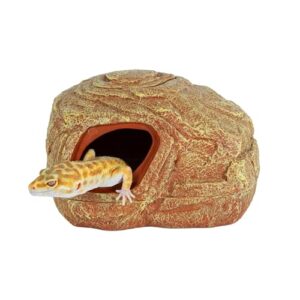
Need one hide that does three jobs? This one does. The two-part design gives you a top entrance for egg laying and a bottom chamber for resting or feeding. Pack it with moist moss and it becomes a moist shedding hide, which helps your snake avoid stuck skin.
At 5.1 x 3.7 x 3.7 inches, it suits small to mid-size snakes. Some buyers report chipped paint, and the holes can be tight for adult snakes. Check yours closely on arrival.
| Best For | Owners of small to mid-size snakes, geckos, and lizards who want one hide that works for resting, shedding, and egg laying. |
|---|
- The two-part design gives a top entrance for egg laying and a bottom chamber for resting or feeding.
- Packed with moist moss, it works as a moist hide that helps with shedding and humidity.
- The non-toxic resin is easy to clean and has a natural rock look with several entry and exit holes.
- Some buyers report paint chipping, either on arrival or over time.
- The holes can be too small for larger or fully grown reptiles.
- Reviews are mixed on long-term durability, even though it feels sturdy and heavy.
Why Snake Collections Need Secure Hides in Every Enclosure

Every snake needs a place to feel safe, and that goes for each enclosure in your collection. Secure hiding spots for snakes lower stress, and a calm snake eats, sheds, and breeds better.
Here’s what a good hide does for you:
- Protects feeding confidence, since ball pythons often refuse meals over insecure hides, not illness.
- Helps shedding through humidity retention in a warm, moist hide.
- Keeps easy to clean reptile habitats simple, because PVC hides wipe down fast.
Check reptile rack system compatibility before you buy, since low-profile tubs need slim hides. I use the same style across my racks. Every snake gets the same routine. A reptile hide size guide will help you fit each animal.
Choosing Snake Hide Sizes for Each Species, Life Stage, and Enclosure
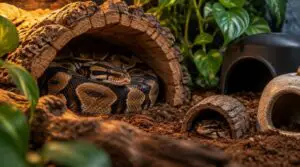
Size is where most keepers slip, so let’s get it right. A hide should feel snug, not roomy.
Start with these three checks:
- Match length to 0.6–0.7 of body length for adult ball pythons and adult colubrids.
- Give small hatchling snakes a space 2–3 times their body diameter.
- Upgrade juvenile to subadult pythons and boas every 3–4 months, since they outgrow hides fast.
Medium boas or womas need more floor space than height, so pick wider hides. Never let a hide take over the floor. Keep its width under 55% of the enclosure width, or your thermal gradient suffers.
Cork and wood hides compress 10 to 15 percent, so buy them 1.1 times larger. PVC never changes, so measure carefully.
Placing Warm, Cool, and Humid Snake Hides in Each Enclosure
Once your hides fit, placement decides whether your snakes actually use them. Every enclosure setup needs three spots, and each one has a job.
Put your warm hide directly over or beside the heat source, where the surface hits 88 to 92°F for ball pythons. Your snake digests and rests there without feeling exposed.
Set the cool hide at the opposite end. Without it, your snake picks security over temperature and either overheats or stays stressed. A cool hide keeps your temperature gradient working.
Without a cool hide, your snake must choose security over comfort, and ends up either overheating or staying stressed
Add a humid hide packed with damp sphagnum moss. In enclosures 4 feet or longer, give each side one. Warm-side moss dries faster, so re-wet it more often. In a 20-gallon tank, one humid hide is plenty.
Snake Hide Materials, Cleaning, and Collection-Wide Hygiene
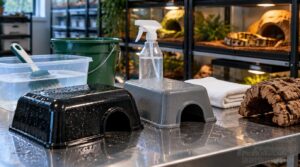
Placement only works if the hide stays clean. Material decides that.
Pick durable reptile housing with a nonporous surface like resin or ABS plastic. It’s easy to clean, and waste can’t soak in. Cork and unsealed wood hold bacteria deep in the grooves, so replace them once they’re chewed or soaked.
Clean in two steps:
- Scrub with soapy water.
- Soak in diluted bleach, 30 parts water to 1, for 15 to 20 minutes.
- Rinse until no chemical smell remains.
- Dry it fully so your snake gets a secure hiding spot again.
Use reptile sanitation solutions like chlorhexidine or F10. Skip Lysol, pine oil, and citrus cleaners. They’re toxic. Keep brushes and buckets for reptiles, and wash your hands between enclosures.
Frequently Asked Questions (FAQs)
How many hides should a snake have?
One hide or two? Give every snake two identical hides, one warm and one cool.
If you’re unsure which style suits your setup, this guide to hide boxes for bioactive habitats covers sizing and placement so your snake feels secure at both temperatures.
These secure hiding spots for snakes follow a simple hide placement strategy, so your snake picks temperature without risking safety.
What snake is worth $100,000?
Funny how a $12 hide shelters a $100,000 animal. A rare ball python morph can hit that, as can pregnant adult boas.
Young reticulated pythons and largebody snakes can too. Budget for reptile breeding supplies.
How much do snake hides cost?
Wondering what you’ll spend per hide? Basic ABS plastic hides run $2 to $6, while Pangea Reptile boxes cost $99 to $99 by size. Buy in bulk at Reptile Hides or Habitat Supplies, and you’ll save.
What attracts snakes out of hiding?
Warmth pulls snakes out first. Once your temperature gradient hits about 16°C, snake thermoregulation kicks in.
Fresh rodent scent works too. Add humidity retention and reptile habitat enrichment, and stress reduction for captive reptiles follows.
How many hides does a snake need?
Give every snake two hides, one warm, one cool, for stress reduction for captive reptiles. Add a humid third for shedding. Multiple snakes? Each adult snake enclosure and juvenile snake housing gets reptile habitat enrichment.
How to get rid of a hiding snake?
A hiding snake is a shy houseguest, not a ghost. Stay calm, open exits, and guide it out with a broom, never your hands. If venomous, call professionals. Afterward, start a reptile hide cleaning routine.
How many hides should each snake have?
Two hides sounds excessive, but it isn’t. Give each snake warm and cool hides, matching hide entrance size and interior space. Add humid third.
Multi-snake collection needs durable materials and a snake hide cleaning routine.
Can two snakes safely share a single hide?
Two snakes means half the reptile hide interior space each. Adult ball pythons, normal to largesize, rarely share, and hatchling boas and pythons shouldn’t either. Pick easy to clean hides, check snake hide entrance size.
Do larger enclosures need extra hides for snakes?
Yes, past 40 gallons add extra hides. Put one in each of your enclosure temperature zones, plus a humidity hide. Rack system tubs need fewer.
Always check snake hide entrance size and reptile hide durability.
Whats the best hide setup for rack systems?
In shoebox or tub type rack systems, give rack system tubs a snug, easy to clean hide. Add a humidity hide for shedding on the cool side. Use offset door placement to keep hides secure.
Conclusion
Last spring, a keeper I know lost a week of feeding on a juvenile corn snake because its hide sat on the cold end. She moved it to the warm side, and the snake ate that night.
Small fixes like that add up across a rack. Choose snake hiding hides for multi snake collections by matching snug fit, steady placement, and easy cleaning. Do that, and every animal gets a safe corner of its own.