This site is supported by our readers. We may earn a commission, at no cost to you, if you purchase through links.
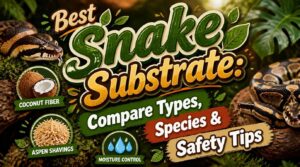
The substrate you pick does more than line the bottom of a tank — it shapes your snake’s humidity, burrowing behavior, hygiene, and long-term health. Get it wrong, and you’re looking at respiratory issues, failed sheds, or an animal that’s stressed without obvious cause.
A ball python needs something loose enough to tunnel through. A boa needs moisture retention. An arboreal species barely touches the floor. Same enclosure setup won’t work across all of them.
Knowing what substrate to use in a snake terrarium comes down to matching your snake’s natural environment — and that’s exactly what this guide breaks down.
Table Of Contents
- Key Takeaways
- Best Snake Substrate by Species
- Compare Common Terrarium Bedding Types
- Top 5 Snake Substrate Products
- Safety, Humidity, and Cleaning Tips
- Frequently Asked Questions (FAQs)
- What is a good substrate for snakes?
- What is the best substrate for a terrarium?
- Is gravel a good substrate for snakes?
- What is the best terrarium litter for corn snakes?
- What is the best substrate for a snake enclosure?
- What substrate can I use for snakes?
- Can snakes eat their substrate accidentally?
- How deep should a snake terrarium be?
- Is substrate safe for hatchling snakes?
- Do snakes prefer one substrate texture?
- Conclusion
Key Takeaways
- Your snake’s species decides its substrate—ball pythons want loose aspen or coconut fiber, boas need deeper moisture‑holding mulch, and arboreal snakes barely touch the floor at all.
- Cedar and pine are off the table for good, since they release oils that mess with your snake’s breathing.
- Humidity needs to match your species too, running anywhere from 50% for ball pythons up to 90% for semi‑aquatic snakes, so a good hygrometer is worth its weight in gold.
- Daily spot-cleaning plus a full substrate swap every four to six weeks keeps things fresh and your snake stress‑free.
Best Snake Substrate by Species
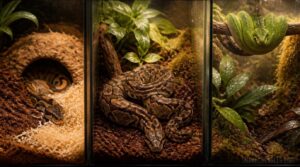
Not every snake wants the same thing under its belly. The substrate that works great for a ball python can be completely wrong for an arboreal species. Here’s a quick breakdown of what each type actually needs.
If ball pythons are your focus, this guide on choosing the best substrate for ball pythons breaks down exactly what keeps them healthy and comfortable.
Ball Python Bedding
Burrowing is a big deal for ball pythons — it’s how they feel safe. Loose coconut fiber or aspen shavings at 2–4 inches deep give them room to dig and hide naturally.
Keep humidity around 50–60% to support healthy shedding.
Avoid cedar or pine; both release oils that irritate their airways.
Safer alternatives like cork bark, manzanita, or grapevine make sturdy climbing perches, and this guide to safe branches for boa constrictor tanks explains how to choose and prepare them.
Aspen’s light color also makes waste easy to spot during daily cleanups.
Coconut fiber offers superior humidity retention, making it ideal for maintaining proper moisture levels.
Corn Snake Substrate
Corn snakes are a bit more flexible than ball pythons, but they still need room to move and hide. Aspen shavings or coconut fiber at 2–4 inches deep support natural burrowing without impaction risk.
Skip sand entirely — it’s too easy to swallow. Spot-clean daily and replace the full substrate every few months to keep things hygienic and odor‑free.
Boa Constrictor Substrate
Boas are bigger and need more from their substrate. Aim for at least 3 inches deep using coconut fiber or cypress mulch to support burrowing and hold humidity at 60–70%.
Good options include:
- Coconut fiber — retains moisture without compacting
- Cypress mulch — controls odor and humidity naturally
- Natural soil blends — great texture for movement
- Aspen shavings — solid backup, but mist more often
Skip cedar or pine — both cause respiratory irritation.
Arboreal Snake Bedding
Tree-dwelling snakes like emerald tree boas spend most of their time off the ground, so the floor substrate matters less than you’d think. Still, coconut fiber with a moss top layer helps regulate humidity at 70–90% without soaking the enclosure.
Avoid sharp bark fragments that could damage scales. Keep it light, breathable, and easy to spot-clean daily.
Semi-aquatic Snake Substrate
Unlike arboreal species, semi-aquatic snakes need a setup that stays genuinely damp. Coconut fiber or cypress mulch at 4–6 inches deep allows burrowing and holds 60–80% humidity without waterlogging.
If you’re prone to asthma or allergies, it’s worth checking allergy-friendly reptile substrate options before committing to these organic materials.
Keep these in mind:
- Create a moist zone near the water and a drier zone opposite
- Avoid sand — impaction risk is real
- Spot-clean weekly; full replacement every 1–3 months
- Skip cedar and pine entirely
- Monitor humidity daily with a gauge
Compare Common Terrarium Bedding Types
Now that you know what each species needs, it helps to understand what’s actually in those bags and blocks at the pet store. Every substrate type has its own strengths, trade-offs, and ideal use cases. Here’s how the most common options stack up.
For a deeper look at moisture retention and shedding support, this breakdown of corn snake substrate options compared is worth a read before you buy.
Newspaper and Paper Towels
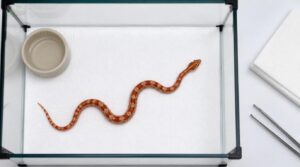
If you’re setting up a quarantine enclosure or housing a new snake, newspaper and paper towels are your best friends. They’re cheap, easy to swap, and make waste impossible to miss — which matters a lot for health monitoring.
They don’t hold humidity well, so add a shallow water dish for snakes that need moisture. Always use unscented, dye-free paper towels to avoid chemical irritation.
Aspen Shavings
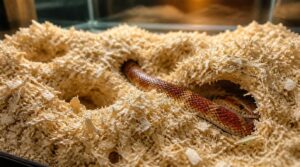
Aspen shavings are a go-to for good reason. Kiln-dried aspen is dust-free, phenol-free, and gentle on scales — making it one of the safest loose substrates out there. It wicks moisture well and lets burrowing snakes dig naturally.
Why keepers love it:
- Soft texture protects sensitive bellies
- Light color makes waste easy to spot
- No toxic oils like cedar or pine
- Widely available and affordable
Cypress Mulch
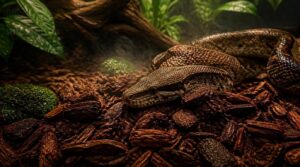
Cypress mulch is a humidity powerhouse for tropical snakes. At 2–4 inches deep, it holds moisture without waterlogging and breaks down slowly — fewer full changes, less hassle.
| Feature | Benefit | Watch Out For |
|---|---|---|
| Moisture retention | Stable humidity | Overwatering causes mold |
| Loose texture | Facilitates burrowing | Needs good ventilation |
| Slow breakdown | Longer substrate life | Spot-clean weekly |
| Natural look | Enrichment microhabitats | Chunk size matters |
| Odor control | Fresher enclosure | Replace every 4–6 weeks |
Coconut Fiber and Chips
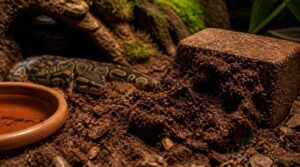
Coconut fiber is one of the most multi-purpose substrates you can use. It comes from coconut husks, releases moisture slowly, and keeps humidity stable at 50–70% without dramatic swings. Compressed blocks expand with water — one brick goes a long way.
The fibrous texture traps dust and lets burrowing snakes dig naturally. Rinse new blocks before use to remove residual particles and protect your snake’s respiratory health.
Bioactive Soil Mixes
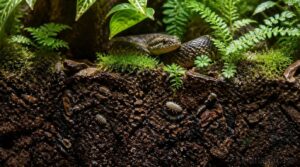
Bioactive soil mixes are the modern move — a living ecosystem inside your terrarium. Isopods, springtails, and beneficial bacteria work together to break down waste and keep things clean naturally.
Bioactive substrates don’t just sit there — they work, with living microorganisms breaking down waste around the clock
The classic ABG mix layers orchid bark, tree fern fiber, peat moss, and charcoal for drainage and microbial balance. Just avoid yard soil — it brings pesticides and unwanted pathogens that can harm your snake.
Top 5 Snake Substrate Products
Knowing the substrate types is one thing — finding a good product you can actually buy is another. There are a lot of options out there, and not all of them are worth your money or your snake’s health. Here are five that consistently deliver.
1. ReptiChip Coconut Substrate Block
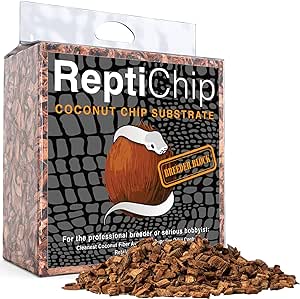
ReptiChip is one of the most trusted names in coconut substrate — and for good reason. One compressed 10 lb block expands to roughly 72 quarts when hydrated, making it surprisingly cost-effective for larger enclosures.
It’s 100% organic coconut husk, dust-free, and holds humidity well without going soggy. Ball pythons, boas, and tropical species all do well on it. Spot-cleaning is easy, and the natural fibers trap odors without any added chemicals. Crack a window when breaking the block open — initial dust is real.
| Best For | Tropical and humidity-loving snakes like ball pythons, boas, and corn snakes that need consistent moisture and natural burrowing opportunities. |
|---|---|
| Material | Coconut husk chips |
| Odor Control | Yes |
| Humidity Retention | High |
| Burrowing Support | Yes |
| Dust Level | Low (mask advised) |
| Biodegradable | Yes |
| Additional Features |
|
- One block expands to 72 quarts — great value for larger enclosures
- 100% organic, dust-free, and chemical-free for sensitive respiratory systems
- Naturally traps odors without added fragrances or synthetic agents
- Needs hydration before use, which adds setup time
- Breaking the block open can release dust — ventilate the room first
- Higher upfront cost than basic paper or aspen alternatives
2. BNOSDM Natural Reptile Soil Substrate
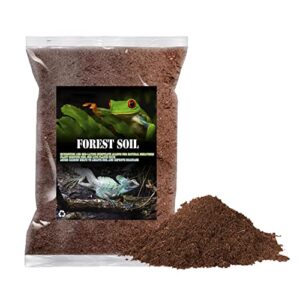
If you want something closer to natural soil, BNOSDM is worth a look. It’s a fine-to-medium textured soil blend that holds humidity well, encourages burrowing, and breaks down waste to reduce odor — no artificial scents or dyes added.
The 5 L bag is compact, which means you may need more than one for larger setups. It works best for humid-loving species. Plan to replace it every 3–6 months to keep things clean and mold-free.
| Best For | Humid-loving snakes, lizards, turtles, and amphibians that need a natural soil feel with consistent moisture and odor control. |
|---|---|
| Material | Natural soil blend |
| Odor Control | Yes |
| Humidity Retention | High |
| Burrowing Support | Yes |
| Dust Level | Low |
| Biodegradable | Yes |
| Additional Features |
|
- Breaks down waste naturally, keeping odor low between cleanings
- Low-dust formula reduces risk of respiratory irritation
- Biodegradable — toss it in the garden when you’re done
- 5 L bag is small; large enclosures will need multiple bags
- Too moist for desert species without mixing in dry substrate
- Needs full replacement every 3–6 months to stay fresh
3. Natural Coconut Fiber Terrarium Bedding
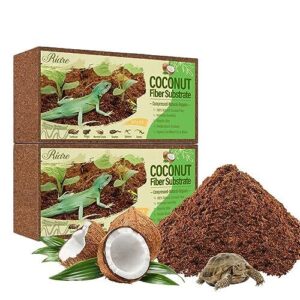
Natural coconut fiber bedding is a solid middle-ground option — simpler than BNOSDM but just as effective for humid species. Each compressed brick expands when soaked, giving you a soft, airy substrate that won’t compact under your snake’s weight.
It maintains humidity and odor control well, absorbs waste without clumping, and works nicely for ball pythons, corn snakes, and boas. Two bricks per package may not cover large enclosures, so size up if needed. Spot-clean regularly and replace every one to three months.
| Best For | Humid-environment snakes like ball pythons, corn snakes, and boas that need soft, breathable bedding with reliable moisture control. |
|---|---|
| Material | Coconut coir fiber |
| Odor Control | Yes |
| Humidity Retention | High |
| Burrowing Support | Yes |
| Dust Level | Low |
| Biodegradable | Yes |
| Additional Features |
|
- 100% natural coconut coir — no additives, odorless, and biodegradable
- Expands from compact bricks, making storage and setup easy
- Absorbs waste and odors better than wood shavings or stone
- Must be soaked before use — no ready-to-go option
- Two bricks may not be enough for larger or deeper enclosures
- Not a good fit for desert species that need dry, gritty substrate
4. Sukh Sphagnum Reptile Moss
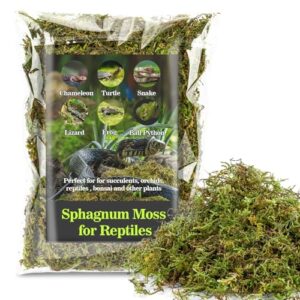
Sphagnum moss plays a different role than fiber or soil — it’s a humidity specialist. Sukh’s version holds several times its weight in water, keeping moisture stable for days after a single misting. That makes it great for shedding support and egg-laying setups.
Don’t use it as a standalone substrate. It works best layered with other bedding or tucked into a humidity hide. Rinse it before use, spot-clean regularly, and watch for mold if your enclosure runs warm and wet.
| Best For | Snakes and reptiles needing high, stable humidity — especially during shedding, egg-laying, or when used inside a dedicated humidity hide. |
|---|---|
| Material | Sphagnum peat moss |
| Odor Control | No |
| Humidity Retention | Very High |
| Burrowing Support | Yes |
| Dust Level | Low |
| Biodegradable | Yes |
| Additional Features |
|
- Holds moisture for days after misting, reducing maintenance frequency
- Soft texture supports natural burrowing, nesting, and shedding behaviors
- Versatile — works as a substrate layer, hide filler, or terrarium decoration
- Can’t be used as a standalone substrate; needs support from other bedding
- Over-wetting leads to mold, especially in warm enclosures
- May become dusty or powdery if stored too long before use
5. Riare Coconut Chip Substrate
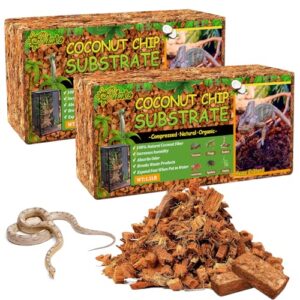
The Riare Coconut Chip Substrate rounds out this list as a chunky, structured alternative to fine fiber options. The chips expand when hydrated, create natural air pockets, and hold humidity well — without going dense or compacting under your snake.
It’s dust-free and non-abrasive, making it safe for terrestrial constrictors and burrowing species. Spot-clean as needed and mist occasionally to keep moisture levels stable. Like all coconut substrates, hydrate the bricks fully before adding your snake.
| Best For | Tropical and burrowing snakes that need stable humidity, natural air pockets, and a skin-safe substrate that won’t compact over time. |
|---|---|
| Material | Coconut husk chips |
| Odor Control | Yes |
| Humidity Retention | High |
| Burrowing Support | Yes |
| Dust Level | Low |
| Biodegradable | Yes |
| Additional Features |
|
- 100% natural coconut husk — no additives, dust-free, and non-abrasive
- Expands 3–4x when hydrated, giving solid coverage from compact bricks
- Can be composted or used as garden mulch after its terrarium life is done
- Must be fully hydrated before use — dry bricks aren’t ready to go
- Breaking apart large bricks can get messy
- Not a good fit for dry-substrate species; needs regular misting to stay effective
Safety, Humidity, and Cleaning Tips
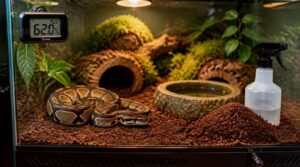
Picking the right substrate is only half the job — keeping it safe and clean is the other half. A few simple habits go a long way toward protecting your snake’s health and your own peace of mind. Here’s what actually matters on the day-to-day.
Avoid Cedar and Pine
Cedar and pine are the two substrates you should never use — full stop. Both woods release aromatic phenols, natural oils that irritate a snake’s respiratory system and can cause chronic breathing issues over time.
Ball pythons, boas, and corn snakes are all vulnerable. Stick to aspen, coconut fiber, or cypress mulch instead. They’re safer, widely available, and your snake’s lungs will thank you.
Prevent Dust and Impaction
Choosing the wrong bedding can quietly harm your snake before you notice anything is wrong. Dust and impaction are two of the most preventable risks in reptile keeping.
Since your snake is in constant contact with its substrate, it helps to read this guide to choosing a safe substrate for pet snakes before you buy.
Stick to dust-free substrates like aspen or coconut fiber. Match depth to your snake’s size — too deep and burrowing debris can reach their airway. A HEPA vacuum removes settled particles without stirring them back up. Enzymatic cleaners break down waste before it becomes a dusty irritant.
Match Humidity Requirements
Humidity isn’t one-size-fits-all. Ball pythons do well at 50 to 60 percent, while boa constrictors need 60 to 70 percent. Semi-aquatic snakes push even higher — up to 90 percent.
Place your digital hygrometer at both basking and hide levels to catch the full gradient. Calibrate sensors every six to twelve months. Watch for condensation on the glass — that’s your enclosure telling you it’s too wet.
Support Shedding and Burrowing
A good shed starts long before your snake goes blue-eyed. Substrate moisture is the real driver — soft, damp bedding like coconut fiber creates microhabitat creation at the base of the enclosure where snakes naturally retreat.
Aim for 4 to 6 inches of depth for burrow stability and tunnel integrity. That pocket of humidity loosens old skin and helps skin sloughing without any extra effort from you.
Spot-clean and Replace Regularly
Think of spot cleaning like doing the dishes — don’t let it pile up. Remove feces daily to prevent ammonia buildup, and use an enzymatic cleaner on stained areas.
Check substrate moisture every time you clean.
Plan a full substrate refresh every four to six weeks, disinfecting hides and décor too.
That simple schedule keeps substrate hygiene solid and your snake stress-free.
Frequently Asked Questions (FAQs)
What is a good substrate for snakes?
Coconut fiber and aspen shavings are both safe bedding materials that support natural behaviors like burrowing. Coconut fiber excels at humidity control; aspen works best for drier species. Replace substrate every four to eight weeks.
What is the best substrate for a terrarium?
Coconut fiber tops the list for most terrariums — it holds up to 191% of its weight in water, controls odor naturally, and works for tropical, burrowing, and humidity-loving species alike.
Is gravel a good substrate for snakes?
No — gravel is one of the worst choices for snakes. Impaction risk is real if ingested, sharp edges can cause skin abrasion, and it traps moisture underneath, creating mold without absorbing waste.
What is the best terrarium litter for corn snakes?
Aspen shavings keep things dry; coconut fiber keeps things moist — and corn snakes require both options available. Aspen works best for daily use, while coconut fiber promotes shedding.
Avoid cedar; it’s toxic.
Either choice allows natural corn snake burrowing safely.
What is the best substrate for a snake enclosure?
It depends on your species. Coconut fiber controls humidity regulation well for tropical snakes, while aspen shavings suit drier species and simplify cleaning efficiency. Both support naturalistic habitat needs, prevent impaction, and are easy to replace on schedule.
What substrate can I use for snakes?
Safe options include aspen shavings, coconut fiber, and cypress mulch — each helps natural behaviors like burrowing while managing moisture and waste. Avoid cedar, pine, and sand, which harm respiratory health or cause impaction.
Can snakes eat their substrate accidentally?
Yes, and it happens more than you’d think. Prey-sticking substrate is the main culprit — loose particles cling to food during a strike. Impaction warning signs include bloating and refusing food. Use safe bedding textures and manage your feeding zone carefully.
How deep should a snake terrarium be?
Most snakes do well with two to three inches of substrate. Burrowing snakes need four to six inches for thermoregulation through layers and humidity buffering. Deeper beds also insulate against heat sources, reducing compaction risks and keeping temperatures stable.
Is substrate safe for hatchling snakes?
It can be — if you pick the right one. Hatchlings are more vulnerable to impaction and respiratory irritants, so stick to paper towels or coconut fiber and skip anything dusty, gritty, or cedar-based.
Do snakes prefer one substrate texture?
Not really — texture preference varies by species. Burrowing snakes need loose, stable particles for burrowing behavior, while others prefer soft textures to avoid belly abrasion.
Moisture texture matters too; slightly damp substrate promotes shedding support without becoming soggy or compacted.
Conclusion
The choices you make today — substrate type, depth, humidity — will show up later in how well your snake sheds, burrows, and stays healthy. Knowing what substrate to use in a snake terrarium isn’t a one-time decision; it shifts as your snake grows and your setup evolves.
Start with the right material for your species, keep it clean, and trust the process. Your snake’s behavior will tell you when you’ve got it right.