This site is supported by our readers. We may earn a commission, at no cost to you, if you purchase through links.

Your snake’s belly turns a strange shade of pink one morning, and your first instinct says something’s wrong. It isn’t. That flush is one of nature’s clearest signals, and reading it correctly means the difference between calm observation and an unnecessary vet visit.
Snake belly color before shedding follows a predictable script: fluid buildup, a rosy flush, then a milky gray veil, each stage tied to specific timeframes and hydration levels. Ball pythons blush vivid red. Corn snakes barely shift at all.
Once you know the pattern, you’ll spot trouble in seconds, not days.
Table Of Contents
Key Takeaways
- Your snake’s belly naturally shifts from pink to milky gray before shedding, and this color change follows a predictable timeline rather than signaling illness.
- Ball pythons show a strong pink or red flush before shedding while corn snakes barely change color at all, so knowing your species’ normal pattern matters more than the color itself.
- Keeping humidity between 50-70% (higher for ball pythons, lower for corn snakes) and providing a humid hide supports smooth shedding and healthy color progression. Since shedding problems often start with how skin differs from scales, it helps to understand how snake skin and scales differ when judging whether a shed looks healthy.
- Call your vet if pink coloring lasts past 7-10 days, black scales spread, or cloudy eyes linger beyond 5 days, since these signs point to dehydration or infection rather than a normal shed.
What Snake Belly Color Means Before Shedding
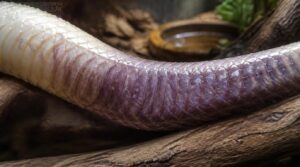
Your snake’s belly is talking to you before it ever starts to peel. Those shifts in color aren’t random — each one marks a real stage happening beneath the skin. Here’s what that changing hue actually tells you.
If those patches spread or darken instead of fading, it’s worth learning how to spot and prevent snake scale rot before it takes hold.
Before a snake ever sheds, its belly color is already telling a real story unfolding beneath the skin
Fluid Beneath The Old Skin
Look closely at your snake’s belly before a shed and you’ll notice a faint sheen building beneath the ventral scales. That’s lubricating fluid, gathering to separate old skin from new. It eases epidermal slippage, softening bonds so the outer layer slides free later.
Fluid levels track hydration, so a visible film is often a reassuring sign, not cause for worry.
When documenting these changes for a herpetology report, following a clear context-content-conclusion structure can help communicate your observations effectively.
Early Pink or Red Flush
That fluid buildup soon shows itself as color. A pink or reddish belly often appears 1 to 2 days later, sometimes deepening to ruby red. This isn’t hyperpigmentation or injury, it’s blood flow near loosening ventral scales. Intensity varies by species and individual.
Dehydration signs include pink locked in place past a week. Otherwise, this flush is healthy and temporary.
Milky Gray Belly Scales
That red flush doesn’t last. Within a few days, ventral scales fade toward a milky gray veil, waterlogged skin blurring the pattern beneath.
- Scales feel slightly softer
- Veil intensifies with higher humidity
- Duration varies by species
Ball pythons show it strongest; corn snakes stay subtler. Aim for humidity between 50-70% to support this pre-shed stage.
Even Color Changes Are Normal
That gray veil should spread evenly, not in patches. A smooth color gradient across ventral scales, pink fading to ghostly gray, signals healthy progression.
| Sign | Normal | Warning |
|---|---|---|
| Spread | Uniform | Patchy |
| Timing | Gradual | Stalled |
| Texture | Even | Tented |
Ventral hue uniformity matters more than shade intensity. Don’t panic over color, panic over unevenness.
Snake Belly Color Shedding Timeline
Shedding doesn’t happen all at once—it moves through distinct stages, each with its own timeline. Knowing what comes next takes the guesswork out of watching your snake’s belly change. Here’s how the whole process unfolds, phase by phase.
Pink Phase Signals Pre-Shed
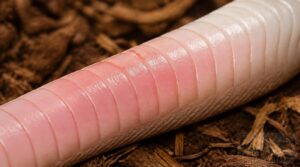
A rosy blush across the belly is often your first clue that shedding has begun. This pink flush onset shows up 1 to 2 days before dulling starts, lasting roughly 7 to 10 days.
During this stretch, keeping your snake well hydrated supports smooth, healthy shedding — see these proper hydration tips for shedding snakes for guidance.
Look for ventral hue uniformity, even color spread signals healthy hydration, not injury. Intensity varies by species and morph, so don’t panic if yours looks subtle.
Belly Turns Milky or Gray
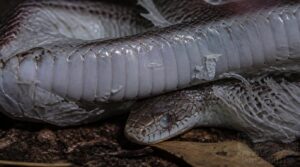
Your snake’s pink flush won’t last. Within 24-48 hours it fades into a milky, ghost-like haze, the classic sign fluid is separating old skin from new. Watch for:
- Dulled scales losing their sheen
- Gray-blue undertones spreading evenly
- Cloudy blue eyes forming soon after
This opaque phase runs 2-4 days. Keep humidity between 50-70% to support smooth progression.
Cloudy Eyes Follow Color Changes
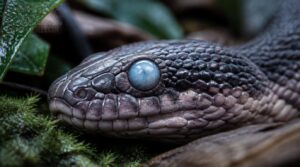
Right on the heels of belly changes, the eyes cloud over too. This cloudy blue phase hits 2-4 days after pre-shed starts, both eyes together, timing tied directly to that pink-to-gray sequence you’re already tracking.
| Belly Stage | Eye Response |
|---|---|
| Pink flush | Clear eyes |
| Milky gray | Haze begins |
| Deep cloud | Blue clouding |
Humidity between 50-70% keeps this stage moving smoothly.
Color Clears Before Sloughing
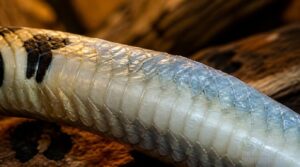
Just before the peel, the belly brightens again. This pre-shed clearing phase signals ventral color lightening as the old skin loosens at the belly edge. Scale elasticity increases, letting that edge lift free.
It’s your final shed signal, the moment full sloughing starts, usually within hours once clearing begins.
Normal Color Returns Post-Shed
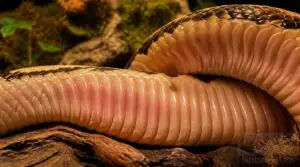
Give it a week. Ventral color recovery follows a fairly predictable script, with belly tone normalization reaching baseline within 3 to 14 days.
- Pale color deepens steadily, no washed-out look
- Species-specific return patterns emerge (ball pythons: pink to tan)
- Scale texture turns smooth, crisp-edged
- Mild patching may fade within a week
- Full color consistency by day 10 in healthy sheds
Hydration recovery period matters here. Don’t wait past 3-4 weeks without normalization.
Belly Color Differences Between Snake Species
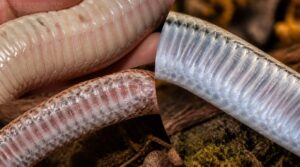
Not every snake reads the same shedding script. Species, and even individual genetics, shape how strongly that belly color shows up. Here’s what to expect depending on who’s living in your enclosure.
Ball Python Pink Bellies
A pink or reddish belly is the classic ball python tell. Pink flush timing runs two to five days before shedding, with intensity varying by hydration, humidity, and genetics.
Genetic variation matters, too. Some morphs blush bright rose; others barely show it. Keep humidity between 65-80% and skip the worry if color seems faint.
Corn Snake Belly Changes
Corn snakes play it subtler than ball pythons. You’ll notice ventral scale translucency and dull skin more than dramatic color. Pale yellowish undertones fade slightly, sometimes with a faint pink or reddish belly.
Expect subtle ventral color shifts, individual ventral variation between snakes, and a scale texture shift as shedding nears. Ventral pattern consistency holds.
Keep humidity between 60-75% for smooth postshed color recovery.
Blue Bellies in Colubrids
Milk snakes and Arizona Mountain kingsnakes trade pink for a striking blue belly, caused by iridophore light reflection layered over pigment. This blue often deepens days before milky blue eyes appear. Humidity affects saturation, and genetics drive species-specific blue hues.
Some snakes hold a consistent blue tone regardless of cycle, so don’t panic if yours does too.
Morph and Genetic Variations
Genetics decides more than pattern. Allele color inheritance shapes pigment cell expression across morphs like albino, piebald, and banana, producing distinct pre-shed hues. Co-dominant genes create intermediate tones, while ventral pattern genetics drives speckling or banding.
These morph hue variations are normal genetic belly traits, not disease. Know your snake’s baseline, so real change stands out.
Snakes With Subtle Changes
Not every snake announces itself. Some individuals show only faint pre-shed hues, a whisper of dulling rather than a dramatic flush.
Watch for these instead:
- Slight scale dulling
- Minimal belly changes
- Barely visible change
- Mild hyperpigmentation
Track color uniformity metrics against your snake’s own baseline. Subtle doesn’t mean absent, it just asks more attention.
Supporting Healthy Pre-Shed Color Progression
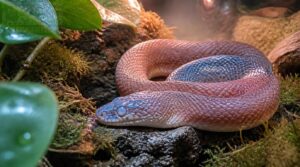
That pink-to-gray color shift doesn’t just happen on its own—your setup plays a big role in how smoothly it goes. Get the enclosure right, and you’re giving your snake everything it needs for a clean shed. Here’s what actually matters.
Set Species-Appropriate Humidity
Humidity drives shedding success. Ball pythons do best around 55 to 65 percent, climbing to 70 to 80 percent once shedding starts. Corn snakes tolerate lower ranges, roughly 40 to 60 percent. Match your setup to species-specific needs, not generic advice.
Skip proper humidity and dehydration color signs creep in: pink that won’t fade, skin that won’t budge.
Provide a Humid Hide
Tuck a humid hide into the cool side, opposite the basking spot, so moisture doesn’t evaporate off in the heat. Fill it with damp sphagnum moss or coco coir.
This creates a small humidity microclimate your snake retreats to on its own, easing hydration support and stress reduction during shedding through simple behavioral thermoregulation.
Maintain a Safe Temperature Gradient
Beyond humidity, your snake needs a proper thermal gradient to shed well. Keep the warm side at 28-32°C, cool side 24-26°C, spanning 15-20 cm minimum. Place heat sources at one end only, calibrate thermometers regularly, and use insulation to prevent drops.
- Warm zone: 28-32°C
- Cool zone: 24-26°C
- Gradient span: 15-20 cm
- Two thermometers minimum
- Calibrate ±1°C accuracy
Monitor Humidity Accurately
A cheap hygrometer lies. Get a digital hygrometer accurate to ±3% RH, and place sensors at mid-enclosure height, away from vents or the humid hide itself.
| Sensor Spot | Purpose | Target Range |
|---|---|---|
| Cool side | Baseline RH | 50-70% |
| Warm hide | Peak moisture | 65-80% |
| Mid-tank | Gradient check | 60-75% |
| Near vents | Avoid false lows | N/A |
Minimize Pre-Shed Handling
Your snake isn’t being dramatic. That dull, pink belly means fluid is loosening old skin, and handling now just adds stress it doesn’t need.
Limit handling to once every 7 to 14 days during pre-shed. Stick to gentle observation instead: watch color shifts and eye clouding from outside the glass. Keep the enclosure quiet, stable, and vibration-free until shedding finishes.
Abnormal Belly Colors and Warning Signs
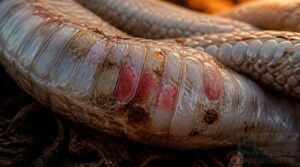
Not every belly change is part of a normal shed. Some colors and patterns signal dehydration, infection, or injury instead. Here’s what should actually worry you.
Patchy Yellow or Black Scales
Yellow scale patches are usually harmless, showing up as scattered discoloration from hydration-related shedding imbalance.
Black spots are different: they signal possible scale rot, darkening over 3–5 days as infection sets in. Watch these ventral surface patches closely. If yellow fades post-shed, relax. If black spreads or the area looks wet or foul, don’t wait, call your vet.
Prolonged Pinkness and Dehydration
Not all pink bellies fade on schedule. Normal pink phase duration runs 7–10 days, but dehydration can lock color in place past 12 days. Watch for skin turgor loss, dull scale elasticity, and sluggish behavior alongside it.
Run a quick hydration check: mist the enclosure, confirm humidity sits between 65–80%, and offer fresh water. No change after 48 hours? Don’t wait, call your vet.
Burns Versus Pre-Shed Redness
Dehydration isn’t the only thing that mimics trouble. Redness can also come from substrate friction burns or irritation, not just the shed cycle itself.
- Pre-shed flush: even, blood-flow related, fades as shed nears
- Burns: localized red patches, may sting, can blister
- Irritation: persists with rubbing, shows hyperpigmentation over time
Blistering or oozing? Skip the wait.
Stuck Shed and Retained Caps
Burns heal. A stuck shed doesn’t resolve on its own, especially around the head.
Retained eye caps and patchy skin signal dysecdysis, often tied to humidity below 40-50% or dehydration delaying the shed. Check head scales closely.
Don’t peel caps yourself. Rehydrate, raise humidity, and if the cap stays, veterinary cap removal protects scale health and prevents damage.
When to Contact a Veterinarian
Cap removal isn’t a DIY job, and neither is guessing when things have gone too far.
Call your vet if:
- Persistent pink belly lasts past 7 days
- Yellow black scales spread or smell foul
- Cloudy eyes no shed linger beyond 5 days
- Appetite loss belly color changes overlap
Don’t wait for scale rot or dehydration to worsen.
Frequently Asked Questions (FAQs)
How often do healthy snakes shed normally?
Think of shedding as a snake’s calendar. Juvenile snakes shed every 2 to 4 weeks, chasing rapid growth. Adult snakes, ball pythons included, slow to 4 to 6 times yearly, guided by nutrition, humidity, and enclosure setup.
Can lighting changes affect belly color timing?
Yes. Photoperiod shifts and shortened light periods can delay pre-shed cues, while stable lighting schedules keep circadian rhythm steady.
Sudden changes act as environmental stressors, throwing off belly color timing and stretching your snake’s shedding cycle unpredictably.
Does diet influence shedding frequency or quality?
A well-fed snake sheds clean; a malnourished one struggles for weeks. Protein intake shapes shedding quality, while vitamin A, hydration, and iron rich food prevent anemia and delayed, dull, patchy sloughing.
Is soaking necessary to help snakes shed?
Not always. Most snakes shed fine with enclosure humidity alone, between 65-80%, a humid hide, and damp substrate. Save brief, warm soaks for stubborn sheds, and avoid soaking during lethargy or respiratory distress.
Can stress delay or worsen a snakes shed?
Stress works like sand in a machine’s gears, slowing everything down. Elevated cortisol causes shedding delays, dehydration stunts skin loosening, and enclosure instability leads to stress-induced pauses, uneven sloughing, and dysecdysis.
Conclusion
A thousand keeper panics could vanish overnight if everyone memorized one truth: snake belly color before shedding is a countdown clock, not a crisis. Pink fades to gray, eyes cloud, skin loosens, and then your snake sheds whole, healthy, unbothered. That’s the rhythm.
Patchy yellow, black scales, or pinkness lasting past ten days breaks that rhythm and deserves attention. Trust the pattern you’ve learned here. Watch closely, act calmly, and let your snake’s belly tell its own honest story.