This site is supported by our readers. We may earn a commission, at no cost to you, if you purchase through links.

Your ball python doesn’t care about road trips. It cares about staying warm, feeling hidden, and not sliding out of a loose lid at 65 miles per hour. Get any of those wrong, and a simple move turns into a stressed snake and a very bad afternoon.
Knowing how to transport a pet snake safely protects your animal and keeps you legal. Some states ban certain species, and many want a health certificate dated within 30 days of travel.
Here’s the good news: a sturdy container, steady heat, and a little planning cover most of it. Start with the rules.
Table Of Contents
- Key Takeaways
- Check Snake Travel Laws and Veterinary Requirements
- Choose a Secure, Size-Appropriate Snake Transport Container
- Maintain Species-Appropriate Temperatures During Snake Transport
- Transport Your Snake Safely by Car or Air
- Help Your Snake Settle After Transport
- Frequently Asked Questions (FAQs)
- What is the best way to transport a pet snake?
- How long can a snake go without moving?
- Can I leave a snake alone for a week?
- Can I transport my snake in a pillowcase?
- Should I feed my snake before a trip?
- Can I transport multiple snakes in one container?
- Is it safe to travel with a snake in shed?
- How long can a snake safely stay in transit?
- Can I transport a gravid female snake safely?
- Conclusion
Key Takeaways
- Check your destination’s laws and book a vet visit close to departure, since many states require a health certificate dated within 30 days of travel and some ban certain species or require permits.
- Use a sturdy, escape-proof, ventilated container with a locked lid, and secure it in the car so it can’t slide around, or call the airline’s cargo department first if you’re flying.
- Keep your snake’s temperature steady and within its species range by building a warm-to-cool gradient with a heat source outside the bin, and never let it go below 38°F or above 95°F.
- Skip feeding before the trip, then give your snake a quiet, hidden spot to settle in, with no handling for at least 72 hours and no food for the first 48 to 72 hours.
Check Snake Travel Laws and Veterinary Requirements

Wondering whether your snake can legally cross a border? Check before you pack a single heat pack. Laws change fast, and a quick call now beats a confiscated snake later.
Once you’ve confirmed the legal side, this step-by-step guide to shipping snakes internationally covers vet exams, pre-trip fasting, and packing so your snake arrives calm and healthy.
Start with destination laws. Some states ban reticulated pythons and venomous species outright, and the Lacey Act bars certain giants like green anacondas from crossing state lines. Cities can be stricter than states, so look up your county and town too. The USDA State-to-State Pet Travel Tool and your destination’s state veterinarian office will give you straight answers. It also helps to research local exotic pet laws in your destination city before you start packing your reptile.
Next, book a veterinary consultation. Many states want a health certificate issued within 30 days of travel, so time the exam close to departure. Ask about permit requirements and quarantine regulations while you’re at it. Wisconsin, for one, wants an import permit.
Keep every record in a folder you can grab fast.
Choose a Secure, Size-Appropriate Snake Transport Container
Paperwork’s sorted, so now it’s time to pick your snake’s ride. Think of the container as a tiny, cozy travel suite.
Choose a secure ventilated container made of sturdy ABS plastic or polycarbonate. Escapeproof containers matter, because snakes treat every gap like an invitation. Solid-colored bins also keep your snake calm by blocking the outside world.
A snug, well-sized enclosure also makes feeding easier, and our guide to feeding a snake live prey explains how to do it safely.
Here’s your checklist:
- Add a secure lid with clips or screw-top latching.
- Drill small, smooth ventilation holes for steady airflow.
- Size it right: a 12x12x18 inch bin suits an adult ball python.
- Line it with paper towels, never anything abrasive.
- Skip sharp edges, big gaps, and toxic materials.
Tuck the bin in a pillowcase for backup. Leave space for heating pads and temperature control.
Maintain Species-Appropriate Temperatures During Snake Transport
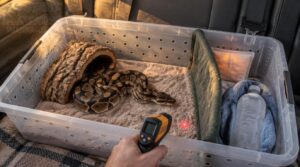
Your snake’s ride is ready, so now let’s keep it comfy. Think Goldilocks: not too hot, not too cold, just right.
A well-planned enclosure also helps you create a warm basking spot and a cooler retreat, and these custom snake tank layouts show how to arrange both.
Know your species’ ideal temperature first. Tropical snakes want 80–100°F, temperate snakes do well at 68–95°F, and desert snakes prefer 65–85°F with a warmer basking spot.
Build a temperature gradient inside the bin. Place a heating pad or 40-hour heat pack outside one end, wrapped in an insulating barrier, so your snake can slide between warm and cool zones. That’s thermal regulation, snake style. Add a small hide along the way.
Check temperature control with an infrared thermometer at several spots. Never travel below 38°F or above 95°F. Frozen water bottles wrapped in towels cool a hot bin nicely.
Transport Your Snake Safely by Car or Air

Your snake’s container is packed, and the temperature is dialed in. Now it’s time to get it from point A to point B, whether you’re hitting the road or heading to the airport. Below, you’ll find car travel and emergency planning plus airline approval and cargo requirements, so you’ll know what to expect before you go.
Car Travel and Emergency Planning
Imagine this: you’re ten minutes down the road when your snake’s bin slides into the brake pedal zone. Not fun. Buckle a secure transportation container onto the floor behind the front seats with a seat belt or bungee cords. Add a non-slip mat underneath.
Cover it with a light cloth for stress reduction. Keep a thermometer inside for temperature control. Pack a go bag for emergency pet planning, and book a veterinary checkup before you leave.
A digital reptile thermometer probe lets you check the temperature inside the container at a glance, so you can adjust the car’s climate control.
Airline Approval and Cargo Requirements
Where do you start with flying a snake? Call the airline’s cargo department first. Most won’t let reptiles ride in the cabin, so airline cargo is your route. Read the airline pet policy, because venomous snakes are often banned.
Pack your snake in an IATA-compliant crate with Live Animal labels on every side. Confirm airline regulations and shipping ground handoffs.
Help Your Snake Settle After Transport

You made it home, and your snake survived the trip. Now comes the quiet part. The acclimation period starts the moment that lid comes off, so keep things calm.
Set the transport container inside the enclosure, lid off, then step away. Let your snake explore on its own terms. Picture a hotel guest wanting privacy.
Set your snake’s container inside its new home, lid off, and step away, because a newly arrived snake wants hotel-guest privacy
Focus on three things:
- Hiding spots that fit snugly
- Steady temperature monitoring
- No handling for at least 72 hours
Skip food for the first 48 to 72 hours. Posttransport recovery takes time, and early meals can come back up. Wait about a week, then offer pre-killed prey.
Keep up behavioral monitoring. Regular exploring and eating mean stress reduction is working. Appetite drops? Allow extra rest.
Frequently Asked Questions (FAQs)
What is the best way to transport a pet snake?
Picture a snake as a sleepy burrito. Choosing the Right Container means a snug bag inside a locked bin. Maintaining Ideal Temperature and Humidity, Safe Handling Techniques, Transportation Methods, and Acclimation After Transport matter too.
How long can a snake go without moving?
A healthy snake can stay still for days, so don’t panic. Shedding or digesting a meal often explains it. Keep the container secure and calm, hold temperatures under 30°C (86°F), and watch for other distress signs.
Can I leave a snake alone for a week?
Usually, yes, if your snake is a healthy adult. Feed it a few days before you leave, finish your enclosure setup with fresh water and locked lids, and use timers for steady temperature control, too.
Can I transport my snake in a pillowcase?
Yes, but only briefly. A clean pillowcase works for short hops, as long as it’s knotted tight and has no holes.
Always tuck it inside a locked, ventilated container for escape prevention and temperature control.
Should I feed my snake before a trip?
Skip the pre-trip snack. Use a feeding delay protocol, letting your snake digest first. Travel stress and poor temperature control invite regurgitation.
Do a hydration assessment, aim for stress reduction, then offer feeding after travel.
Can I transport multiple snakes in one container?
Short answer: don’t. Give every snake its own individual transport container. Snakes are loners, and sharing a tight space spikes stress and invites fighting. Keep each container escape-proof, ventilated, and temperature-checked.
Is it safe to travel with a snake in shed?
Skip it if you can. A snake in shed is jumpy and half-blind.
If you must go, use an escapeproof box with proper ventilation requirements, steady temperature control, and humidity control. Watch for stress signs.
How long can a snake safely stay in transit?
Aim for 24 hours or less. Your snake can handle 48 to 72 hours with solid insulation and temperature control, but past 72 hours, mortality risk climbs fast. Stick to overnight shipping and skip weekends.
Can I transport a gravid female snake safely?
Nothing says "relax" like a road trip for an egg-heavy snake. Yes, you can, but only if necessary.
Use a secure container, steady temperature control, and stress reduction. Get a health certificate for legal compliance.
Conclusion
Picture Mia, who moved her corn snake three states over with a pillowcase, a cooler, and zero heat pack. The snake arrived sluggish and refusing food for two weeks. Don’t be Mia.
Knowing how to transport a pet snake safely comes down to three habits: a secure locked container, steady warmth, and paperwork sorted before you leave. Do those, and your snake just naps through the trip.
Then let it hide and rest. Quiet wins.