This site is supported by our readers. We may earn a commission, at no cost to you, if you purchase through links.

Scaleless ball pythons feel like no other snake you’ve touched. Without scales, their skin has the texture of soft leather—smooth, warm, and surprisingly delicate. That same quality that makes them so striking is exactly what makes their care different from a standard ball python setup.
Their skin bruises easily, dries out faster, and heals more slowly when damaged. Getting the humidity wrong, choosing the wrong substrate, or using an unguarded heat mat can cause real harm quickly.
The good news is that once your enclosure hits the right parameters, these snakes thrive—and this scaleless snake care information covers exactly what those parameters look like.
Table Of Contents
- Key Takeaways
- What Makes Scaleless Snakes Different?
- Are Scaleless Snakes Hard to Care For?
- What Enclosure Do Scaleless Snakes Need?
- What Substrate is Safest?
- What Temperature and Humidity Work Best?
- How Should Scaleless Snakes Be Fed?
- How Do Scaleless Snakes Shed?
- What Health Problems Are Common?
- Should You Buy a Scaleless Snake?
- Frequently Asked Questions (FAQs)
- Do scaleless snakes have health issues?
- How do you take care of a scaleless rat snake?
- What is the lifespan of a scaleless snake?
- How hard is it to take care of a corn snake?
- Is it hard to take care of a scaleless corn snake?
- How do I choose a scaleless corn snake?
- What is a scaleless snake?
- Do scaleless snakes shed their scales?
- How do you handle a scaleless snake?
- What is a scaleless corn snake?
- Conclusion
Key Takeaways
- Scaleless ball pythons lack the beta-keratin armor, making their skin highly vulnerable to burns, scrapes, and slow-healing wounds that demand tighter enclosure management than standard ball python setups.
- Humidity must stay between 50–70% at all times, with a bump to 60%+ during shed cycles, because dry conditions cause dysecdysis and retained shed that can quickly damage their exposed skin.
- Live prey is a genuine injury risk for scaleless morphs — always use frozen-thawed feeders offered with tongs, sized no wider than 1.5 times the snake’s widest body point.
- Owning a scaleless ball python is a 25–30 year commitment starting at around $1,500, requiring daily husbandry checks, annual vet visits, and a smooth-surfaced enclosure of at least 40 gallons for adults.
What Makes Scaleless Snakes Different?
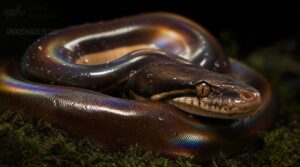
Scaleless snakes look like something straight out of a science fiction movie — smooth, glossy, and completely scale-free.
Their scale-free skin makes color and pattern pop in ways normal snakes can’t match — explore some of the most visually striking scaleless snake breeds to see exactly what that looks like.
That single difference changes everything about how you care for them. Here’s what sets them apart from your average ball python.
Scaleless Vs. Normal Snake Skin
Normal snakes wear armor. Scaleless morphs don’t — and that changes everything about their skin. The key difference comes down to beta-keratin deficiency.
Normal scales are rigid, protective, and textured. Scaleless skin skips all of that, leaving a soft, wrinkled surface with noticeable surface texture contrast.
Here’s what’s actually missing:
- Beta-keratin — the protein that makes scales hard
- Mechanical protection — leaving dermal fragility in its place
- Scale gene expression — replaced by interscale-like smooth skin
Why Scaleless Snakes Need Special Care
Without that beta-keratin armor, your scaleless snake is working without a safety net. Skin fragility means every sharp edge, rough surface, or temperature spike carries real risk.
Wound healing slows when conditions slip. Stress sensitivity, shedding issues, and moisture retention all demand tighter management than scaled species ever require.
| Care Factor | Why It Matters |
|---|---|
| Humidity & Substrate Management | Prevents shedding issues and skin sensitivity |
| Equipment Safety | Stops burns from heat sources |
| Health Risks & Vet Care | Catches infections before they spread |
| Temperature Management | Maintains stable skin condition |
Scaleless Ball Python Morph Basics
The scaleless ball python sits at the rarest end of the morph world. Gene inheritance follows a codominant pattern, first introduced by BHB Enterprises in 2010. Fully scaleless specimens weren’t achieved until 2013.
Market rarity keeps prices high, often starting at $1,500. Breeders frequently mix pastel, piebald, or mojave genes, resulting in vibrant color combinations that make phenotype identification a visual delight.
A suitable habitat requires a minimum 40-gallon tank.
Scaleless Head Vs. Fully Scaleless Traits
Not all scaleless ball pythons look the same — and that’s where genetic inheritance gets interesting. The scaleless head ball python loses scales primarily on its crown, while a fully scaleless ball python lacks them across its entire body. This spectrum of scale reduction creates real phenotype variability between individuals.
Breeding challenges increase with full scaleless pairings, directly affecting market valuation and care complexity.
Common Scaleless Snake Species
Several species carry the scaleless trait, but each brings its own care demands. The scaleless ball python — including popular combos like the scaleless pinstripe, scaleless piebald, and Mojave scaleless morph — tops the list.
You’ll also find the scaleless corn snake, scaleless garter snake, and scaleless rat snake in the hobby.
Even the scaleless rattlesnake exists, though that one’s strictly for experts.
Are Scaleless Snakes Hard to Care For?
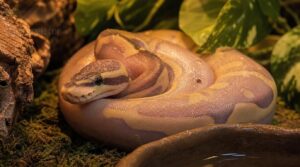
Scaleless snakes aren’t impossible to care for, but they do demand more attention than your average ball python.
Without scales, they’re more vulnerable to injuries, humidity swings, and shedding problems — so small mistakes matter more.
Here’s what you need to know about the key areas of their daily care.
Care Difficulty for Beginners
Caring for a scaleless ball python has a real learning curve — steeper than most beginner-friendly reptile husbandry practices suggest. Their exposed skin leaves zero margin for error on temperature and humidity requirements, substrate choices, or handling advice.
- Study skin injury risks
- Lock in your budget planning
- Build your time management routine
- Prioritize mistake prevention daily
Daily Husbandry Responsibilities
Every day with a scaleless ball python follows the same non-negotiable rhythm. Water bowl hygiene, temperature verification across the full temperature gradient, and a spot check routine aren’t optional extras — they’re the job.
| Daily Task | What to Check |
|---|---|
| Humidity assessment | Keep humidity levels at 50–70% |
| Temperature verification | Cool side 75–80°F, warm side 84–89°F |
| Water bowl hygiene | Fresh water, clean bowl, no debris |
| Spot check routine | Skin, hides, surfaces, escape points |
| Feeding observation | Appetite, body condition, post-meal posture |
Your feeding schedule and enclosure checks keep small problems from becoming expensive vet visits.
Biggest Risks for Scaleless Snakes
Think of their skin as unarmored—one wrong setup and one is already dealing with health issues. Sharp décor causes lacerations, and even the wrong substrate can scrape raw skin before you notice.
Heat spot burns happen fast without proper gradients, while low humidity triggers dysecdysis and respiratory infections.
Improper handling stresses them out, and escape hazards expose them to rapid dehydration.
Long-Term Care Commitment
Owning a scaleless ball python is a 25–30 year commitment. Your Scaleless Ball Python care guide doesn’t end after setup — it grows with the snake.
Build an Enclosure Maintenance Plan, stick to a Skin Inspection Routine, and practice Hydration Trend Tracking through seasonal shifts. These practices ensure the snake’s health adapts to environmental changes.
Yearly Vet Visits, Multi-Year Budgeting, and consistent Humidity and Substrate Management in captivity keep long-term lifespan care for exotic pets on track.
When Scaleless Snakes Need Extra Attention
Some moments demand more from you. Stuck shed, especially around the eyes, is one of them — dysecdysis can quickly impair vision.
Use shedding support tools like a moist hide and emergency hydration techniques such as a 15-minute lukewarm soak. Post-feeding isolation reduces regurgitation risk.
Wound care protocols and humidity control during shedding cycles prevent skin sensitivity and shedding issues from spiraling into serious health concerns for scaleless ball pythons.
What Enclosure Do Scaleless Snakes Need?
Setting up the right enclosure for a scaleless snake isn’t complicated, but the details really do matter. Without scales, your snake is more vulnerable to rough surfaces, incorrect temperatures, and poor humidity than most other ball pythons.
Here’s what you need to get the setup right.
Minimum Tank Size for Juveniles

A 10-gallon vivarium — roughly 20 × 10 × 12 inches — provides juvenile scaleless ball pythons sufficient horizontal floor space to move between hide positioning zones without constant wall contact. This Scaleless Ball Python Enclosure Setup prioritizes space weight ratio and ventilation balance over height.
Match the tank size to your snake’s current body length, then plan for growth projections, scaling toward a 40-gallon enclosure as they develop.
Adult Enclosure Size Requirements

Once your snake outgrows that starter vivarium, the Scaleless Ball Python Enclosure Setup needs a serious upgrade. A 40-gallon enclosure — at least 48 × 12 × 16 inches — provides the necessary space for an adult snake.
- Length requirement: 4 feet minimum for full-body stretching
- Width allowance: 12 inches keeps natural posturing comfortable
- Heat zone separation: Clear warm/cool sides reduce stress
- Hide accessibility: Both hides fit without crowding the habitat and enclosure setup for a scaleless ball python
- Floor footprint: Open space prevents skin abrasions on tight corners
Best Enclosure Materials

Material choice matters just as much as size. Wood, glass, PVC, and smooth plastic tubs are all solid options for scaleless snakes.
PVC and high-density polyethylene resist moisture and clean up easily — significant advantages for a skin-sensitive animal. Glass offers great visibility but watch the edges.
Powder-coated steel and fiberglass-reinforced panels work well too, but verify every interior surface is completely smooth.
Secure Lids and Escape Prevention

Even the best enclosure fails if the lid isn’t secure. Ball pythons are strong and persistent—they’ll probe every edge. Use latches with positive catches, not friction fits. Do latch integrity checks weekly, especially after cleaning.
Cover vents with tight metal mesh for reptile enclosure ventilation. Add pass-through grommets at cable openings, and replace worn gaskets.
Build an escape testing routine: press upward on every corner after closing.
Smooth Interior Surfaces
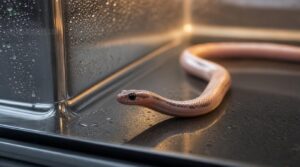
Without protective scales, your snake’s skin snags on anything rough. That’s why interior surfaces matter more than most keepers realize.
Choose Non-porous Materials like glass or PVC, and apply an Epoxy Coating over wood for easy disinfection. Sand all Enclosure Materials—Wood, Glass, PVC, Plastic—down to a smooth finish, and profile every edge.
Filleted Corners eliminate the last hidden snag points.
Safe Placement of Heating Equipment

Heating gear can hurt a scaleless snake fast if it’s placed carelessly. To ensure safety, follow these five rules:
- Position your thermostat probe placement at belly height on the warm side — never touching the heater.
- Use heater guard installation on ceramic heat emitters and heat lamps.
- Practice cable routing safety by keeping cords away from daily access points.
- Apply moisture isolation so heat pads stay dry.
- Keep heat source spacing to one end, preserving a real temperature gradient.
What Substrate is Safest?

Substrate matters more for scaleless snakes than most people realize. Without scales, their skin scrapes easily, so what lines the bottom of the enclosure can make a real difference.
Here are the safest options to explore.
Paper Towels for Easy Monitoring
Paper towels are the simplest win for monitoring your Scaleless Ball Python’s health. Their plain white surface makes stain visibility instantly — blood, urine, or unusual discharge shows up fast. They’re fully disposable, ensuring contamination prevention is built-in. Replace them after every cleaning session: no guessing, no reuse.
| Benefit | Why It Matters |
|---|---|
| Stain Visibility | Spots health issues immediately |
| Disposable Hygiene | Eliminates pathogen reintroduction |
| Inspection Buffer | Soft layer during handling checks |
| Litter Control | Easy daily spot removal |
| Humidity Control | Absorbent surface prevents moisture buildup |
Newspaper as a Low-Abrasion Option
Newspaper is a surprisingly solid soft substrate for your Scaleless Ball Python. Its smooth, uncoated surface is gentle against bare skin, reducing micro-abrasions as your snake moves.
It’s budget friendly, eco-friendly, and easy to swap out—quick replacements take seconds.
Clear visibility of waste simplifies monitoring, while its moisture-wicking surface helps manage humidity without saturation.
Coconut Fiber for Humidity Support
Coconut fiber acts like a slow-release humidity reservoir inside your enclosure. Its capillary moisture channels distribute water evenly, providing microclimate enhancement around hides where your Scaleless Ball Python needs it most.
Use a 2–4 inch base layer, lightly pre-wetted, as part of a layered substrate design. This moisture buffering keeps humidity levels stable between 50–70% for effective reptile humidity control.
Prioritize ventilation to mitigate mold risk, ensuring the substrate’s benefits are maintained without compromising enclosure safety.
Substrates to Avoid
Some substrate choices can seriously hurt a scaleless snake. Skip Pine Mulch, Cedar Bark, and scented bedding entirely — their oils and chemicals irritate exposed skin fast.
Dusty sand and Loose Gravel are just as bad; fine particles stick to sensitive skin and cause abrasions. Soil mixtures often hide sharp debris too.
Stick with coconut fiber or paper towels for safe substrate moisture retention.
Preventing Skin Scrapes and Irritation
Beyond substrate choices, the enclosure itself plays a big role in keeping skin safe. Rounded enclosure corners, smooth seams, and clean surfaces all cut down on daily friction.
- Use skin-safe moisturizers sparingly during shed cycles for added barrier support
- Practice low-friction handling on smooth surfaces and keep sessions short
- Apply light wound coverings over any scrapes until healed
Elevated humidity cycles also prevent dry skin from catching and tearing.
Spot Cleaning and Full Substrate Changes
Spot cleaning is your daily habit — scoop out feces and urates as soon as you see them. Dried urate residue builds up fast and locks odors into the substrate. Use Residue-Free Products and sanitized tools every session — tool sanitization matters more with sensitive-skinned snakes.
When coconut fiber or soil mixtures are heavily soiled throughout, do a full reset. Move your snake into temporary containment first, then replace everything.
What Temperature and Humidity Work Best?

Getting the climate right inside your scaleless snake’s enclosure isn’t optional — it’s the foundation of good care. Without proper temperature and humidity, even the best substrate and hides won’t protect your snake’s vulnerable skin.
Here’s exactly what you need to hit.
Cool Side Temperature Range
On the cool side, aim for 76–80°F. That 10°F gap between sides is your thermal gradient — it lets your scaleless snake thermoregulate properly. Ambient room influence can push the cool side higher, so do not rely on guesswork.
Use a thermometer to verify readings, and rely on your thermostat settings and heat mat placement to keep the gradient ratio consistent.
Warm Side Temperature Range
The warm side should sit between 84–89°F. This range promotes healthy digestion and keeps your thermal regulation devices functioning properly. Thermostat calibration is critical here—a poorly placed temperature probe can provide inaccurate readings.
Keep these guidelines in mind:
- Heat source placement should cover one-third of the enclosure floor
- Warm zone size must fit your snake’s full body length
- Nighttime warm drop shouldn’t fall below 80°F
- Temperature probe accuracy depends on probe height matching the snake’s resting level
Basking Spot Temperature
The basking spot is where your scaleless snake directly contacts heat — so surface measurement matters more than air temperature. Aim for 90–94°F at the contact point. Use an IR thermometer to verify.
| Heat Source | Best For |
|---|---|
| Heat lamps | Overhead radiant warmth |
| Ceramic heat emitters | Nighttime temperature stability |
| Heat mats | Supplemental belly heat |
Bulb distance calibration is your simplest control lever — raise it to cool down, lower it to warm up.
Ideal Humidity for Scaleless Snakes
Scaleless snakes need 50–70% humidity—higher than most scaled species. Without it, their skin dries out fast and shedding goes wrong.
Use a hygrometer, placing it at snake level to capture accurate microclimate zones rather than ceiling-level air.
- Target 50–70% daily humidity levels
- Use moisture-retaining substrate like coconut fiber
- Add humid hides for localized high humidity
- Watch for humidity fluctuations caused by heating or ventilation
- Make seasonal adjustments when indoor air gets drier
Humidity During Shedding
When your snake goes into shed, bump humidity levels to at least 60%—ideally higher. That moisture timing matters because a humidity gradient keeps the microclimate humidity elevated right when the skin layers need fluid to separate.
Substrate humidity helps, and humid hides do the heavy lifting.
Skip this, and dysecdysis occurs rapidly. Humidity control during shedding cycles prevents retained shed before it starts.
Thermometers and Hygrometers
You can’t manage what you don’t measure. For scaleless ball pythons, accurate Temperature and Humidity Management in Terrariums is non-negotiable.
- Place thermometers at both ends to verify your temperature gradient, and mount your hygrometer at breathing height for honest ambient readings
- Enable wireless alerts on smart units so you catch dangerous swings fast
- Calibrate twice yearly, log data logging trends, and swap batteries every 6–12 months
Preventing Burns, Chills, and Dehydration
Three invisible threats—burns, chills, and dehydration—can sneak up fast without proper safeguards in place.
| Risk | Prevention Strategy |
|---|---|
| Burns | Use Heat Guard Barriers between heater and snake |
| Chills | Draft Elimination near vents and windows |
| Dehydration | Water Hygiene with daily bowl changes |
| Temperature swings | Thermostat Calibration every six months |
| Dry skin | Humidifier use in terrariums during low-humidity periods |
Your temperature gradient and humidity levels do the heavy lifting—trust your tools.
How Should Scaleless Snakes Be Fed?

Feeding a scaleless snake isn’t complicated, but it does require a few non-negotiable rules to keep your snake safe. Without scales as a natural shield, the wrong prey choice can turn mealtime into a serious injury.
Here’s what you need to know to get feeding right every time.
Frozen-Thawed Vs. Live Prey
For a scaleless ball python, live prey isn’t just risky — it’s a serious threat. Without protective scales, even a small rodent bite can turn into an open wound fast. Frozen-thawed mice eliminate that injury risk entirely, cut parasite transmission, and make hygiene practices far easier to maintain.
For scaleless ball pythons, live prey isn’t a risk — it’s a wound waiting to happen
- Convenience factors: Buy feeder rodents in bulk, freeze them, and feed on your schedule
- Prey handling techniques: Thaw completely in warm water, then offer with tongs — never by hand
- Adjustment strategies: Wiggle the prekilled prey with tongs to mimic movement if your snake hesitates
Frozen-thawed is the highest standard. Stick with it.
Safe Prey Size Guidelines
Getting prey size right matters just as much as choosing frozen-thawed. The 1.5x rule is your baseline — feeder rodents shouldn’t exceed 1.5 times your snake’s widest body point. Going bigger risks regurgitation, jaw strain, and real mouth injuries.
| Prey Size Factor | Safe Guideline |
|---|---|
| Diameter Limits | No wider than 1.5x the snake’s body |
| Prey Length | Consistent thickness, no awkward angles |
| Weight Matching | Proportional to current snake size |
| Feeding Frequency | Every 5–7 days; increase size gradually |
| Regurgitation Indicators | Back off on size immediately if it occurs |
Pre-killed mice and pre-killed rats both follow these same rules. Proper prey handling techniques start before the tongs ever move.
Feeding Juvenile Scaleless Snakes
Juveniles need a routine you can count on. Feed every 5–7 days using fully thawed prekilled mice. Proper prey thawing methods involve warming prey to room temperature to trigger a natural feeding response. Keep the room quiet; a calm, quiet feeding environment makes a real difference.
- Offer prey with tongs, never fingers
- Remove uneaten food immediately after feeding
- Monitor post-meal behavior for lethargy or swelling
Feeding Adult Scaleless Snakes
Adults shift from mice to appropriately sized prekilled rats, and prey size progression should be gradual — never jump more than one size up at a time.
Feeding frequency adjustments matter too; most adults do well on a weekly schedule, but body condition drives that call.
Watch appetite monitoring closely, since stress-free feeding and consistent nutrient balance keep your scaleless ball python feeding guidelines on track.
Using Feeding Tongs Safely
Tongs make every feeding session safer — especially since your scaleless ball python’s skin has zero scale armor to protect against an accidental bite redirect.
Material selection matters: Stainless steel tongs with soft, rounded tips won’t scrape delicate skin.
Grip technique keeps prey steady at eye level. Release timing lets the snake strike voluntarily.
Clean tongs after every use — hygiene practices and strike mitigation go hand in hand.
Avoiding Handling After Meals
Once your snake swallows its meal, hands off — full stop. Post-meal stress is a real trigger for regurgitation, and scaleless skin makes rough handling after feeding even riskier.
Follow the 48-hour digestive rest period before any contact. Minimize disturbance by keeping the enclosure dark and quiet.
Handling guidelines are simple: wait until the snake resumes normal resting behavior first.
Signs of Feeding Problems
Watch your scaleless snake closely at every meal. Refusal behaviors, vomiting episodes, or chewing difficulty with pre-killed feeder rodents all signal something’s wrong. Weight stagnation and respiratory distress during feedings are serious red flags. These symptoms can point to stomatitis, wounds, or deeper illness.
Your feeding and diet recommendations for ball pythons only work when consistent health monitoring and veterinary care remain consistent.
How Do Scaleless Snakes Shed?

Shedding is one of the trickiest parts of caring for a scaleless snake, and getting it right matters more than most keepers expect. Without scales, your snake has almost no buffer against the problems that come with a bad shed.
Here’s what you need to know to get through each shed safely.
Why Shedding Can Be Difficult
Shedding without scales resembles peeling tape from skin with no grip points—unpredictable and uneven. Scaleless snakes lack the textured surface that normally enables old skin to separate cleanly, increasing risks of partial shedding and dysecdysis.
Watch for these four common triggers:
- Reduced grip from smooth skin causes uneven separation
- Uneven humidity creates patchy, incomplete skin shedding
- Abrasive substrate scrapes loosened skin instead of releasing it
- Dehydration’s impact tightens the outer layer, worsening dysecdysis
Signs of an Upcoming Shed
Your scaleless ball python basically telegraphs a shed days before it starts. Cloudy eyes and matte scales are your first clear signals — the skin fluid layer builds underneath, dulling color and turning eyes opaque.
Expect hide preference to increase, feeding decline to kick in, and touch sensitivity to spike.
Catch these cues early and you’ll have time to dial in humidity levels before dysecdysis becomes a real risk.
Using a Moist Hide
A good, hydrated hide is your best tool for smooth skin-shedding assistance.
To optimize its effectiveness, follow these setup steps:
- Placement Strategy — Set it on the warm side, with the entrance clear and unobstructed.
- Material Selection — Pack damp sphagnum moss inside; ensure it remains moist but never pooling.
- Ventilation Design — Use a loose lid to maintain stable humidity levels without soaking.
- Cleaning Protocols — Replace the moss weekly to prevent bacterial buildup.
Safe Soaking for Stuck Shed
When the moist hide isn’t enough, a lukewarm water soak can save the day. Fill a shallow container just deep enough to reach your snake’s belly—no deeper. Keep sessions to 10–15 minutes with supervised sessions throughout.
The lukewarm water gently softens stuck shed, making gentle removal much easier. Always use a clean soak setup to avoid introducing bacteria during an already stressful shedding process.
Checking Eye Caps and Tail Tips
Once the soak is done, your shed monitoring isn’t finished yet. Check both eye caps closely — the ocular scale should look clear, not cloudy or filmy. That’s your Eye Vision Test.
Then run a gentle finger along the tail tip, checking Tail Blood Flow by looking for swelling or indentation.
Log humidity in your Daily Humidity Log to catch patterns before they become health issues.
When Not to Pull Shed
Even after checking eyecaps and tail tips, resist the urge to pull anything that isn’t already loose. Excessive pulling on a scaleless ball python isn’t just risky — it can cause visible redness, bleeding, and damaged new skin underneath.
Premature intervention during the shedding process makes dysecdysis worse, not better. If humidity levels are right and the shed still clings, wait.
When to Contact a Reptile Vet
Sometimes the shed situation goes beyond humidity fixes. If your scaleless ball python shows any of the following, call a reptile vet right away:
- Open-mouth breathing or wheezing signal respiratory distress
- Uncontrolled tremors indicate a neurologic emergency
- Visible wounds or burns require urgent care for severe injury
- Sudden illness after feeding may mean toxic ingestion
- Straining without egg production suggests egg binding
What Health Problems Are Common?
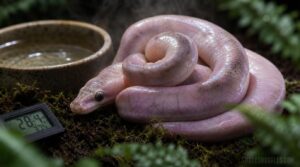
Scaleless snakes don’t have that tough outer armor that protects most reptiles, so health issues can show up faster and hit harder.
Knowing what to watch for means you can act before a small problem turns into a vet emergency. Here are the most common health concerns you’ll want to stay ahead of.
Cuts, Scrapes, and Open Wounds
Scaleless snakes have extrasensitive skin, so even minor wounds require quick attention. Begin with wound assessment: check if edges gape or if muscle/fat is visible, as both indicate serious health issues.
Clean the wound gently using proper cleaning protocols, then apply a dressing. Deep cuts require veterinary attention for stitches.
Always prioritize snake handling safety to prevent injuries before they occur.
Burns From Improper Heating
Burns are the silent danger in any scaleless ball python setup. Without protective scales, skin sensitivity means a faulty thermostat or unmonitored hot spot can cause serious tissue damage fast.
Always run heat mats through a reliable thermostat, check for substrate heat transfer underneath, and verify your temperature gradient daily.
For emergency burn care, skip heat lamps on the affected area and call your reptile vet immediately.
Retained Shed and Dysecdysis
Dysecdysis — lymphatic cleavage failure where old skin will not separate cleanly — hits scaleless snakes harder than most. Watch for these shed retention indicators:
- Patchy, dull skin after a shed cycle
- Digit constriction or tight rings near the tail tip
- Cloudy eye caps still present post-shed
Humidity spike strategies — like daily misting and 15–20 minute soaks — resolve most shedding problems and address dysecdysis treatment needs before tail tip necrosis develops.
Dehydration Warning Signs
Dehydration sneaks up fast in scaleless snakes—and without scales to retain moisture, your snake pays the price quickly. Humidity levels and temperature directly impact reptile health, making environmental control critical. Watch for these warning signs closely, as they signal urgent fluid deficits.
| Warning Sign | What You’ll Notice | What It Means |
|---|---|---|
| Dry Mouth | Sticky, dry oral tissue | Fluid levels critically low |
| Reduced Urine | Dark or absent urates | Kidneys conserving water |
| Skin Turgor | Skin tents when pinched | Severe dehydration present |
| Excess Thirst | Drinking unusually often | Body signaling fluid deficit |
| Dizziness/Fatigue | Lethargy, uncoordinated movement | Late-stage dehydration |
A humid environment isn’t optional—it’s survival. Shedding problems and dysecdysis treatment often trace back to dehydration first, underscoring the need for proactive humidity management.
Respiratory Infection Symptoms
Respiratory infections hit fast—and scaleless snakes have zero extra protection when they do. Catching symptoms early is everything. Watch closely for:
- Nasal congestion or increased sneezing frequency
- Wheezing episodes and labored breathing
- Fever spikes paired with visible lethargy
- Mucus bubbling from the mouth or nostrils
- Open-mouth breathing or chest pain signs
Preventing respiratory infections in reptiles starts with stable temps and humidity—non-negotiable for reptile health.
Mouth Rot and Skin Infections
Scaleless snakes are one skin breach away from a serious infection. Mouth rot (stomatitis) and skin infections share the same root cause: compromised tissue that lets bacteria or fungi in.
| Sign | Mouth Rot | Skin Infection |
|---|---|---|
| Early Detection Signs | Excess saliva, food refusal | Redness, swelling at wound |
| Visual Clues | Cottage cheese discharge | Open sore, discoloration |
| Spread Risk | Can reach lungs, cause pneumonia | Spreads to surrounding tissue |
| Treatment Type | Antifungal vs Antibiotic depends on cause | Wound Care Protocol, topical antimicrobials |
| Prevention | Humidity levels 50–70%, clean substrate | Substrate Choices for Sensitive-skinned Snakes |
Oral Bacterial Treatment requires a vet diagnosis first—guessing wrong wastes critical time. Infection Spread Prevention starts with catching problems early and keeping enclosures spotless.
Preventive Veterinary Care
A good reptile vet is your best insurance policy. Schedule Wellness Exams at least once a year — more often for younger or high-risk snakes. Routine Bloodwork catches kidney or liver issues before symptoms appear. Discuss Parasite Prevention and Vaccination Planning during each visit.
Veterinary care for reptiles also covers health monitoring, helping you stay ahead of Shedding Problems and reptile disease prevention year-round.
Should You Buy a Scaleless Snake?
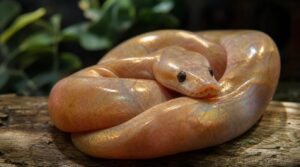
Scaleless ball pythons are stunning, but they’re not an impulse buy. Before you commit, there are a few things worth thinking through.
From the ethics of the morph to finding the right breeder and knowing what you’re paying for, here’s what to keep in mind before bringing one home.
Ethical Considerations of Scaleless Morphs
Buying a scaleless morph isn’t just a purchase — it’s a vote for what breeders produce next. That’s the heart of the ethical debate over scaleless snake morphs. Before you buy, consider:
- Welfare trade-offs are real and predictable
- Market demand’s impact drives genetic selection ethics
- Breeder responsibility requires transparency standards
- Ethical considerations in exotic pet ownership include long-term skin health costs
Choosing a Reputable Breeder
Once you’ve wrestled with the ethics, finding the right breeder matters just as much. On MorphMarket, look for breeders with verified reviews, genetic transparency, and clear health guarantees.
Ask about facility conditions and after-sale support — good breeders welcome those questions.
Breeder accreditation through hobby clubs adds accountability. A trustworthy source won’t rush you.
Health Checks Before Purchase
Once you’ve found a breeder you trust, look before you commit. Check body condition first — no sunken areas, lumps, or uneven thickness.
Skin inspection matters too; scaleless snakes show scrapes and redness clearly. Confirm clear eyes and a closed mouth.
Ask about parasite screening and stool analysis. Plan a vet visit right after purchase.
Scaleless Ball Python Price Factors
Price tags on scaleless ball pythons aren’t random. Genetic rarity drives cost first — fully scaleless specimens start around $1,500 on MorphMarket, while premium combos can exceed $10,000. Breeder reputation, health documentation, and market demand all push numbers higher too.
Key cost factors include:
- Morph purity and rare genetic mutation
- Sex and age premium
- Documented health history
- Current market demand
Buying Online Vs. Reptile Expos
Each option has real trade-offs. MorphMarket connects you with reputable breeders nationwide, offering live arrival guarantees and wide morph selection — but shipping stress is a genuine risk.
Reptile expos let you assess health in person and open the door to price negotiation with vendors directly. For rare scaleless morphs, community networking at expos often surfaces breeders you won’t find online.
Preparing Before Bringing One Home
Before your scaleless ball python arrives, have everything ready: ensure the transport container is prepared, the enclosure is built, and the substrate is in place.
Use paper towels or coconut fiber to protect their sensitive skin.
Set your temperature gradient and humidity immediately—not after arrival.
Book a vet baseline visit early to establish care.
A solid supply checklist and arrival stress mitigation plan will ease the transition for both you and your python, ensuring calmer first hours.
Frequently Asked Questions (FAQs)
Do scaleless snakes have health issues?
Yes, they do. Common health issues in scaleless ball pythons include blister disease, skin ulceration, dysecdysis, thermal injury, humidity deficiency, and respiratory infections.
All these conditions are linked to husbandry gaps rather than immune deficiency.
How do you take care of a scaleless rat snake?
Keep a smooth enclosure with paper towel substrate, maintain 75–89 °F temperatures, and hold humidity at 50–70 %. Use feeding tongs, offer frozen-thawed prey, and monitor skin after every shed.
What is the lifespan of a scaleless snake?
With good exotic pet care, your scaleless ball python can live 20 to 30 years. Genetic longevity, veterinary checkups, and stress management all play a role in reaching that upper range.
How hard is it to take care of a corn snake?
Corn snakes are beginner-friendly reptiles. Their enclosure setup is straightforward, temperature regulation is forgiving, and humidity levels stay manageable around 40–50%.
With proper substrate, consistent handling, and avoiding common mistakes, they’re genuinely rewarding pets.
Is it hard to take care of a scaleless corn snake?
It’s not rocket science, but scaleless corn snake care demands attention to substrate, humidity levels, shedding, and skin irritation prevention — small oversights add up fast.
How do I choose a scaleless corn snake?
Look for a breeder who documents genetic lineage and morph stability. Check head pattern clarity, color saturation, and temperament. Availability sources include MorphMarket and reptile expos.
What is a scaleless snake?
Smooth skin, subtle scales, surprising genetics — a scaleless snake carries genetic mutations that disrupt normal keratin deficiency in scale development, leaving soft, leather-like skin instead of the typical protective layer.
Do scaleless snakes shed their scales?
Yes, scaleless snakes still go through ecdysis. They shed outer keratin layers just like scaled snakes do.
The difference is their moisture dependence is higher, making post-shed inspection essential to catch retained skin early.
How do you handle a scaleless snake?
Support the full body, keep your hands clean, and keep sessions brief. Gentle body support prevents friction injury, and stress signals like tight coiling mean it’s time to return your snake to its enclosure.
What is a scaleless corn snake?
A scaleless corn snake is a genetic morph of Pantherophis guttatus with recessive inheritance.
Meaning it needs two copies of the scaleless allele to show scale reduction across its dorsal surface.
Conclusion
Caring for a scaleless ball python is like maintaining a high-performance engine—every detail matters, and skipping one step puts the whole system at risk. This scaleless snake’s care information gives you exactly what you need to keep their delicate skin intact, their environment dialed in, and their health consistent.
You’ve already done the hard part by learning before something goes wrong. Now your setup just needs to match what you know.
- https://www.petplace.com/article/reptiles/general/keeping-your-snake-healthy
- https://www.thebiodude.com/blogs/snake-caresheets/care-guidelines-for-corn-snakes?srsltid=AfmBOoq-LqgQuZaQr9QAshL2SG2jTSqr54XG9Vp4NTe8AiyRvRTVAnmx
- https://www.goodreptiles.com/blogs/learn?srsltid=AfmBOorgM-tsSmDatg9akMZY-JwZkU2GOjdl4c5bVZb-eXX8bDOyQTNY