This site is supported by our readers. We may earn a commission, at no cost to you, if you purchase through links.

A snake’s strike clocks in at around 50 milliseconds. Your hand, offered at feeding height with fingers wiggling, doesn’t stand a chance—human reaction time runs eight times slower than that. Most keepers who’ve been bitten while hand-feeding will tell you the same thing: they never saw it coming.
What happens if you feed a snake by hand isn’t just a bite risk. It conditions your snake to associate your hand with food, rewiring its response to your presence long after the prey is gone.
The fixes are straightforward, and your snake will eat just as well.
Table Of Contents
Key Takeaways
- A snake strikes in 50 milliseconds—eight times faster than you can react—so hand-feeding puts you at risk before you even register the movement.
- Feeding by hand conditions your snake to associate your scent and hand motion with prey, turning routine care into a daily bite risk long after mealtime.
- Tong-feeding with frozen-thawed prey eliminates that hand-prey connection, keeps you outside the strike zone, and works just as well for the snake.
- After any meal, leave your snake alone for at least 48 hours—handling during digestion raises stress, disrupts recovery, and can trigger regurgitation. If you’re thinking about switching up your snake’s menu, this guide on whether corn snakes can safely eat crickets explains which feeder risks matter most.
Hand-Feeding Teaches Snakes to Strike
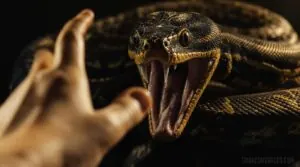
Hand-feeding a snake isn’t just risky once — it rewires how the snake sees your hand permanently.
Using tong-feeding techniques for non-aggressive snake behavior helps break that hand-prey association before it becomes a hard habit to undo.
Every time fingers deliver food, the snake’s brain logs that connection. Here’s what that habit actually sets in motion.
Fingers Resemble Moving Prey
Your wiggling finger looks exactly like prey to a snake. That’s not a metaphor—it’s basic prey motion mimicry at work. Snakes rely on visual cue confusion, tracking small moving shapes within their feeding range. Finger stimulus overlap makes your hand indistinguishable from a mouse. Here’s what triggers that targeted strike perception:
- Continuous motion near the mouth
- Repeated presentation at feeding height
- Human scent paired with movement
- Inconsistent motion pattern conditioning over time
Faster-Than-Reaction Strikes
Once your finger moves like prey, the snake doesn’t pause to reconsider. Its neuromuscular reflexes fire through spinal pattern generators—no conscious decision required. Strike speed hits 50 ms, roughly eight times faster than human reaction time.
A snake’s strike fires at 50 ms—eight times faster than your hand can react
Coil acceleration mechanics and pre-strike cues like subtle body shifts give you maybe 40–80 ms warning. You won’t catch it.
Protective gloves aren’t optional—they’re your only real buffer.
Feeding Mode Conditioning
Hand-feeding doesn’t just create one risky moment—it rewires your snake’s entire feeding behavior over time. Through tactile cue association and chemosensory cue learning, your snake links your scent, hand movement, and approach pattern directly to food. That’s conditioned feeding anticipation.
Every session reinforces it. The prey motion trigger fires more quickly, strike timing adaptation shortens the pause, and hand association with food becomes hardwired.
Increased Routine Care Risk
That conditioned behavior doesn’t stay in the feeding window. It bleeds into every routine care interaction. Frequent hand contact during cleaning, water changes, or enclosure checks triggers the same strike response. Cumulative bite risk builds quietly across repeated sessions.
Unexpected movement triggers—even reaching for a water dish—can set off a lunge. Routine stress buildup turns ordinary upkeep into a daily gamble.
Defensive Posture Warning Signs
Your snake’s body telegraphs intent before the strike lands. Learning to read these snake behavior cues is one of the most practical bite prevention techniques you’ll develop. Watch for:
- Coiled Body Tension — tight coils braced for launch
- Head Elevation — neck raised above the body line
- Muscle Tightening — a rigid, "set" appearance along the front third
- Open Mouth Display — visible gaping paired with stillness
- Sudden Lunge — explosive forward movement without warning
Defensive posture and strike zone awareness go hand in hand. Back off immediately.
Bites Can Happen Very Quickly
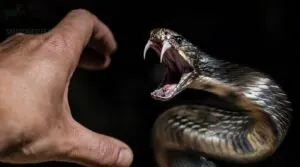
Snake bites don’t give you a warning shot. At around 50 milliseconds, a strike lands before your brain even registers movement — that is roughly eight times faster than your hand can pull away.
That speed is exactly why a spring feeding schedule for snakes built around calm, predictable routines helps reduce the defensive strikes that catch even experienced keepers off guard.
Here’s what you’re actually up against when your hands get too close.
Hands in Strike Zone
Your hand’s position matters more than you think. Place it within a snake’s proximity threshold—roughly one body-length forward—and you’ve entered the strike zone. Strike zone awareness is everything here. A snake doesn’t pause to reconsider. It reads motion and range, not intent.
Bite prevention technique starts with hand angle control: keep your hand low, back, and always behind proper equipment extension tools.
Dry Bite Punctures
Even a "dry bite" — no venom, just fangs — isn’t consequence‑free. Local inflammation kicks in fast, and fang mark care still matters. About half of snakebites are classified as dry bites.
- Wash the wound with soap and water (Infection Prevention starts here)
- Monitor for swelling, redness, or delayed symptoms — Envenomation Monitoring is non‑negotiable
- Check your Tetanus Update status
- Evaluate whether bite‑resistant gloves could’ve prevented this
Constrictor Bite Risks
Think constrictors are "safe" because they’re nonvenomous? Their bite force and recurved teeth can cause deep tissue damage — tearing muscle and tendon if a larger individual latches on.
Infection complications follow fast: swelling indicators like redness, heat, and drainage signal bacterial invasion that can escalate to systemic sepsis.
Ocular injuries have been documented too. Defensive bites demand immediate bite wound care, and bite-resistant gloves are not optional.
Venomous Snake Dangers
Venomous species make every feeding moment a calculated gamble. Venom potency varies wildly—viper venom can trigger systemic envenomation within minutes, destroying tissue and impairing clotting rapidly. In 2023, one bite required amputation.
Key complications include:
- Venom toxicity causes local necrosis almost immediately
- Systemic envenomation can cascade into organ failure
- Antivenom access isn’t guaranteed in every region
- Snakebite complications worsen without a first aid protocol
- Protective gloves reduce risk but won’t stop viper-grade bite force
Even with precautions, outcomes remain perilous.
When to Seek Help
Any bite—dry or venomous—warrants immediate medical attention. Snakebite complications escalate fast, especially for immunocompromised individuals.
Watch for swelling, discoloration, or numbness spreading beyond the wound. Seek professional intervention if symptoms worsen within hours. Amputation risk, while rare, is real.
Beyond physical injury, the psychological toll matters too—persistent anxiety, social withdrawal, or decline in daily functioning after a traumatic bite are signs you need support.
Hand-Feeding Spreads Germs

Bites aren’t the only thing you need to worry about.
Every time your hand enters that enclosure, you’re potentially moving bacteria around — between your snake, your surfaces, and yourself. The real hygiene risks hide here.
Salmonella on Scales
More than half of captive snakes carry Salmonella on their scales — and hand-feeding puts your fingers right in the contamination zone.
Moisture accelerates transfer, and scale bacterial load spikes during stress or poor husbandry.
Watch for cross-contamination through:
- Wet hands touching snake skin
- Glove contamination risk from reused gear
- Saliva contact enables zoonotic disease transmission
- Skipping hand hygiene after handling reptiles
Routine swab testing and effective disinfection methods catch problems early.
Rodent Scent Triggers
Salmonella isn’t the only thing your hands carry into the enclosure. Rodent scent is a hard-wired trigger for prey animals, which release alarm pheromones when stressed. These chemical signals linger on your skin, creating an unintended consequence.
Your hand-fed pet snake detects these pheromones through olfactory investigation, mistaking your presence for a predator threat. This triggers a survival response aimed directly at you.
Wash hands before feeding. Every time.
Cross-Contamination Between Enclosures
Your gloves, tongs, and water dishes travel between enclosures, risking bacterial transfer. That’s why a Glove Rotation System is critical: dedicated gloves per enclosure, with no exceptions.
Tool Decontamination and Water Dish Sanitizing must occur between uses, using reptile-safe sanitizers only.
Your Cleaning Order Strategy should proceed from clean to dirty—never backward—to prevent cross-contamination.
Risks for Vulnerable People
Cross-contamination poses the greatest risk when vulnerable individuals are involved. Routine Salmonella exposure can escalate into severe health events for those with compromised immunity. Three high-risk groups face heightened dangers:
- Children under five — Their developing immune systems struggle to combat Salmonella effectively.
- Immunocompromised individuals and pregnant women — Infections can rapidly escalate into life-threatening situations.
- Elderly adults — Cognitive impairment and slower recovery times compound their vulnerability.
To mitigate these risks, use protective gloves to maintain a barrier between vulnerable individuals and potential contamination sources at all times.
Proper Handwashing Steps
Washing up takes a minimum of twenty seconds—no shortcuts. Lather every surface: backs of hands, between fingers, under the nails (Fingernail Scrubbing matters more than people think). Rinse thoroughly, then turn off the faucet with a paper towel to avoid recontaminating clean hands.
Dry with a clean towel. Post-Glove Handwash counts too.
Hand sanitizing alone won’t cut it. These handwashing protocols are non-negotiable for proper infection control.
Safer Feeding Methods Work Better
The good news is that hand-feeding isn’t the only option—and honestly, it’s not even the best one.
A few simple tools and habits make feeding safer for both you and your snake. Here’s what actually works.
For a full walkthrough of sourcing, storing, and thawing prey safely, this guide on how to prepare snake food covers every step in detail.
Use Long Feeding Tongs
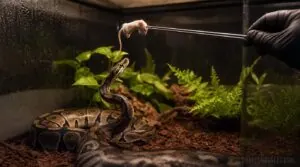
Snake feeding tongs are your first real line of defense. Tong Length Selection matters — longer enclosures require longer tongs, ideally purpose-built to keep hands outside the strike zone entirely.
For Material Corrosion Resistance, prioritize stainless steel, as moisture and frequent cleaning rapidly degrade cheaper metals.
Grip Tip Design — curved or serrated — prevents prey from slipping during presentation. Inspect tips before every use; Replaceable Tip Maintenance and Safety Distance Calibration are non-negotiable for safety.
Offer Frozen-Thawed Prey
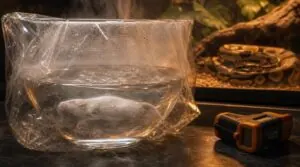
Switching to frozen-thawed prey is one of the smartest safe feeding practices you can make. Proper prey thawing process matters — use the Bagged Water Method: seal the prey in a bag, submerge in 110–115°F water for 5–10 minutes, then do a Prey Warmth Check targeting 100–105°F surface temp.
Keep these rules tight:
- Match prey size to 1–1.5× your snake’s widest point — Prey Size Matching prevents refusal and regurgitation
- Avoid Refreezing; it degrades tissue quality fast
- Check Thawing Temperature with an infrared thermometer
- Store frozen prey properly — sealed, labeled, dated
- Never skip the warmth check; cold prey triggers fewer feeding attempts
Wiggle Prey Safely

Motion matters more than most keepers realize. With feeding tongs locked in steady grip—Tool Stability is everything here—wiggle the prey slowly and consistently within your snake’s strike path. Match Wiggle Speed to natural prey movement, not nervous twitching. Keep Movement Range tight to the front third of the enclosure.
Once your hand-fed pet snake strikes, hit Post-Strike Pause immediately. Still hands. No Conditioning Avoidance mistake is costlier than continuing to wiggle after contact.
Keep Hands Away

Your hands don’t belong near the enclosure edge during feeding. Period. Enclosure Edge Safety means treating the front opening like a strike zone — because it’s.
Rely on feeding tongs for all Prey Presentation Distance, and follow strict Non-Contact Protocols throughout. Equipment Positioning matters too: tongs extended, hands back.
Hand-Free Operations keep your hand-fed pet snake focused on prey, not fingers.
Remove Uneaten Prey

Don’t leave uneaten prey sitting in the enclosure. Remove it within 30–60 minutes — removal timing matters more than most keepers realize.
- Retrieval Tools first: Use tongs for safe, no-contact removal — injury prevention starts here.
- Decomposition Control: Leftover prey breeds bacteria quickly, making waste management and cleaning after feeding non-negotiable.
- Hygiene during feeding: Swap gloves between enclosures — preventing cross-contamination and practicing hand hygiene after handling reptiles keeps every animal safer.
After Feeding, Leave Them Alone
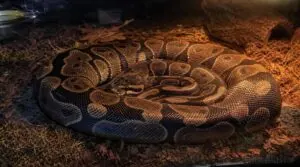
Once your snake has eaten, the real work is hands-off. Digestion is a serious biological process, and interrupting it can cause more harm than most keepers expect.
Here’s what to do — and not do — in the hours that follow.
Avoid Handling for 48 Hours
Once your snake finishes eating, put the tongs down and walk away. The 48-hour digestion period isn’t arbitrary — it’s the Hormonal Recovery Phase, when stress hormone levels drop and Post-Meal Immobility sets in naturally.
| Timing | Handling Frequency | Risk Level |
|---|---|---|
| 0–12 hrs | None | Critical |
| 12–24 hrs | None | High |
| 24–48 hrs | Minimal | Moderate |
Disrupting this window raises handling stress, derails Long-Term Growth Impact, and compromises Weight Gain Tracking accuracy.
Reduce Regurgitation Risk
Regurgitation isn’t just messy — it can be lethal if it happens repeatedly. Keep your Thermal Gradient stable, nail your Prey Size Matching, and stick to Feeding Schedule Consistency.
Post-Meal Observation matters too: watch for gaping, tension, or restless posture.
Proper Humidity Management and a stress-free environment do the heavy lifting.
Hand feeding removes this control entirely.
Lower Feeding-Day Stress
Feeding-day chaos is the fastest way to undo everything you just protected.
Keep things calm with these five habits:
- Stick to Predictable Feeding Times — same day, same hour
- Maintain a Low-Noise Environment before and during the session
- Use a Gentle Approach Path — no sudden movements
- Keep a Stable Temperature Zone throughout
- Run Brief Feeding Sessions — offer prey, done
Stress-free feeding isn’t luck. It’s routine.
Support Healthy Digestion
Digestion isn’t passive — it’s work. After a successful meal, your ball python is effectively running a slow internal engine. Proper prey size calculation is crucial here: a correctly sized meal (1–1.5× the widest body point) promotes digestive health without overtaxing gut function.
Stress reduction feeding habits, like temperature regulation consistency in the enclosure, ensure efficient digestion. These practices allow the internal engine to run smoothly.
Disruption of these conditions, however, directly triggers regurgitation.
Maintain Calm Enclosure Conditions
Even after feeding, your work isn’t done — the enclosure itself needs to stay calm and stable. Stress doesn’t stop at the tongs.
- Maintain your Temperature Gradient: warm side 88–92°F, cool side 76–80°F
- Keep Humidity Control steady at 60–80% using a hygrometer
- Offer Secure Hides on both sides so your snake isn’t exposed
- Provide Proper Ventilation and Consistent Lighting via a timer — no surprises
Frequently Asked Questions (FAQs)
What protective gear should I wear while feeding?
Suit up like you mean it. Wear puncture‑resistant gloves, safety goggles, long‑sleeve apparel, and non‑slip footwear.
Keep disposable cleanup gloves nearby.
That’s your full personal protective equipment setup—simple, effective, non‑negotiable.
How often should I feed my ball python?
Adults do well on a 10–14 day interval. Adjust based on body condition and weight trends. Bigger prey means longer gaps. Watch seasonal appetite dips and tweak your schedule accordingly.
What prey size is right for my snake?
Match prey width to your snake’s widest body point. A good rule: prey should weigh roughly 10% of your snake’s body weight.
If you’re still deciding which species suits your household, these friendly snake breeds for families tend to stay manageable in size and feeding needs.
If your snake refuses appropriately sized prey, don’t panic—our corn snake feeding guide for babies walks you through common reasons for hunger strikes and how to fix them.
A small lump after swallowing means you’ve sized it right.
How do I properly thaw frozen prey?
Refrigerator thawing overnight is the safest option.
Seal meat in a bag and submerge it in a cold water bath; change the water every 20 minutes. Monitor temperature to reach 20–28°C and avoid hot spots.
What if my snake refuses to eat?
Snakes are picky eaters. Seasonal fasting, shedding pause, or temperature mismatch can all trigger food refusal. Track weight weekly. If refusal stretches past three weeks, schedule a veterinary evaluation.
Conclusion
Hand-feeding is a shortcut that rewires your snake’s brain—and not in your favor. What happens when you feed a snake by hand unfolds slowly: one session of wiggled fingers, one conditioned strike response, one bite you never saw coming.
Tongs cost a few dollars. A vet visit costs a few hundred. The math isn’t complicated. This simple tool prevents associating your hands with food, avoiding dangerous conditioning.
Feed smart: use tongs, step back after meals, and prioritize safety. By doing so, your snake stays healthy—and your hands stay intact.