This site is supported by our readers. We may earn a commission, at no cost to you, if you purchase through links.
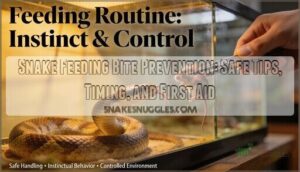
snake feeding bites don’t start with aggression. They start with confusion, a warm hand carrying mouse scent, a quick movement at the glass, a feeding response firing before your snake can sort target from mistake.
I’ve seen calm, well-established pets strike because thawed prey was handled carelessly or because someone reached in too soon after dinner.
That makes snake feeding bite prevention less about bravery and more about reading instincts, timing your actions, and setting up clean, consistent routines.
A few small changes, from tongue length to post-feeding handling rules, can keep both you and your snake out of trouble.
Table Of Contents
Key Takeaways
- Feeding bites usually come from confusion and instinct, not aggression, so clean hands, minimal movement, and consistent routines are the best way to prevent them.
- Using long feeding tongs and properly warmed, correctly sized frozen‑thawed prey keeps your hands out of the strike zone and lowers risk for both you and your snake.
- Avoid handling your snake on feeding days and wait at least 48 hours after meals, or 72 hours for larger snakes, so digestion can finish and defensive reactions stay low.
- If a bite happens, wash the wound, apply firm pressure, cover it with a clean dressing, and get medical help right away if you see severe swelling, breathing trouble, dizziness, or signs of infection.
Why Snakes Bite During Feeding
Feeding time is when snakes are most likely to bite, often because their instincts kick in fast. Understanding triggers these bites can help you stay safe and confident.
If you’re looking for practical tips to avoid bites during feeding, check out this expert guide on safe snake feeding routines.
Let’s look at the main reasons snakes bite during feeding.
Understanding Food Response Bites
Even when you’re careful, scent transfer from thawed prey or feeding tools can make your hand seem like a meal. If you reach in quickly, your snake’s feeding schedule cues and prey mimicry instincts may trigger a bite.
Owner hand hygiene is essential—wash well before handling. Stress-feeding interaction also plays a role, so remain calm and minimize movement.
Understanding these triggers is your foundation for snakebite prevention and applying first aid steps for venomous snakebites.
These incidents are often linked to chemical or thermal cues that activate feeding circuitry.
Snake Instincts and Feeding Behavior
You can think of your snake’s feeding response as automatic—a chain reaction triggered by Thermal Sensing and Prey Detection. When warmth, movement, and scent overlap, your snake’s instincts take over, whether it’s using Ambush Strategies or actively searching for prey.
Kinetic Swallowing allows it to handle meals much larger than you’d expect. Species-Specific Diets shape these behavior patterns, so knowing your snake’s natural preferences helps with snake bite prevention.
Here’s what influences feeding strikes:
- Temperature and humidity levels
- Recent feeding schedule
- Peak snake activity periods
Understanding snake behavior makes first aid easier if needed.
Recognizing Stress and Defensive Triggers
Instincts set the stage, but stress loads the gun. Once your snake shifts from feeding mode to defense, a bite can happen fast — and the warning signs are readable if you know what to look for.
Stress turns feeding into defense in a flash, so spotting the warning signs is your best way to avoid a bite
| Stress Signal | What It Means |
|---|---|
| Rapid Head Bobbing | Switching from interest to threat readiness |
| Neck Flattening Signals | Active threat-display, back away now |
| Tongue Flick Frequency increase | Heightened scanning for danger or targets |
| Body Tension Cues (tight S-curve) | Defensive firing position, not feeding focus |
These behavior patterns are core to bite prevention strategies. Escape Behavior Indicators — like retreating to enclosure corners — signal your snake wants out, not food. Recognizing and avoiding snake encounters starts right here, before your hand enters the enclosure.
For more insights on why snakes instinctively test their enclosures, check out this guide to snake escape behavior prevention and containment tips.
Safe Feeding Techniques for Snake Owners
Feeding your snake safely starts with the right tools and techniques. There are a few key choices you’ll need to make to keep both you and your snake comfortable.
Let’s walk through the most important options to help prevent bites during feeding.
Using Tongs and Feeding Tools

Why risk your fingers when a stainless steel tong offers safer reach? Choose a length that keeps you well outside the strike zone—it’s your shield.
Lockable tong design lets you grip prey securely, while proper prey placement accuracy reduces stress. Clean tools after every session (tool sanitation protocol) and wear protective clothing.
These snake bite prevention strategies support bite management and effective snakebite first aid.
Choosing Frozen Vs. Live Prey
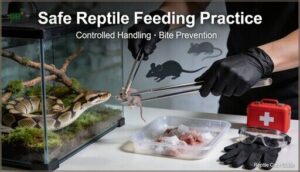
While you weigh your options, frozen thawed prey stands out for safety and practicality. You dodge Injury Risk from live rodents, minimize Parasite Transmission, and gain Nutritional Equality when prey is handled right.
Storage Logistics are simple—just freeze and thaw as needed. Cost Comparison favors bulk frozen purchases.
These snakebite prevention strategies, paired with protective clothing and first aid for snake bites, support reliable risk assessment and bite management. The reduced disease risk of frozen feeding helps protect snakes from bacterial infections.
- Reduces injury from defensive prey
- Minimizes parasite transmission
- Ensures consistent nutrition
- Simplifies storage and handling
- Lowers long-term feeding costs
Prey Size and Preparation Tips
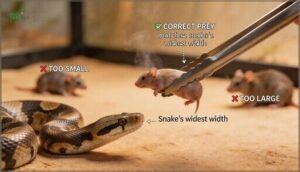
Even a small mismatch in prey size can turn feeding into a risky affair. Aim for Gape Matching—choose prey with a Prey Width Ratio close to your snake’s widest point.
Thawing Temperature matters: warm prey to 95–100°F, preserving scent and texture. Gradual Size Increase keeps meals manageable.
Here’s a quick comparison:
| Prey Size | Thawing Temp | Scent Preservation |
|---|---|---|
| Matched | 95–100°F | High |
| Oversized |