This site is supported by our readers. We may earn a commission, at no cost to you, if you purchase through links.

Your snake is bleeding, coiled tight, and you’re not sure if what you’re doing is helping or making things worse. That moment, when panic meets uncertainty, is exactly when the wrong move can turn a survivable injury into something far more serious.
Safe pain relief for snakes with injuries isn’t as simple as reaching for the nearest antiseptic. Snake physiology runs on completely different rules than mammalian biology, and common household remedies like hydrogen peroxide or ibuprofen can be fatal at even small doses.
This guide walks you through what to do, what to skip, and how to get your snake the right care fast.
Table Of Contents
- Key Takeaways
- Recognizing Pain and Emergency Signs in Injured Snakes
- Safe First Aid, Handling, and Wound Care Before The Vet
- Veterinary Pain Relief Medications for Injured Snakes
- Creating a Recovery Enclosure That Supports Healing
- Monitoring Wound Healing and Preventing Complications
- Frequently Asked Questions (FAQs)
- What to do for an injured snake?
- Is meloxicam safe for reptiles?
- Can snakes recover from injuries?
- How to tell if a snake is in pain?
- How do you treat a snake injury?
- How can physical therapy help with snake venom?
- How do you treat a snake bite wound?
- How does a snake heal a wound?
- Can a snake heal from a scaly bite?
- What can I give my snake for pain?
- Conclusion
Key Takeaways
- Snake physiology differs radically from mammals, so common household items like hydrogen peroxide, alcohol-based disinfectants, and human painkillers (ibuprofen, aspirin) can be fatal—never self-medicate; only a reptile vet can safely prescribe pain relief such as NSAIDs or opioids.
- For first aid, control bleeding with sustained gentle pressure (snake blood clots much slower than mammal blood), flush with sterile saline, apply dilute povidone-iodine, and transport in a warm (75–85°F), escape-proof carrier with the body kept in natural alignment.
- Since snakes can’t verbalize pain, watch for behavioral red flags like refusing food, rigidity near the injury, guarding a body region, or striking when touched, and treat labored breathing, spurting blood, spreading swelling, or foul-smelling discharge as emergencies requiring an exotic vet immediately.
- Support healing with a small, bare recovery enclosure lined with paper towels or reptile carpet (no branches or loose substrate), stable thermostat-controlled heat, balanced humidity, and daily wound checks—photographing from the same angle to catch subtle infection signs early.
Recognizing Pain and Emergency Signs in Injured Snakes

Snakes can’t tell you when something hurts, so you’ll need to read the signals they do give you. Knowing the difference between normal stress behavior and a genuine emergency can mean the difference between a quick recovery and a critical situation. Here’s what to watch for.
Learning to spot the difference early matters — this guide to recognizing and treating snake handling injuries walks you through what each symptom actually signals and when to act fast.
Pain and Stress Behaviors
Because snakes can’t verbalize pain, you have to read their behavior instead. Watch for these stress behaviors:
- Refusing meals despite good husbandry
- Unusual immobility or reduced exploration
- Rigid body segments near the injury
- Escalating defensive postures during handling
- Altered positioning in the enclosure
These clinical signs of pain serve as your pain assessment scale. Spot them early to act fast.
Emergency Warning Signs
Some behaviors escalate beyond stress signals into genuine emergencies. If your snake shows labored breathing, spurting or pooling blood, or can’t right itself after injury, call an emergency vet immediately.
When seconds count, knowing exactly what to watch for can save your snake’s life — recognizing critical snake health emergencies before they spiral is half the battle.
A rapidly expanding wound swelling, spreading discoloration, or foul odor signals aggressive infection.
Cold extremities paired with extreme lethargy are also serious red flags. Time isn’t on your side.
Safe First Aid, Handling, and Wound Care Before The Vet
Once you’ve spotted the signs of pain, your next job is keeping things stable until your vet can take over. How you handle and transport your snake in these first critical moments matters more than most people realize. Here’s what to do before you ever leave the house.
Bleeding and Wound Protection
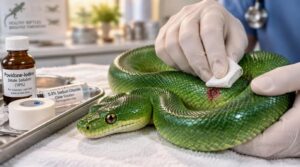
Think of a tiny papercut that won’t clot. Snake bleeding control takes patience since reptile blood clots far slower than a mammal’s, so hold that gauze longer than you’d expect.
Snake blood clots far slower than a mammal’s—hold that gauze longer than you’d expect
- Press gauze with sustained gentle pressure
- Flush with sterile saline, not alcohol
- Apply dilute povidone-iodine after cleaning
- Wrap with paper tape under adhesive
- House on paper towels to prevent infection
For deeper wounds, applying silver sulfadiazine cream topically can help disinfect cuts, burns, and abrasions across a wide variety of reptile injuries.
Safe Transport Techniques

Once the wound’s dressed, get moving. Place your snake in a rigid, escape-proof carrier lined with a non-slip surface like paper towel to prevent sliding that can shear injured tissue.
Keep the carrier warm—ideally 75–85°F—since temperature stability supports recovery, as outlined in this guide to recognizing and responding to snake paralysis.
Keep the body in natural alignment, no sharp bends near the wound. Set the carrier in a dark, quiet spot in your car so it won’t tip, then drive smoothly.
Veterinary Pain Relief Medications for Injured Snakes

Once your snake is at the clinic, the vet has a few solid options for keeping pain under control. Which medication gets used depends on the injury type, your snake’s species, and what’s going on physiologically. Here’s a breakdown of the main categories your vet will be choosing from.
Opioids and NSAIDs
Your vet may use opioids for snakes or NSAIDs for snakes as part of reptile analgesia, but reptile pharmacology makes every dose a careful calculation.
Watch for these risks:
- Opioids can suppress breathing in a stressed snake
- NSAIDs may harm kidneys if your snake is dehydrated
- Stacking both drugs compounds the danger
Safe pain relief always needs direct vet oversight.
Local Anesthetics and Sedation
When sedation is necessary for wound care, reptile anesthesia requires precision that standard pain medication simply can’t deliver.
Local anesthetics like lidocaine work at controlled doses, but injection into highly vascular tissue risks systemic toxicity fast. Your vet uses anesthetic depth monitoring throughout, because a snake’s temperature directly affects drug metabolism, making sedation or anesthesia genuinely unpredictable without close oversight.
Medications and Remedies to Avoid
When in doubt, leave it out. Human pain medications and home remedies can’t safely treat your snake due to how drug metabolism in ectotherms works.
Never use:
- Ibuprofen, naproxen, or aspirin
- Hydrogen peroxide on tissue
- Alcohol-based disinfectants
- Human local anesthetics or topical creams
- Random unprescribed antibiotics
Reptile pharmacology is highly specialized. Potential side effects can stack fast without proper guidance.
Creating a Recovery Enclosure That Supports Healing

A ball python I treated last spring kept reopening a tail abrasion because her tank had a tall cork ledge. Once we moved her to a simple recovery tub, she healed in three weeks. Yours can too.
Start with a small, bare enclosure. Your snake should lie flat and turn easily without climbing. Skip branches, hides with ledges, and loose substrates like bark. Use paper towels or reptile carpet instead; they’re clean, non-abrasive, and won’t snag injured skin.
Nail your temperature control next. Keep a stable gradient with a heat source your snake can’t touch, like a thermostat-controlled pad under one-third of the tub. Humidity control matters too: damp-but-not-wet beats swampy, since moisture softens healing tissue.
Monitoring Wound Healing and Preventing Complications

Healing isn’t linear. Snake wounds will test your patience, but consistent daily checks are your most powerful tool.
Keep an eye out for these three red flags:
- Increasing redness or swelling around the wound edge signals infection, not normal healing.
- Cloudy or foul-smelling exudate means trouble, since healthy tissue produces only mild, clear discharge.
- Behavioral changes like hiding or refusing food often point to worsening systemic issues.
Good wound care includes documentation. Photograph the wound from the same angle each time to catch shifts your eyes might otherwise miss. A smartphone macro lens makes these daily photos sharper, revealing subtle texture changes in the wound edge.
Temperature control matters too. Keeping your snake warm helps circulation and speeds snake wound healing, but excess moisture invites bacteria. Strike that balance, and your wound infection prevention stays on track.
Frequently Asked Questions (FAQs)
What to do for an injured snake?
If your snake is bleeding badly, struggling to breathe, or badly hurt, call an exotic vet now. Otherwise, keep it still, cover wounds with sterile saline cleaning only, and transport it in a ventilated, escape-proof carrier.
Is meloxicam safe for reptiles?
Here’s the theory worth testing: meloxicam is safe for reptiles. It is, with caveats. Follow analgesic use guidelines: 2 mg/kg baseline, avoid exceeding that in iguanas, and consult a reptile vet before any snake injury treatment.
Since snakes metabolize medications differently based on body temperature and species, reviewing safe pain relief options for pet snakes can help owners make more informed decisions alongside their vet.
Can snakes recover from injuries?
Yes, many do. Snakes often recover when wounds are stabilized, infections controlled, and hydration maintained. Superficial injuries heal best; deep tissue damage, fractures, or burns carry poorer odds. Watch for improving appetite and a clean recovery environment.
How to tell if a snake is in pain?
Last spring, a ball python sat coiled tight and unmoving after a rat bite, refusing food. That classic picture is how most owners first learn to read snake pain symptoms.
Watch for behavioral changes: guarding one body region, staying rigid or hiding constantly, striking when a specific spot is touched, or open-mouth breathing. Behavioral indicators of distress escalate with handling. Use simple pain assessment scales for pain assessment in reptiles, and treat collapse or bleeding as emergencies.
How do you treat a snake injury?
A snake injury is a five-alarm emergency. Keep your snake still, skip soap and Neosporin, and apply gentle pressure to bleeding wounds. Transport safely in a padded container to a reptile vet immediately.
How can physical therapy help with snake venom?
Skip the exercises entirely. Physical therapy won’t counteract venom; it needs antivenom fast. Once your snake’s stable post-treatment, gentle rehab can restore movement, but that’s injured snake care for later, not now.
How do you treat a snake bite wound?
Treat a snake bite wound with calm, minimal fuss. Stop the bleeding with gentle pressure, cover it using a sterile non-adherent dressing, skip suction or draining, keep the snake warm and contained, and see your exotic vet promptly.
How does a snake heal a wound?
Snake wounds heal in stages: inflammation, tissue repair, then remodeling. Expect slower timelines than mammals, since cooler, slower metabolisms delay tissue regeneration. Keep wounds clean, warm, and moist, and monitor daily for infection.
Can a snake heal from a scaly bite?
Ironically, your snake’s scaly armor can’t stop every bite, but it heals remarkably well. Clean gently, keep temperatures near 85°F, and watch for infection. Most wounds close by the next shed. See a reptile vet if swelling spreads.
What can I give my snake for pain?
Think of your medicine cabinet as a minefield for snakes. Don’t play doctor. Only a reptile vet can safely prescribe safe pain relief, like NSAIDs or opioids. Meanwhile, keep your snake warm, handle minimally, and reduce stress.
Conclusion
Picture your snake healing quietly in a warm, dim enclosure, wound protected, pain managed by the right medication. That’s the goal, and it’s within reach.
Safe pain relief for snakes with injuries comes down to three habits: skip the human medicine cabinet, keep wounds clean and covered, and call an exotic vet early. Trust your instincts when something looks off. You can’t fix everything at home, but you can get your snake to someone who can.