This site is supported by our readers. We may earn a commission, at no cost to you, if you purchase through links.

Your ball python hisses, curls into a tight ball, and tucks its head away. It’s not being stubborn. It’s telling you it feels unsafe.
Most new owners make the same mistake: they reach in too soon, grab from above, and keep going when the snake shows stress. A shy snake becomes a defensive one, and handling gets harder each time.
Ball python trust building methods work because they follow how your snake reads the world. Slow moves, steady routines, and a calm touch teach it that your hands mean safety. Here’s how to earn that trust, one quiet step at a time.
Table Of Contents
- Key Takeaways
- Start With a Settling Period
- Create a Low-Stress Routine
- Pick Up Your Ball Python Safely
- Read Body Language and Avoid Mistakes
- Top 10 Ball Python Trust-Building Tools
- 1. V-CHEETONG Aluminum Alloy Telescopic Snake Hook
- 2. GXSTWU Digital Reptile Hygrometer Thermometer
- 3. Ball Python Care Guide Complete Ownership Book
- 4. Ball Python Manual CompanionHouse Guide
- 5. Python Passion Ball Python Encyclopedia
- 6. Ball Python Owners Guide Complete Caring Breeding
- 7. Ball Python Care Logbook
- 8. Ball Python Care Guide for Beginners
- 9. Ball Pythons Breeding Guide Handbook
- 10. Ball Python Captivity Guide
- Frequently Asked Questions (FAQs)
- How to build trust with ball in python?
- How to tell if a snake trusts you?
- Can you build trust with a snake?
- What is the best setup for ball pythons?
- Do ball pythons bond differently with multiple handlers?
- Can music or TV sounds stress ball pythons out?
- How does age affect a ball pythons tameness?
- Do female ball pythons behave differently than males?
- Can handling improve a ball pythons appetite over time?
- Can ball pythons recognize their owners by scent?
- Conclusion
Key Takeaways
- Give your new ball python at least seven days (ideally fourteen) without handling in a properly heated, humid setup with two hides, and wait until it has eaten and digested a first meal before you start.
- Keep a steady routine of same-day feedings, consistent temperature checks, and a quiet enclosure spot, because predictability tells your snake it’s safe.
- Handle only 48 to 72 hours after a meal and never during a shed, approach from the side (never from above), support the whole body with a loose grip, and keep early sessions to about 10 minutes.
- Treat hissing, puffing, and tight balling as signs of fear rather than aggression, back off when you see them, and remember that calm, patient, repeated sessions are what slowly turn a shy snake into a relaxed one.
Start With a Settling Period

You just brought your ball python home, and you’re probably excited to hold it. Wait. Your snake needs an acclimation period first.
During that first week, a secure, properly heated and humid setup helps your snake settle in, so check out this guide to the best ball python enclosure.
Give it at least seven days without handling. Fourteen is even better. Skipping this step stresses your snake and slows down trust.
Build a secure environment before you do anything else. Keep temperatures between 78 and 88°F and humidity at 50 to 60 percent. Add two hides, one warm and one cool. Open the enclosure as little as possible. When your snake starts to shed, raise the humidity during shedding to 65 to 70 percent and provide a humid hide filled with damp sphagnum moss.
Wait one or two days before offering the first meal. Let your snake digest fully. Gradual handling begins only once it has eaten and digested that meal.
Watch from a distance. A settled snake explores more and hides less.
Create a Low-Stress Routine

Once your snake’s acclimation period ends, routine becomes your best tool. Snakes feel safe when life is predictable. A consistent routine tells your ball python what to expect, and that calms it.
- Feed on the same evening each week, using tongs inside the enclosure.
- Check temperature and humidity at the same time daily.
- Run the lights on a timer for a steady day and night cycle.
Keep the enclosure in a quiet spot. Avoid bright lights and loud noise nearby, especially at night. Your snake is most active then, and a secure environment helps it stay calm.
Log feedings, sheds, and behavior to spot patterns early. Give positive reinforcement by leaving your snake undisturbed after meals. Gradual handling comes later.
Pick Up Your Ball Python Safely
Once your routine feels steady, you’re ready to start handling. Wait 48 to 72 hours after a meal. Never handle during a shed, from blue eyes through 24 hours after.
Wash your hands and use scent-free sanitizer. Food smells can trigger a feeding response.
Approach from the side, never from above. Overhead movement looks like a predator. Move slowly and calmly. Tap the mid-body gently with a hook or your hand. This tells your ball python it’s handling time, not feeding time.
Then lift with one hand behind the head and one under the midsection. Never grab the tail or head alone. Keep your grip loose.
Keep sessions short in a secure environment and watch its body language. Trust grows.
Read Body Language and Avoid Mistakes

Your ball python talks through body language. Learn to read it, and handling gets easier for both of you.
Hissing, puffing, and striking mean your snake feels threatened. It isn’t being mean. Balling up tightly is a defensive posture, and so is fast tongue flicking with a tight coil. Back off and give it space. Respecting these signals builds trust.
A hissing, puffing, or balled-up snake isn’t being mean, just scared, so back off and give it space to build trust
A relaxed snake moves slowly over your hands. Its muscles feel loose, and it explores calmly.
Now the common mistakes. Don’t grab from above or by the tail. Don’t flinch or jerk if it bites. Don’t push on when it’s showing stress. That teaches your snake that handling means fear.
Keep early sessions brief, around 10 minutes. Let patience lead.
A gentle snake hook for handling lets you lift a nervous ball python calmly, without grabbing from above or startling it.
Top 10 Ball Python Trust-Building Tools
Trust grows faster when you handle your snake with care and stay consistent. The right trust-building tools can help you do both. Here’s what to look at, from safe handling gear and habitat monitors to books and logs you can learn from.
1. V-CHEETONG Aluminum Alloy Telescopic Snake Hook

A snake hook isn’t about control. It’s about keeping your ball python calm.
The duckbilled hook lets you gently guide your snake without grabbing it. The 4-section telescopic shaft extends to 53 inches, so you stay at a safe distance. It’s built from aluminum alloy with stainless steel parts, and it weighs 0.3 kg.
Know the limits. It’s rated up to 5.5 lb (2.5 kg), so check your snake’s weight. Tighten the hook before every use, because it can loosen.
| Best For | Reptile keepers and outdoor enthusiasts who need to gently move or handle small to medium snakes (under 5.5 lb) from a safe distance. |
|---|---|
| Product Type | Telescopic snake hook |
| Price | N/A |
| Weight | 0.3 kg |
| Size | 53 inches extended |
| Target User | Reptile keepers |
| Main Drawback | Can loosen, mixed durability |
| Additional Features |
|
- The 4-section telescopic shaft extends to 53 inches, keeping you at a safe distance.
- The duckbilled hook lets you guide a snake without grabbing it.
- The anti-skid, sweat-absorbing handle gives a comfortable, secure grip, and the whole tool weighs only 0.3 kg.
- Durability reports are mixed, and some users saw it break after about two months.
- Assembly can be tricky, since the friction locks need to be rotated rather than the sleeves.
- The hook can loosen during use, and it isn’t rated for reptiles over 5.5 lb (2.5 kg).
2. GXSTWU Digital Reptile Hygrometer Thermometer
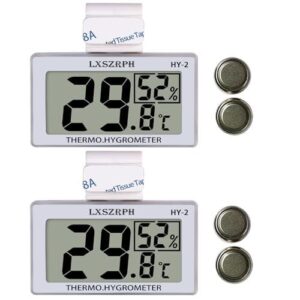
A reliable thermometer and hygrometer helps you spot problems before your ball python shows stress. The GXSTWU unit displays temperature and humidity together on one LCD screen. Switch between Fahrenheit and Celsius with the C/F button.
It’s tiny, so stick it to the glass with the self-adhesive backing. Move it between the warm side and the cool side to compare.
Check humidity calibration early, since one user found it off by -5%RH. The screen can look dark in low light.
| Best For | Reptile keepers with small terrariums, such as owners of bearded dragons, geckos, or tortoises, who want a compact, easy-to-mount way to track temperature and humidity on both the warm and cool sides of the tank. |
|---|---|
| Product Type | Thermometer-hygrometer |
| Price | N/A |
| Weight | N/A |
| Size | Tiny, compact |
| Target User | Small terrarium owners |
| Main Drawback | Accuracy varies |
| Additional Features |
|
- Shows temperature and humidity together on one LCD screen, with a C/F button to switch units.
- Small and lightweight, with self-adhesive backing so it sticks to tank walls without tools.
- Comes with its LR44 battery included, so it’s ready to use right away.
- Accuracy varies, and some users report temperature readings off by several degrees.
- The humidity sensor may need manual calibration, since one user found it off by -5%RH.
- The LCD can look dark in low light, so you may need extra lighting to read it.
3. Ball Python Care Guide Complete Ownership Book
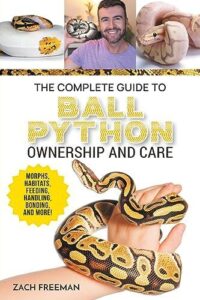
Think of this book as a trail map. It won’t show every hidden path, but it keeps you from getting lost.
The Ball Python Care Guide covers five topics: understanding, selecting, habitat setup, care, and health. You’ll find step-by-step feeding and handling instructions, plus emergency care and shedding guidance. It runs 101 pages and weighs just 6.9 ounces, so it’s easy to keep nearby.
Be realistic. Some readers call it surface-level, and $19.95 feels steep. Paperbacks may show printer marks.
| Best For | New or first-time ball python owners who want a short, beginner-friendly guide to choosing, housing, feeding, and caring for their snake. |
|---|---|
| Product Type | Care guide book |
| Price | $19.95 |
| Weight | 6.9 ounces |
| Size | 101 pages |
| Target User | First-time owners |
| Main Drawback | Surface-level information |
| Additional Features |
|
- Covers five key topics: understanding, selecting, habitat setup, care, and health
- Gives step-by-step feeding and handling instructions
- Includes emergency care and shedding guidance in a light 101-page paperback
- Some readers find the information surface-level
- At $19.95, some feel it is expensive for the content length
- Paperbacks may show printer marks, according to reviews
4. Ball Python Manual CompanionHouse Guide
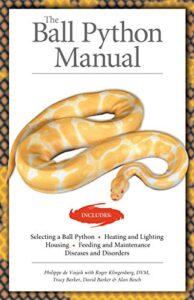
Picture a new owner whose ball python balls up tight every time she reaches in. A guide like the Ball Python Manual CompanionHouse Guide can help her decode that reaction.
Look for:
- Clear body language pictures
- Handling schedules that build consistency
- Tips for positive reinforcement
Use it alongside your sessions. Trust grows when your handling stays calm, gentle, and predictable.
| Product Type | Encyclopedia book |
|---|---|
| Price | $15.99 |
| Weight | 5 ounces |
| Size | 70 pages |
| Target User | Beginners to breeders |
| Main Drawback | Published in 2015 |
| Additional Features |
|
5. Python Passion Ball Python Encyclopedia
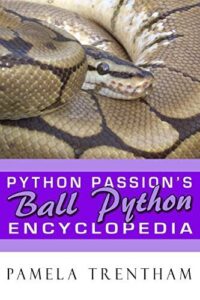
Want a quick answer when your snake acts strangely? Keep this book within reach.
The Python Passion Ball Python Encyclopedia is a 70-page guide that covers husbandry, anatomy, common problems, incubation, sexing, and hatchling care. It’s slim, at just 5 ounces, so it fits easily in your reptile room.
Newer keepers get a solid foundation here. Experienced keepers get a handy reference.
Keep one caution in mind. It was published in 2015, so check newer research. Some reviewers also want more on shedding and feeding. At $15.99, it’s still a fair price.
| Best For | Ball python keepers, from beginners building a foundation to experienced breeders, who want a slim, quick-reference guide to keep in their reptile room. |
|---|---|
| Product Type | Owner’s guide book |
| Price | $12.97 |
| Weight | N/A |
| Size | 56 pages |
| Target User | First-time owners |
| Main Drawback | Some inaccurate advice |
| Additional Features |
|
- Covers husbandry, anatomy, common problems, incubation, sexing, and hatchling care in one book.
- Compact at 70 pages and 5 ounces, so it’s easy to keep within reach.
- Priced at $15.99, with material useful to both new and experienced keepers.
- Published in 2015, so it may not reflect the latest research or breeding practices.
- Some reviewers say it offers limited coverage of everyday issues like shedding and feeding.
- Ranked 705 in Reptile & Amphibian Care, which suggests only moderate popularity.
6. Ball Python Owners Guide Complete Caring Breeding

Trust grows when you know what you’re doing, and this slim paperback helps you get there fast. It’s written for non-experts, so the explanations stay clear and short.
The Ball Python Owner’s Guide covers handling, health, temperament, breeding, and buying. At 56 pages, you can read it in one evening and keep it handy. It costs $12.97.
Be careful, though. Some experienced owners flag odd advice on tank size and substrate. Double-check those points before you act. Use it as a quick companion, not your only source.
| Best For | First-time ball python owners who want a short, easy-to-read reference to learn the basics before bringing a snake home. |
|---|---|
| Product Type | Beginner care primer |
| Price | $12.22 |
| Weight | N/A |
| Size | 132 pages |
| Target User | Beginners and kids |
| Main Drawback | Editing errors |
| Additional Features |
|
- Written for non-experts, with clear and concise explanations
- Covers handling, health, temperament, breeding, and buying in one place
- Slim 56-page paperback that is affordable at $12.97 and easy to keep handy
- Some reviewers say it lacks depth on advanced topics
- Experienced owners flag occasional inaccurate advice, such as tank size and substrate
- Its thin format can be read quickly, which limits how thoroughly it can cover each subject
7. Ball Python Care Logbook
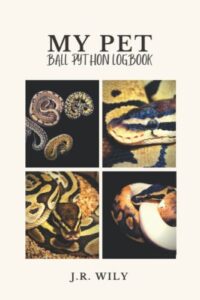
Knowing what you’re doing builds ball python trust, and a logbook keeps you honest. Write down feedings, sheds, weight, and enclosure readings.
Add notes on handling and body language too. Spot patterns, like irritability before a shed, and skip handling then. That’s simple stress reduction and positive reinforcement, since calm sessions end well.
Review your entries weekly. Changes show fast.
| Product Type | N/A |
|---|---|
| Price | N/A |
| Weight | N/A |
| Size | N/A |
| Target User | N/A |
| Main Drawback | N/A |
8. Ball Python Care Guide for Beginners
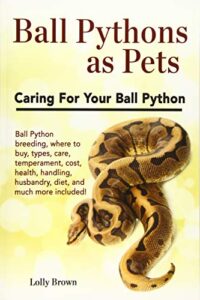
Once your logbook is in place, you’ll want a reference to check it against. Ball Python Care Guide for Beginners is a simple primer, written in plain language that even kids can follow. It covers behavior, diet, health, handling, and cost across 132 pages. At $12.22 from NRB Publishing, it’s an easy first buy.
The information is basic, with no complex care detail. Readers noticed repetition, spelling slips, and missing words. Use it as a starter, not your only source.
| Best For | New ball python owners, including kids, who want a simple, low-cost primer on basic care before moving on to more detailed sources. |
|---|
- Written in plain language that beginners and children can follow
- Covers behavior, diet, health, handling, breeding, and cost across 132 pages
- Affordable at $12.22, making it an easy first purchase
- Contains only basic information, with no advanced or detailed care instructions
- Has editing problems, including spelling mistakes and missing words
- Some readers found it repetitive and not thorough enough to be a complete care reference
9. Ball Pythons Breeding Guide Handbook

After the beginner primer, you may want something with more depth. Ball Pythons Breeding Guide Handbook covers breeding season timing, follicle tracking, pre-lay shed counts, incubation, and male readiness.
Don’t rush into breeding. A stressed ball python won’t thrive, so build trust and handling skills first. Strong reptile husbandry matters here. Keep this handbook for later.
10. Ball Python Captivity Guide
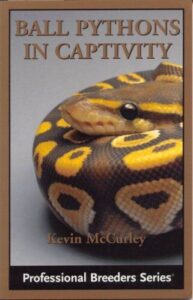
If you’re still learning, start here. Ball Python Captivity Guide is a 101-page book from ECO/Serpent’s Tale NHBD, published March 15, 2006. It packs in 114 full-color photographs and covers natural history, diet, health, breeding, and egg incubation in plain language. A used copy costs $6.94.
Know its limits. Some chapters feel disorganized, a few spelling errors slip through, and humidity guidance is thin. Pair it with a hygrometer and keep humidity between 50-60%. Experienced keepers will find it basic.
| Best For | First-time ball python keepers who want a plain-language, photo-filled beginner guide to housing, feeding, health, and breeding basics. |
|---|
- Includes 114 full-color photographs that illustrate ball python care and behavior.
- Covers natural history, diet, health, breeding, and egg incubation in accessible language.
- Costs only $6.94 for a used copy in good condition.
- Some chapters are disorganized and contain spelling errors.
- Humidity guidance is minimal, so you may need a hygrometer and outside sources to keep humidity in the right range.
- Too basic for experienced keepers, with no detailed coverage of morph genetics or advanced breeding techniques.
Frequently Asked Questions (FAQs)
How to build trust with ball in python?
Want a calm, curious snake? Start slow.
Trust grows through consistent handling, short sessions, and positive reinforcement. Let your ball python settle first, then watch its body language and end the session when it stresses.
How to tell if a snake trusts you?
One keeper told me her ball python never struck once in two years, yet she still wasn’t sure he trusted her. Watch his body language. A trusting snake moves slowly, tongue-flicks your hand, and explores calmly.
Can you build trust with a snake?
Yes, but not the way you trust a dog. Your ball python learns that you’re safe. Calm, predictable handling and steady positive reinforcement build that trust. Watch its body language, and let it set the pace.
What is the best setup for ball pythons?
You don’t need a fancy setup, just a stable one. Use a 4’x2’x2′ PVC enclosure. Keep the warm side at 88–92°F, the cool side near 76–80°F. Add two hides, 3–4 inches of cypress substrate, and a humidity of 50–60%.
Do ball pythons bond differently with multiple handlers?
A key fits one lock best. Your ball python learns each handler’s scent and touch, so trust isn’t shared equally. It’s habituation, not a true emotional bond. Keep handling consistent, and everyone’s trust grows.
Can music or TV sounds stress ball pythons out?
Yes, they can. Your ball python feels bass and loud audio as floor vibrations through its jaw. That stress shows up as tight coiling, hiding, or refusing food. Watch these reptile stress indicators, and move the enclosure away.
How does age affect a ball pythons tameness?
Age shapes how your ball python grips being touched, but it doesn’t decide tameness alone. Juveniles stress easily, so keep sessions short. Adults give clearer behavioral cues. Genetics and past experiences matter just as much.
Do female ball pythons behave differently than males?
You’ll hear that females and males act like different species. They don’t. Your ball python’s individual personality matters most. Females may turn moody while building follicles, and males restless in breeding season, so watch behavioral cues, handling, and trust.
Can handling improve a ball pythons appetite over time?
Picture a ball python tucked in its hide, slowly learning your hands mean safety. Calm, gentle handling over time builds trust, and that trust can strengthen feeding response. Never handle before meals or within 48 hours after.
Can ball pythons recognize their owners by scent?
Probably not by scent alone. A 2025 study found your ball python didn’t tell familiar human scent from unfamiliar scent in standard conditions. Stay consistent with handling, and calm behavior will show you what it’s learned.
Conclusion
Worried this takes too long? It does, and that’s the point. Trust can’t be rushed, and a snake that’s hurried will only learn to hide.
Stick with ball python trust building methods every week: let your snake settle, keep routines steady, scoop from the side, and stop when it signals stress. Small, calm sessions add up.
Someday, your python will rest across your hands, relaxed and unbothered. That quiet moment is the reward you earned.