This site is supported by our readers. We may earn a commission, at no cost to you, if you purchase through links.

A corn snake tops out around 5.5 feet. A reticulated python can pass 20. Both get sold as "snakes," and that gap in size is where most beginners go wrong.
Size is only the start. Rosy boas want bone-dry air, green tree pythons need 70-80% humidity, and a vine snake wants branches at least 36 inches high. Venom adds another layer, since elapids, vipers, and rear-fanged colubrids carry very different risks.
This snake species comparison chart puts those traits side by side, so you can identify what you’re looking at, match it to the right setup, and plan for the 15 to 30 years a pet snake can live.
Table Of Contents
- Key Takeaways
- Snake Species Comparison Chart: Size, Habitat, Venom, and Care Needs
- How to Use a Snake Comparison Chart for Identification
- Snake Habitats Compared: Global Distribution and Ecological Niches
- Pet Snake Species Compared: Temperament, Housing, and Handling
- Snake Conservation Status Compared: Threats and Responsible Ownership
- Frequently Asked Questions (FAQs)
- Which snake has a 100% fatality rate?
- What state has zero snakes?
- What snake is worth $100,000?
- What are the 10 most popular snakes?
- What is a snake scale size comparison?
- How many species of snakes are there?
- What are some notable snake species?
- Are all snake scales identical?
- What are the different types of snakes?
- How do you determine a snake’s size?
- Conclusion
Key Takeaways
- Match the snake to your setup before you buy, because size (a 5.5-foot corn snake versus a 20-foot reticulated python), humidity (dry for rosy boas, 70-80% for green tree pythons), and enclosure height all vary enormously by species.
- Identify a snake by structure rather than color, confirming at least three traits like scale patterns, pupil shape, and tail length from photos taken at a safe distance, and never guess venom risk from pattern alone.
- Corn snakes and ball pythons are the best beginner choices thanks to their docile temperaments and reliable feeding, while green tree pythons demand an experienced keeper.
- Buy captive-bred snakes, never release a pet, and plan for the 15 to 30 years of vet bills, enclosure space, and feeding, since that commitment protects both your animal and wild populations.
Snake Species Comparison Chart: Size, Habitat, Venom, and Care Needs
A well-built Snake Species Comparison Chart puts the facts you need in one place, so you’re not flipping between field guides and care sheets. Start with body dimensions. A corn snake tops out around 5.5 feet, a ball python rarely passes 5, and a reticulated python can exceed 20. Many adult Asian vine snakes reach 3 to 6 feet, and keepers should plan tall arboreal enclosures of at least 36 inches with plenty of branches.
Next, check habitat. Rosy boas need arid, low-humidity setups, while green tree pythons want 70-80% humidity and climbing space.
Because airflow, heat sources, and misting access all affect humidity, choosing the right spot for your snake’s enclosure matters as much as the setup itself.
Venom matters for safety. Elapids carry neurotoxins, vipers carry hemotoxic venom, and rear-fanged colubrids rarely harm people.
Look at care difficulty. Corn snakes suit beginners. Green tree pythons demand experience. Together, this morphological data helps accurate snake identification and smarter choices, and it helps you read scale patterns with real confidence.
How to Use a Snake Comparison Chart for Identification

A chart only helps if you read it the right way. Start with structure, not color, because color shifts within a single species and fools plenty of people.
Once you can tell species apart by structure, it’s easier to see why docile snake species for beginners like corn snakes and ball pythons are such popular first pets.
Compare scale patterns first: head scales, dorsal rows at midbody, and subcaudal counts. Measure them at the same spots the chart uses, or the numbers won’t match.
Then check morphological data like body shape, pupil form, and tail length. One matching trait proves nothing, so confirm at least three.
| Check | What to do |
|---|---|
| Location | Cut your list to species documented in your area |
| Venom profiles | Never guess from pattern; confirm with a local expert |
| Age | Juveniles often look unlike adults |
Photograph from several angles, note the date and place, and keep your distance. Accurate snake identification never requires touching the animal.
Once you have clear photos in hand, comparing head shape, pupils, and pattern against a venomous snake identification guide helps you weigh several clues together instead of trusting any single trait.
Snake Habitats Compared: Global Distribution and Ecological Niches

Your location check from the chart leads straight to habitat, because habitat preferences tell you where a snake can actually live.
Tropical regions hold the most diversity. Brazil’s Amazon shelters over 400 species, while Southeast Asian jungles support 370+. Warm, steady climates let ectotherms stay active year-round.
Deserts reward burrowers. Mojave rattlesnakes hide underground by day and hunt at night. Himalayan pit vipers shelter under rocks at altitude, and very cold places have almost no snakes.
Mountains, islands, and river basins drive geographic isolation speciation, so nearby ranges often hold different species. Use ecological niche modeling to predict where a species might turn up, and don’t forget habitat loss impact hits forest specialists hardest. Always check a species’ range map.
Pet Snake Species Compared: Temperament, Housing, and Handling
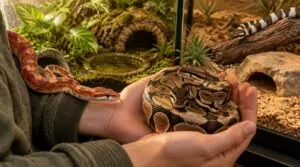
Habitat tells you where a snake lives, and it shapes your setup.
Start with temperament. Ball pythons stay calm and curl into a ball when stressed, but they can fast for weeks. Corn snakes are curious, active, and eat reliably, which makes them the best beginner snake. Kingsnakes can musk when young.
Housing differs. Ball pythons need 50-60% humidity, corn snakes do fine at 40-50%, and rosy boas want dry, burrowable substrate. In a snake size comparison, corn snakes reach 4-6 feet, ball pythons 3-5, kingsnakes 3-4.
Handling builds trust. Captive populations are bred for docility, and you’ll feel it when:
- Python settling in palms
- Corn snake exploring sleeves
- A fasting snake eating
- Kingsnake finally trusting you
- Quiet, steady bonding
Snake Conservation Status Compared: Threats and Responsible Ownership

Many snakes on your Snake Species Comparison Chart carry a conservation status that should change how you shop. Habitat fragmentation alone threatens over 60% of evaluated species, and sea snakes fare worse, with 7 of 16 true species threatened or near-threatened.
Your choices matter here. Captive breeding programs ease pressure on wild populations, so buy captive-bred animals from breeders who document lineage and guarantee health. Skip wild-caught imports.
Responsible ownership also means planning for 15 to 30 years of vet bills, bigger enclosures, and feeding. Never release a pet snake. Escapees spread disease and become invasive, which undoes the conservation work. Keep your vet records, too, because they protect genetic integrity in captive lines. That’s how you help wild populations.
Owning a snake means committing decades to its care, and never releasing it protects wild populations from disease and invasion
Frequently Asked Questions (FAQs)
Which snake has a 100% fatality rate?
No snake has a 100% fatality rate. Even the inland taipan, with the most potent venom profiles in lab tests, doesn’t kill every time.
Your outcome depends on dose, bite location, health, and fast antivenom.
What state has zero snakes?
You’ve probably heard Hawaii has zero snakes. That’s mostly true, but only for native land snakes. Sea snakes can visit its waters, and illegal pets turn up, so zero snakes means zero established wild populations.
What snake is worth $100,000?
Two heads, one fate: your $100,000 snake is a two-headed California kingsnake. Rarity, not size, sets the price. Captive populations matter more than the largest or smallest snake species, antivenom development, or public conservation outreach.
What are the 10 most popular snakes?
Picture a first-timer choosing between a ball python and a boa constrictor. Popular nonvenomous picks you’ll see: corn snake, California kingsnake, milk snake, rosy boa, Kenyan sand boa, Children’s python, carpet python, green tree python.
Since adult boas often reach 6-10 feet while ball pythons usually stay around 3-5 feet, this boa constrictor vs ball python size comparison can help you plan enclosure space.
What is a snake scale size comparison?
Ever wondered why two snakes look so different up close? Scale size shifts across your snake’s body: dorsal scales run larger, while smaller side and mouth scales stretch for big meals. Scale patterns and snake morphology reveal species.
Beyond scale size, genes also shape color and pattern, which is why a visual comparison of common snake morphs shows siblings of one species looking strikingly different.
How many species of snakes are there?
You’ll find roughly 4,249 known snake species today, up from 4145 species in August Steady taxonomic updates snake species lists keep shifting, which matters for your species identification accuracy and reptile biodiversity tracking efforts.
What are some notable snake species?
Snakes are nature’s record-holders. Reticulated pythons stretch roughly 10 meters, anacondas weigh most, king cobras lead venomous length, taipans carry the strongest venom, mambas sprint fastest.
You’ll find habitat preferences and conservation status differ widely.
Are all snake scales identical?
No, they aren’t. Snake scale analysis reveals smooth versus keeled textures, differing scale microstructure, and varied snake body proportions. This snake morphological diversity, plus snake scale coloration adaptation, helps you identify species quickly and safely.
What are the different types of snakes?
You’ll sort snakes into five major families. Colubridae is the biggest, mostly harmless. Elapidae and Viperidae carry venom, while pythons and boas are constrictors. Each species differs in habitat, venom, and pet care needs.
How do you determine a snake’s size?
Use the snoutvent technique: tape snout to cloaca, then add the tail. For snake length estimation in photos, place a scale beside it. Snake size extremes, fossil vertebrae analysis, and morphometric modeling build on these.
Conclusion
A snake can look harmless and still be dangerous, or look intimidating and be a gentle pet. That’s why guessing fails and data wins.
Keep your snake species comparison chart close, and check size, habitat, venom, and temperament before you commit. A well-matched setup keeps the animal healthy and you safe.
Choose the species you can house, handle, and afford for decades. Do that, and the snake stops being a risk and becomes a companion.