This site is supported by our readers. We may earn a commission, at no cost to you, if you purchase through links.

A snake in an empty enclosure never relaxes. It patrols the glass, freezes at every shadow, and stays rigid long after you’ve walked away. Most keepers read that as activity. It’s alarm.
Bare space is the quiet stressor behind refused meals, stuck sheds, and defensive strikes. So what decorations help snakes feel secure? A snug cork hide, a screen of pothos, and a branch sized to your snake’s body make the difference between constant vigilance and real rest.
Here’s how to place each piece, match it to your species, and build a setup your snake trusts.
Table Of Contents
- Key Takeaways
- Which Hides Help Snakes Feel Secure?
- Use Plants and Backgrounds to Create Cover
- Match Climbing Decorations to Your Snake’s Species
- Add Species-Appropriate Substrate and Ground Cover
- Choose and Maintain Safe Snake Decorations
- Frequently Asked Questions (FAQs)
- How to make snakes trust you?
- What material can snakes not bite through?
- What are some good decorations for a snake enclosure?
- How many decorations are too many for snakes?
- Can snakes become stressed by decorations?
- Do snakes need decorations in baby enclosures?
- Can I use fake skulls as snake decorations?
- Should decorations be placed near heat lamps?
- Conclusion
Key Takeaways
- Put a snug cork hide on both the warm and cool sides of your enclosure, sized so a coiled snake touches the roof and at least two walls, and add a damp-moss humid hide to help with shedding.
- Break up open sightlines with leafy plants and textured backgrounds so your snake can travel from hide to hide under cover, because bare, exposed space keeps it tense and can lead to refused meals and defensive strikes.
- Match climbing branches and substrate to your snake’s species and size, choosing grippy, sturdy wood like manzanita or cork and a substrate depth suited to how your snake burrows or lives.
- Keep every decoration safe by using non-toxic materials, sanding sharp edges, anchoring heavy pieces firmly, and changing only a portion of the layout at a time so your snake adjusts calmly.
Which Hides Help Snakes Feel Secure?
A snake that feels exposed is a stressed snake, and stress shows up quietly. The right Secure Hide Setup fixes that fast. Here’s what to put in your enclosure, and why each one matters.
Pairing a snug hide on both the warm and cool sides with the right substrate is easier when you follow this snake cage accessories checklist.
Snug Warm-Side and Cool-Side Hides
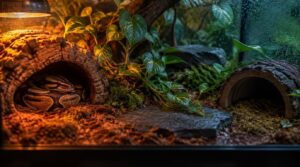
Hides work best when they’re tight. A snake wants walls touching its body on every side, because snug hides feel like safety, not a cage.
Put one warm hide over your heat source and one cool hide on the unheated end. That’s your temperature gradient doing its job. Skip either and stress creeps in. Secure hides on both sides win.
Cork Tubes and Hollow Logs
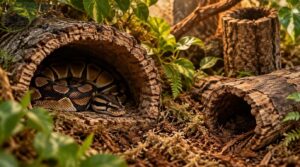
Cork bark is the hide that earns its place. A cork tube or hollow log gives your snake that tight squeeze, blocking light like a burrow. Stress reduction follows. A hide is the right size when a coiled snake touches the roof and at least two walls, so recheck a snug hide fit as your snake grows.
Smart hide placement matters. Stand a tube upright for climbers, lay a log flat for ground dwellers. Sand down splinters first, because enclosure safety fails quietly. Snug cork, one calm snake.
Humid Hides for Shedding Support
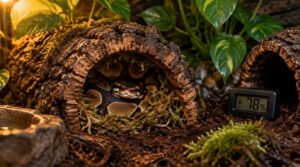
Humid hides give your snake shedding support without turning the whole enclosure into a swamp. Fill a snug cork bark hide with damp sphagnum moss, a burrowing-friendly substrate that holds water well.
Check the humid hide every few days and re-dampen the moss as needed, and for more on setting up a healthy enclosure, see this ball python beginner care guide.
Substrate moisture management is the quiet part. Check it with a hygrometer, aim for 50-70%, and replace moss every one to two weeks. Mold hides quietly, so inspect.
Use Plants and Backgrounds to Create Cover

Hides are only half the story. Your snake also needs cover on the move.
Plants build visual barriers that break up open sightlines. Dense schefflera and ivy, whether live or artificial plants, layer leaves so your snake can glide beneath them unseen. Low mats of nerve plant and pothos add what I call Travel Corridor Cover, a continuous path from hide to hide. That’s real visual stress reduction.
Textured backgrounds help too. Add climbing vines and your snake gets vertical cover, which means natural behavior stimulation and more confident hiding behavior.
The quiet risk? Bare, open floor space. Your snake won’t complain. It’ll just stay tense. Stress builds silently, before appetite or shedding suffers.
Give it leaves. Give it peace.
Match Climbing Decorations to Your Snake’s Species

Branches make or break an arboreal setup. Your snake’s species-specific needs decide which climbing structures belong in the enclosure, so don’t copy a generic layout. Reptile climbing enrichment starts here.
Poor climbing surfaces can also snag old skin, so it’s worth knowing the signs of snake skin shedding problems before retained shed starts causing trouble.
Green tree pythons want horizontal perches, ideally sized so the body coils fully with no gaps. Juveniles do best on thin willow twigs they can wrap. Adult boas need thick, heavily secured limbs that carry their weight.
Watch branch texture. Slick, polished wood forces a snake to grip harder, and that quiet strain adds up. Choose manzanita, mopani, bamboo, or cork. Mount sturdy reptile basking platforms near the heat so your snake can climb, bask, and settle.
Fit the perch to the snake, and the snake will trust the perch.
Add Species-Appropriate Substrate and Ground Cover
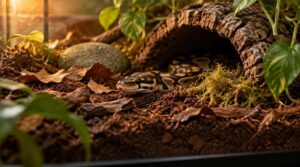
Substrate does more than cover the floor. It’s part of your reptile habitat setup and tells your snake whether this space is safe.
Match it to the species. Sand boas and hognose snakes need burrowing-friendly substrate, 2 to 4 inches of loose sand deep enough to vanish into. Ball pythons want 3 to 6 inches of coconut fiber or cypress mulch, a true humidity control substrate. Corn snakes do fine on 1 to 3 inches of aspen.
Try substrate layering. Coco coir below, leaf litter on top, a pinch of sphagnum near the hide for shedding.
Watch for damp spots. Wet aspen molds quietly. Spot-clean daily, and schedule reptile terrarium cleaning with a full swap every three to four months.
Choose and Maintain Safe Snake Decorations

A great enclosure can still hide quiet dangers, and most of them come from the decor. Before you add or keep a single item, run it through three checks: Safe Decor Standards, secure setup, and a steady care routine. Here’s what to look for, one point at a time.
Non-Toxic Materials and Smooth Edges
Your snake can’t tell you a decoration hurts. It just gets hurt.
A snake can’t tell you a decoration is hurting it, so the danger stays hidden until the harm is done
Stick to nontoxic enclosure materials: slate, river rock, cork bark, baked hardwood. Skip pine and cedar. Their oils harm reptiles quietly.
Run your hand over everything. Smooth edges only. Sharp edges scratch skin, and scratches invite infection.
- Seal paint with certified sealant
- Avoid rusting metal
- Rinse with reptilesafe disinfectants
Safe decor is invisible protection.
Secure Anchoring and Escape Prevention
Picture a boulder sliding down a burrow at 2 a.m. Quiet. Unseen. Dangerous.
Secure Anchoring and Escape Prevention starts here. Escape prevention means enclosure anchoring: silicone-bond fixed decor, bury heavy bases, seat lids flush.
Reptile habitat anchoring with corrosive resistant fasteners won’t rust loose. Check cable ports too. Your snake tests every gap. Solid decor, solid lid, one safe snake.
Cleaning, Inspections, and Gradual Changes
Dirty decor hides quiet trouble. Mold, mites, and worn seams don’t announce themselves, so check every hide during reptile habitat maintenance.
Clean the whole enclosure every 4-6 weeks. Rotate only 25-30% of decor using a Timed Rotation Schedule.
Follow Gradual Layout Shifts for reptile decor rotation. Then track behavioral observation metrics for 72 hours. Calm snakes feed.
Frequently Asked Questions (FAQs)
How to make snakes trust you?
Trust starts with security. Give your snake secure hides, textured rocks, artificial foliage, burrowingfriendly substrate, and temperature gradient zones. Wait two weeks, handle gently, and let it choose. Calm snakes learn your hands mean safety.
What material can snakes not bite through?
Think of snake fangs as tiny needles hunting for a weak spot. Ballistic nylon, Cordura and Kevlar stop them cold, thanks to tight weaves. Thin cotton, denim and sandals? Useless. Material safety starts with layers.
What are some good decorations for a snake enclosure?
Start with two snug hides, one warm, one cool. Add a cork tube for climbing, plus a damp-moss humid hide. Trailing plants give cover.
Anchor everything firmly, sand rough edges, and skip toxic materials. Safe habitat, calm snake.
How many decorations are too many for snakes?
Picture a maze with no exit. That’s a cluttered tank. Keep 30% open floor, and make sure you can reach the water bowl without moving more than two items. Fewer pieces, better snake enclosure setup.
Can snakes become stressed by decorations?
Yes, they can. Decorations that are unsafe, sudden, or badly placed leave stressed snakes hiding, pacing, or refusing meals. Poor hide placement is the quiet culprit. Fix it, and snake stress reduction follows.
Do snakes need decorations in baby enclosures?
A bare tub is an open field, and open fields frighten babies. Yes, they need decor. Place a snug hide on each side, a water bowl near the cool one, cork for cover.
Can I use fake skulls as snake decorations?
A skull is a cave with attitude. Yes, you can.
Choose reptilesafe materials, sand sharp edges, anchor it for escape prevention, and pair it with artificial foliage for visual barriers. It’s solid reptile habitat enrichment.
Should decorations be placed near heat lamps?
Yes, but not close. Keep decorations out from directly under the lamp, since hot bulbs burn. Use slate for basking, add a warm hide nearby, and keep heat source isolation clear so your temperature gradient survives.
Conclusion
Picture a ball python tucked into a cork tube, flanks pressed to the walls, eyes half closed. That’s trust, and you built it.
What decorations help snakes feel secure? Snug hides on both temperature zones, leafy cover, species-fit branches, and safe, anchored materials. Check them often and change them slowly. Skip anything sharp, toxic, or loose.
A secure snake eats, sheds, and rests. Give it walls to trust and cover to vanish into. Peace follows.