This site is supported by our readers. We may earn a commission, at no cost to you, if you purchase through links.

A corn snake left in a bare tub will still eat, still shed, still survive. It won’t thrive. Watch one in a properly decorated enclosure, though, and you’ll see the difference: confident exploration instead of glass-surfing, relaxed basking instead of constant hiding.
Good snake housing decoration does more than look nice for visitors. It shapes body temperature, humidity, and stress levels, all through the placement of hides, branches, and substrate you choose.
Get these elements right, and you’ll build an enclosure that works with your snake’s instincts instead of against them.
Choosing a safe base like plain topsoil matters just as much, and this guide to substrate materials for naturalistic setups breaks down which options actually hold up.
Table Of Contents
- Key Takeaways
- Essential Hides for Cozy Security
- Natural Climbing Decor Ideas
- Substrate and Ground Cover
- Live and Artificial Plants
- Safe Finishing Touches
- Frequently Asked Questions (FAQs)
- Can snakes hear human voice?
- What can I put in my snake enclosure?
- Do snakes prefer vertical or horizontal enclosures?
- How do you decorate a snake’s home?
- How to design a snake enclosure?
- What can you put in a snake enclosure?
- How do you make a DIY snake habitat?
- What is a DIY snake cage enclosure?
- Do you have to keep a snake in an enclosure?
- What not to put in a snake enclosure?
- Conclusion
Key Takeaways
- Provide separate warm-side and cool-side hides, checking temperatures with a thermometer or probe to maintain a proper thermal gradient for digestion and security.
- Use safe climbing materials like cork bark, grapevine, and stable log stacks to give your snake vertical choices for resting and basking.
- Choose substrate and ground cover, such as deep burrowing layers, leaf litter, or bioactive soil blends, to control humidity and support natural digging behavior.
- Finish the enclosure with safety checks like secure screen clips, smooth rock edges, and heavy water bowls to prevent escapes and injury.
Essential Hides for Cozy Security
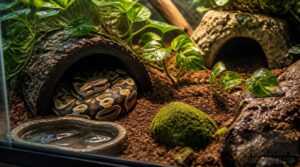
Every snake needs a place to disappear, and hides are where that security starts. Get the placement, materials, and moisture right, and your snake will actually use them instead of hiding behind the water bowl. Here’s what a well-planned hide setup should include.
If you’re aiming for that sweet spot of warmth and dampness, this guide to building a humidity hide box walks you through getting the balance right for shedding and overall comfort.
Warm-side Hide Placement
Position this hide directly over your heat source so interior temperatures hit the digestion range your species needs. Check with a thermometer inside the hide, not just the ambient air.
To make sure safety, always establish a temperature gradient by placing a second hide on the cool side.
- Peace of mind knowing digestion runs smoothly
- Confidence your snake feels secure, not exposed
- Fewer worries about missed feedings
Keep it away from water bowls to avoid pooling, and size it for full-body coverage.
Cool-side Hide Placement
Every reptile enclosure setup needs balance, and that means giving your snake somewhere cool to retreat. Place this hide at the far end, away from heat, ensuring floor level contact for accurate readings. A digital probe confirms temperatures stay in the low-to-mid 70s.
Keep it dark, moisture-controlled, and free of sightlines to the heater—thermal gradient stability depends on it.
Humid Moss Hide
Cool and warm zones handle temperature, but shedding brings its own demands. A humid moss hide, packed with damp sphagnum moss, keeps relative humidity between 70-90%.
Focus on:
- Shedding Support during inter-shed periods
- Humidity Monitoring to catch dry spots
- Mold Prevention through balanced moisture
- Entrance Accessibility from multiple angles
- Moss Maintenance rehydrating weekly
Burrow-friendly Hide Setup
Some snakes, like corn snakes, prefer digging over sitting in an open hide. Add multi-entrance tunnels 2-3 inches wide with smooth interior walls to prevent abrasion.
| Feature | Purpose |
|---|---|
| Rounded entrances | Injury prevention |
| Sloped floor | Drainage |
| 4-inch chamber | Resting space |
| Compacted substrate | Collapse resistance |
This setup encourages natural burrowing instincts while keeping the habitat safe and functional.
Multiple Shelter Zones
Multiple shelter zones turn a single tank into a full naturalistic enclosure. Give corn snakes and milk snakes separate hides across the thermal gradient, each with its own microclimate, so smells don’t mingle and stress stays low.
If you’d rather use one continuous shelter, these corn snake hide placement tips show how to position it across the gradient so cover never competes with comfort.
This zone-based approach makes humidity segregation, easy relocation, and real habitat enrichment possible—transforming basic snake tank decorations into a space your snake can actually navigate and control.
Natural Climbing Decor Ideas
Climbing space does more than fill empty air in your enclosure, it gives your snake real choices about where to rest and warm up. The right branches, logs, and rocks turn a flat floor into a layered world your snake can actually use. Here’s what to look for when building that vertical setup.
Cork Branches

Cork oak bark gives your snake a rugged, grooved surface for reliable grip while climbing — no smooth, slippery wood here.
- Naturally moisture resistant and antimicrobial, resisting mold in humid vivariums
- Lightweight yet stable, even at 36-inch lengths
- Ideal for multi-level, naturalistic enclosure enrichment
Anchor a few pieces at different heights, and you’ve built a multi-purpose climbing route your snake will actually use.
Grapevine Perches
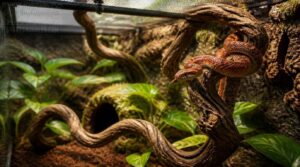
Twisting vines curve and bend unlike any straight branch, giving your snake asymmetric resting spots that mimic a real arboreal habitat.
Vine diameter variety, from 0.5 to 1.5 inches, lets corn snakes and milk snakes alternate grip pressure as they climb.
The porous wood’s moisture wicking properties support humidity control, while secure, multi-point installation keeps every perch wobble-free.
Stable Log Stacks

Think of log stacks as your snake’s jungle gym, built for structural integrity, not just looks.
Interlock logs in staggered, pyramid-style layers, anchoring each piece so nothing shifts.
- Choose cork or maple for grip and moisture tolerance
- Stagger joints between rows for even load distribution
- Keep gaps minimal for stability, allowing airflow
- Inspect weekly for loosened or displaced logs
Slate Basking Ledges
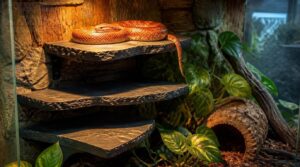
Slate isn’t just decoration—it’s a heat bank, storing warmth from your basking lamp and radiating it back for sustained basking. Mount ledges securely on enclosure walls or over hides using silicone or brackets, and try tiered basking heights for thermoregulation options.
Smooth, beveled edges protect delicate skin, while thickness affects heat retention properties—thicker slate holds warmth longer than thin tiles.
Safe Wood Choices
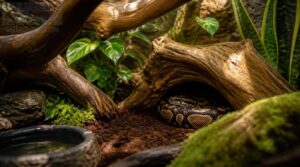
Not all wood belongs in a naturalistic vivarium—some pieces can quietly poison the air your snake breathes. Skip pine, fir, or cedar; their resins off-gas and irritate reptile respiratory systems.
Safe choices:
- Kiln-dried oak or beech branches
- Untreated, FSC-certified wood
- Copper azole-treated structural pieces (never CCA)
- Mineral oil or beeswax-finished surfaces
Hardwood grain resists bacteria, supporting hygienic, enrichment-friendly reptile habitat design.
Substrate and Ground Cover
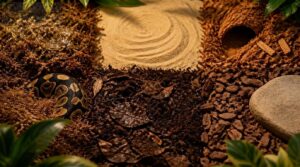
What goes beneath your snake’s feet matters just as much as what sits above it. The right substrate controls humidity, encourages natural burrowing behavior, and keeps your enclosure easy to maintain over time. Here are five ground cover approaches worth building into your setup.
Pair your substrate choice with the right thermometers and hygrometer from this snake cage accessories checklist to keep humidity and temperature dialed in together.
Deep Burrowing Layers
Give burrowing colubrids room to dig, not just hide. Soil texture and moisture balance determine whether tunnels hold or collapse—sandy loam or clay works best when dampened just right. Softer substrate lets snakes carve deeper, branching networks, while compacted layers force shallow digs.
Deeper tiers stay cooler and humid; upper layers swing warmer. That temperature gradient mimics wild microhabitats corn snakes and milk snakes naturally seek out.
Leaf Litter Cover
Layer leaf litter over that dug-out substrate and you’ve got a snakes enclosure that finally looks alive. It buffers soil erosion, holds moisture, and feeds nutrient cycling as it breaks down.
Add microhabitat diversity your snake will actually use:
- Damp crevices
- Air pockets
- Shaded cool spots
- Fungal soil networks
Bake leaves at 200°F first—safe litter sources matter for bioactive setups and terrarium landscaping alike.
Moss for Humidity
Once that leaf litter settles in, moss fills the gaps as your enclosure’s natural humidifier. Cushion and sheet varieties offer strong moisture retention, releasing dampness back into the air as things dry out.
Tuck it into shaded corners or pack a humid hide, and you’ve got instant microclimate control—stabilizing humidity between 60-85% without constant misting.
Bioactive Soil Blends
Combine soil or coco coir with aged compost, and you’re building a living substrate that feeds itself. Bioactive inoculants—beneficial bacteria, mycorrhizal fungi, even microfauna—drive microbial nutrient cycling, breaking down waste naturally.
Mineral amendments like biochar or crushed limestone stabilize pH and boost moisture retention. Your corn snake gets a self-sustaining microclimate, cutting deep-cleans while supporting the fungal networks doing the real work underground.
Easy-clean Substrate Options
Not every keeper wants a bioactive jungle, and that’s fine—some setups call for simplicity over sprawl.
- Quartz charcoal benefits absorb moisture and odor
- Coconut coir humidity stays balanced with airflow
- Gravel drainage pros reduce impaction risk
- Paper bedding hygiene means quick swaps
- Ceramic tile maintenance offers wipe-down ease
Pair any option with live plants or terrarium decorations for enrichment without sacrificing practical substrate management.
Live and Artificial Plants
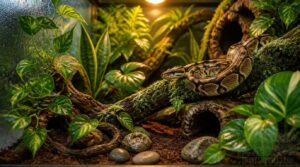
Plants do more than decorate your snake’s enclosure; they support humidity, offer cover, and give the whole space a natural feel.
Whether you choose living greenery or a well-made artificial version, each option comes with its own care requirements and benefits. Here’s what you need to know before adding plants to your setup.
Snake-safe Live Plants
Live plants aren’t just decoration, they’re environmental enrichment that mimics a snake’s natural habitat.
Non-toxic succulents like jade and snake plants tolerate low light, while pothos and spider plants add climbing structure. Bromeliads hold humidity in cupped leaves.
Always practice pesticide-free sourcing and follow plant quarantine protocols for two weeks. Check root system stability before placing any live plant near your snake’s terrarium accessories.
Dense Ground Cover
Picture a lush carpet instead of bare, exposed floor. Dense ground cover blocks light gaps, curbs bare zones, and prevents soil erosion through spreading root networks. Try Nerve plants or Chinese evergreen:
- Continuous root spread
- Moderate humidity tolerance
- 2-6 inch heights
- Trimming schedules keep density even
- Non-toxic, non-spiny leaves
Mix live and artificial foliage for lasting root network stability.
Bromeliads for Drinking
Ever wondered why your snake ignores its water dish? Bromeliads solve that by pooling water right in their leaf rosettes, creating a natural drinking spot.
Bromeliads pool water in their leafy rosettes, giving snakes a natural drinking spot they’ll actually use
| Genus | Benefit |
|---|---|
| Guzmania | Deep tank capacity |
| Tillandsia | Low-maintenance option |
Rinse tanks weekly to prevent stagnation and support beneficial microfauna, keeping this small hydration microecosystem safe within your bioactive setup.
Realistic Faux Foliage
Not every enclosure works with live plants, and that’s where quality faux foliage earns its keep. Look for blended green tones, vein texture, and UV resistance to prevent fading under terrarium lighting.
Layer broad leaves with slender fronds for real depth, and set pieces near lighting around 2700K-3000K. Combined with terrarium backgrounds, this creates sensory stimulation without live-plant upkeep—ideal for Corn Snake accessories in bioactive-style displays.
Plant Cleaning Tips
Dust dulls leaves fast in a vivarium, cutting light and making your display look tired. Wipe broad live leaves with a damp microfiber cloth, base to tip, every two weeks.
Skip soap on waxy or succulent types—residue clogs stomata. For faux foliage, rinse under lukewarm water instead. While cleaning, check leaf undersides for pests, and keep ambient humidity steady so mold never gains ground.
Safe Finishing Touches
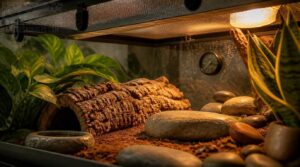
Once your hides, climbing branches, substrate, and plants are in place, a few smaller details still deserve your attention. These finishing touches might seem minor, but they play a real role in keeping your snake safe and your enclosure secure. Here’s what you should check before calling the setup complete.
Heavy Water Bowls
Water bowls need enough weight to survive a curious corn snake shoving its nose in without tipping over. That’s where anti-tip design matters: wide, low bowls in glazed ceramic or stoneware resist chip damage and clean easily. Their thermal mass even helps steady water temperature briefly.
Choose smooth, chip-free finishes that fit in naturally with rocks, climbing branches, and live plants for a smooth, safe enclosure look.
Enclosure Background Panels
A photographic background does more than dress up a PVC enclosure—it hides wiring and seams while giving corn snakes or milk snakes a sense of enclosed security.
Look for UV-resistant, scratch-proof finishes that mount flush against the back panel without blocking vertical space for climbing branches. Removable panels simplify cleaning, and matching your enclosure’s mounting holes keeps installation snug and secure.
Smooth Rock Accents
Once your background panel is set, smooth river rocks add the finishing texture. Choose stones with rounded, water-worn surfaces in muted grays and tans for scale-safe texture that won’t snag on scales.
Place rocks on substrate at least 2 inches deep for stability, mixing light and dark tones for natural color variation and gentle thermal absorption near basking zones.
Secure Screen Clips
Rocks and branches mean nothing if a curious corn snake can pry the lid loose.
Choose clips with snap or screw mechanisms rated for 5-10 kilograms, fitting screens from 0.5-1.2 millimeters thick. Look for corrosion-resistant zinc or polycarbonate builds, recessed anti-tamper heads, and rubberized backing—then check monthly for hairline cracks or looseness.
Sharp-edge Safety Checks
Run your hands along every rock, branch, and panel edge before your snake ever moves in—monthly edge inspections catch what eyes miss.
| Check Point | What to Look For |
|---|---|
| Metal fasteners | Rounded, capped heads |
| Acrylic panels | Chamfered edges |
| Wood surfaces | No splinters |
| Shelves/ledges | No pinch points |
Good reptile husbandry means smoothing rough wood and sealing hollow decor completely.
Frequently Asked Questions (FAQs)
Can snakes hear human voice?
Not quite the way we hear it. Snakes rely more on jawbone vibration sensing and low frequency sensitivity than airborne sound response, so your voice registers faintly, more felt than heard, through ground vibration detection.
What can I put in my snake enclosure?
Include hides on both temperature ends, cork or grapevine climbing branches, deep aspen substrate for burrowing, live or artificial plants, and a heavy water dish—each supporting natural behavior, safe wood types, and better humidity control for a thriving vivarium setup.
Do snakes prefer vertical or horizontal enclosures?
Think of it like a telegraph line versus a horizontal hallway: your snake needs both directions, but floor space matters most for stretching, coiling, and reducing locomotion stress, while climbers still crave secure vertical perches.
How do you decorate a snake’s home?
Layer functional zones: warm and cool hides, climbing branches under UV lighting, live or artificial plants, and bioactive substrate. Balance humidity, enrichment, and safety so your enclosure feels natural while supporting your snake’s health and confidence.
How to design a snake enclosure?
Building a thriving vivarium is like assembling a tiny world in a box: balance microclimate management, vertical space, hides, and bioactive substrate. Combine live plants, safe hardscape, and rigorous safety inspection protocols for a secure, naturalistic home.
What can you put in a snake enclosure?
Fill your vivarium with warm and cool hides, cork branches, slate ledges, live or artificial plants, leaf litter, moss, a heavy water dish, and secure decor—balancing microclimate management, enrichment, and safety for exotic pet care.
How do you make a DIY snake habitat?
Start with customizing microclimates: warm and cool hides, secure branches for climbing, and safe substrate mixing. Add live or artificial plants, moss, and leaf litter for naturalistic enclosure design, then check décor for sharp edges before your snake moves in.
What is a DIY snake cage enclosure?
A DIY snake cage enclosure is a custom-built vivarium using budget-friendly materials like melamine, PVC, or glass tanks, sized to your snake’s needs, with secure screen clips, proper ventilation, and safety features protecting against escapes or injury.
For step-by-step guidance on dimensions, vent placement, and silicone sealing, these DIY snake cage design plans walk you through building a safe, escape-proof enclosure from scratch.
Do you have to keep a snake in an enclosure?
Letting your snake roam free like a tiny escape artist sounds fun until it’s behind your fridge for weeks. Yes, you need an escape-proof enclosure—it prevents injury, allows for proper ventilation, and gives your pet snake the security it craves.
What not to put in a snake enclosure?
Skip cedar and pine bedding, sand, or cat litter—all toxic or hazardous. Avoid unverified live plants, scented cleaners, and exposed heating elements.
Rough wood and sharp decor risk injury, so prioritize safety-tested herpetology supplies for your enclosure’s overall welfare.
Conclusion
Picture a milk snake that once hid for weeks, now stretched out on a cork branch, tongue flicking at the air with total confidence. That shift happens when snake housing decoration meets real purpose, not just appearance.
Hides give security, branches build muscle, moss holds humidity steady, and safe plants soften a bare tank into a living space. Check every edge, secure every clip, and your enclosure becomes a thriving habitat, not just a container your snake survives in.