This site is supported by our readers. We may earn a commission, at no cost to you, if you purchase through links.

Most snakes won’t show you they’re stressed—they’ll just stop eating, hide more, or pace the glass. By the time you notice, the problem has been building for weeks.
The decor inside your enclosure does more than fill space; it shapes how safe your snake feels every single day.
A hide placed on the wrong side of the tank, a branch with a rough edge, or a water bowl sitting too close to a heat source can quietly chip away at your snake’s health.
Getting safe and enriching snake decor right isn’t complicated, but the details matter more than most guides let on.
Table Of Contents
- Key Takeaways
- Essential Safe Snake Decor Items
- Choosing Snake-Safe Materials
- Enrichment Decor for Natural Behaviors
- Safe Decor Placement Tips
- Cleaning and Inspecting Snake Decor
- Frequently Asked Questions (FAQs)
- Can snakes recognize and interact with their owners?
- How often should I rearrange my snakes habitat?
- What lighting schedules work best for nocturnal snakes?
- Are heating rocks safe for snake enclosures?
- How often should I rotate my snakes decor?
- Can wild-collected branches be used safely indoors?
- What decor works best for nocturnal snake species?
- How do I introduce new decor without stressing my snake?
- Are bioactive setups suitable for all snake species?
- Conclusion
Key Takeaways
- Stressed snakes rarely show obvious signs, so your decor choices—hide placement, branch texture, water bowl position—are quietly shaping your snake’s health long before problems become visible.
- Every material inside the enclosure carries real risk if chosen carelessly, so stick to cork, sealed hardwoods, BPA-free plastics, and coconut coir while keeping cedar, pine, and anything with flaking paint far away.
- Enrichment isn’t about filling space—it’s about giving your snake the chance to hide, climb, burrow, and hunt on its own terms, which directly lowers stress and supports natural behavior.
- Cleaning and inspecting decor on a daily, weekly, and monthly schedule isn’t optional busywork—it’s how you catch mold, cracks, loose mounts, and bacterial buildup before they quietly harm your snake.
Essential Safe Snake Decor Items
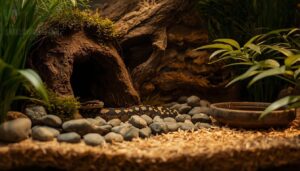
Getting your snake’s enclosure right starts with choosing the right pieces. Each item in the setup plays a real role in your snake’s comfort, safety, and daily behavior.
From tank size to substrate, every choice shapes your snake’s world—this guide to creating the ideal snake environment walks you through what actually matters and why.
Here are the essentials worth knowing about.
Secure Hides for Stress Reduction
A good hide does more than just sit in the corner — it’s your snake’s whole sense of safety. Look for these four key features:
- Smooth interior edges prevent snagging during shedding
- Ventilation hole placement near the entrance keeps air moving
- Non-slip bottom stops shifting on smooth substrate
- Weighted lid design eliminates accidental openings
Pair hides across temperature zones for effective temperature differential control and real stress reduction.
Including minimum two hides per enclosure ensures proper thermoregulation and stress reduction.
Sturdy Climbing Branches and Cork Logs
Hides give your snake a sense of security, but climbing structures take that comfort further — they invite natural movement.
Cork bark is your best bet here. It manages humidity without warping, stays temperature-neutral for comfortable resting, and its rough surface gives excellent Cork Grip Mechanics for safe climbing.
Branch Fork Stability, choose pieces with natural forks and aim for Branch Length Ratios over 40 inches.
Heavy Water Bowls and Soaking Areas
Water access matters just as much as climbing space. Bowl Material Choice shapes how easy cleaning stays — go with BPA-free plastic or stainless steel.
Bowl Size Selection ranges from 4 to 8 inches depending on your snake’s length.
Follow these Soaking Depth Guidelines:
- Small species: 1–2 inches
- Medium snakes: 2–3 inches
- Larger builds: 3–4 inches
Bowl Positioning Tips and Rim Safety Design keep soaking stress‑free.
Textured Rocks for Shedding Support
Shedding support starts with the right surface. Textured rocks give your snake something to rub against as old skin loosens — think of them as nature’s built-in scratch pad.
Rock Grit Gradients and Pressure Point Placement matter more than most keepers realize.
Use Humidity Interaction Zones near warm areas, test Material Longevity, and watch for Texture Wear Monitoring to keep reptile habitat enrichment safe.
Artificial Foliage for Visual Cover
Artificial foliage pulls double duty — it gives your snake hiding places while cutting visual stress at the same time. Choose pieces with a UV-Resistant Finish and Leaf Density Gradients that mimic real cover.
- Layer Modular Foliage Panels at Adjustable Height Layers to build natural-feeling zones
- Use Seasonal Color Swaps to refresh visual enrichment without overwhelming your snake
- Position visual barriers across temperature gradients using naturalistic decorations and enrichment
reptile enrichment accessories are easy to wipe clean and safe for long-term use.
Burrowing-Friendly Substrate Layers
Some snakes just need to dig — it’s hardwired into them. A 60/40 Coir‑Sand Ratio gives your fossorial snake the Anchoring Stability it needs without trapping moisture. Follow Layer Depth Guidelines of 4–6 inches to support burrowing behavior naturally.
| Feature | Detail | Benefit |
|---|---|---|
| Substrate Moisture Control | Damp but not soggy | Prevents tunnel collapse |
| Microclimate Creation | Buried humidity zones | Aids healthy shedding |
| Bioactive Substrate | Organic matter blend | Boosts microfauna activity |
Choosing Snake-Safe Materials
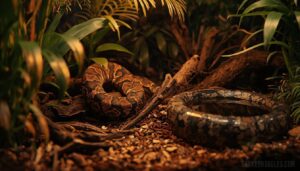
The materials inside your snake’s enclosure matter more than most people realize. A wrong choice can cause skin irritation, respiratory issues, or worse — and some dangers aren’t obvious at first glance.
Even substrate stored incorrectly before it reaches your tank can introduce mold or humidity problems, so it’s worth checking reptile tank substrate options and storage tips before you buy.
The wrong enclosure materials can silently harm your snake in ways you won’t see coming
Here’s what you actually need to know before buying anything.
Non-Toxic Woods, Cork, PVC, and Resin
Not all decor materials are created equal — and the wrong choice can quietly harm your snake.
Stick to maple, birch, or oak with wood grain finishes sealed in non-toxic varnish.
Cork facilitates cork moisture management naturally, absorbing humidity without warping.
PVC piping delivers reliable PVC structural integrity, while cured resin coating benefits include mold resistance and easy cleanup with any reptile safe cleaning solution.
Safe Substrates for Humidity Control
Your substrate choice does more for humidity control than most people realize.
Coconut Coir Retention keeps moisture steady — coconut fiber holds up to 3.5 times its weight in water. Sphagnum Moss Moisture releases slowly during dry spells. Cypress Mulch Porosity allows airflow that limits mold. Peat Moss Balance absorbs without waterlogging.
Add Silica Gel Barriers beneath safe substrate materials to stabilize levels further.
Materials to Avoid: Cedar, Pine, and Splinters
Some substrate choices look natural but quietly work against your snake’s health. Cedar shavings and pine shavings are two you want off your list entirely.
- Cedar Dust Hazard triggers respiratory irritation and skin dermatitis on contact
- Pine Resin Odor releases volatile compounds that stress reptile health in enclosed habitats
- Splinter Injury Risk from both woods threatens soft tissue inside your reptile habitat
Your substrate choice matters more than it looks.
Checking Artificial Plants for Sharp Wires
That pretty ivy might look harmless, but hidden wires inside stems can slice delicate scales.
Start with a Wire Core Inspection — bend each branch gently using a Flex Test Procedure to feel for stiff kinks or exposed metal. Run a finger along every stem for a Surface Texture Assessment. Watch for Hidden Wire Indicators like peeling foam edges. Cover any exposed ends with Heat Shrink Protection before use.
Avoiding Flaking Paint, Glue, and Chemicals
Wires aren’t the only hidden danger — flaking paint and harsh chemicals are just as risky.
For any DIY snake enclosure construction, stick to Low-VOC Paints labeled child-safe or food-grade. Skip PVC glue and solvent-based adhesives; use Acrylic Adhesive Alternatives instead. Proper Surface Preparation, full Curing, and Ventilation prevent off-gassing. Regular Coating Inspections catch early flaking before your snake ingests anything harmful.
- Choose water-based, non-toxic primers compatible with your top coat
- Apply thin coats and sand lightly between layers
- Clean cured surfaces with a reptile safe cleaning solution only
- Avoid epoxy or hot-melt glues in enclosed spaces
Selecting Easy-to-Clean Decor Surfaces
Once you’ve sorted out chemicals and coatings, the surface material itself becomes your next decision. Easy-to-clean options like PVC Panel Finish, Quartz Composite Tiles, and Sealed Granite Surface save real time on your cleaning schedule — and support cleaning and disease prevention long-term.
| Surface | Why It Works |
|---|---|
| PVC Panel Finish | Wipes clean, resists stains |
| Quartz Composite Tiles | Non-porous, scratch-resistant |
| Sealed Granite Surface | Liquid-resistant, easy to sanitize |
| Large Format Tiles | Fewer grout lines, less buildup |
Silicone Coated Fabric works well for liner-style DIY alternatives inside plastic containers too.
Enrichment Decor for Natural Behaviors

A snake that can explore, hide, climb, and hunt on its own terms is a healthier, calmer snake. Good enrichment decor makes those natural behaviors possible right inside the enclosure.
Here are the best ways to set that up.
Multiple Hiding Spots Across Temperature Zones
Your snake doesn’t pick one spot and stay there — it moves through temperature gradients all day. That’s why Thermal Hide Placement matters.
Set up hides across warm, mid, and cool zones using a Hide Size Gradient so your snake can choose based on comfort.
Zonal Hide Rotation, Humidity Boost Hides near shed-prone areas, and Zone-specific Hide Types — like cork on the cool side and smooth PVC near the basking zone — turn hiding spots into real behavioral enrichment.
Climbing Decor for Arboreal and Active Snakes
Once your hide zones are set, vertical space is next.
Arboreal and active snakes genuinely need climbing structures — not just something to rest on. Build a Climbing Network Geometry using branches at varied diameters (1.5–7 cm) across Texture Gradient Zones. Add Humidity Retention Perches like cork logs and secure everything with Safety Clip Connectors.
- Mix horizontal and diagonal branches for full-body movement
- Use Interactive Climbing Toys to encourage behavioral enrichment for snakes
- Anchor all environmental enrichment for reptiles securely — no wobble allowed
Tactile Surfaces for Exploration
Touching different surfaces tells a snake a lot about its world. Add Gradient Texture Panels, Micro-Relief Tiles, and Pocked Surface Blocks to build a solid snake tactile board.
These materials and tools for reptile enrichment support real environmental enrichment for reptiles through texture variation.
| Surface Type | Material | Benefit |
|---|---|---|
| Variable Grip Ribbons | Veterinary wrap | Grip support |
| Temperature-Integrated Strips | PVC with heat zones | Thermal mapping |
| DIY Reptile Enclosure Puzzles | Cork + resin tiles | Problem-solving |
| Micro-Relief Tiles | Textured composite | Scale feedback |
| Pocked Surface Blocks | Foam-core resin | Burrowing simulation |
Visual Barriers to Reduce Stress
Visual barriers do more than divide space — they give your snake a sense of control. Use dark Barrier Color Schemes and Matte Finishes to cut glare inside the snake enclosure.
Pair that with Ambient Light Levels adjusted through Dimmable Controls, and Gradient Lighting near commercial hides.
This kind of environmental enrichment works quietly, reducing stress without any dramatic changes to your setup.
Burrowing Zones for Fossorial Species
For fossorial species, burrowing zones aren’t optional — they’re essential. Tunnel geometry and ventilation design shape how well your snake regulates temperature and stays calm underground.
Use deep substrate selection like coconut fiber or sandy loam, at least 4–6 inches of solid substrate depth. Soil moisture and chamber humidity stay naturally balanced in loose materials.
Environmental enrichment promotes reptile welfare by giving hiding places that actually feel like home.
Food Puzzle and Scent Trail Ideas
Snakes hunt — so let them. Food puzzle ideas for snake habitats don’t need to be complicated.
Start simple: hide prey inside a dye‑free plastic container, then progress the puzzle complexity progression slowly.
scent trail zigzag using safe attractants, rotating scent attractant variety weekly to prevent nose fatigue.
Puzzle container safety matters — smooth edges only.
cognitive enrichment activities and food enrichment techniques support real snake behavioral enrichment techniques.
Rotating Decor Without Overwhelming Your Snake
Think of your snake’s enclosure like a slow-changing landscape, not a surprise party. Gradual Layout Shifts work better than dramatic overhauls.
Swap one item at a time on a Timed Rotation Schedule — hides, foliage, or textured surfaces — every three to four weeks. Sensory Variety Rotation keeps habitat enrichment materials feeling fresh without triggering stress.
Minimalist Zone Rotation lets your snake explore at its own pace.
Safe Decor Placement Tips
Getting the decor right is only half the job — where you put it matters just as much. A poorly placed branch or hide can turn a great setup into a real hazard.
Here’s what to keep in mind before you start arranging your snake’s space.
Anchoring Branches, Platforms, and Heavy Items
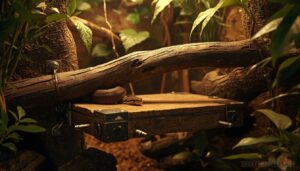
Loose decor is a real hazard.
When anchoring climbing structures, use corrosion-resistant fasteners and always build in redundant anchor points — if one connection fails, a second one holds. Spread weight with load-distribution bracing so no single spot takes all the stress. Drill holes cleanly, apply PVC glue evenly, and document torque specs for each junction.
quarterly stability audits after cleaning.
Preventing Falls, Crushing, and Pinch Points

Once everything’s anchored, your next job is protecting your snake from hidden hazards.
Keep clearance pathways at least 12 inches wide between decor pieces. Use soft edge finishing on cork logs and branches — sharp corners cause real cuts. Practice secure attachment methods so nothing shifts under pressure.
- Cover pinch points with smooth end caps
- Place heavy items low to reduce crush risk
- Guard any moving parts with barriers
Keeping Decor Away From Heat Sources

Heat source isolation matters just as much as anchoring. Keep all decor at least three feet from heat lamps, ceramic emitters, and heat mats — your thermal safe distance.
Heat buffer zones using heat resistant materials like tile or slate protect soft decor underneath.
Elevated decor placement also helps.
Temperature gradients stay accurate when nothing blocks airflow between warm and cool sides.
Maintaining Clear Access to Water and Hides
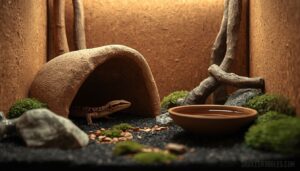
After heat management, watch your layout. Every decor piece between your snake and its water bowl or hide is a potential roadblock.
Barrier-Free Path design keeps access simple:
- Water bowl placement — use a Bowl Edge Clearance of at least two inches around heavy bowls
- Hide Entrance Space — no decor blocking hide openings
- Minimal Obstructions — keep substrate clear of clutter near reptile hides
- Clear Viewing Angles — helps you monitor environmental enrichment for reptiles daily
Escape-Proofing Gaps Around Decor
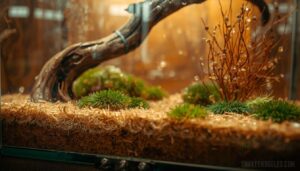
Gaps around decor are sneaky escape routes. Apply Gap Sealing Techniques, like low‑expansion foam or silicone, along hiding places and cork log bases.
Use Mounting Reinforcement Strategies — stainless screws and zip ties — to stop shifts that open new holes. Edge Finishing Methods smooth rough edges. Substrate Leveling Practices close base gaps. Routine Gap Audits every month keep your snake enclosure secure.
Matching Decor Size to Snake Species

Size isn’t one-size-fits-all — and neither is decor.
A corn snake does fine in a 40–60 gallon enclosure with proportional hide size and species-specific branch length that it can actually grip. A boa needs adjusted enclosure volume, sturdy perches, and length-based perch height that holds real weight.
Match your setup to the snake you have:
- Corn/king snakes: specific habitat dimensions around 40–75 gallons
- Garter snakes: taller enclosures with vertical decor
- Rosy boas: compact, ground-level layouts
- Boas: large enclosures, 60–125 gallons minimum
Cleaning and Inspecting Snake Decor
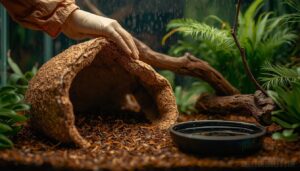
Even the best decor setup can turn into a problem if you let maintenance slide. A quick routine keeps your snake safe and your enclosure working the way it should.
Here’s what to stay on top of.
Daily Spot Checks for Waste and Shed Skin
A quick daily sweep takes less than five minutes but tells you a lot. Check for droppings, leftover food, and shed skin fragments every day.
Use a simple Waste Log to note feces consistency, odor observation, and shedding status — these details build a Health Trend Linking picture over time.
| Check | What to Look For | Action |
|---|---|---|
| Shed Skin Check | Full shed, eye caps intact | Log shed cycle date |
| Feces Consistency | Color, firmness, odor | Note in cleaning schedule |
| Enclosure Cleaning | Damp spots, residue, mold | Spot-clean with reptile cleaning solution |
Weekly Decor Safety Inspections
Once a week, go beyond the daily sweep. Check every hide, branch, and mount for Crack Detection — even hairline fractures matter.
Do Mount Load Testing by pressing down on shelves and perches to confirm they hold.
Look for Mold Monitoring near humid zones.
Behavioral Observation ties it together: if your snake avoids a spot suddenly, that’s your first clue, something’s off.
Disinfecting Hides, Bowls, Branches, and Rocks
Cleaning isn’t just busywork — it’s how you protect your snake’s world.
Boiling Disinfection works great for rocks and wooden hides: 15–30 minutes in plain water kills most pathogens.
For bowls, Bleach Dilution at 1:32 for 10 minutes does the job.
Always rinse everything completely.
Drying Storage matters too — damp decor grows mold fast.
Use reptilesafe disinfectants, and keep a simple Log Keeping record of your cleaning and disinfection routines.
Replacing Worn Substrate and Damaged Decor
Even the best substrate has an expiration date. When depth drops below functional levels or compaction kills drainage, it’s time for a full swap. Track your last change with labeling dates right on the enclosure — simple, effective, and easy to forget otherwise.
- Use Moisture Metering to confirm substrate isn’t waterlogged before reintroducing your snake
- Practice Batch Tracking and Replacement Scheduling every 2–3 months for consistent substrate hygiene
- Inspect decor during swaps — cracks wider than 0.5mm mean replacement, not reuse
Monitoring Humidity, Mold, and Bacterial Buildup
Humidity above 60% is where mold starts winning. Place your hygrometer near hides and substrate — not in open air — for accurate readings.
Use data logging trends to catch post-misting spikes before they become problems. Fuzzy growth or musty odors signal mold visual indicators you can’t ignore.
Clean bacterial hotspots like water bowls daily with a reptile cleaning solution, and keep ventilation steady.
Watching Behavior for Enrichment Effectiveness
Your snake’s behavior tells you more than any checklist can. Once mold and bacteria are under control, shift your attention to how your snake actually moves through its space — that’s where evaluating enrichment effectiveness through behavior observation gets real.
Track these behavioral observation markers:
- Behavioral Baselines — Note normal hiding, foraging, and locomotion patterns before changing anything
- Ethogram Metrics — Log exploration bouts, response latency, and engagement duration per enrichment item
- Activity Heatmaps — Identify which zones your snake favors across temperature gradients
- Stress Indicators — Watch for reduced pacing, less wall-hugging, and calmer tongue-flicking frequency
Juveniles engage new textures faster than adults — so don’t expect identical results across ages.
Frequently Asked Questions (FAQs)
Can snakes recognize and interact with their owners?
Your snake doesn’t know your face — but it knows your scent.
Through scent recognition and a steady handling routine, snakes build memory retention of familiar caregivers, showing calmer body language over time.
Over time, this consistent routine reinforces trust, and you can explore whether pet snakes enjoy being petted as your bond deepens.
How often should I rearrange my snakes habitat?
Rearrange every 4 to 6 weeks. During shedding period adjustments or adoption acclimation schedule, bump that to every 2 to 4 weeks. Watch stress monitoring intervals closely after each change.
What lighting schedules work best for nocturnal snakes?
Stick to a 12/12 lighting cycle.
Timer Consistency matters — your snake’s circadian rhythms depend on it.
Skip Dim Night Light; a true dark period reduces stress far better than Moonlight Observation ever will.
Are heating rocks safe for snake enclosures?
Heat rocks look cozy, but they’re a quiet hazard. Localized hotspots cause burns before your snake even reacts.
Skip them — safer heat source alternatives with thermostat integration protect reptile wellness far better.
How often should I rotate my snakes decor?
Rotate one or two decor items every four to six months. That’s your sweet spot for environmental enrichment for reptiles — enough novelty to stimulate, not enough change to stress.
Can wild-collected branches be used safely indoors?
Yes, but prep them first. Wild branches hide mites, mold, and bacteria. Bake at 180°F for two hours, scrub well, and quarantine for four weeks before use.
What decor works best for nocturnal snake species?
Nocturnal snakes thrive with UV-Free LEDs, scented hide options, and visual barriers made from naturalistic decorations.
Low Light Lighting, hiding places, and textured climbing structures for snakes support their natural nighttime rhythms effectively.
How do I introduce new decor without stressing my snake?
Start small. Add one piece at a time, let your snake sniff it first, then watch for a few days. Gradual introduction and quiet placement make all the difference.
Are bioactive setups suitable for all snake species?
Not really.
Bioactive setups work well for some snakes but not all. Fossorial species, large snakes, and those with strict Temperature Gradient Requirements often struggle with the complexity these naturalistic setups demand.
Conclusion
Every single decor choice you make shapes the world your snake wakes up in each day. A misplaced hide or a toxic branch doesn’t just cause inconvenience—it silently erodes trust, health, and behavior over weeks.
Safe and enriching snake decor isn’t decoration; it’s communication.
When your setup speaks the right language, your snake eats well, sheds clean, and moves with confidence.
Get the details right, and the enclosure takes care of the rest.
- https://www.rspca.org.uk/adviceandwelfare/pets/other/hides?utm_source=openai
- https://reptifiles.com/ball-python-care-guide/ball-python-terrarium-decorations/?utm_source=openai
- https://www.merckvetmanual.com/all-other-pets/reptiles/providing-a-home-for-a-reptile?query=reptile+enclosures&utm_source=openai