This site is supported by our readers. We may earn a commission, at no cost to you, if you purchase through links.
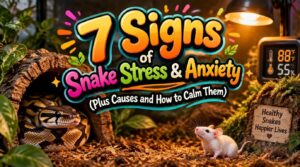
Your ball python hasn’t touched a mouse in three weeks, and he’s wedged himself into the coolest corner of his hide. You assume he’s being picky. He might be telling you something else entirely.
Snakes don’t pace, whine, or ask for help. They hide, refuse meals, and hiss, and most owners read those moves as personality. As an exotic animal veterinarian, I see the signs of snake stress anxiety dismissed until a minor problem becomes a clinical one.
Your snake’s habits carry a message. Here’s how to decode it, fix what’s causing the strain, and know when to call a vet.
Table Of Contents
- Key Takeaways
- How to Tell Stress From Normal Snake Behavior
- 7 Signs Your Snake May Be Stressed
- What Causes Stress in Pet Snakes
- How to Calm a Stressed Snake
- When to Call a Reptile Veterinarian
- How to Prevent Future Snake Stress
- Frequently Asked Questions (FAQs)
- How to calm down a stressed snake?
- What are 7 warning signs of stress?
- What animal has the highest stress level?
- How can I tell when my snake is stressed?
- How do I tell if my snake is stressed?
- What can stress do to a snake?
- How to destress a snake?
- What are signs of discomfort in snakes?
- How can stress affect snake reproduction?
- What role does diet play in stress management?
- Conclusion
Key Takeaways
- Learn your snake’s normal baseline first, because stress shows up as lasting changes like extra hiding, repeated meal refusals, constant pacing, stuck sheds, or fast breathing, not as a single odd moment.
- Most stress traces back to setup problems you can fix, so check your temperature gradient and humidity, give your snake at least two hides (one warm, one cool), and keep handling short and infrequent.
- Calm comes from steady conditions, so cut back handling for a week or two, keep feeding times consistent in a quiet room, and avoid rearranging the enclosure on a whim.
- Stress can hide real illness, so if the signs continue after you’ve fixed the basics, or you see wheezing, open-mouth breathing, weakness, or weeks of refused food, book a reptile vet and bring your temperature logs.
How to Tell Stress From Normal Snake Behavior

Telling stress from normal behavior starts with knowing your snake’s baseline. A calm snake explores, settles into a hide, and returns to its routine without drama.
If you’re still getting to know your snake, a few tips for handling a snake for the first time can help you read its body language and avoid causing unnecessary stress.
Context matters. One skipped meal after a move isn’t alarming, but food refusal across several feedings is. Brief hissing after a sudden disturbance is normal. Heightened aggression that builds while you stand there isn’t.
Watch for patterns. Increased hiding, repetitive movements, or retained eye caps point to a problem worth investigating. Don’t ignore them.
7 Signs Your Snake May Be Stressed
Your snake can’t tell you when something’s wrong, so you have to read the signs yourself. The seven below are the ones I see most often in my exam room, and each one is worth knowing before you panic or shrug it off. Go through them with your own snake in mind, and note which ones you’ve already spotted.
Because snakes instinctively mask illness, catching trouble early often depends on knowing the common pet snake health issues and their warning signs before symptoms become serious.
Hiding More Than Usual

Spotting Hiding More Than Usual starts with knowing your snake’s baseline. Snakes hide daily, so watch for behavioral changes instead. Increased hiding during feeding windows, or only in the coolest hide, signals discomfort.
Prolonged hiding lasting several days deserves attention. Check temperatures, noise, and recent handling first. If the hiding behavior comes with weight loss or lethargy, call your vet.
Refusing Food

Hiding often goes hand in hand with Refusing Food. One skipped meal isn’t alarming. A pattern is.
Check these first:
- Recent shed timing
- Enclosure Temperature and Temperature Gradients
- Prey size and thaw
- Shedding Disorders or weight loss
Normal Feeding Behavior returns once the cause is fixed. If refusals keep stacking up, call your vet. Also weigh your snake every week.
Hissing or Defensive Striking

means your snake feels cornered. A bluff strike, often with a closed mouth, is a warning. Defensive behavior spikes with handling stress and sudden defensive reactions.
If your snake does this often, it helps to understand the quirks behind the drama, and these interesting hognose snake facts show why some species bluff so convincingly.
| Cue | Meaning | Action |
|---|---|---|
| Hiss | Warning | Back off |
| Head flattening | Imminent strike | Pause |
| Repeated lunges | Chronic stress | Call vet |
A hiss after surprise is normal. Repeated displays during routine care aren’t.
Pacing or Rubbing The Enclosure

usually means your snake is hunting for something it can’t find. Check these first:
- Glass surfing along one wall
- Constant roaming without any rest
- Rubbing nose against glass seams
- Repetitive movements along identical routes
- Sudden change from your snake’s baseline
Normal exploring comes and goes. Stress-driven movement doesn’t stop, so check temperatures, humidity, and hides.
Difficulty Shedding

Trouble during your snake’s shedding cycle often signals stress, not bad luck. Patchy skin, stuck pieces, or retained eye caps point to shedding disorders. Check your humidity control first, then confirm your temperature gradients let your snake warm up and cool down.
Never pull stuck skin; you’ll tear scales. Recurring problems across several sheds mean you should call your vet.
Breathing Changes

Picture a tiny bellows working overtime beneath your snake’s ribs. That’s rapid breathing, and brief bursts after handling are normal. Sustained changes in respiratory rate aren’t.
A snake’s rapid breathing after handling is normal, but a sustained change in respiratory rate means something is wrong
Watch for openmouth breathing, wheezing, or crackling sounds. A raised respiration rate during quiet hours points toward a respiratory infection, so call your vet promptly. Don’t wait for it to settle on its own.
Lethargy or Weight Loss

A snake draped limp over its hide, tongue barely flicking, isn’t always resting. Stillness alone proves nothing, so compare it to your snake’s usual baseline.
Watch for unexplained weight loss that continues for weeks, plus increased hiding, rapid breathing, heightened aggression, or dull skin coloration.
Weigh weekly on the same scale. If it keeps slipping, call your vet right away.
What Causes Stress in Pet Snakes

Once you know what stress looks like, the next step is finding what’s causing it. Most cases trace back to a handful of everyday triggers in your snake’s setup and routine. Here are the five to check first, starting with the one that’s easiest to get wrong.
Improper Temperature Or Humidity
Your enclosure is your snake’s whole climate. When it’s off, stress follows fast.
Incorrect temperature and poor humidity push your snake into hiding and off its food. A proper thermal gradient lets it choose where to warm up or cool down.
Even small setup errors, like a misplaced thermometer or a heat lamp that runs too hot, can stress your snake, so review these common mistakes with snake habitat temperature before they become problems.
- Check the temperature gradient with a digital probe.
- Track humidity levels every day.
- Fix hot or cold spots today.
Too Few Hiding Spots
Leave your snake feeling exposed all day, and that’s a real problem. Without a place to fully disappear, it stays on alert, paces the glass, or freezes when you reach in. Researchers at Adelaide Zoo found that abnormal stress behaviors such as freezing and lunging at the glass rose to 8.5% of observations when visitors got too close.
Give it at least two hides, one warm and one cool. Smart shelter placement and cork bark add habitat security and simple environmental enrichment.
Excessive Handling
Even with perfect hides, you can undo the calm by picking your pet up too often. Excessive Handling keeps its guard up, and handling stress can linger for days.
Keep Handling Sessions short, and limit Handling Frequency to a couple of times a week. Build in Handling Recovery Intervals of at least 48 hours. Support the body from below, move slowly, and skip sessions if your snake hides or refuses food.
Loud Surroundings
Handling isn’t the only thing that rattles your pet. Excessive noise works the same way, keeping your snake in heightened alertness long after the sound stops.
Watch for:
- Bass-heavy speakers near the shelf
- Slamming doors that shake the rack
- Rapid breathing after sudden shouting
- Enclosure exposure to flickering TV light
- Handling stress piled on loud days
Choose a quieter room.
Underlying Health Problems
Sometimes the noise isn’t the problem. If your snake stays tense in a quiet room, look inward.
Illness often looks like stress. Respiratory infections cause wheezing and open-mouth breathing, parasites drive weight loss, and bad sheds point to dehydration. Chronic illness raises cortisol levels, which causes immune suppression and growth inhibition. Don’t guess. Book a vet exam before things worsen.
How to Calm a Stressed Snake

Fix the cause you found, then give your snake time to settle. Calm comes from steady conditions, not extra attention.
Start with these three changes:
- Correct temperature and humidity, and add a second hide.
- Cut handling for a week or two.
- Keep a consistent feeding schedule in a quiet room.
Once your snake relaxes, add environmental enrichment like fresh branches or a cardboard tube. Keep gentle enrichment sessions short. Pair them with routine health checks to support the whole body.
When to Call a Reptile Veterinarian

If stress indicators persist despite correct warmth and humidity, stop troubleshooting and book veterinary consultations. Good health monitoring means knowing when symptom recognition says it’s time for professional help.
| Sign | What you’ll see | Your move |
|---|---|---|
| Breathing | Wheezing, gaping | Call today |
| Appetite | Weeks refusing food | Book visit |
| Weakness | Can’t right itself | Go now |
| Shedding | Stuck, swollen skin | Book visit |
| Aggression | Wounds, constant striking | Call soon |
Don’t ignore blood or mucus, which are vet care warning signs. Bring temperature logs and dates.
How to Prevent Future Snake Stress

Building a stable routine keeps your snake calm for good. Lock in these five habits:
- Hold steady temperature gradients and check them weekly.
- Practice humidity control with a reliable hygrometer.
- Offer two or more hiding spots, one warm, one cool.
- Add environmental enrichment, like branches and burrowing substrate.
- Book annual veterinary consultations.
Don’t rearrange the enclosure on a whim. Consistency builds security, and a secure snake rarely stresses.
Spend ten minutes a week watching normal behavior, so you’ll spot changes early.
Frequently Asked Questions (FAQs)
How to calm down a stressed snake?
Ball pythons thrive at roughly 55 percent humidity, so start with humidity control.
Correct your temperature gradients, add two snug hiding spots, and pause handling sessions. A quiet enclosure design lets your snake settle down.
What are 7 warning signs of stress?
Your snake shows stress through increased hiding, refused meals, hissing or defensive strikes, pacing, stuck shed, open-mouth breathing, and lethargy with unexplained weight loss.
Excessive noise and frequent handling sessions can often start it early.
What animal has the highest stress level?
Free-ranging giraffes show cortisol levels up to 686,000 ng/mL, the highest in your data. Still, don’t compare them to a stressed snake: constant hiding, feeding refusal, rigid body language, and over handling matter much more.
How can I tell when my snake is stressed?
Vets often say roughly 75% of reptile health problems trace back to husbandry.
Watch for increased hiding, feeding refusal, and heightened aggression, then check your temperatures, hiding spots, and environmental enrichment. Track patterns across days.
How do I tell if my snake is stressed?
Think a hiding snake is always stressed? Not always true. Compare it to your baseline. Stress shows as persistent hiding behavior, repeated feeding refusal, or defensive striking, especially after temperature gradient or humidity levels drift.
What can stress do to a snake?
Stress can wreck your snake’s health faster than you’d believe. It triggers feeding refusal, shedding disorders, and defensive behavior, then weakens immunity.
Check your temperature gradient and humidity levels first. Poor setups cause most cases.
How to destress a snake?
Start with proper microclimate zones: a warm side, a cool side, correct humidity. Add two hiding spots, one per side. Keep a consistent feeding schedule, limit handling, and offer environmental enrichment through gentle enrichment sessions.
What are signs of discomfort in snakes?
Your ball python hides all day long, skips dinner, and lunges when you open the lid. That’s real discomfort.
Watch closely for refusing meals, defensive striking, prolonged hiding, repeated escape attempts, and regurgitation after feeding.
How can stress affect snake reproduction?
A stressed snake is an engine running on fumes. Chronic stress hormones shrink appetite and body reserves, which cuts clutch size and egg viability, hurting reproductive success. Prioritize stress reduction well before your breeding season.
What role does diet play in stress management?
Diet can make or break your snake’s calm. A Consistent Feeding Schedule keeps feeding frequency predictable, so feeding behavior stays steady.
Watch for nutritional deficiency, and use weight monitoring to catch problems very early on.
Conclusion
A client brought in a ball python that had refused food for a month. The cause? A heat mat running ten degrees too cool. He ate within days.
Learning the signs of snake stress anxiety works the same way. Your snake can’t tell you what’s wrong, but his habits will, if you’re watching. Fix the enclosure basics, handle gently, and call your vet when symptoms linger. A calm snake isn’t luck. It’s something you build.
- https://www.wilbanksreptiles.com/blogs/ball-python/ball-python-body-language-and-mood-guide
- https://www.behavioreducation.org/post/minimizing-transition-stress-for-snakes-a-guide-to-low-stress-home-and-habitat-changes
- https://www.reddit.com/r/ballpython/comments/8hn3xz/signs_of_comfort_and_stress_in_snakes